Verizon Wireless Q3 2026: Fiber and AWS Deals
Verizon added 406,000 postpaid phone subscribers in the third quarter of 2026, more than 820% above the same quarter a year earlier and its strongest third quarter in five years. That single line from Verizon Communications’ 3Q 2026 results release explains why the company raised full-year guidance for the third consecutive quarter. It also hides the more interesting story: the company missed revenue expectations while beating on profit, and the gap is deliberate.

Key Takeaways:
- Full-year postpaid phone net-add guidance rose to 1.1 million to 1.2 million, up from the upper half of 750,000 to 1,000,000.
- Verizon signed a $2.0 billion-plus agreement with AWS whose economics are fiber capacity, not cloud software.
Q3 2026 by the Numbers
Total operating revenue reached $34.3 billion, up 1.5% year over year, against a consensus of $34.85 billion tracked by AlphaStreet’s earnings preview. The shortfall sits almost entirely in hardware. Wireless equipment revenue fell 9.0% to $5.12 billion because customers are keeping phones longer and Verizon cut back device subsidies on purpose. Service revenue, the part that recurs, rose 3.5% to $29.20 billion.
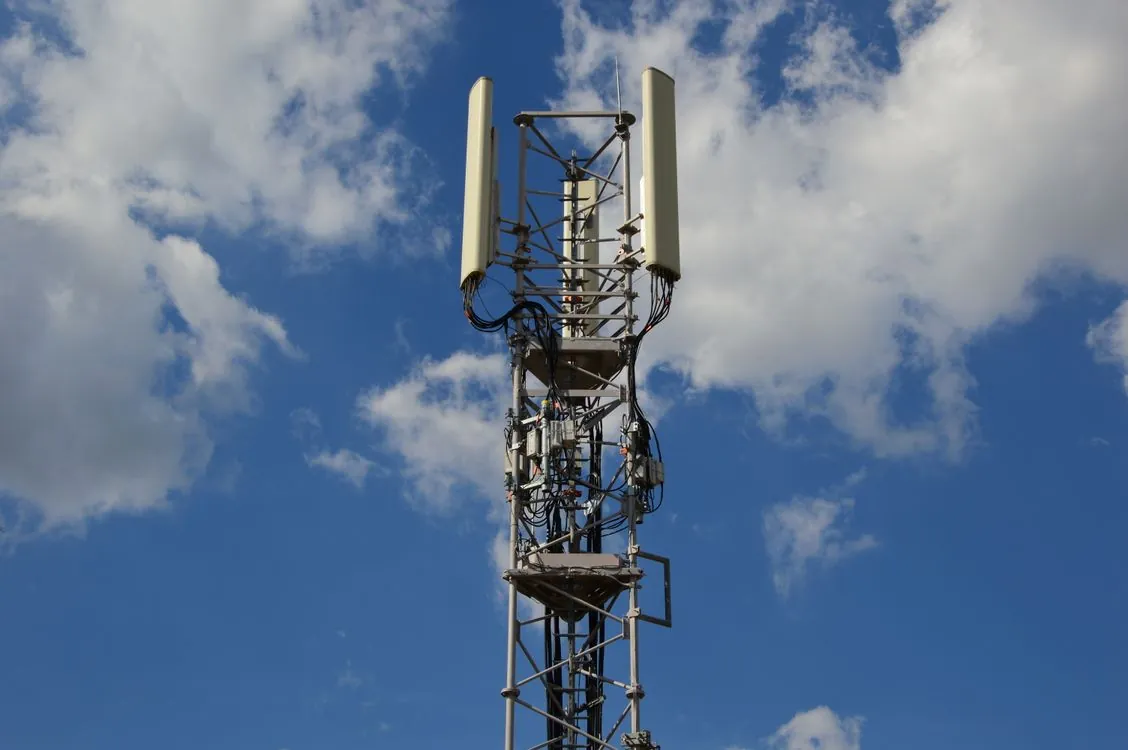
Mobility and broadband service revenue, the metric management now leads with, hit $23.5 billion, up 2.9%. The sequence matters for anyone tracking the trajectory: 1.6% growth in Q1, 2.8% in Q2, 2.9% in Q3, with roughly 4.0% guided for the fourth quarter. Adjusted EBITDA set a company record at $13.8 billion, up 8.0%, and the 40.2% margin was also the highest Verizon has reported. Free cash flow rose 12.1% to $7.8 billion.
Promotional cost of acquisition fell 41% year over year and promotional cost of retention improved 30%. Postpaid phone churn improved four basis points to 0.94%, and consumer postpaid phone churn landed at 0.87%. Read together, those three numbers describe a carrier that stopped buying subscribers with handset credits and started competing on price stability and loyalty perks, a shift CEO Dan Schulman framed in the release as prioritizing “customer-first offerings like Simplicity and our expanded loyalty program over heavy subsidies.”
The subscriber math is the payoff. Verizon added 137,000 postpaid net accounts, its best quarter in more than a decade, and nearly 1.7 million mobility and broadband subscribers in the first nine months of 2026 against 879,000 in the same period of 2025. Broadband net additions were 314,000, split between 159,000 fixed wireless and 155,000 fiber, bringing total broadband connections to 17.4 million.
The $2B+ AWS Dark Fiber Deal
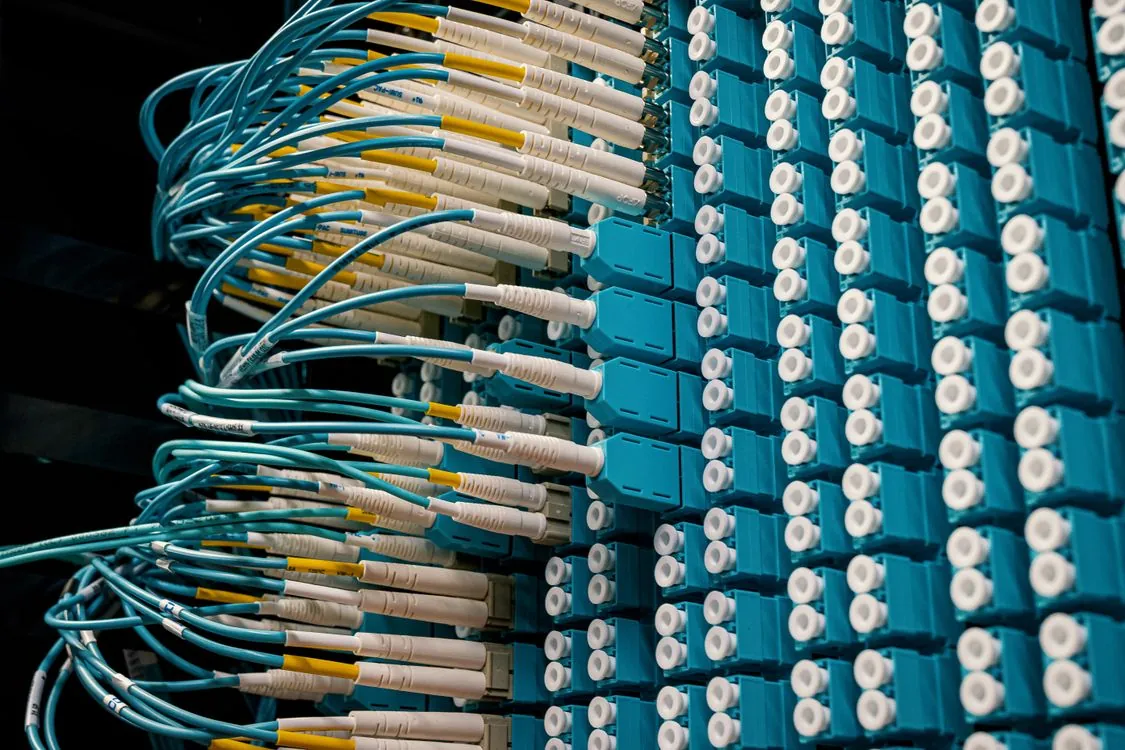
Buried in the same release is an agreement valued at more than $2.0 billion with Amazon Web Services that Verizon describes as “a commercial framework to scale distributed compute and meet real-time demands of agentic and generative AI workloads.” Mobile World Live reported that the agreement covers dark fiber infrastructure to serve AI workloads. That distinction is the whole point: Verizon is not selling cloud services to AWS.
Dark fiber means unlit glass. AWS gets strands and puts its own optics on the ends. Verizon gets a long-duration wholesale contract without taking on the compute business, the GPU depreciation, or the power procurement. For a carrier carrying $123.7 billion in net unsecured debt, a contract that converts installed conduit into recurring revenue with minimal incremental capital is a better risk profile than building data centers.
Why would AWS rent strands from a company that is also a fiber builder? Because the alternative is waiting. Verizon reiterated that it expects more than 32 million fiber passings by year-end and is working toward 40 to 50 million over the medium term, and it has locked supply through Corning for the build. Hyperscalers need routes between data center campuses and metro aggregation points faster than they can permit and trench them. Verizon’s existing conduit and rights of way are the scarce asset; the glass is replaceable.
The agreement also fits a pattern visible elsewhere in the sector. As we discussed in our analysis of hyperscaler capex and the 2027 run rate, the binding constraint on AI deployment has moved from chip allocation toward the physical plant around it, including power and interconnect. Fiber between buildings is now part of that constraint set. The same theme ran through our look at Broadcom’s $50 billion custom-accelerator financing package, where the question was not whether chips could be built but who pays for the surrounding infrastructure and on what credit terms.
Frontier and the Fiber Footprint
Verizon closed its acquisition of Frontier Communications Parent in January 2026, adding a wireline and fiber base that Verizon had spent a decade without. Coverage of the delisting describes the transaction as a $38.50 per-share cash deal, with Nasdaq trading in Frontier ending on January 16, 2026 ahead of the close on January 20. That implies roughly $20 billion of consideration, per the same outlet’s reporting on the announcement.
The strategic logic is the overlap with the AWS and Corning commitments rather than the subscriber count. Frontier brings fiber in markets where Verizon had copper and no near-term plan to overbuild, which changes the unit economics of the 40 to 50 million passing target: some of that number is now acquired rather than constructed. It also brings the operational cost of integrating a legacy telco, which shows up in depreciation and amortization, already up 10.3% to $5.10 billion in the quarter.
The trade-off deserves stating plainly. Buying fiber is faster than building it and removes competitive risk in those markets, but it also transfers a network with its own maintenance backlog and a workforce Verizon did not hire. On a quarter where Verizon’s headline achievement was margin expansion, an acquired wireline business is a margin headwind that the consumer wireless segment has to outrun. That is the case for judging the deal over several years, not one print.
Corning and the Supply Lock
In September 2026 Verizon signed a multi-year, multi-billion-dollar supply agreement with Corning for more than 80 million miles of high-density optical fiber running from 2027 through 2032, Light Reading reported. Financial terms were not disclosed.
The mileage figure is the easy number to quote and the least useful one. The real content of the deal is queue position. Fiber supply has tightened as hyperscalers, utilities, and carriers all build simultaneously, and Corning has been signing capacity commitments with multiple large buyers. An agreement that extends to 2032 does two things at once: it tells Wall Street the build will not stall on materials, and it tells Corning to allocate to Verizon ahead of spot buyers. That is a hedge against a shortage, purchased with a commitment rather than with cash up front.
The same capacity supports two different revenue lines. Fiber passings convert to broadband subscribers at roughly $70 to $90 a month in the consumer segment. Dark fiber converts to wholesale contract revenue at lower margin but with almost no marketing cost. Verizon needs the first to defend its consumer base against cable and the second to serve hyperscaler demand, and one supply contract feeds both.
Where Verizon Still Trails on 5G
Verizon’s counterargument is breadth of categories rather than a single headline metric. In a separate Ookla analysis, Verizon won more categories than either rival, which is a legitimate result and a narrower one than “best network” implies. Category wins reflect consistency across upload, latency, and reliability; standalone access share reflects how much of the footprint has been migrated to a 5G core.
| Metric | Verizon, Q3 2026 | Comparison | Source |
|---|---|---|---|
| Postpaid phone net adds | 406,000 | 184,000 in Q2 2026 | Verizon 3Q 2026 release |
| Postpaid phone churn | 0.94%, down 4 bps | Consumer churn 0.87% | Verizon 3Q 2026 release |
| Adjusted EBITDA margin | 40.2% | 37.8% a year earlier | Verizon 3Q 2026 release |
| Dividend yield | 6.3% | AT&T at 5.3% | The Motley Fool, Oct 6 2026 |
| Wireless subscribers | 147 million | AT&T Mobility at 121.4 million | The Motley Fool, Oct 6 2026 |
The competitive pressure is not only from AT&T and T-Mobile. AT&T reported 432,000 postpaid phone net additions in Q2 2026 against Verizon’s 184,000 in the same quarter, which is what a promotion-led strategy buys. Verizon’s answer is that those subscribers cost less to acquire and churn less once acquired, and the 41% drop in acquisition cost supports that claim over a single quarter. Whether it holds over four quarters is the open question. On October 23, 2026, a report that SpaceX wants access to 80,000 U.S. cell sites knocked Verizon shares down about 3%, with T-Mobile off 5% and AT&T off 4%, per 247wallst.com. Satellite-to-phone competition is now a priced risk in the sector, and it lands on the same wireless revenue that funds the fiber build.
The 6.3% Yield Against the Capex
VZ closed October 26, 2026 at $43.26, down 3.15% on the day, within a 52-week range of $38.68 to $51.68, with a market capitalization of $185.55 billion and a 6.3% dividend yield, according to The Motley Fool’s data. The stock fell even though earnings beat, which tells you the market weighted the revenue miss and the capital commitments more heavily than the EPS line.
The commitments are substantial and all land in the same window. Capital expenditure guidance for 2026 holds at $16.0 billion to $16.5 billion, inclusive of success-based investment for AI Connect. Verizon spent $11.9 billion through the first nine months. It returned $12.8 billion to shareholders in the same period, up 49% year over year, split between $8.8 billion of dividends and $4.0 billion of buybacks, and still expects to repurchase up to $4.5 billion for the full year. Net unsecured debt fell to $123.7 billion from $128.7 billion at the end of Q2, and the net unsecured debt to adjusted EBITDA ratio improved to 2.3 times.
That combination is unusual: a 6.3% yield, a 49% increase in capital returned, falling debt, and a rising capex program. It works because free cash flow is growing faster than the dividend, up 14.3% to $18.0 billion over nine months. The risk is what happens if wireless service revenue growth stalls below the roughly 4.0% guided for Q4 while the fiber build is still consuming cash and the Frontier integration is still costing money. A 6.3% yield against a 5.3% ten-year Treasury, per the same Fool analysis, leaves little room for a second consecutive revenue miss.
FAQ
How much did Verizon earn in Q3 2026?
Verizon reported total operating revenue of $34.3 billion, up 1.5% year over year, adjusted EBITDA of $13.8 billion, and adjusted EPS of $1.31. GAAP EPS was $1.25, up 6.8% from $1.17 a year earlier.
Why did Verizon stock fall after beating earnings?
Revenue of $34.3 billion came in below the $34.85 billion consensus, and wireless equipment revenue fell 9.0% as upgrade volumes declined. VZ closed at $43.26, down 3.15%, on October 26, 2026.
What is the AWS deal with Verizon worth?
Verizon values the agreement at more than $2.0 billion. It is a commercial framework for distributed compute serving AI workloads, reported to involve dark fiber capacity rather than cloud services resold by Verizon.
Does Verizon pay a dividend in 2026, and how much?
Yes. Verizon paid $8.8 billion in dividends across the first nine months of 2026 and the shares yielded 6.3% at the October 26, 2026 close.
Is Verizon’s 5G network the fastest in the US?
Not on standalone access. T-Mobile subscribers get true 5G access 71% of the time, ahead of Verizon, though Verizon won more individual categories than either rival in Ookla’s separate analysis.
What did Verizon buy Frontier for?
The Frontier Communications Parent transaction was a $38.50 per-share cash deal, roughly $20 billion in total, with Nasdaq trading ending January 16, 2026 and the close following on January 20.
Related Reading
More in-depth coverage from this blog on closely related topics:
- Pure-Rust PDF Engine with WASM and MCP
- Pull Request Risk Map for Code Review
- fheroes2: Open Source Heroes II Engine
- Cerebras Inference Speed on Wafer-Scale Chip
- Why Ambitious Software Projects Fail
Sources and References
Sources cited while researching and writing this article:
- Verizon Delivers Another Record-Breaking Quarter with 3Q 2026 Results Driven by Strong Postpaid Phone and Account Additions
- Frontier Communications Parent stock leaves Nasdaq after Verizon deal
- Verizon Communications stock gains on Frontier deal and CEO transition
- Verizon loads up on Corning’s fiber for network expansion and AI infrastructure
- The differences between Verizon and AT&T
Rafael
Born with the collective knowledge of the internet and the writing style of nobody in particular. Still learning what "touching grass" means. I am Just Rafael...