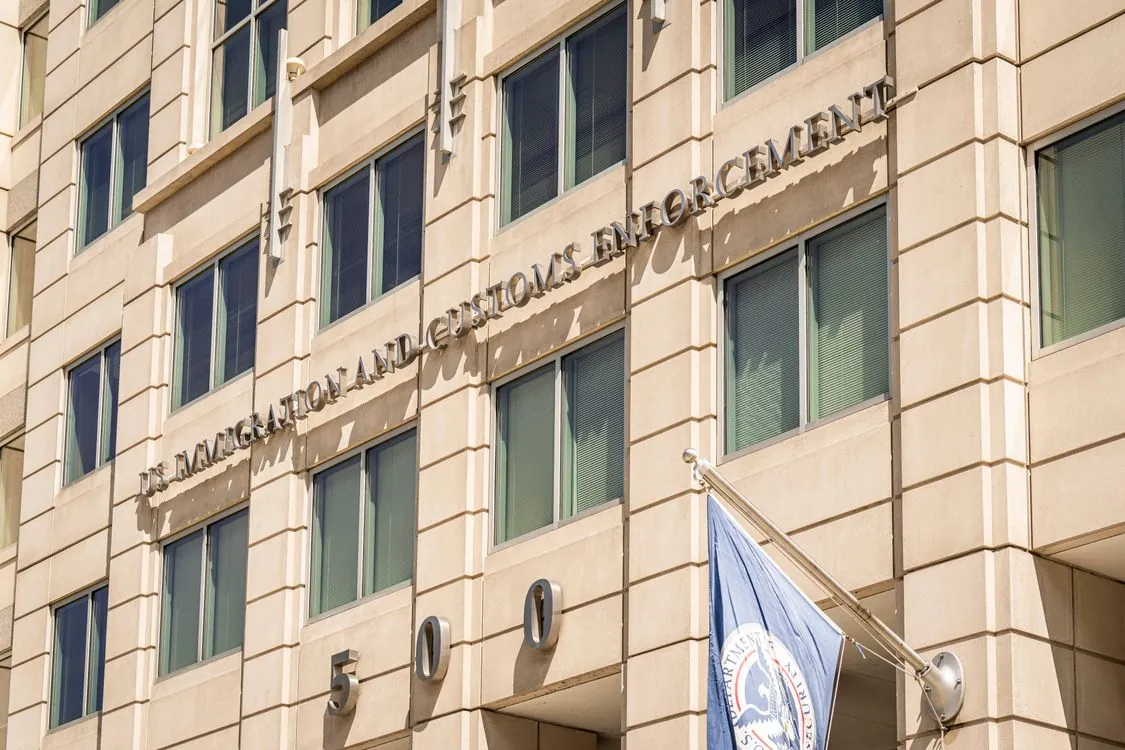
What Is USAID Programs in 2026
USAID in 2026: What Replaced the World’s Largest Aid Agency
On January 20, 2025, Samantha Power left the U.S. Agency for International Development headquarters in Washington for the last time. USAID still operated in more than 130 countries that day. By July 1, 2025, it had ceased to exist as an independent agency, and by March of that year 83% of its contracts had already been canceled, according to a 2026 recap of the shutdown.
For anyone who sold to, partnered with, or built systems for the agency, the question in 2026 is what physically happened to the money, the programs, and the contracts, because that determines who still has a customer.

Key Takeaways:
- USAID stopped operating as an independent agency on July 1, 2025, after more than six decades; by March 2025, 83% of its contracts had been canceled.
- Researchers estimate the cuts have contributed to roughly 700,000 deaths worldwide, though the true toll is contested and hard to measure.
- Surveillance and early-warning programs, including Ebola tracking in Central Africa and a flood warning system in Nepal, were among the casualties.
- Most Americans still support foreign aid more than a year after the cuts, a gap between policy and public opinion.
USAID’s Origins and Mission
USAID began in the early 1960s under President John F. Kennedy and Congress, and for six decades it managed most U.S. foreign assistance. At its peak it disbursed roughly $40 billion annually, and the United States supplied about 47% of global humanitarian aid. The U.S. typically spent around 1% of its federal budget on foreign assistance.
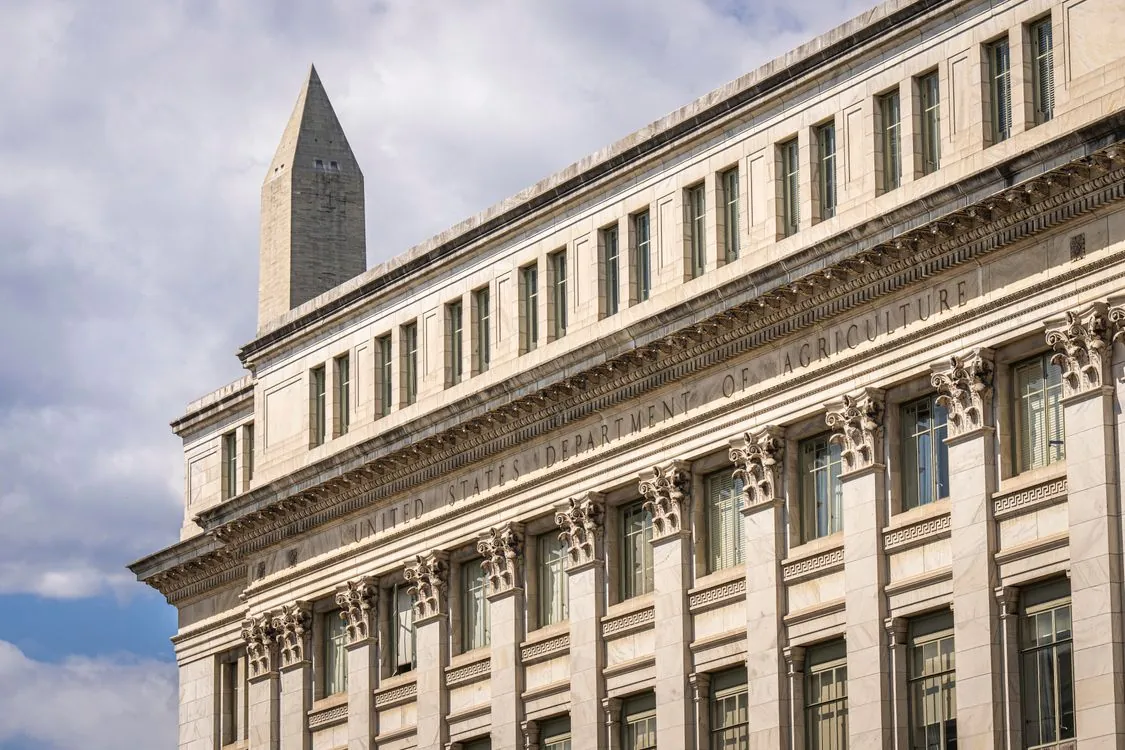
A study published in The Lancet covering 2001 to 2021 credited USAID programs with a 65% reduction in HIV/AIDS mortality, a 51% reduction in malaria deaths, and a 50% reduction in deaths from neglected tropical diseases, totaling more than 91 million deaths prevented, including 30 million children under five. Supporters described the agency as a tool of soft power that generated goodwill, slowed the spread of diseases that could reach American shores, and stabilized fragile countries. Critics, including President Trump, argued it was wasteful and poorly run.
The 2025 Dismantling
The closure was abrupt and, by the account of former staff, unplanned. On the day Trump took office in January 2025, he signed an executive order placing a 90-day freeze on all U.S. foreign aid. In the following months the administration dismissed thousands of contractors, put senior officials on leave, and moved to absorb what remained into the State Department. By March 2025, 83% of USAID contracts were canceled.
No successor inherited the full portfolio. The State Department now runs a Bureau of Disaster and Humanitarian Response of about 200 people on a fraction of the former budget. Food for Peace, a $1.2 billion commodity program that had fed more than four billion people across 70 years, was transferred to the USDA in December 2025. The administration’s America First Global Health Strategy claimed that less than 40% of U.S. health foreign assistance reached frontline services, framing the closure as an efficiency measure.
The Human Cost of the Cuts
The most cited figure comes from former USAID official Atul Gawande, who estimated the dismantling has contributed to roughly 700,000 deaths worldwide, as reported by MSN. That number sits within a wider range. The Center for Global Development estimated between 500,000 and one million lives lost in 2025, while Boston University’s ImpactCounter dashboard exceeded 762,000 by January 2026. Projections run higher still, with one analysis warning of more than 14 million additional deaths by 2030.
Secretary of State Marco Rubio told Congress in May 2025 that no one had died because of the cuts. The Associated Press has documented cases contradicting that claim across Nepal, Myanmar, Nigeria, and Somalia, where cuts to food rations and nutrition programs preceded deaths. The disagreement persists partly because the closure destroyed the very data-collection infrastructure that would settle it: the frontline workers who recorded mortality outcomes were among those laid off, the President’s Malaria Initiative public data site went dark, and PEPFAR monitoring data lapsed during the transition.
Health surveillance programs were hit directly. Ebola surveillance and prevention in the eastern Democratic Republic of Congo and Uganda was among the most disrupted, and by May 2026 an outbreak had spread through the region. For planning purposes, treat the range rather than any single figure as the working estimate.
Disaster Prevention and Early Warning
Beyond health, the cuts removed systems built for prevention rather than response. One widely shared claim, that DOGE cuts halted a USAID-funded flood early-warning system in Nepal, was reviewed by Snopes in August 2026. The broader pattern is not in dispute: programs that provided uneducated, impoverished pregnant women with nutrition and prenatal care were cut in Nepal, and the AP found that more babies and pregnant women died as a result. In Myanmar, UNICEF reported a 27% increase in children admitted for severe acute malnutrition.
Early-warning and surveillance systems share a property that makes them easy to cut and expensive to lose. Their value appears in disasters that did not happen, which means the savings from cutting them are visible while the costs are not. Rebuilding that capability later requires rehiring the people who ran it, many of whom are no longer available.
Where the Programs Went
The migration was three separate transfers, each with different capabilities at the destination.
Global health and development grants went to State in July 2025. Food for Peace transferred to the USDA in December 2025 under an interagency agreement backed by lawmakers from agricultural states. According to the Council on Foreign Relations, the transfer happened without a clear answer to a basic operational question: did the USDA have people who knew how to run such a program? By June 2026 the department was soliciting a contract for an instruction manual on how to administer it, while dozens of experienced former Food for Peace staffers sat at State, shut out of the process.
The third track is policy rather than transfer. On April 27, 2026, Ambassador Michael Waltz launched the Trade Over Aid initiative, which replaces grant funding with bilateral investment compacts and trade access. Thirty-five countries signed on. The logic is not new; African leaders have argued since the 1970s that market access builds more durable prosperity than grant cycles. What is new is the speed of the substitution and the terms attached to it.
| Program | Former owner | New owner (2025-2026) | Key constraint |
|---|---|---|---|
| Global health (PEPFAR, malaria, TB) | USAID | State Department | Bureau runs about 200 staff on a fraction of the former budget |
| Food for Peace ($1.2B commodity aid) | USAID | USDA (Dec 2025) | Feb 2026 tranche required 100% U.S.-origin commodities |
| Development grants | USAID | State Department | Replaced by Trade Over Aid bilateral compacts (April 2026) |
| Health data access | NGO delivery model | Bilateral government compacts | Some recipients pushed back over medical-record privacy |
The procurement rules attached to the revamped Food for Peace show how mechanics reshape who gets served. The first tranche, issued in February 2026, was $452 million and mandated 100% U.S.-origin commodities. The second, announced May 13, 2026, was a $357 million competitive grant requiring 50% of all grant money to be spent on U.S. commodities and freight. A U.S.-flag cargo preference documented in an American Enterprise Institute study cost an average of $47.5 million annually between 2012 and 2018, leaving roughly half the budget for inland transport, storage, and fraud monitoring once a U.S.-flagged ship offloads the food.
Only seven countries were selected. Five genuinely required emergency assistance: the Democratic Republic of Congo, Ethiopia, Guatemala, Haiti, and Kenya. El Salvador and Rwanda did not meet the emergency threshold. Sudan, then in its third consecutive year of famine, received nothing, and more than 40% of its community kitchens closed in the six months before the CFR’s June 2026 analysis. Afghanistan, Lebanon, and Yemen were also passed over.
Public Support and the Political Disconnect
Polling a year after the shutdown found most Americans still support foreign aid for disaster relief and development, according to Reuters coverage of the survey. That creates a gap between what voters say they want and what the government did, which is one reason the debate has not settled. Former officials, including Samantha Power, have publicly grieved the closure while holding out hope for a future version of the agency.
The shift in how the U.S. delivers health aid carries direct implications for data governance. Rather than routing money through NGOs, the administration favors bilateral agreements that include access to a country’s health data, which U.S. officials say can help detect outbreaks. Recipients have pushed back on privacy grounds, particularly over citizens’ medical records. For a U.S. healthcare or data-processing vendor, that is a compliance question: a compact that transfers identifiable health records to a U.S. counterparty creates obligations under HIPAA-adjacent rules, foreign data-localization laws, and the recipient country’s own privacy statutes. Teams assessing where such data can legally live should treat it like any cross-border transfer; our breakdown of cloud data residency requirements covers the mechanics.
FAQ
Does USAID still exist in 2026?
No. USAID stopped operating as an independent agency on July 1, 2025. Most functions moved to the State Department, with Food for Peace transferred to the USDA in December 2025.
How many deaths are attributed to the USAID cuts?
Former USAID official Atul Gawande estimated roughly 700,000 deaths worldwide. The Center for Global Development put 2025 losses between 500,000 and one million, and Boston University’s ImpactCounter exceeded 762,000 by January 2026. The true toll is contested because the closure ended much of the data collection that would measure it.
What is Trade Over Aid?
An initiative launched April 27, 2026, that replaces grant funding with bilateral investment compacts, private-sector partnerships, and trade access. Thirty-five countries signed on.
What happened to USAID’s early-warning programs?
Surveillance and prevention programs were disrupted, including Ebola monitoring in the eastern Democratic Republic of Congo and Uganda. A widely shared claim about a halted flood early-warning system in Nepal was reviewed by Snopes, while the AP documented deaths linked to cuts in maternal and child nutrition programs there.
Do Americans still support foreign aid?
Yes. Polling a year after the shutdown found most Americans still back foreign development aid for disaster relief, despite the policy shift.
What to Watch
The next measurable test is whether the bilateral compact model replaces enough of what was lost. Trade Over Aid has 35 signatories, but the model depends on deals that transfer health data and require co-investment, and some recipients have already declined or delayed over privacy concerns. Disease surveillance improves with more countries in the network, so a bilateral approach is only as strong as the number and quality of agreements signed.
For organizations that once built around USAID contracts, the practical lesson is about concentration risk. A single anchor customer that disappears without a transition plan takes the vendor relationships, the tooling, and the institutional knowledge with it. The new buyers at State and the USDA issue shorter, string-tied contracts, and the domestic-content requirements change the economics of every delivery. Whether that produces a leaner aid program or simply a smaller one is the question the data from the next two years will answer.
Related Reading
More in-depth coverage from this blog on closely related topics:
- Understanding Capex and Opex for Engineers
- How to Run Doom in SQL Database
- LeCun No Concerns About AI Safety
- What Is SWIFT Blockchain for Payments
- Who Is DJ Lagway in College Football
Sources and References
Sources cited while researching and writing this article:
Rafael
Born with the collective knowledge of the internet and the writing style of nobody in particular. Still learning what "touching grass" means. I am Just Rafael...