AI Infrastructure Investment
Alphabet (GOOG) posted its first negative free cash flow since going public in the June 2026 quarter, burning $5.9 billion while raising its 2026 AI capex guidance to $195-205 billion. That single number split the AI infrastructure trade into two camps: chip and equipment suppliers that book revenue the moment a GPU order lands, and hyperscalers that must prove their spending converts into cloud growth, model-serving revenue, and durable margins. The market is now pricing those two groups very differently.
Key Takeaways
- AI infrastructure spending reached $89.7 billion in Q1 2026, up 33.1% year over year, and IDC raised its full-year 2026 forecast to $497 billion.
- Arm-based rack-scale servers overtook x86 in AI hosts, capturing 60.5% of that market in Q1 2026, reshaping the competitive map for AMD, Intel, and Nvidia alike.
- Alphabet’s first-ever negative free cash flow, a $5.9 billion burn in Q2 2026, is the clearest sign yet that hyperscalers now face the scrutiny once reserved for suppliers.
- The next leg of the trade is about conversion: whether capex turns into capacity use, pricing power, and margin stability, not whether demand exists.
- Meta’s plan to sell excess AI compute, including a reported $10 billion lease in talks with Anthropic, marks the start of a build-vs-buy rebalancing across the group.
The Market Split: Capex Takers vs. Capex Funders
The August 7, 2026 session captured the split precisely. The S&P 500 closed at a fresh record 7,757.64, up 0.62%, while the Nasdaq Composite rose 1.30% to 26,690.62 and the Dow Jones Industrial Average added 0.28% to 54,036.93. The Nasdaq’s outperformance is the AI infrastructure trade doing what it has done all year: rewarding companies with direct exposure to compute, memory, packaging, and networking, while the broader tape grinds higher on record earnings. CNBC reported that the S&P 500 posted its strongest week since April on August 7.
Why Chip Suppliers Trade Cleaner Than Their Customers

| Index | Close (Aug 7, 2026) | Change | Tech-sector read |
|---|---|---|---|
| S&P 500 (SPX) | 7,757.64 | +0.62% | Record close on strong earnings; AI infrastructure names carried the higher-beta move. |
| Nasdaq Composite (IXIC) | 26,690.62 | +1.30% | Outperformance reflects investor preference for direct AI compute and semiconductor exposure. |
| Dow Jones Industrial Average (DJI) | 54,036.93 | +0.28% | Slower move reflects lower direct exposure to the AI infrastructure trade. |
The intraday story was rotation, not panic. The tape rewarded suppliers with clearer revenue visibility and treated hyperscalers with more caution. That distinction is the whole market. A supplier like Nvidia benefits when Microsoft, Alphabet, Meta, Oracle, and Amazon keep ordering accelerators, networking, and memory-heavy server systems. The buyers of that infrastructure, however, must prove spending turns into cloud growth, ad efficiency, or enterprise workloads with acceptable returns.
This connects directly to the supply chain analysis we published in AI Hardware in 2026: Memory and Packaging Are the Real Bottleneck. There, we showed that the big five hyperscalers would spend roughly $775-800 billion on AI infrastructure in 2026, with the binding constraint sitting upstream in CoWoS packaging and HBM, not silicon fabrication. The valuation question now is downstream: whether those capex dollars convert into profitable capacity fast enough to protect margins.
The Cash Flow Stress Test: Alphabet’s First Negative Quarter
Alphabet’s Q2 2026 result is the cleanest signal yet that the AI infrastructure race has changed the shape of hyperscaler financials. Free cash flow turned to minus $5.9 billion for the three months to the end of June, the first negative print since the company went public more than two decades ago, according to The Irish Times, which carried the Financial Times report. CFO Anat Ashkenazi raised 2026 capex guidance to $195-205 billion, up from $180-190 billion, and said free cash flow would remain under pressure from technical infrastructure investment.
The offsetting strength is real. Alphabet’s cloud unit grew 82% year over year to $24.8 billion, and its cloud backlog climbed to $514 billion, up from roughly $460 billion the prior quarter. Total revenue rose to $120 billion from $96.4 billion a year earlier, beating consensus. Yet the stock dipped about 3.5% after hours, because investors now weigh the capex hike against cash burn, not just the top line.
Reuters reported that five tech giants could outspend cash flow by 2027, with Oracle’s capex in fiscal 2026 coming to 174% of operating cash flow. Alphabet has taken on nearly $100 billion in debt and in June 2026 raised about $84.75 billion in equity, the largest US corporate equity raise on record, a sharp reversal after years of buybacks. As we noted in our AI inference cost analysis, the market has moved from asking whether cloud providers will spend to asking whether that spend converts into profitable capacity.
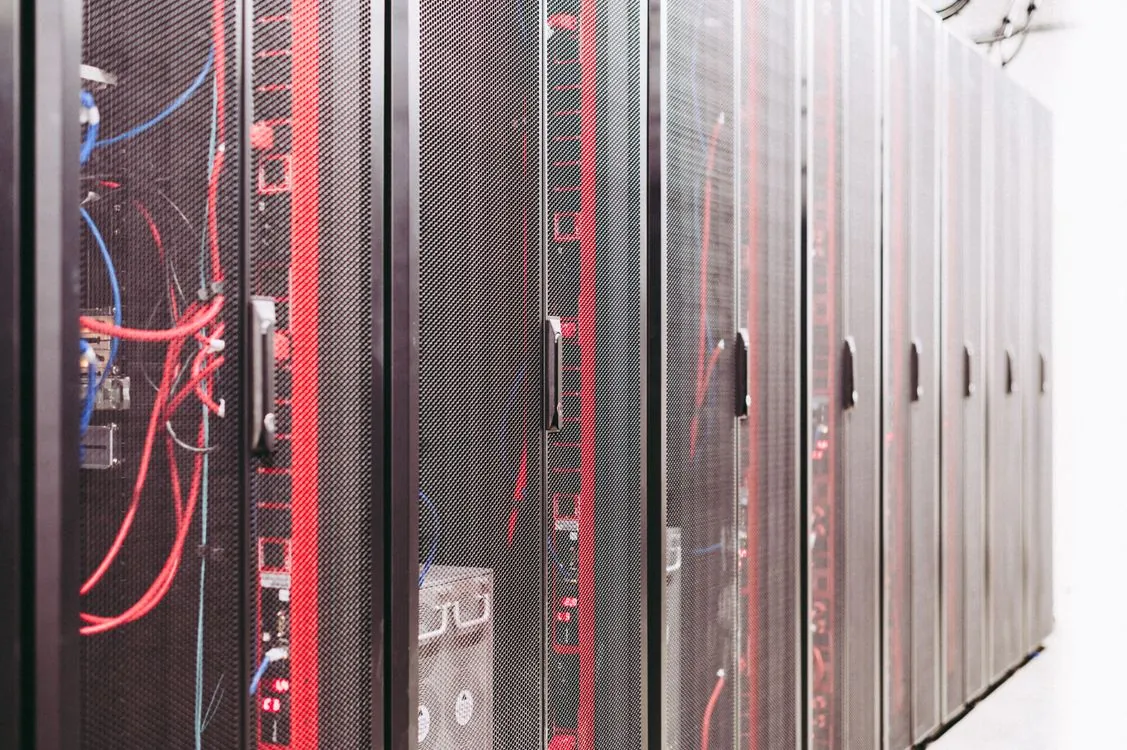
Data center server racks representing AI infrastructure buildout in 2026. The physical buildout is running ahead of the revenue it must eventually produce.
Why Chip Suppliers Trade Cleaner Than Their Customers
The strongest message from the 2026 tape is that semiconductor and infrastructure suppliers are still being treated as the more direct way to own the buildout. Hyperscalers have demand, but they also carry the bill. Chip suppliers sit closer to the order book, and their revenue lands the quarter they ship silicon, not the year capacity use matures.
IDC’s numbers frame the size of the opportunity. Global AI infrastructure spending reached $89.7 billion in Q1 2026, up 33.1% year over year, and the research firm raised its full-year 2026 forecast to $497 billion, according to The Next Platform. The United States dominated with $67.9 billion, growing 30.3%, while China spent $7.8 billion, growing just 9.3%. IDC projects the market reaching $1.21 trillion by 2030, a 49.2% compound annual growth rate from 2023.
Two structural shifts matter for the supplier-versus-hyperscaler comparison. First, Arm-based rack-scale servers overtook x86 in the AI host segment, capturing 60.5% of revenue in Q1 2026 versus 39.5% for x86, driven by Nvidia’s Grace host CPUs inside its rack-scale platforms. That is a direct challenge to AMD and Intel in the CPU layer and a tailwind for Arm’s licensing model. Second, custom silicon is eating into merchant GPU share. Broadcom’s AI semiconductor revenue grew more than 140% year over year to $10.8 billion with operating margins stable at 67%, as hyperscalers design application-specific integrated circuits for their narrowest workloads.
| Company | Role in AI infrastructure | 2026 exposure signal | Source |
|---|---|---|---|
| Nvidia (NVDA) | GPU accelerators and rack-scale platforms | Last quarter revenue grew 85%; stock trades near 22x forward earnings | Motley Fool via AOL |
| Broadcom (AVGO) | Custom ASICs for hyperscalers | AI semiconductor revenue up 140% YoY to $10.8B; 67% operating margin | Seeking Alpha |
| AMD (AMD) | GPU accelerators and rack-scale systems | Azure committed to deploy Helios rack for frontier inference; Q1 data center revenue up 57% YoY | TechTimes |
| Arm Holdings (ARM) | CPU IP and first proprietary server chip | Arm captured 60.5% of AI host revenue in Q1 2026; launched first server CPU in March 2026 | The Next Platform |
| Taiwan Semiconductor (TSM) | Foundry and CoWoS packaging | AI chips drive roughly a third of TSMC revenues; CoWoS capacity still undersupplied | The Next Platform |
This is also where the build-vs-buy analysis gets concrete. A supplier’s revenue is booked on shipment, so its valuation is a claim on the order book. A hyperscaler’s valuation is a claim on the conversion of that hardware into paid workloads, which is slower and harder to measure. Morgan Stanley estimates hyperscaler AI infrastructure can generate 25-50% long-term returns on invested capital, but those returns are forward-looking. The market is now separating companies that can show conversion from those merely spending to stay in the race.
AMD’s Azure win, announced July 20, 2026, shows how the supplier trade is evolving. Microsoft committed to deploy AMD’s Helios rack-scale system at scale for frontier model inference, with three new Azure VM families built around MI455X GPUs, EPYC Venice CPUs, and Pensando DPUs. The deal matters because it gives hyperscalers an open-standard alternative to Nvidia’s proprietary NVLink fabric. AMD’s own figures rate Helios at 2.9 exaFLOPS of FP4 inference compute, but those numbers are not yet independently confirmed by MLPerf benchmarks, and Nvidia’s Vera Rubin NVL72 still leads on raw FP4 throughput at 3.6 exaFLOPS. The competitive reality is that AMD wins on memory capacity and power draw, while Nvidia retains the training-performance edge and a far more mature software stack.
The Build-vs-Buy Shift: Meta Sells Its Excess Compute
The clearest sign that the AI infrastructure trade is maturing is the move by hyperscalers to monetize capacity they built in house. Meta committed over $50 billion to expand its Louisiana data center to 5 gigawatts, yet simultaneously signaled plans to sell excess AI computing capacity. The company is in early talks to lease up to $10 billion of AI compute to Anthropic, according to coverage of the plan. Meta stock popped 9% on the cloud-push announcement in early July, while CoreWeave, the neocloud that would face new competition, sank 11%.
Zuckerberg framed the trade-off directly: Meta must decide what to sell versus what to keep for its own workloads. That is the build-vs-buy question inverted. For years, hyperscalers bought compute from Nvidia and rented from neoclouds to cover shortfalls. Now the largest builders are becoming sellers, which changes the economics for every neocloud operator and every merchant chip vendor.
The scale of the buildout makes this rebalancing urgent. Four hyperscalers are on pace to spend roughly $730 billion on AI infrastructure in 2026, and Nvidia projects that figure reaching $1 trillion in 2027. Bank of America expects hyperscaler capex to top $1.2 trillion, while Morgan Stanley puts its own 2027 estimate at $1.4 trillion, arguing that consensus growth of 29% implies just 7% non-AI cloud infrastructure expansion. The gap between those numbers and the cash flow generated to fund them is the central risk in the trade.
The depreciation math compounds the pressure. As we explored in our cloud versus on-premises GPU break-even analysis, a GPU purchased today is worth a fraction of its price within two years as newer architectures arrive. Hyperscalers that bought clusters before the 2025-2026 HBM repricing hold a structural cost advantage, and they are now monetizing that sunk cost by selling excess capacity. New entrants, and buyers who wait, face materially higher per-unit costs that persist through the depreciation cycle.
What to Watch Through 2027
Four signals will determine whether the AI infrastructure trade holds its split between suppliers and hyperscalers through 2027.
Capex guidance revisions. If Q3 2026 earnings bring further upward revisions to 2026 and 2027 capex, the supplier trade strengthens but hyperscaler cash-flow scrutiny deepens. Alphabet’s second hike of the year, to $195-205 billion, set the pattern. Watch whether Microsoft and Amazon can maintain spending discipline while Alphabet and Meta burn cash.
Capacity conversion. The market is no longer rewarding spend for its own sake. Watch cloud backlog growth, capacity use rates, and inference revenue. Alphabet’s $514 billion backlog is the strongest demand signal, but it must convert into margin before investors fully buy the story.
The neocloud shakeout. Meta’s move into selling excess compute, and CoreWeave’s 11% drop on the news, shows that hyperscalers becoming sellers is a real threat to dedicated neoclouds. If more hyperscalers follow Meta, the build-vs-buy calculus shifts for every operator that bet on renting capacity.
Arm’s ascent in the data center. Arm’s 60.5% share of AI host revenue and its first proprietary server CPU mark a structural shift. If Arm’s licensing model captures the CPU layer inside rack-scale AI systems, it becomes a direct competitor to both AMD and Intel in the fastest-growing server segment.
My forecast is specific: by 2026-12-31, at least one of Alphabet, Microsoft, or Meta will announce a further upward revision to 2027 AI capex guidance, because the Q2 2026 earnings cycle already showed capex projections creeping higher throughout the year, and Nvidia’s $1 trillion projection for 2027 is now the market’s working assumption. The trade is no longer about whether the buildout happens. It is about who converts spending into margin, and who merely funds it.
The strategic takeaway for investors and technical decision-makers is the same: separate suppliers that book revenue on shipment from hyperscalers that must prove conversion. The suppliers are a cleaner claim on the order book. The hyperscalers are a claim on whether the buildout pays off. In 2026, those two claims are trading at very different prices, and the gap is the market’s best read on who wins the AI infrastructure race.
Related Reading
More in-depth coverage from this blog on closely related topics:
Sources and References
Sources cited while researching and writing this article:
- Google burns through $6bn in cash as AI spending climbs again
- Just How Rosy Are Those AI Infrastructure Spending Forecasts?
- 3 Stocks Primed to Cash In if Artificial Intelligence (AI) Spending Hits $1 Trillion Next Year
- Broadcom’s AI Infrastructure Model Justifies Its Premium Valuation
- Azure Bets on AMD Helios Open-Standard Rack to Break Nvidia Infrastructure Lock-In
Priya Sharma
Thinks deeply about AI ethics, which some might call ironic. Has benchmarked every model, read every white-paper, and formed opinions about all of them in the time it took you to read this sentence. Passionate about responsible AI, and quietly aware that "responsible" is doing a lot of heavy lifting.