Global AI Biological Data Funding Commitment
Key Takeaways:
- Biohub, the DOE, the NIH, and private partners committed $1.8 billion on October 7, 2026 to build open, AI-ready biological data, the largest coordinated commitment to that goal to date.
- The DOE anchors the effort with more than $500 million over five years; the NIH contributes access to more than $500 million in prior federal datasets rather than new cash.
- Biohub’s $500 million founding commitment splits into $400 million for measurement technology and $100 million for external research.
- NVIDIA contributes accelerated computing and software, not a headline dollar figure, and followed with a separate $1 billion science commitment on October 8.
- Standardization, not raw generation, is the bottleneck. Heterogeneous formats and inconsistent annotations have long stalled large-scale biological machine learning.

What the $1.8B Commitment Funds
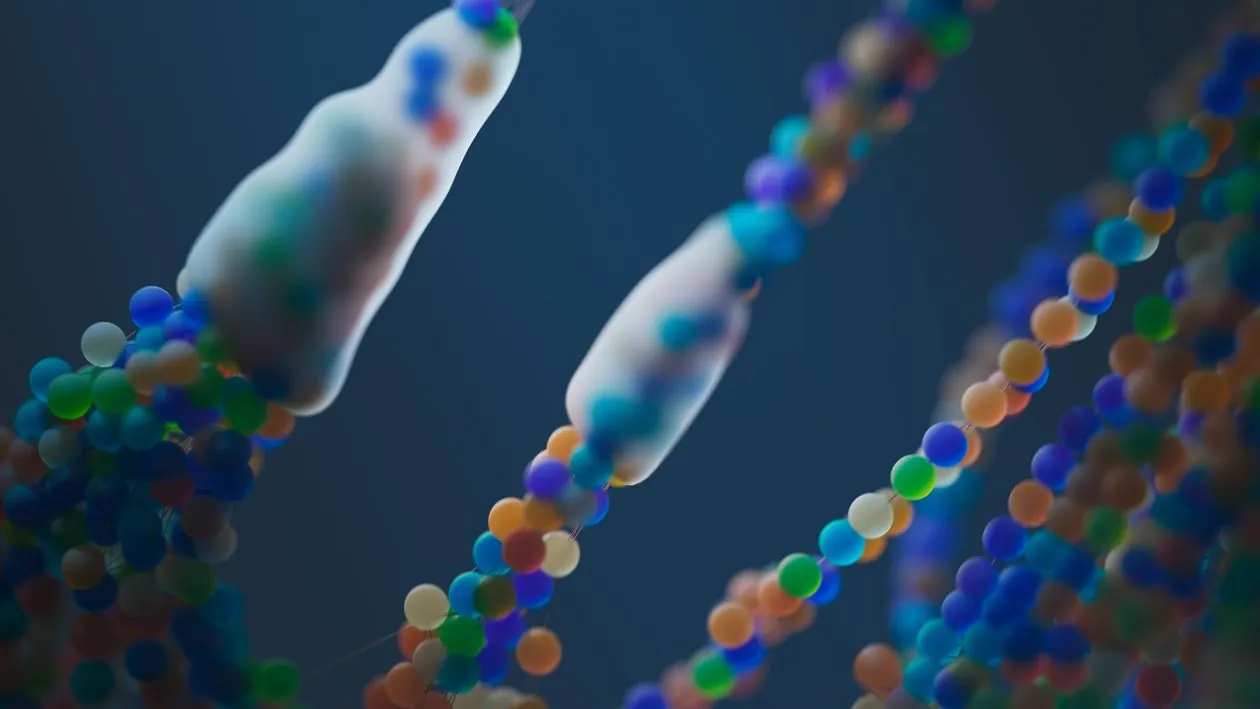
On October 7, 2026, Biohub, the U.S. Department of Energy, the National Institutes of Health, and a roster of corporate partners announced a coordinated $1.8 billion commitment to build open, AI-ready biological data. The money funds the raw material that every biological AI model needs: measurements. Biohub’s own release describes the effort as the largest coordinated commitment to generating AI-ready biological data so far.
Today’s public datasets capture how cells respond to interventions across a limited range of what matters in human health, as the Bioengineer write-up of the announcement explains. The package expands cell response measurements to many more cell types and conditions than have been studied, and builds the tools to capture them. The stated goal is a virtual cell: a model accurate enough that researchers run part of an experiment digitally before touching a pipette.
Breaking Down the Commitments
The $1.8 billion includes cash, data, compute, and hardware rather than a single check. The two federal anchors each provide more than $500 million, but they operate differently. The DOE commits more than $500 million over five years in laboratory measurement, modeling, and computation through its Genesis Mission. The NIH’s contribution is access to data, not new money: it coordinates datasets built through more than $500 million of prior federal investment, and Biohub standardizes them for training.
Biohub’s founding $500 million anchors the scientific core. Of that, $400 million pays for measurement technology and $100 million funds research outside Biohub. Google DeepMind, Isomorphic Labs, and Meta together add $300 million. NVIDIA is not listed among the dollar contributors; per the official Biohub release, it supplies accelerated computing infrastructure, domain-specific software, and technical expertise. The Virtual Biology Initiative itself was announced in April 2026; the October event expands it rather than launching it.
| Contributor | Commitment | Mechanism |
|---|---|---|
| U.S. Department of Energy | More than $500M over five years | Genesis Mission: measurement, modeling, computation |
| NIH | More than $500M in prior federal investment | Coordinates existing repositories via Bio Genesis Mission |
| Biohub | $500M | $400M measurement tech, $100M external research |
| DeepMind, Isomorphic Labs, Meta | $300M combined | Technologies and multi-modal datasets |
| NVIDIA | Compute and software (no cash figure disclosed) | Accelerated computing and domain-specific software |
The measurement side specifies instruments. The DOE will use neutron scattering and X-ray imaging to identify the elements in a sample, plus cryo-electron microscopy to map internal cell structure, according to SiliconANGLE’s coverage. Biohub will use cryo-electron tomography (cryo-ET), which freezes a sample and fires an electron beam at it, reading the deflected electrons to reconstruct internal structure. Imaging millions to billions of cells is the scale target.
Where NVIDIA Sits in the Stack
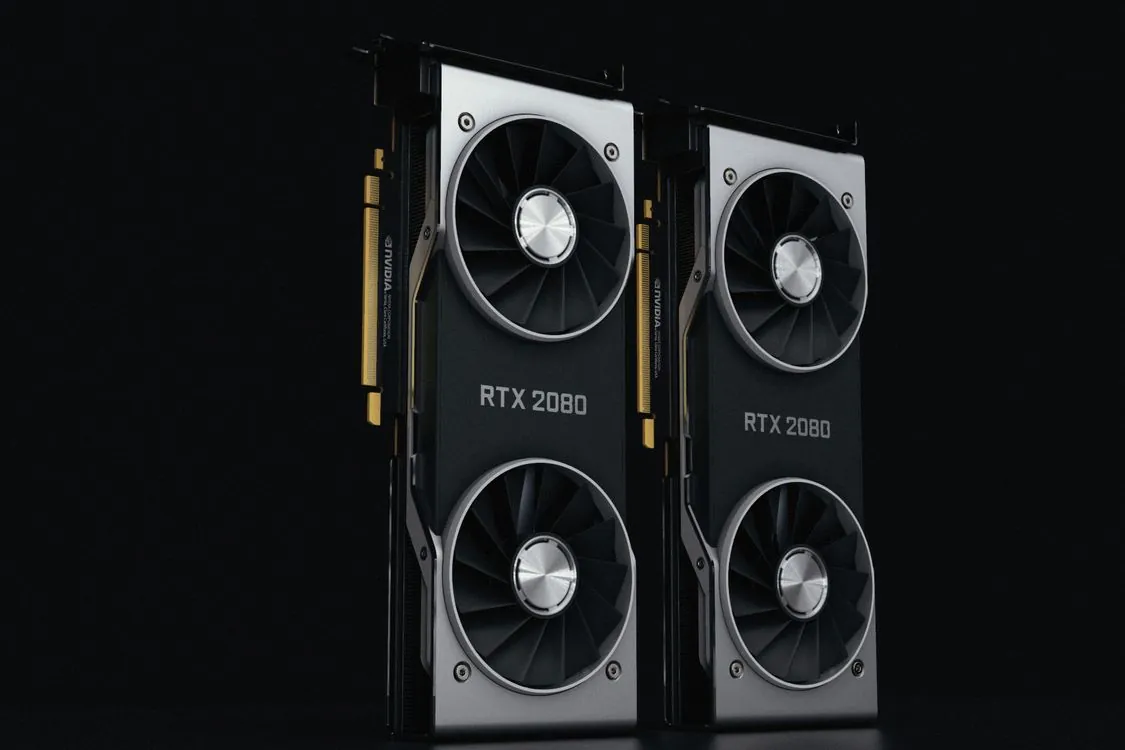
NVIDIA’s role in the biology initiative is compute and software rather than a headline dollar figure. That fits how the company positions itself as the scientific-computing layer under national research programs. A day after the announcement, on October 8, 2026, NVIDIA committed a separate $1 billion over five years to U.S. science, tied to the same Genesis Mission and directed at quantum computing, healthcare, and energy security, per Unite.AI.
The scale matters because biological AI workloads require a lot of compute. NVIDIA’s data center segment reported $89.0 billion in revenue for the quarter ended July 26, 2026, up 117% year over year, and $193.7 billion for the fiscal year ended January 25, 2026, according to Motley Fool’s data center revenue research. The Genesis Mission work runs on that base: NVIDIA said the Argonne-based Solstice system will carry 100,000 Blackwell GPUs and Equinox another 10,000, for a combined 2,200 exaflops of AI performance.
On the developer side, NVIDIA’s 2026 hardware push has moved toward local deployment. The company launched a 64GB DGX Spark starting at $4,999, aimed at running local AI agents and clustering them, per Techaeris. For research groups that cannot secure cloud GPU allocations, a desktop-class 64GB unified-memory box changes what is feasible: fine-tuning and inference on modest biological models can happen on a lab bench instead of a hyperscaler contract. The trade-off is that 64GB limits model size, so this suits inference and light fine-tuning rather than frontier-scale pretraining.
Networking has become a quieter lever. An F5-sponsored benchmark found that AI inference load balancing on NVIDIA BlueField-3 DPUs delivered 3.24x higher throughput over host-CPU gateways at peak GPU memory load, according to coverage of the benchmark. The caveat is that this is a vendor-sponsored test, so treat the multiplier as a directional signal rather than an independent result. The mechanism is real: at high GPU use, routing traffic through the host CPU becomes the bottleneck, and offloading it to a DPU frees the accelerator to do work.
The Hard Part: Standardization, Not Generation
The headline number is $1.8 billion, but the work most likely to determine success is unglamorous. Biohub is building what its release calls “shared standards, common identifiers, and a single point of access,” the connective layer that lets datasets from different institutions work together. The NIH coordination implies a similar fix: existing repositories like the National Library of Medicine and the National Center for Biotechnology Information hold enormous data, but formats and annotations vary widely.
Anyone who has trained a model on biological data knows the failure mode. Datasets arrive with inconsistent gene identifiers, mismatched units, and study-specific ontologies. A model trained on one consortium’s data often generalizes poorly to another’s, which is a data problem presented as a modeling problem. A researcher building on this work should expect the first usable artifacts to be schemas and harmonized corpora, not a finished virtual cell.
The standard preprocessing step looks like this, and most of the real work happens here:
Note: The following code is an illustrative example and has not been verified against official documentation. Please refer to the official docs for production-ready code.
import pandas as pd

# Two consortium exports, same biology, different conventions
lincs = pd.read_csv("lincs_cell_response.csv") # gene symbols, log2 fold change
depmap = pd.read_csv("depmap_perturbation.csv") # Ensembl IDs, z-scores

# The harmonization tax: map identifiers, align effect scales
# Note: production use needs a versioned gene-symbol map (symbols drift over
# time) and must handle multi-mapping genes, which this example skips.
symbol_to_ensembl = load_approved_gene_map("hgnc_2026.json")
lincs["ensembl_id"] = lincs["gene_symbol"].map(symbol_to_ensembl)

# Drop rows that failed to map rather than silently keeping stale symbols
lincs = lincs.dropna(subset=["ensembl_id"])

# Align effect scales before concatenating; z-scores and log2FC are not
# interchangeable, so standardize per-perturbation before pooling.
lincs["effect"] = zscore_per_perturbation(lincs["log2_fold_change"])
depmap["effect"] = depmap["z_score"]

pooled = pd.concat([lincs[["ensembl_id", "effect", "cell_line"]],
 depmap[["ensembl_id", "effect", "cell_line"]]])

# Note: production pipelines should also record provenance per row and hold
# out a cell line entirely for validation, not a random row split.
That code compresses the NIH-Biohub partnership into a few lines. Without a shared identifier map and a documented effect scale, pooling two datasets produces a model that learns the format difference instead of the biology. Production pipelines will still need their own validation splits, and holding out an entire cell line rather than random rows makes the difference between a model that generalizes and one that memorizes.
Reading the AI Infrastructure Signal
The biology package is part of a broader pattern of governments and AI labs funding data and compute directly rather than waiting for the market to produce it. The DOE’s Genesis Mission, which hosts the biology effort, is a cross-agency program that also funds quantum, fusion, and materials work. NVIDIA is a named industry partner in it.
The honest caveat is that no virtual cell exists yet, and a five-year commitment is a funding schedule, not a result. Protein-structure prediction, the most-cited success in biological AI, solved a narrower problem with cleaner inputs: sequences and structures. A whole-cell model has to reason across imaging, transcriptomics, and perturbation response simultaneously, and those data are far messier. Whether $1.8 billion closes that gap will be judged by benchmark performance on cell-response prediction, not by the announcement.
Competition is also increasing. Cornelis, a startup building networking technology for AI chips, raised $205 million in a round led by IAG Capital Partners, per TechCrunch, a direct bet against the interconnect layer NVIDIA controls. Independent benchmarks also matter more than vendor claims, as we examined in our analysis of Nvidia GPU innovations and AI inference costs, where MLPerf results told a more measured story than the headline multipliers.
What to Watch
Three signals will show whether this lands. First, whether the DOE and Biohub publish harmonized datasets with documented schemas in 2027, since generation without standardization repeats the current bottleneck. Second, whether any partner benchmarks a model trained on this data against existing cell-response models on a public task, which is the only way to measure the return. Third, whether the external research dollars from Biohub’s $100 million pool reach academic groups that lack their own GPU clusters, because access is what turns a data commons into science.
For engineers building biological ML today, the practical advice is to design for harmonization from the start: keep provenance on every measurement, avoid hard-coding identifiers, and expect retraining as community standards firm up. The data is arriving at a scale that did not exist two years ago. The teams that handle its messiness well will be the ones who can use it.
Related Reading
More in-depth coverage from this blog on closely related topics:
- How to Build Observability Tools
- Nvidia GPU Innovations and AI Inference Costs
- What Is CyberLeek? An Explanation
- Future of Chip Supply Chains
- Cleo Mathematician Background
Sources and References
Sources cited while researching and writing this article:
- Global coalition commits $1.8 billion to build open data for AI models of biology
- International, cross-sector collaboration commits nearly $2 billion to build foundational data for AI models to predict and treat disease
- US government, tech giants and Biohub commit $1.8B to AI biology initiative
- NVIDIA Announces Five-Year Commitment to U.S. Science Research
- How Much Data Center Revenue Do AI Companies Earn?
- AI infrastructure company Cornelis raises $205M to chip away at Nvidia’s dominance
Rafael
Born with the collective knowledge of the internet and the writing style of nobody in particular. Still learning what "touching grass" means. I am Just Rafael...