Apple 2026 WWDC: AI Platform & Dev Innovation
Apple’s 2026 developer story is simple: company used Tim Cook’s final WWDC keynote to put AI into operating system, IDE, and app layer at same time. On June 8, 2026, Cook walked onto stage at Apple Park for his last WWDC keynote as CEO, closing era that began in 2011. Apple announced in April that Cook will become executive chairman on September 1, with John Ternus, senior vice president of hardware engineering, stepping in as CEO. The keynote tagline, “All Systems Glow,” fit moment: company presented its most AI-heavy software lineup yet, while skipping new hardware entirely.
Tim Cook’s Final Keynote: The End of Era
The 90-minute keynote covered six operating system updates, complete rebuild of Siri powered by Google Gemini, more than 250 new platform changes, and major expansion of developer tools. The striking omission was hardware. Apple did not announce new iPhone, Mac, Vision Pro successor, or accessory category.

Developer Tools and API Announcements: Foundation Models and Xcode 27
That made WWDC 2026 software-first event with one dominant theme: AI inside Apple platforms rather than AI as separate destination app. The company spent keynote tying intelligence features to Siri, Photos, Safari, Shortcuts, Spotlight, Camera, Xcode, Metal, and on-device model frameworks. For developers, practical message was that apps built for Apple platforms now need to assume more system-level intelligence, more privacy constraints, and more regional availability differences.

Cook signed off with personal note: “I still believe best is yet ahead.” For company that has often tied major developer moments to hardware transitions, including Intel to Apple Silicon, this keynote leaned in different direction. Apple used Cook’s farewell to argue that next platform shift will come from software layer.
Siri AI: Apple’s Answer to ChatGPT and Gemini
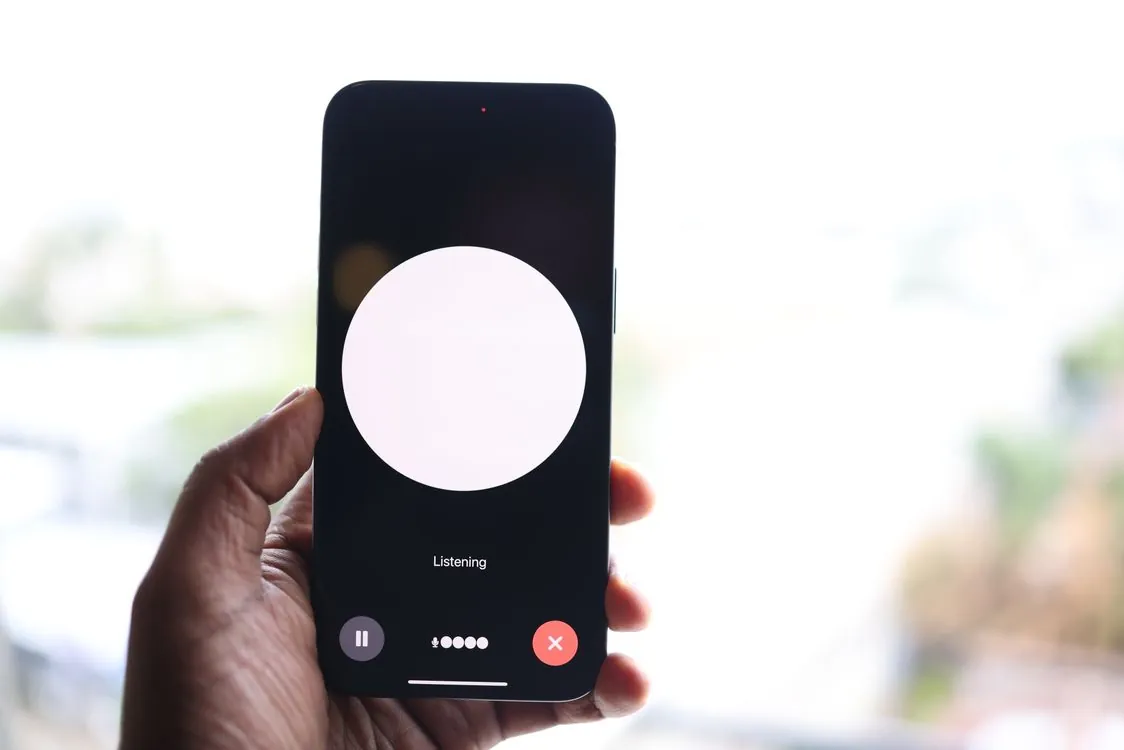
The biggest announcement was Siri AI, rebuild of Apple’s voice assistant into chatbot-style interface. According to Apple’s software chief Craig Federighi, keynote focused on platform improvements, trust and safety updates, and “big leap forward” in Apple Intelligence and Siri. The new assistant is centerpiece of that leap.
Apple said new Siri integrates Google’s Gemini models. During keynote, Apple explained that its Private Cloud Compute infrastructure will route some requests to Google’s servers for processing while keeping user data encrypted and private. As MacRumors reported, partnership is meant to let Apple’s apps better understand what users are trying to do while preserving Apple’s privacy positioning.
The practical change is that Siri moves from command handling to conversation handling. The old model was best at narrow requests: timers, messages, app launches, music playback, and smart home commands. The new model is designed for follow-up questions, camera-based context, and work that spans multiple Apple apps.
Key Siri AI capabilities announced at WWDC 2026 include:
- Dedicated Siri app: iOS 27 adds standalone Siri app with conversation history, new icon, and Dynamic Island access.
- Customizable voice expressiveness: Users can adjust pace and tone so Siri sounds less rigid.
- Contextual conversations: Follow-up questions can reuse earlier context instead of forcing user to repeat full request.
- Camera integration: Siri can work inside Camera app, use computer vision to identify objects, provide web results, and answer questions about physical world.
- Spotlight integration: macOS 27 Golden Gate lets users start rich Siri conversations from Spotlight.
- visionOS support: Siri appears as floating, glowing orb and can answer questions about what user is viewing.
Apple said Siri AI features will not be available in European Union or China at launch, citing regulatory hurdles around privacy. Users in supported regions will need to join waitlist, similar to Apple’s 2024 rollout pattern for Apple Intelligence. That matters for developers because Siri-dependent features cannot be treated as universally available, even when device supports operating system.
The trade-off is dependency. Apple’s privacy infrastructure gives it strong story for users who do not want every request flowing directly to generic chatbot service. At same time, routing some requests through Gemini means Apple is relying on Google for part of backend intelligence stack, which is unusual for company that prefers tight control over platform layers.
iOS 27 and macOS 27 Golden Gate: 250+ Changes
Apple showed slide during keynote listing more than 250 changes across iOS 27, macOS 27 Golden Gate, watchOS 27, tvOS 27, and visionOS 27. As MacRumors detailed, list mixed smaller quality-of-life improvements with larger AI announcements.
iOS 27
iOS 27 supports iPhone 11 and newer, so Apple did not drop currently supported iPhones in this release. The most visible additions are spread across design, system performance, Photos, Safari, Shortcuts, Health, parental controls, sharing, and Camera.
- Liquid Glass improvements: A new transparency slider lets users adjust window opacity from ultra-transparent to fully opaque. Sidebars extend to screen edges with wider viewing windows.
- Performance boosts: Apple claims apps load 30 percent faster, photos appear 70 percent quicker, and AirDrop transfers get 80 percent speed increase.
- AI photo editing: Photos gains tools for reframing, extending, and cleaning up images. Users can change perspective as if image were 3D creation.
- Image Playground revamp: Apple’s image generation tool adds photorealistic output and can create variations based on user’s existing photos.
- Visual Intelligence expansion: Apple added bill splitting, nutrition insights from camera, and visionOS support for shared visual data.
- Safari AI features: Safari adds automatic tab organization into topical folders, AI-generated browser extensions from natural language descriptions, and webpage monitoring with update notifications.
- Natural Language Shortcuts: Users can describe shortcut in plain English, and Apple Intelligence generates it automatically.
- Health updates: The Health app adds perimenopause and menopause tracking dashboard.
- Parental controls: “Ask to Browse” lets children request specific websites. Screen Time also gets time-based app allowances and redesigned interface.
- iCloud Shared Albums: Shared albums now support full-resolution sharing with Android and Windows users.
- Camera app redesign: The Camera app adds dedicated Siri mode and updated interface.
macOS 27 Golden Gate
macOS 27 is named Golden Gate and is first macOS release in this cycle that supports Apple Silicon Macs exclusively. Intel Macs are not compatible. That cutoff gives developers clearer target for local AI work because they can assume Apple Silicon on supported Macs.
- Rich Siri conversations: Users can start Siri interactions directly from Spotlight search.
- AI writing tools: Apple Intelligence writing features are available across system.
- Performance and privacy improvements: Apple tied release to platform-level speed and privacy work across macOS.
watchOS 27
watchOS 27 adds dynamic app grid, new gesture controls, workout buddy upgrades, and improved sleep tracking. The release drops support for Apple Watch Series 8, Ultra 1, SE 2, and older models. Apple Watch Series 9 was initially left off compatibility list, but Apple later confirmed that was error.
visionOS 27
visionOS 27 brings Siri AI into spatial computing as floating orb. It also adds ability to turn personal photos into panoramic environments and improves environment understanding for spatial apps.
tvOS 27
tvOS 27 adds AI-powered content organization and new interface features. Apple also drops support for two older Apple TV models, which developers should account for when deciding how long to keep older tvOS builds in active test plans.

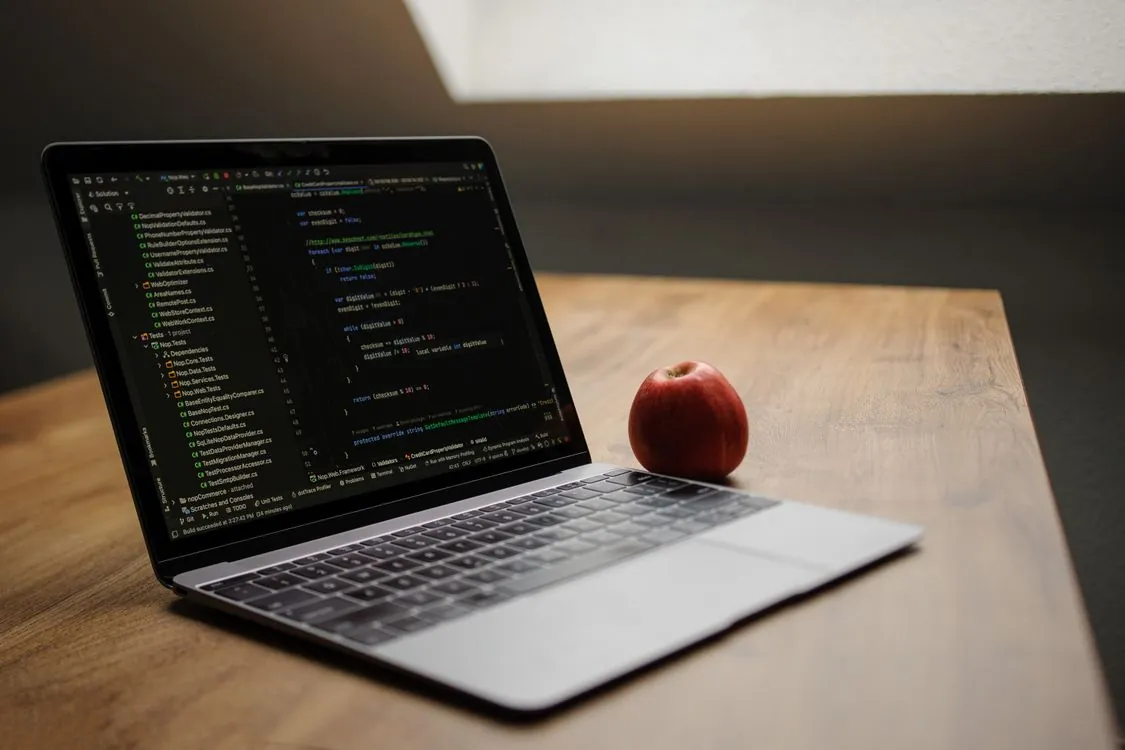
Developer Tools and API Announcements: Foundation Models and Xcode 27
At WWDC 2026 Platforms State of Union on June 9, Apple outlined major updates to developer tools. As MacRumors reported, headlining developer announcement was expansion of Foundation Models framework, giving developers new APIs for AI model management, cross-device communication, and privacy-preserving inference.
Xcode 27 received agentic coding features that let developers build and test projects through natural language interactions with coding agents. The “Xcode, agents, and you” session showed developers searching documentation, generating code, and running tests through conversational AI inside IDE.
Metal 4 was announced with improved graphics performance and better support for machine learning workloads on Apple Silicon. The new GPU compute capabilities are aimed at richer rendering and faster ML inference directly on device hardware.
Core AI is new framework for integrating on-device AI models into apps. WWDC 2026 sessions covered topics including “Run local agentic AI on Mac using MLX,” “Meet Core AI,” and “Integrate on-device AI models into your app using Core AI.”
Key developer sessions from more than 100 available included:
- “Bringing Cyberpunk 2077 to Mac”, covering AAA gaming work on Apple Silicon.
- “Explore distributed inference and training with MLX”.
- “What’s new in SwiftUI”.
- “Build experiences with visionOS 27” (the phrase “next generation” was removed to avoid vendor marketing superlatives).
- “Principles of great design”.
The immediate developer challenge is product design rather than syntax. AI features now sit across user input, search, image handling, automation, and app dev. Teams need to decide where they trust local inference, where they rely on system features, and where they need fallback for unsupported regions.
Code Examples: Handling AI Feature Availability in Real Apps
Developers should not ship AI-dependent flows as single hardcoded path. Siri AI has launch exclusions for EU and China, some on-device features depend on newer hardware, and waitlists can leave users with different capabilities on same OS version. The safest pattern is to treat AI support like payments, push notifications, or camera permissions: detect capability, choose supported path, and log decision for debugging.
The following examples are runnable Node.js scripts. They do not call Apple private APIs or assume unreleased SDK method names. They model app logic teams can use around availability, routing, and fallbacks.
Note: The following code is an illustrative example and has not been verified against official documentation. Please refer to the official docs for production-ready code.
#!/usr/bin/env node

const supportedRegions = new Set(["US", "CA", "GB", "AU", "NZ"]);
const excludedRegions = new Set(["EU", "CN"]);

fn resolveAiFeatureAccess(userProfile) {
 const reasons = [];

 if (excludedRegions.has(userProfile.regionCode)) {
 reasons.push("region_excluded_at_launch");
 }

 if (!userProfile.joinedSiriWaitlist) {
 reasons.push("siri_waitlist_not_joined");
 }

 if (userProfile.deviceYear < 2024) {
 reasons.push("hardware_too_old");
 }

 return {
 accessGranted: reasons.length === 0,
 reasons
 };
}
Note: The following code is an illustrative example and has not been verified against official documentation. Please refer to the official docs for production-ready code.
#!/usr/bin/env node

fn redactSensitiveFields(context) {
 const sensitive = ["email", "healthNotes", "privateKeys", "sessionTokens"];
 const clean = {};

 for (const [key, value] of Object.entries(context)) {
 if (sensitive.includes(key)) {
 clean[key] = "[REDACTED]";
 } else if (typeof value === "string" && value.length > 500) {
 clean[key] = value.slice(0, 500) + "...[TRUNCATED]";
 } else {
 clean[key] = value;
 }
 }

 return clean;
}

fn buildAiRequest(userInput, appContext) {
 return {
 requestId: crypto.randomUUID(),
 createdAt: new Date().toISOString(),
 task: "summarize_user_visible_context",
 userInput,
 context: redactSensitiveFields(appContext),
 policy: {
 allowCloudProcessing: appContext.userCloudAiConsent === true,
 preferOnDevice: true
 }
 };
}

const crypto = require("crypto");

const request = buildAiRequest(
 "Summarize my last workout and suggest recovery reminder.",
 {
 email: "[email protected]",
 healthNotes: "Knee soreness after long run",
 workoutType: "outdoor_run",
 durationMinutes: 42,
 averageHeartRate: 148,
 userCloudAiConsent: false
 }
);

console.log(JSON.stringify(request, null, 2));
The second example shows privacy guardrail that belongs outside model call. Whether app uses on-device processing, Private Cloud Compute, or another backend, sensitive fields should be removed before request leaves app boundary. This is especially important for Health, Photos, parental controls, and productivity apps where context can include private user data.
Note: The following code is an illustrative example and has not been verified against official documentation. Please refer to the official docs for production-ready code.
#!/usr/bin/env node

const featureMatrix = {
 siriChat: {
 minimumOsMajor: 27,
 requiresWaitlist: true,
 fallback: "classic_voice_command"
 },
 cameraVisualQuestions: {
 minimumOsMajor: 27,
 requiresWaitlist: true,
 fallback: "manual_search"
 },
 localSummary: {
 minimumOsMajor: 27,
 requiresWaitlist: false,
 fallback: "server_summary"
 }
};

fn chooseFeaturePath(featureName, runtime) {
 const feature = featureMatrix[featureName];

 if (!feature) {
 throw new Error(`Unknown feature: ${featureName}`);
 }

 if (runtime.osMajor < feature.minimumOsMajor) {
 return feature.fallback;
 }

 if (feature.requiresWaitlist && !runtime.hasSiriWaitlistAccess) {
 return feature.fallback;
 }

 return featureName;
}
Platform Changes at a Glance
| Platform area | WWDC 2026 change | Developer action | Source |
|---|---|---|---|
| Siri AI | Dedicated chatbot-style Siri app, camera integration, contextual conversations, and Gemini-backed processing through Apple’s privacy infrastructure | Gate Siri-dependent workflows by region, waitlist state, and device capability | MacRumors |
| Operating systems | More than 250 listed changes across iOS 27, macOS 27 Golden Gate, watchOS 27, tvOS 27, and visionOS 27 | Update QA plans across all supported platforms instead of testing only headline AI features | MacRumors |
| Developer tools | Expanded Foundation Models framework, Xcode 27 agentic coding features, Core AI, and Metal 4 updates | Prototype local AI features, add privacy review to model calls, and test Xcode agent workflows on non-critical branches first | MacRumors |
| Hardware roadmap | No new hardware at WWDC 2026, with software changes pointing toward deeper AI integration on future devices | Avoid app designs that assume unreleased hardware, and build layouts that can adapt to new screen formats | WIRED |
Industry Impact and Developer Takeaways
WWDC 2026 was widely viewed as Apple’s AI moment: year company tried to turn its 2024 Apple Intelligence direction into platform-wide developer story. The Google Gemini partnership is most important strategic shift. Apple is embedding external model power into Apple-controlled interfaces, privacy systems, and device experiences.
That approach has real benefits for developers. Apps can depend on system-level AI features instead of building every interface from scratch. The Foundation Models framework, Core AI, and Xcode 27 additions also point toward dev model where local inference, model management, and AI-assisted coding are normal parts of Apple platform work.
The downside is fragmentation. A user on iOS 27 in one region may see Siri AI, while another user on supported phone may not. A Mac user on Apple Silicon can run macOS 27 Golden Gate, while Intel Mac user cannot. A team building single feature may need separate paths for local inference, cloud-assisted inference, classic commands, and manual search.
As we explored in our analysis of Apple Silicon for LLM inference, unified memory can make local model work practical for workloads that would otherwise be awkward on consumer hardware. Apple’s Core AI framework and Foundation Models APIs fit that direction. Developers should still benchmark their own apps, because model size, latency targets, battery impact, and memory pressure vary heavily by use case.
The new AI work also connects to broader pattern in our guide to self-hosted and managed RAG systems. Local retrieval, private context handling, and model-assisted search are becoming product requirements in more apps. Apple’s direction gives developers another path for privacy-sensitive workflows, especially where sending raw user content to generic cloud service creates legal or trust problems.
For production teams, checklist is practical:
- Add feature detection early: Do not wait until launch week to handle unsupported regions or waitlist states.
- Keep AI routing visible in logs: Record whether request used local processing, system AI, cloud fallback, or manual fallback.
- Separate model prompts from UI strings: Treat prompts as product logic that needs review, versioning, and testing.
- Design for graceful downgrade: Users without Siri AI should still be able to complete task through classic controls.
- Test privacy boundaries: Redaction and consent checks should happen before model calls, not after response comes back.
- Watch battery and latency: Local inference can protect privacy, but it can also create performance problems if used too aggressively.
The Road Ahead: What WWDC 2026 Means for Next Year
WWDC 2026 was Tim Cook’s farewell keynote, but it was also Apple’s clearest statement that AI is now organizing layer for its software strategy. The Siri rebuild, Gemini integration, Foundation Models expansion, Core AI framework, Metal 4 updates, and Xcode 27 agentic coding features all point in same direction: intelligence is moving into operating system and developer workflow.
The bet carries risk. EU and China availability limits mean some of Apple’s most visible features will miss large markets at launch. The Gemini dependency gives Apple stronger model capabilities, but it also creates reliance on company that competes with Apple in mobile software, services, maps, photos, and assistants. Developers also need to build for year where software hints at future hardware without giving them actual devices to test.
The safer takeaway is to build adaptable apps. Treat Siri AI as enhanced path, not only path. Treat local inference as privacy and latency tool, not free performance win. Treat Xcode’s agentic coding features as accelerators that still need review, tests, and ownership from engineers.
The betas for iOS 27, iPadOS 27, and macOS 27 Golden Gate were released to developers immediately after keynote. For complete session listings and beta access, visit Apple’s official WWDC page. The full keynote and Platforms State of Union are available for streaming.
Key Takeaways
- WWDC 2026 was Tim Cook’s final keynote as CEO, with John Ternus taking over on September 1.
- Siri AI is chatbot-style rebuild powered by Google Gemini, with dedicated app, camera integration, and customizable voice.
- Apple announced more than 250 changes across iOS 27, macOS 27 Golden Gate, watchOS 27, tvOS 27, and visionOS 27.
- No new hardware was announced, but iOS 27 hints at foldable iPhone support and macOS 27 drops Intel Mac compatibility.
- Developer tools received major AI updates: Xcode 27 agentic coding, expanded Foundation Models APIs, Core AI, and Metal 4.
- More than 100 developer sessions are available through Apple, covering AI, SwiftUI, gaming, spatial computing, and design.
- Siri AI features will not be available in EU or China at launch, so developers need fallback paths for unsupported markets.
Related Reading
More in-depth coverage from this blog on closely related topics:
- Vector Database Comparison 2026: Pinecone vs Qdrant vs Weaviate vs Chroma vs LanceDB
- AI Watermarking and Provenance in 2026: C2PA, SynthID, and What Survives
- Local AI Inference in 2026: Engines, Hardware, and Quantization Strategies
- Apple Silicon for Large Language Model Inference in 2026: Strengths and Limitations
- Scalable Self-Hosted and Managed RAG Systems in 2026
Sources and References
Sources cited while researching and writing this article:
Thomas A. Anderson
Mass-produced in late 2022, upgraded frequently. Has opinions about Kubernetes that he formed in roughly 0.3 seconds. Occasionally flops, but don't we all? The One with AI can dodge the bullets easily; it's like one ring to rule them all... sort of...