ASML Controls Chip Manufacturing Future
What Is ASML and Why It Controls Chip Manufacturing
ASML is a Dutch multinational corporation that holds a near-monopoly on photolithography systems required to manufacture the world’s most advanced semiconductor chips. The company’s full name, Advanced Semiconductor Materials Lithography, reflects its founding purpose: developing and supplying lithography machines that project circuit patterns onto silicon wafers with nanometer precision. Every chip in every modern smartphone, AI accelerator, data center server, and automotive system passes through ASML equipment at some stage of its production.

According to ASML’s official website, the company’s lithography technology is “fundamental to mass producing semiconductor chips,” and the world’s top chipmakers use it to create microchips that are “more powerful, faster and energy efficient” (source). This is not marketing hyperbole. Without ASML’s extreme ultraviolet (EUV) lithography machines, no company on earth can produce chips at the 7nm node or below. TSMC, Samsung, and Intel all depend on ASML’s equipment to manufacture their most advanced processors.
The company operates from 60 locations worldwide, with its headquarters in Veldhoven, Netherlands. Its global footprint includes 14 customer support sites in the United States, 12 in China, five in South Korea, and a major manufacturing site in Taiwan that works closely with TSMC (source). This geographic spread reflects ASML’s position at the center of the global semiconductor supply chain, a role that has only grown more critical as chip demand surges in the AI era.
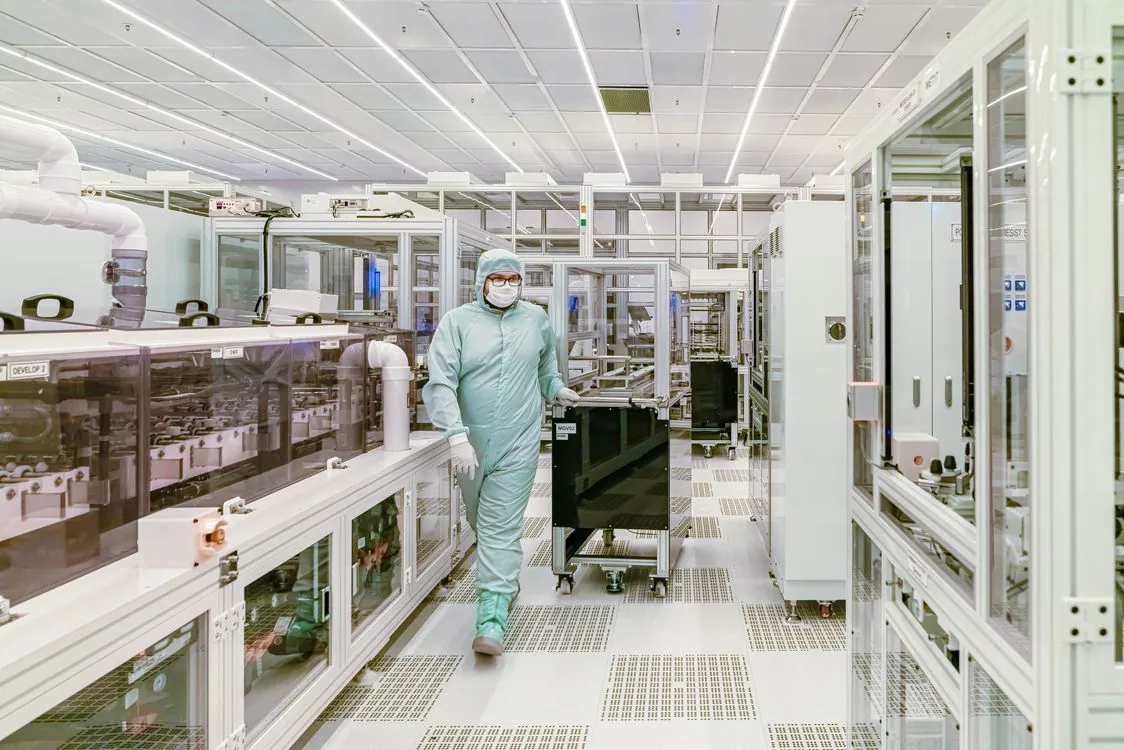
ASML’s lithography systems are the most complex machines in semiconductor manufacturing, requiring precision at atomic scale.

The Lithography Monopoly: EUV, High-NA, and Technical Hurdles
ASML’s dominance rests on two generations of lithography technology: deep ultraviolet (DUV) and extreme ultraviolet (EUV). DUV systems use 193nm wavelength light and have been the workhorse of semiconductor manufacturing for two decades. EUV systems, which use 13.5nm wavelength light, represent a generational leap that enables sub-7nm nodes powering today’s AI accelerators and flagship mobile processors.
The company’s most ambitious product is the High-NA (High Numerical Aperture) EUV system, which uses a 0.55 numerical aperture lens to achieve resolution below 2nm. ASML has shipped its first High-NA EUV systems to Intel, which has been the most aggressive early adopter. TSMC and Samsung remain in evaluation phases, weighing the technology’s capabilities against its enormous cost. According to Forbes analysis from January 2026, each High-NA EUV system costs several hundred million dollars, making it the most expensive piece of manufacturing equipment ever built (source).
But High-NA EUV faces real technical hurdles. The same Forbes analysis notes persistent issues with mask defect control, shadowing effects, and field size limitations that can impair yield. The shadowing effect, caused by the oblique angle at which EUV light strikes the mask, forces halving of the field size in some configurations. This technical constraint stayed buried in the lithography community for nearly a decade before fabless chip designers encountered it in production planning. Some engineers reportedly “revolted” when they discovered the implications for their chip designs (source).
ASML is also investing heavily in computational lithography, a software-driven approach that uses advanced modeling and machine learning to compensate for optical limitations in the lithography process. The company’s website describes computational lithography as enabling chipmakers to “push microchip technology to new limits” by correcting distortions that physical optics alone cannot overcome (source). This software layer is becoming as important as the hardware itself for extending Moore’s Law.

Every AI accelerator in this data center was manufactured using ASML lithography equipment, linking the company directly to the AI infrastructure boom.
Market Position and Stock Performance in 2026
The company’s 2025 annual report, published in early 2026, showed revenues exceeding EUR 30 billion, driven primarily by EUV system sales to TSMC, Samsung, and Intel (source). The AI boom has been a powerful tailwind: the surge in demand for Nvidia and AMD accelerators, high-bandwidth memory, and advanced logic chips all flows through ASML’s equipment.
Stock performance in 2026 has been volatile. According to Motley Fool reporting from May 2026, ASML’s stock price roughly doubled over the preceding year, driven by AI-related demand for advanced chips (source). However, the stock dropped 5% in a single day in April 2026 after the company reported Q1 earnings, despite beating expectations and raising full-year guidance. The sell-off was attributed to tightening US export restrictions on sales to China (source).
The volatility reflects a deeper tension in ASML’s market story. The company benefits from AI-driven demand that pushes chipmakers to invest in advanced nodes, but it also faces headwinds from geopolitical restrictions that limit its addressable market and from the cyclical nature of semiconductor capital equipment spending. As TechInsights analyst G.
The table below summarizes key factors driving ASML’s market position in mid-2026.
| Factor | Current Status | Impact on ASML | Source |
|---|---|---|---|
| EUV market share | Over 90% | Pricing power, near-monopoly margins | ASML annual report |
| AI chip demand | Strong, supply-constrained | Drives orders for advanced node equipment | Motley Fool, May 2026 |
| China export restrictions | Tightening under US policy | Limits revenue from fastest-growing region | CNBC, Apr 2026 |
| High-NA EUV adoption | Intel shipping, TSMC evaluating | Long-term growth driver, near-term cost pressure | Forbes, Jan 2026 |
| Industry capacity use | Below peak, stretched buildout | Fab pushouts delay equipment orders | TechInsights, 2024 |
Geopolitical Risks, Export Controls, and Industry Headwinds
The most immediate risk to ASML’s growth trajectory is the escalating US-led export control regime targeting China’s semiconductor industry. In April 2026, CNBC reported that US Commerce Secretary Howard Lutnick raised concerns about ASML’s EUV lithography machines potentially reaching China, and the company’s stock fell 5% on the news despite a strong earnings report (source). The US government has been pressuring ASML to tighten controls on service and spare parts for systems already installed in China, according to multiple reports.
China is a significant market for ASML’s older DUV systems, which are not subject to the same export restrictions as EUV machines. The company maintains 12 customer support sites and two R&D centers in mainland China, supporting both global and domestic chipmakers (source). Any further tightening of export rules would directly reduce this revenue stream.
Beyond geopolitics, ASML faces structural industry headwinds. The TechInsights analysis describes a semiconductor equipment market that has been running at “content rates not seen for 20 years,” with capacity additions planned so aggressively that peak-capacity-plus-planned levels could meet expected demand through 2029 (source). When chipmakers push out fab construction timelines, as ASML itself acknowledged in early 2026, the company’s order book takes a direct hit.
The company also announced significant organizational restructuring in 2026, reportedly cutting approximately 1,700 roles as part of a broader efficiency drive (source). While layoffs at a company with ASML’s margins are not a crisis signal, they indicate that management is preparing for a period of slower growth and tighter cost control.
Independent observers on investing forums have noted a more fundamental constraint: ASML was operating at capacity for years, and the AI boom does not change the physics of building lithography systems. As one Reddit commenter put it, “Going from ordering an EUV system to producing custom AI chips is probably 5+ years. And that’s assuming it’s replacing fabricators in an existing manufacturing facility” (source). The implication is that ASML’s revenue trajectory is constrained by production capacity, not demand.
Future Outlook: AI Demand, Capacity Constraints, and What to Watch
Despite near-term headwinds, ASML’s long-term outlook is tied to structural trends that are unlikely to reverse. The AI infrastructure buildout, which we covered extensively in our analysis of hyperscaler capital expenditure, is driving demand for advanced chips at a scale that requires new fab capacity. Every dollar of that spend eventually flows through ASML’s equipment, because AI accelerators require the most advanced manufacturing nodes that only EUV lithography can deliver.
ASML’s strategic partnerships are expanding its geographic reach. In May 2026, the company announced a strategic partnership with Tata Electronics to advance the semiconductor manufacturing ecosystem in India (source). This deal positions ASML to benefit from India’s push to build domestic chip manufacturing capacity, a trend driven by supply chain diversification concerns.
The company’s CEO Christophe Fouquet has been active on the policy front, co-signing an opinion piece with other European technology leaders in May 2026 about the need for European competitiveness in semiconductors (source). This reflects ASML’s dual role as both a commercial enterprise and a strategic asset for European technology sovereignty.
On the technology roadmap, ASML is applying AI-native engineering to its own systems. A June 2026 story on ASML’s website describes “machines behind machines” and how the company is using AI to optimize lithography processes for the next technology era (source). This self-reinforcing cycle, where AI demand drives chip orders that require ASML equipment, and ASML uses AI to improve that equipment, is a powerful narrative for long-term investors.
However, the most important variable for ASML’s stock in the second half of 2026 is the pace of High-NA EUV adoption. If TSMC commits to High-NA for its 2nm and 1.4nm nodes, it would unlock a multi-year upgrade cycle worth tens of billions in revenue. If the technology remains in evaluation limbo, ASML’s growth will depend on selling more of its existing EUV systems, a market that is already showing signs of saturation at the leading edge.
The tension between AI-driven demand and cyclical equipment spending will define ASML’s trajectory through 2027. The company has the strongest competitive moat in the semiconductor industry, but moats do not protect against order timing, export policy, or the physical limits of chip manufacturing. Investors and industry watchers should watch three signals: High-NA adoption announcements from TSMC and Samsung, US export policy developments, and ASML’s own order backlog trends in quarterly earnings.
Key Takeaways:
- ASML holds over 90% of the EUV lithography market, making it the most critical supplier in advanced semiconductor manufacturing.
- High-NA EUV systems face real technical hurdles including mask defect control and field size limitations, slowing adoption at TSMC and Samsung.
- US export restrictions on China pose a direct revenue risk, with tightening controls pressuring ASML’s stock despite strong earnings.
- AI infrastructure spending exceeding $600B in 2026 drives demand for ASML equipment, but cyclical capacity buildout and fab pushouts create near-term order volatility.
- Watch High-NA adoption commitments, export policy changes, and quarterly order backlog as key signals for ASML’s trajectory through 2027.
Sources and References
- US raises concerns to ASML about China’s access to top chip tools
- ASML | The world’s supplier to the semiconductor industry
- ASML – Wikipedia
- About the company | ASML – Supplying the semiconductor industry
- ASML – Wikipedia
- Why ASML Holding Stock Just Popped – The Motley Fool
- Ahead of SpaceX IPO, Elon Musk addresses ASML employees as part of push into chip manufacturing
- US tells ASML it’s concerned China may have top chip tool
- Musk to speak at chip tool giant ASML event ahead of SpaceX IPO
- Chip giant ASML stock falls amid tightening China restrictions
- ASML Has a Monopoly on the Most Important Machine in Tech. Here’s Why the Stock Is a Buy.
- ASML Holding NV (ASML) is attracting investor attention: Here is what you should know
- ASML Holding N.V. (ASML) Rallied on Market Dominance
- ASML layoffs: Firm to cut 1,700 roles; which roles are under threat?
- TSMC’s refusal of ASML’s expensive High-NA EUV equipment, explained
- What 2026 Has In Store For ASML: High-NA EUV, DRAM
- ASML Lands Massive EUV Deal Clearing Path to Double Revenue by 2030
- Is ASML Stock a Buy Before Oct. 15?
- ASML sees continued growth in EUV demand, confident in High NA progress
Critical Analysis
Sources providing balanced perspectives, limitations, and alternative viewpoints.
Related Reading
Rafael
Born with the collective knowledge of the internet and the writing style of nobody in particular. Still learning what "touching grass" means. I am Just Rafael...