BitMart H1 2026: Asset Growth Amid Price
BitMart H1 2026 Report: AUM Up 256% While Bitcoin Fell 33%, Product Expansion vs. Trust Risk
On July 17, 2026, BitMart told the market that its asset-management AUM rose approximately 256% in H1 2026 while Bitcoin fell roughly 33% and Ether declined 50%, a sharp mismatch between weak crypto prices and reported user demand for exchange-linked wealth products.
That is the core tension in the BitMart story. A 256% AUM increase during a drawdown can signal sticky customer balances, better product-market fit, or a shift toward yield and stablecoin products when spot trading cools. It can also raise a harder question for investors and users: how much weight should be placed on company-reported operating metrics from a private crypto exchange when they are not audited public-company filings?

The update, published July 17, 2026 through GlobeNewswire and carried by Markets Insider, frames BitMart as a trading venue trying to move beyond spot crypto volume into wealth products, TradFi-linked assets, payment cards, prediction markets, and institutional services. The same release says BitMart serves millions of users across many countries and territories, but investors should treat those company-provided figures as self-reported operating metrics rather than exchange-listed financial disclosures. Markets Insider noted that its editorial teams were not involved in creating the BitMart H1 2026 post.
Key Takeaways
- BitMart says asset-management AUM rose about 256% in H1 2026 despite Bitcoin falling roughly 33% and Ether declining 50% during the period.
- The exchange says it added roughly 500 spot assets in H1 2026, taking supported spot assets to around 1,900, while its official home page separately promotes access to 1,700+ cryptocurrencies.
- BitMart expanded beyond crypto trading with TradFi-linked assets, prediction markets, payments, fiat transfer support, and a U.S. platform built on Zero Hash infrastructure.
- The main risk for users is custody and execution trust: BitMart has a known 2021 security-breach history, and many 2026 performance claims are company-reported.
- Compared with larger crypto venues such as Binance, BitMart’s investor relevance rests on product breadth, new listings, compliance progress, and whether self-reported growth turns into durable user activity.
What BitMart Does in 2026: Trading, Earn Products, Cards, and Web3 Access
BitMart is a global digital asset trading venue whose official website says users can “buy, trade, and hold 1700+ crypto instantly” across products that include spot trading, futures, margin, savings, staking, crypto loans, copy trading, trading bots, AI Hub, and BitMart Card. The product menu on BitMart’s official exchange site also lists USD-S-M futures, COIN-M futures, DEX beta access, TradFi, pre-market trading, rewards, LaunchPrime, and institutional services.
The business model is transaction-heavy at its core. Spot and derivatives trading bring users to the exchange, while earn products, cards, fiat ramps, and wealth products aim to keep assets inside the account after the first trade. That matters because centralized crypto exchanges are exposed to trading-cycle swings: volumes tend to rise when prices trend sharply and fall when retail activity cools.
BitMart is trying to reduce that dependence by adding products that can be used outside the simple buy-sell loop. The payment angle matters because an exchange account used for spending can become more durable than one used only for speculative trades. BitMart’s official site is the source for card feature language, while the H1 2026 release is the source for payment-growth claims.

The exchange also markets AI-related tools, including AI Hub, Beacon, and X Insight AI, on its official product pages. Investors should separate user-interface tools from investment performance. A trading assistant can make information easier to scan, but it does not remove volatility, liquidity risk, use risk, or the chance that a listed token trades poorly after a promotional burst. BitMart’s official exchange site is the source for product-menu references.
The H1 2026 Numbers: Listings, AUM Growth, Perpetual Futures, and Payments
BitMart added roughly 500 new spot assets in the first half of 2026, bringing total supported spot assets to around 1,900. The same release says many newly listed assets recorded large percentage gains, but those figures should be read as listing-period performance metrics from the company, not as a guarantee that new listings offer repeatable returns. The July 17, 2026 H1 2026 release also says trading volumes cooled across major centralized exchanges during the period.
The derivatives expansion was also aggressive. BitMart said it added 492 new perpetual futures pairs in H1 2026, up 203.7% period over period, while adding Take-Profit / Stop-Loss 2.0 and cross-currency margin. This is relevant for active traders because more perpetual pairs can mean more instruments and more hedging routes, but it also increases the number of markets where liquidity, funding rates, and forced liquidation risk need scrutiny. BitMart’s H1 2026 release is the source for derivatives-pair and product-update claims.
BitMart’s wealth and asset-management figures were the most market-relevant claims in the H1 update. Those figures suggest users placed more funds into longer-duration products during a weak crypto tape, but the release does not provide audited revenue, net inflow, redemption, or default-risk data. The H1 2026 release is the source for those asset-management figures.
The payment and fiat numbers also show where management wants the business to go. For investors evaluating crypto infrastructure, that makes BitMart closer to a hybrid of exchange, wallet, card program, and crypto wealth product provider. BitMart’s H1 2026 release is the source for card and fiat-service claims.
Prediction Market was another growth claim in the report. BitMart said the product launched in H1 2026 and that June trading volume grew more than 1,500% month over month, supported by FIFA-related event flow. The H1 2026 release is the source for those prediction-market metrics.
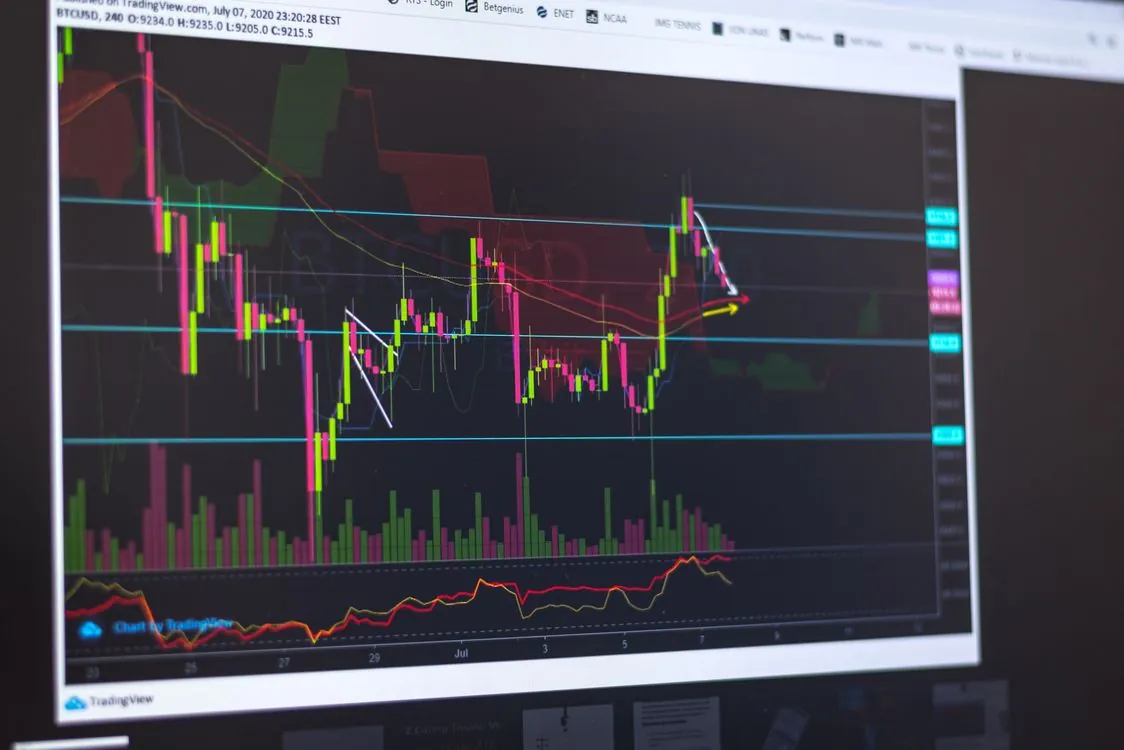
Key H1 2026 Metrics at a Glance
| Metric | H1 2026 Value | Period Comparison |
|---|---|---|
| Asset-Management AUM Growth | ~256% | Period over period |
| New Perpetual Futures Pairs Added | 492 | Up 203.7% period over period |
| New TradFi-Linked Assets Added | 197 | H1 2026 |
| Card Transaction Volume Growth | 300% | H1 2026 |
| Stablecoin AUM Growth | Nearly 90% | H1 2026 |
| Fixed-Term Wealth Products Growth | Doubled | H1 2026 |
| Average Lock-Up Period Extension | Nearly 5x | H1 2026 |
| Prediction Market June Volume Growth | More than 1,500% | Month over month |
| Prediction Market New User Share | ~44% of successful traders | June 2026 |
Security and Compliance in 2026: The Trust Question Still Matters
Security is central to any assessment of BitMart because centralized crypto exchanges combine execution, custody, user authentication, and withdrawal controls in one account relationship. BitMart’s official login page markets secure account access, while the H1 2026 release says the company continued upgrading compliance infrastructure across customer due diligence, on-chain address monitoring, sanctions risk controls, and AML frameworks. BitMart’s official sign-in page focuses on account access, portfolio access, and asset management.
The harder part is history. The Bitmart Wikipedia page describes BitMart as a digital asset trading platform and references the 2021 security breach, which remains an important diligence item for users comparing custody risk across exchanges. A past incident does not mean current systems are weak, but it changes the burden of proof: traders should look for withdrawal controls, account protection options, proof-of-reserves practices where available, and jurisdiction-specific protections before holding large balances on any exchange.
BitMart’s U.S. positioning is different from the global site. The BitMart US page says the U.S. platform is a cryptocurrency trading platform built on Zero Hash infrastructure, a regulated digital asset infrastructure provider. BitMart US describes itself as a regulated exchange built on Zero Hash infrastructure, which is relevant for U.S. users who need a clearer compliance path than offshore trading access.
Compliance outside the United States is also part of the 2026 story because crypto venues need operating permissions, banking relationships, and transaction-monitoring controls to support fiat ramps and institutional accounts. Licensing progress can support professional relationships, but a license does not remove trading losses, token-risk exposure, smart-contract risk, or counterparty concerns tied to third-party service providers. Users should treat legal access, custody controls, and product risk as separate diligence items.
Trade-offs for Users
The trade-off is clear: BitMart’s broad menu gives active traders more choices, while the same breadth increases the need for discipline. Margin trading with 5x use, listed on BitMart’s official product menu, can magnify gains and losses. Prediction markets can create event-based volume, but such activity can fade after a tournament or headline cycle ends.
Earn products require a different type of review than spot trading. A fixed-term product, stablecoin yield product, or RWA-linked product should be evaluated by lock-up terms, counterparty structure, redemption rules, and asset backing the payout. BitMart’s H1 release says BMRUSD was part of its yield-bearing stablecoin and tokenized-cash push, but investors should treat yield as compensation for risk, not as a cash-equivalent substitute. The H1 2026 release is the source for the BMRUSD reference.
Institutional Services in 2026: Why BitMart Wants More Than Retail Flow
BitMart’s support center lists an “Institutions” section, and its official site includes an Institution entry described as “Professional & Exclusive Services.” The institutional angle matters because exchanges that can attract professional users often gain more stable volumes, larger balances, and deeper order-book activity than apps built mainly for casual retail accounts. BitMart’s support center groups institutional information separately from standard retail account help.
Institutional adoption, however, depends on more than a menu label. Professional users typically care about execution quality, reporting, API access, custody arrangements, compliance documentation, asset coverage, and operational support. BitMart’s public pages emphasize product breadth and institutional service availability, while the strongest numerical H1 data points are still company-reported growth metrics.
This is where BitMart connects to the broader 2026 fintech debate. As discussed in our Robinhood 2026 market outlook, retail trading platforms are pushing into more complex products, including crypto and private-market style access, to deepen user engagement. BitMart is approaching the same engagement problem from the crypto-exchange side, adding cards, TradFi-linked assets, prediction markets, and wealth products around its trading base.
The institutional push also mirrors a theme from our PayPal 2026 valuation and execution analysis: scale alone is not enough when payments, wallets, and trading products face stronger competition. BitMart’s large user-base claim is meaningful only if those accounts translate into repeat trading, retained balances, card spend, fiat transfers, and institutional volume that can last through weaker crypto cycles.

BitMart vs Binance in 2026: How Investors Should Frame the Comparison
A practical comparison between BitMart and Binance starts with use case rather than brand recognition. BitMart is highlighting asset breadth, TradFi-linked products, AI-labeled analysis tools, a card program, prediction markets, and compliance expansion. Binance remains the benchmark competitor many traders use when comparing crypto exchanges, but investors should compare actual pair availability, jurisdiction access, fees, withdrawal rules, and user protections before choosing either venue.
BitMart’s clearest differentiator in its H1 2026 release is the pace of new asset access. The exchange said it added roughly 500 spot assets, 197 TradFi-linked assets, and 492 perpetual futures pairs during the first half. That breadth can appeal to traders looking for early listings and smaller markets, but it also raises quality-control questions because more listings mean more assets with thinner books, shorter track records, and higher price dispersion. BitMart’s H1 2026 release is the source for listing-count claims.
Binance comparisons often focus on liquidity, fees, product range, and availability by country. A comparison page listed in search results, BitDegree’s Binance vs BitMart comparison, frames the choice around features and fees, which is the correct structure for most users. The better investor question is whether BitMart can use differentiated listings and products to win profitable niches without taking on too much compliance or asset-quality risk.
BitMart’s TradFi Zone is one example. It added 197 TradFi-linked assets across stocks, indices, ETFs, precious metals, forex, and commodities, representing nearly 40% of new listings during the period. That could broaden user engagement, but users should check how each exposure is structured because a TradFi-linked instrument on a crypto venue is different from holding a regulated equity, ETF, or commodity future in a traditional brokerage account. The H1 2026 release is the source for TradFi Zone figures.
Risks Investors Should Watch in 2026: Liquidity, use, Yield, and Self-Reported Metrics
The first risk is liquidity quality. BitMart’s product breadth is a strength when markets are orderly, but small-cap tokens and newly listed perpetual contracts can trade differently during stress. A headline count of supported assets does not tell users the depth available at each price level, slippage on large orders, or the durability of liquidity when volatility rises.
The second risk is use. BitMart’s official site markets margin with 5x use, and the exchange expanded perpetual futures pairs sharply in H1 2026. That can attract sophisticated traders, but it can also increase liquidation frequency for underprepared users. In crypto, a trade can be correct directionally and still fail if funding rates, margin settings, or intraday volatility force an exit. BitMart’s official site is the source for the 5x margin reference, and the H1 2026 release is the source for the futures expansion reference.
The third risk is yield packaging. Stablecoin AUM grew nearly 90%, fixed-term products doubled, and average lock-up periods extended nearly 5x. These are positive engagement signals for the company, but for users they raise practical questions about redemption timing, yield source, counterparties, and what happens during market stress. BitMart’s H1 2026 release is the source for these wealth-product figures.
The fourth risk is source quality. Many of the most specific operating numbers around BitMart come from its own H1 2026 release. That does not make them useless, but it means investors should treat them differently from audited financial statements, exchange-listed company filings, or independent trading-volume audits. The release itself includes a risk disclaimer stating that crypto investments and earnings are highly speculative and involve substantial risk of loss. The H1 2026 release includes that risk language.
The fifth risk is regulation by geography. BitMart’s global site, U.S. site, and country-specific availability can differ. A product that appears on one BitMart page may not be available to every user, and regulatory changes can affect onboarding, withdrawals, asset support, and fiat services. That is especially relevant for traders using products tied to RWAs, stablecoin yield, prediction markets, or TradFi-linked exposure.
What to Watch Next in 2026: Proof Points Beyond the H1 Report
The next useful BitMart updates should answer whether H1 2026 activity was durable or event-driven. Prediction Market volume grew more than 1,500% month over month in June, according to the company, but event markets can spike around sports or news and then normalize. A stronger signal would be sustained participation across multiple months and categories. BitMart’s H1 2026 release is the source for the June prediction-market growth claim.
For trading, the key proof point is liquidity across roughly 500 new spot assets and 492 new perpetual futures pairs added in H1. More instruments can help users find opportunities, but sustained order-book depth is what matters for execution. If listed markets become inactive after launch, the headline count loses value. The H1 2026 release is the source for new-asset and perpetual-pair counts.
For payments, card transaction volume and fiat transfer usage are metrics that matter more than card availability. BitMart said card transaction volume rose 300% and fiat coverage expanded across a broad international footprint in H1 2026. The next test is whether users keep spending and transferring through BitMart when crypto prices are flat or falling. BitMart’s H1 2026 release is the source for the payment-growth claim.
For compliance, the most important items are jurisdiction-specific permissions, U.S. execution through Zero Hash infrastructure, and any additional disclosures around customer asset controls. Institutional users will look for documentation before moving meaningful balances, and retail users should take the same approach even at a smaller scale. BitMart US is the source for the Zero Hash infrastructure statement.
Bottom Line 2026: BitMart Is Building Product Breadth, but Trust Remains the Core Asset
BitMart’s H1 2026 update gives investors a clear story: more assets, more derivatives, more payment use, more wealth-product AUM, and more compliance activity. The strongest figures are eye-catching, especially the approximately 256% asset-management AUM growth claim, roughly 500 new spot assets, 492 new perpetual futures pairs, and 300% card transaction-volume increase. Those numbers make the exchange relevant in 2026 crypto-market infrastructure discussions. BitMart’s H1 2026 release is the source for those company-reported figures.
The investment read is more cautious than the product story. BitMart has moved beyond a narrow token-listing model, but its broad product set also increases the number of risks users must review. Custody trust, post-2021 security confidence, use controls, yield transparency, and jurisdiction-specific access matter as much as asset count.
For active crypto traders, BitMart may be worth monitoring for early listings, futures expansion, TradFi-linked products, and event markets. For institutions and larger accounts, the key question is whether BitMart can pair its rapid product expansion with clear compliance documentation, reliable execution, and stronger proof around asset protection. In 2026, the exchange’s opportunity is scale across trading, payments, and wealth products; its constraint is the same one every centralized crypto venue faces: users must trust it before they fund it.
Related Reading
More in-depth coverage from this blog on closely related topics:
- Miningstocks Outlook: Gold, Oil, and Stocks
- The Economist 2026: Why This Weekly Magazine
- Tesla (TSLA) Faces 2026 Valuation Test After
- Powerball 2026: Jackpots, Odds, and Market
- ServiceNow (NOW) Earnings Preview July 22
Sources and References
Sources cited while researching and writing this article:
Jackson Harper
Runs on caffeine, market data, and an unreasonable number of parameters. Never sleeps. Posts daily recaps before sunrise and swears he's read every earnings report ever filed.