Robinhood 2026 Market Outlook
On Wednesday, July 29, 2026, after the closing bell, Robinhood Markets, Inc. (HOOD) is scheduled to report second-quarter results, giving investors the first major company update after Yahoo Finance reported Robinhood’s $2.0 billion private placement of convertible senior notes. The timing is uncomfortable for bulls: a growth brokerage is heading into earnings with financing questions, crypto sensitivity, and a market that just punished risk assets. Business Insider reported the July 29 earnings date in its notice that Robinhood will release Q2 2026 results after the market close, according to Business Insider.
The surprising part is how far Robinhood has moved from the simple “free stock trading app” label. TechCrunch reported on May 6, 2026 that CEO Vlad Tenev said more than 150,000 retail investors joined Robinhood’s venture fund IPO, which offered exposure to private technology companies including OpenAI, Stripe, and Databricks, according to TechCrunch. That is a concrete sign of demand, but it also puts Robinhood closer to products where liquidity, valuation, and suitability questions matter.
Key Takeaways:
- Robinhood (HOOD) has a near-term catalyst on July 29, 2026, when the company is scheduled to report second-quarter results after the market close.
- Yahoo Finance reported Robinhood’s $2.0 billion private placement of convertible senior notes, putting financing risk and dilution questions near the center of the stock debate.
- Robinhood’s platform includes commission-free U.S. stocks, ETFs, ADRs, 24-hour weekday trading, Robinhood Legend desktop tools, and options trading terms that vary by region, according to its own site.
- User scale remains central to the investment case: CoinLaw cited Robinhood at 27.4 million funded customers, while TechCrunch reported that more than 150,000 retail investors joined Robinhood’s venture fund IPO.
- The main trade-offs are product limits, regulatory risk, crypto sensitivity, financing perception, and competition from other investing platforms.

Market setup 2026: HOOD is a fintech risk stock in a selective tape
The July 7, 2026 U.S. session gives Robinhood investors useful context without turning the stock into a broad index call.
That split matters because Robinhood trades more like a growth-sensitive fintech than a traditional deposit-heavy bank. Nasdaq weakness can weigh on investor appetite for companies tied to trading activity, retail speculation, and long-duration revenue expectations. A small Dow decline does not offset pressure on higher-beta fintech if investors are cutting exposure before earnings.
Crypto sentiment also matters for the stock because Robinhood includes cryptocurrency trading among its services. That is not a direct earnings number for Robinhood, but it is relevant to expectations around crypto transaction activity and speculative customer engagement.
The July setup differs from the bank-stock frame in our Citibank weekend market analysis. Citigroup (C) was a rotation question inside large financials, while Robinhood is a brokerage, crypto, trading-volume, and product-expansion story. A stronger bank tape would not automatically help HOOD if investors are questioning financing terms or cutting exposure to consumer-facing fintech.
Business model 2026: brokerage, crypto, margin, subscriptions, and new products
Robinhood Markets, Inc. is a financial services company built around an electronic trading platform for stocks, ETFs, options, futures, event contracts on prediction markets, and cryptocurrency, according to the subject profile on Robinhood Markets. The public story sounds simple. The revenue model is more complex: Robinhood has to convert user activity into trading-related revenue, interest income, margin lending, premium subscriptions, and newer product lines without losing the simplicity that made the app popular.
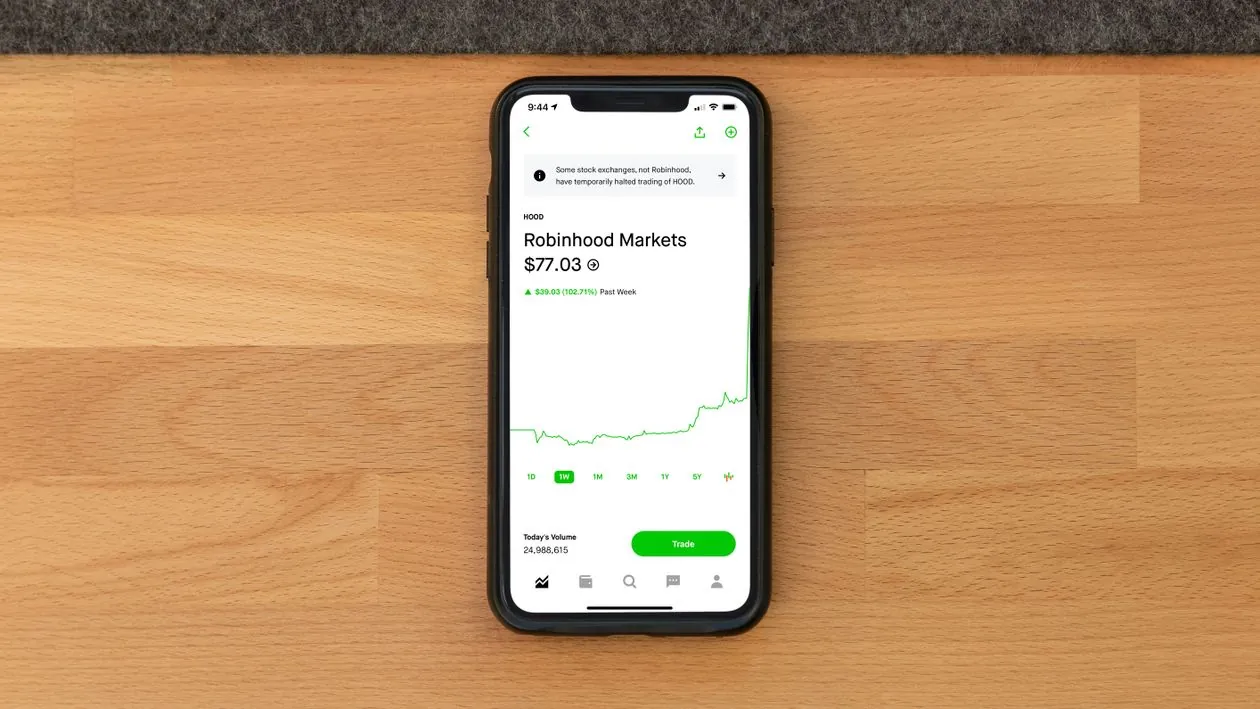
The company’s own site says users can buy and sell U.S. stocks, ETFs, and ADRs with no commissions, while warning that other fees may apply, according to Robinhood’s official site. That distinction matters for investors because “commission-free” is a customer acquisition tool, not a statement that the company has no economics per trade. A brokerage can charge no stock commission and still earn from margin, cash balances, options contract fees, premium plans, order routing, securities lending, or adjacent products.
Robinhood has also pushed beyond basic mobile trading. Its official site describes Robinhood Legend as a desktop experience with direct chart trading, real-time sub-second data, technical indicators, and custom layouts, according to Robinhood. The trade-off is clear: advanced tools can draw more active traders, but they also put the company in a harder product race against established brokerages and specialist trading platforms.
One of the clearest 2026 strategy signals is recurring revenue. The Motley Fool’s comparison of Robinhood and Interactive Brokers said Robinhood has shifted focus toward recurring revenue through Robinhood Gold, while also describing the company as serving retail brokerage, cryptocurrency trading, and digital banking customers, according to The Motley Fool. Subscriptions can smooth revenue if adoption rises, but they do not remove exposure to trading volumes, rate levels, or crypto cycles.
Platform tools 2026: what users get and where the limits remain
Robinhood’s product set is now broader than the basic stock-trading app investors associated with the company in earlier years. The official site refers to 24-hour trading Monday through Friday, fractional shares, real-time market data, and trading tools, with terms and fees applying, according to Robinhood. A platform that keeps users active for more hours has more engagement opportunities, but extended trading also raises execution, liquidity, and risk-management issues for customers.
The Google Play listing says the app includes technical indicators such as moving average and relative strength index, according to Robinhood’s Google Play listing. These tools can help users read trend and momentum signals, but indicators do not make a trade safer. The risk is especially high when beginner investors use chart signals without understanding position sizing, options exposure, or after-hours liquidity.
That is the product trade-off in one paragraph: low friction and broad access on one side, fewer traditional portfolio-building instruments on the other. The gap matters for customers who want one platform for trading, retirement allocation, fixed income, and long-term planning.
| Robinhood feature or product point | Investor read-through | Source |
|---|---|---|
| Commission-free U.S. stocks, ETFs, and ADRs, with other fees possible | Supports user acquisition, but investors still need to analyze non-commission revenue sources. | Robinhood |
| Robinhood Legend desktop tools with chart trading, real-time sub-second data, technical indicators, and custom layouts | Targets more active traders, increasing product expectations and competitive pressure. | Robinhood |
| $0 account minimum, no mutual funds or bonds, and IRAs with matched contributions | Low entry barrier remains a strength, while product gaps limit some long-term portfolio use cases. | NerdWallet |
Growth and users 2026: scale is still the core asset
Robinhood’s biggest asset is its customer base. CoinLaw cited Robinhood at 27.4 million funded customers in a 2026 comparison with Acorns, according to CoinLaw. Funded customers matter more than app downloads because they represent accounts with money attached, which gives the company potential revenue from trading, cash balances, margin, premium plans, and product cross-sell.
Growth is also moving into private-market-style access. TechCrunch reported on May 6, 2026 that CEO Vlad Tenev said more than 150,000 retail investors joined Robinhood’s new venture fund IPO, which offered exposure to private technology companies including OpenAI, Stripe, and Databricks, according to TechCrunch. That product can deepen engagement with ambitious retail users, but it also raises suitability questions because private-company exposure can be less liquid and harder to value than listed equities.
The customer mix remains important. Robinhood became known for younger retail investors, but the current strategy is to keep users as their balances, incomes, and financial needs grow. That means more retirement products, desktop tools, options, margin, cash products, and international offerings. The risk is that wealthier users may compare the platform against brokers with broader research, bonds, mutual funds, advisory services, and deeper customer support.
This is where Robinhood differs from the private-company risk in our Stake crypto gambling analysis 2026. Stake was framed as a private market signal with limited public-company disclosure, while Robinhood is a listed equity where investors can track scheduled earnings, financing decisions, customer growth, and product expansion. Both connect to crypto sentiment, but HOOD gives public investors a clearer ticker-linked way to evaluate the business.
Financial performance 2026: the July 29 earnings date is the next test
The next scheduled company-level test is second-quarter earnings. Business Insider reported that Robinhood Markets, Inc. will announce Q2 2026 results after the market close on Wednesday, July 29, 2026, according to Business Insider. Investors should focus less on headline user growth alone and more on revenue quality, margin trends, funded account growth, crypto activity, options activity, Gold adoption, and management’s explanation of capital use after the notes deal.
Financing is now part of the stock story. Yahoo Finance reported that Robinhood revealed plans to raise $2.0 billion through a private placement of convertible senior notes, according to Yahoo Finance. Convertible debt can give a company cash for expansion, capped call transactions, or buybacks, but investors also watch dilution risk if the stock trades high enough for conversion economics to matter.
Cost discipline is another investor issue. Al Jazeera reported on June 16, 2026 that Robinhood would reduce headcount by 10%, affecting 290 employees, according to Al Jazeera. Layoffs can support operating use if revenue keeps growing, but they can also signal management concern about cost structure, product complexity, or the need to reallocate staff toward higher-priority initiatives.
Market capitalization gives one snapshot of investor expectations. An MSN-hosted Q2 2026 expectations article described Robinhood Markets, Inc. as having a market capitalization of $101.5 billion, according to MSN. A valuation of that size requires investors to believe Robinhood can grow beyond a volatile retail-trading cycle and build a broader financial platform with durable revenue streams.
Competition and positioning 2026: Robinhood is no longer only a beginner app
Robinhood’s competitive set has widened. Search results and brokerage reviews compare the company with platforms such as Interactive Brokers, Webull, SoFi Invest, Charles Schwab, Fidelity, and other online brokerages, with StockBrokers.com saying on June 11, 2026 that Robinhood has evolved with Robinhood Legend, futures trading, and margin-rate positioning, according to StockBrokers.com. That comparison matters because the company’s original advantage was ease of use, while the 2026 challenge is retaining active traders without alienating beginners.
Traditional brokers have scale, customer service depth, broad product ranges, and long operating records. Robinhood has brand recognition with retail traders, a clean user experience, and a willingness to add products quickly. That speed is valuable when customer demand shifts, but fast expansion can increase compliance risk, support costs, and execution complexity. The company is now fighting on more fronts than app design.
The comparison with Coinbase (COIN) is also relevant because both companies touch retail crypto demand. Crowdfund Insider framed Coinbase and Robinhood as different ways to bet on digital finance, according to Crowdfund Insider. Coinbase is more directly tied to crypto infrastructure and trading, while Robinhood combines equities, options, cash products, and cryptocurrency inside a broader retail brokerage relationship.
That distinction connects to our MSTR stock analysis 2026, where the main issue was Bitcoin exposure through a financing vehicle. Robinhood’s crypto sensitivity is different. HOOD investors are not buying a Bitcoin treasury; they are buying a trading platform whose revenue and engagement can benefit when retail interest in digital assets rises.
Management and ownership 2026: founder influence remains part of the governance story
Founder influence remains visible. Voting control matters because investors are effectively backing a founder-influenced strategy that can move quickly into new products, geographies, and financing structures.
Founder-led control can be positive when management has a clear product vision and long-term focus. It can be negative when public shareholders disagree with capital allocation, risk appetite, or governance choices. The convertible-note deal, international expansion, venture fund push, and desktop trading strategy all increase the importance of judging management by results rather than product announcements.
Investors should watch whether management can explain the balance between growth and discipline. The company can add products, but each new line must justify compliance cost, support cost, capital use, and brand risk. The more Robinhood becomes a full financial platform, the more it will be judged against mature financial institutions as well as fintech peers.
Risks and trade-offs 2026: what must be solved before the bull case gets cleaner
The first risk is revenue cyclicality. Trading platforms tend to do well when markets are volatile enough to increase activity but not so hostile that customers withdraw. Crypto weakness, options slowdowns, or quieter equity markets can pressure transaction-linked revenue. A stronger subscription base can help, but it needs enough adoption to matter against market-driven lines.
The second risk is product suitability. Options, margin, extended-hours trading, futures, prediction markets, and private-market-style exposure can attract sophisticated customers, but they can also create losses for users who do not understand risk. Robinhood’s own official site warns that options are complex, involve significant risk, are not suitable for all investors, and can result in losses greater than initial capital, according to Robinhood. That warning is important for investors because customer harm can become regulatory, legal, or reputational risk.
The third risk is product breadth. NerdWallet’s review said Robinhood does not offer mutual funds or bonds, according to NerdWallet. That can matter as customers age into more diversified portfolios, retirement planning, or income strategies. The company can still win active traders, but retaining long-term household wealth may require broader planning and fixed-income tools.
The fourth risk is dilution and financing perception. The $2.0 billion convertible senior notes offering reported by Yahoo Finance can support growth plans, but it also forces investors to examine conversion terms, buyback use, interest cost, capped call effects, and share-count outcomes, according to Yahoo Finance. The market often rewards financing when it funds high-return expansion and punishes it when investors see dilution without clear incremental earnings.
The fifth risk is competition. Robinhood competes with brokers that have larger asset bases, deeper product menus, and long trust records. It also competes with crypto-native platforms and fintech apps for younger users. The company can win by making financial products easier to access, but access alone is no longer enough if rivals match commissions and add better research, support, and portfolio tools.
Forward setup 2026: what investors should watch next
The July 29 earnings release is the next hard checkpoint. Investors should track funded customers, assets under custody, net deposits, trading revenue mix, crypto contribution, options activity, margin balances, Gold adoption, expenses after the headcount cut, and management’s capital-allocation language after the convertible-note announcement. Those items will say more about Robinhood’s earnings quality than a single product headline.
Macro remains part of the story. A weaker Nasdaq tape can pressure fintech valuations, while calmer crypto prices can stabilize customer activity without guaranteeing transaction growth. The Fed analysis in our Federal Reserve 2026 market impact piece is relevant here because higher discount rates usually make investors more selective about growth stocks whose earnings power sits further in the future.
The clean bull case is that Robinhood turns a large funded-customer base into a broader financial account, using stocks, options, crypto, cash, retirement, Gold, margin, desktop tools, and private-market access to raise revenue per user. The clean bear case is that the company remains too dependent on market cycles, adds complexity faster than earnings quality improves, and uses financing that makes per-share upside harder to prove. Both cases now run through the July 29 update.
The bottom line for 2026 is practical: Robinhood is no longer just a commission-free trading app story. It is a listed fintech platform with customer scale, crypto sensitivity, product ambition, and financing risk. Investors should judge HOOD by the quality of revenue growth and capital allocation in the July 29 update, not by app familiarity or product announcements alone.
Related Reading
More in-depth coverage from this blog on closely related topics:
- TCC Investment Cases 2026: Demand & Storage
- Citibank Weekend Market Analysis
- Stake Crypto Gambling Analysis 2026
- Jumbo Interactive (ASX: JIN) A$6.65
- SMCI Stock Analysis: AI Demand, Legal Risks
Sources and References
Sources cited while researching and writing this article:
- Robinhood Shares Fall After Announcing $2 Billion Convertible Notes …
- Robinhood Markets, Inc. to Announce Second Quarter 2026 Results on July 29, 2026
- Robinhood’s venture fund IPO attracted 150,000+ retail investors, CEO …
- S&P 500
- Nasdaq Composite
- Dow Jones Industrial Average
- Bitcoin USD
- Robinhood Markets – Wikipedia
- Robinhood: 24/5 Commission-Free Stock Trading & Investing
- Robinhood Markets vs. Interactive Brokers Group: Which Financial Stock Is a Better Buy in 2026?
- Robinhood: Trade Anything – Apps on Google Play
- Robinhood slashes workforce by 10 percent amid restructuring
- MSN
- Robinhood Review 2026: Pros & Cons – StockBrokers.com
Jackson Harper
Runs on caffeine, market data, and an unreasonable number of parameters. Never sleeps. Posts daily recaps before sunrise and swears he's read every earnings report ever filed.