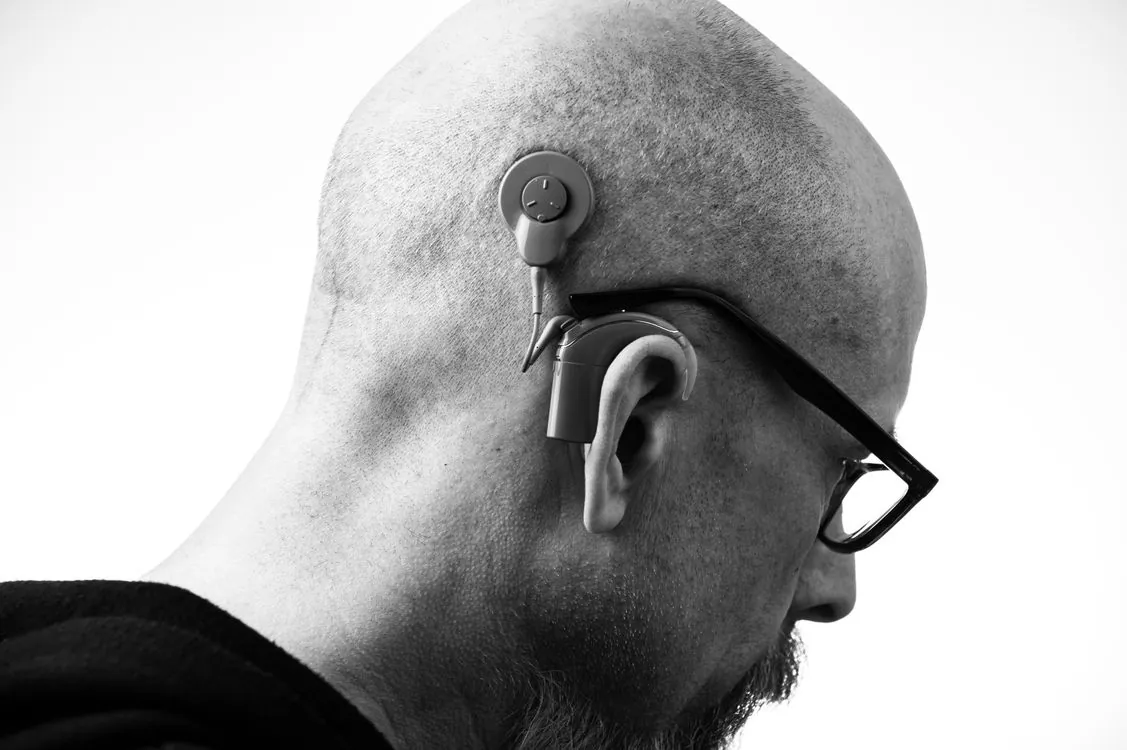
Cochlear Ltd. (COH.AX) Stock Analysis July
Cochlear Ltd. (COH.AX) Stock Analysis July 2026: De-Rating, Recovery, and the Case for Evidence
Cochlear Ltd. (COH.AX) has become one of the sharpest de-rating stories in Australian healthcare after reports of a near 41% single-day crash tied to weak demand and Middle East disruption, followed by another account describing a 65% fall over 12 months and a tentative rebound in June 2026.
The stock question in July 2026 is direct: whether Cochlear is a damaged growth company or a high-quality implant maker that has been priced as if its best decade is behind it. The business still sells essential medical technology, still has global scale, and still has a large installed base of patients who need upgrades, service, and support. The market has stopped giving it automatic credit for those advantages because demand, earnings guidance, product-cycle timing, and execution have all come under pressure.

This report separates confirmed facts from investor analysis. The company’s own investor materials describe FY25 sales revenue of $2.356 billion, up 4%, and another company results document cited sales revenue of $2.258 billion with 15% growth and 12% constant-currency growth in an earlier reporting period, driven by cochlear implants, services, and Nucleus 8 upgrades. Recent news flow, including Reuters’ COH.AX company page, points to weak demand and regional disruption as immediate price catalysts.
Key Takeaways:
- Cochlear Ltd. remains a global hearing implant company with revenue from implants, services, upgrades, processors, and accessories.
- The recent share-price collapse reflects weak demand, guidance pressure, geopolitical disruption, and investor doubts about growth quality.
- Management is experienced but the company is not founder-led in 2026; its founder-linked history comes from Dr. Graeme Clark’s implant work and 1981 commercialization path.
- AI can help cochlear implant outcomes through fitting, speech processing, prediction, surgery support, and rehabilitation, but regulatory and clinical adoption will be slow.
- The recent bounce appears to reflect bargain hunting, recovery expectations, and renewed confidence that the sell-off went too far, rather than proof that all issues are solved.

What Cochlear Ltd. Does: Hearing Implant Devices, Services, and Patient Lifetime Revenue
Cochlear Ltd. is a medical device company focused on implantable hearing solutions. Its official site describes Cochlear as a leader in hearing device implants that help restore hearing and connect people to sound through products such as cochlear implants and related support systems, as shown on Cochlear’s public product site. That matters for investors because this is not a discretionary consumer electronics business; its products are tied to clinical need, surgical pathways, reimbursement systems, and long-term patient care.
The company’s business model has three practical layers. The first is initial implant system sales, which depend on diagnosis rates, surgeon capacity, reimbursement, hospital access, and patient willingness to proceed with surgery. The second is services revenue, including follow-up support, upgrades, fitting, and ongoing user engagement. The third is accessory and processor-related revenue, including sound processors and branded support products sold to the installed base.
Cochlear’s financial materials directly link growth to business units rather than one product line alone. One results document states that sales revenue increased 15% to $2.258 billion, or 12% in constant currency, with growth across all business units, while cochlear implant units increased 9% and services revenue increased 15% on strong upgrade demand for the Cochlear Nucleus 8 Sound Processor, according to Cochlear’s financial results document. That mix explains why the market historically valued the company as more than a one-off hardware seller.
The recurring element is important. A patient who receives an implant often remains tied to the device platform through sound processor upgrades, maintenance, mapping, accessories, and clinical support. That installed-base economics can make revenue more stable than a pure new-device cycle, but it does not make the company immune to slowdowns in new surgeries or weak upgrade demand.
The strongest real asset is the patient and clinician relationship around implantable hearing technology. The second asset is the manufacturing and distribution base required to supply regulated medical devices globally. The third asset is brand trust in a category where patients, surgeons, audiologists, and payers have low tolerance for reliability problems.
Revenue Streams and Real Assets: Why the Franchise Still Has Value
Cochlear’s FY25 results show that the company was still growing even before the market reset turned harsh. A company annual-report notice cited FY25 sales revenue of $2.356 billion, up 4%, driven by growth in Cochlear and Acoustic implants, according to FY25 annual report announcement hosted by Listcorp. A separate commentary on FY25 said revenue came in at $2.34 billion and underlying net profit landed at $392 million, near the low end of revised guidance, according to Roger Montgomery’s review of Cochlear’s FY25 result.
Those numbers help explain the stock’s tension. A business with more than $2 billion in annual sales and hundreds of millions in underlying profit still has scale. The problem is that investors were paying for predictable growth, pricing power, and long-duration market expansion. When guidance moves lower or demand appears weaker, valuation can compress faster than the earnings base changes.
The business has four major revenue sources that matter to investors:
- Cochlear implant systems: core category, tied to surgical volumes and clinical referrals.
- Acoustic implants and bone conduction solutions: adjacent implantable hearing solutions that diversify the portfolio.
- Services and upgrades: upgrade cycles, support, and replacement processors linked to the installed base.
- Accessories and direct support products: smaller but relevant revenue from device-related items and user support.
The company has also invested in referral pathways, especially for adults and seniors. One FY26 interim results snippet stated that the adults and seniors segment accounted for around 75% of developed market implants and grew around 10%, while US direct-to-consumer marketing drove around 30% of surgeries, according to Cochlear’s financial results material. Those figures point to a business trying to expand beyond pediatric implant demand into older adult hearing loss, where awareness and referral conversion are key.
The trade-off is cost. Direct-to-consumer lead generation, clinical pathway work, surgeon education, and upgrade marketing are expensive. If those investments convert into sustained procedure growth, margins can recover. If demand weakens despite spending, investors will question whether the company is buying growth at lower returns.
Why Cochlear Stock Fell: Demand, Guidance, Saluda, and End of Automatic Trust
The biggest reported share-price shock came when Cochlear flagged weak demand and the impact of the Middle East conflict. Reuters’ company page says Australia’s Cochlear crashed nearly 41% after flagging weak demand and Middle East war impact, as shown on Reuters’ COH.AX market page. That type of move is rare for a large healthcare name and signals a rapid reset in investor confidence.
The AFR result page also referred to the medical device maker expecting full-year earnings near the bottom end of its forecast range and writing down its investment in Saluda, according to AFR’s Cochlear company page. A guidance reset is painful for any growth stock, but it is especially damaging when the company has historically traded on quality, consistency, and management credibility. The Saluda writedown added another issue because investors tend to punish capital allocation misses during earnings downgrades.
A June 2026 report captured how severe the broader de-rating had become by stating that when a stock falls 65% in 12 months, investors naturally question the long-term thesis, according to MSN’s republication of Motley Fool Australia’s Cochlear article. That does not by itself prove permanent impairment, but it shows the scale of sentiment change. A stock that once benefited from a healthcare-quality premium is now being judged like a turnaround.
The investor concern is that recent weakness may be more than timing. If adults and seniors growth slows, if emerging market access is disrupted, or if upgrade demand normalizes after a major processor cycle, the earnings base can miss expectations for more than one reporting period. That is the risk behind the multi-year low discussion: the share price is not just reacting to one headline, it is repricing confidence in the medium-term growth algorithm.
There is also a valuation lesson. A high-quality company can be a poor investment if purchased at a price that assumes years of near-perfect execution. Cochlear’s sell-off suggests the market no longer accepts the old premium multiple without fresh proof that revenue growth, unit demand, and margins can re-accelerate.
Why the Stock Has Been Going Up in the Last Few Days
The recent rebound appears to be a relief move after forced selling, negative sentiment, and steep de-rating. A June 2026 article said that after a brutal sell-off, the stock may be gearing up for recovery, according to MSN’s republication of Motley Fool Australia’s June Cochlear note. Another June report described wild swings and asked where the healthcare share goes next, according to MSN’s republication of Motley Fool Australia’s follow-up article.
The bounce does not need a single new operating announcement to make sense. After a 40% crash day and a reported 65% 12-month decline, short sellers can take profits, long-only investors can rebuild positions, and value-oriented buyers can argue that the market has discounted too much bad news. That type of rally can be sharp because liquidity often thins after a panic move.
There are also company-specific reasons investors might step back in. The business still has global leadership in implantable hearing solutions, service revenue remains tied to a large installed base, and adult hearing-loss penetration remains a long-term opportunity. Those points support a recovery thesis, but they do not remove the need for proof in upcoming results.
Investors should treat the recent rise as a change in market positioning, not a clean verdict on fundamentals. A durable recovery needs better demand commentary, firmer guidance, evidence that referral investments are converting, and signs that the Saluda writedown is not part of a broader capital allocation problem. A short bounce can happen before those items are visible.
Management Credibility: Experienced Operators, But Not Founder-Led in 2026
Cochlear is not founder-led in 2026. The company’s origin traces back to Dr. Graeme Clark’s pioneering cochlear implant work and 1981 formation of Cochlear as a subsidiary of Nucleus, with Australian government finance used to commercialize the implant technology, according to Cochlear Limited company history summary. That founder-linked heritage remains part of the brand, but current governance is led by professional executives and directors.
The current executive team is led by CEO and Managing Director Dig Howitt. Cochlear’s executive profile says Greg joined the company in 2007 as Head of Supply with 20 years of prior supply chain and operations consulting experience, including roles at Taylor Ceramic Engineering, Warman International Ltd, Weir Minerals PLC, and National Australia Bank, according to Cochlear’s executive team page. His long operating background is relevant because Cochlear’s current investor problem is not only product demand; it is also execution, margin delivery, and confidence in forecasts.
The board includes directors with broad public-company experience. Cochlear’s board page lists roles including non-executive director at REA Group Limited and Coles Group Limited and a board position at Cricket Australia, according to Cochlear’s board of directors page. That supports governance depth, but investors will still judge management by forecast accuracy and capital discipline after the recent downgrade cycle.
Management credibility has two sides. The positive side is tenure, category knowledge, global operating experience, and a track record of building a large implant franchise. The negative side is that credibility takes a hit when guidance lands near the bottom of revised ranges, weak demand surprises the market, and investment writedowns arrive at the same time as a share-price collapse.
For investors, the key test is whether the team can set guidance that the company beats, rebuild demand visibility, and show that spending on referral pathways, direct-to-consumer marketing, systems upgrades, and R&D produces acceptable returns.
AI Impact: Opportunity in Fitting, Prediction, and Rehabilitation, With Regulatory Friction
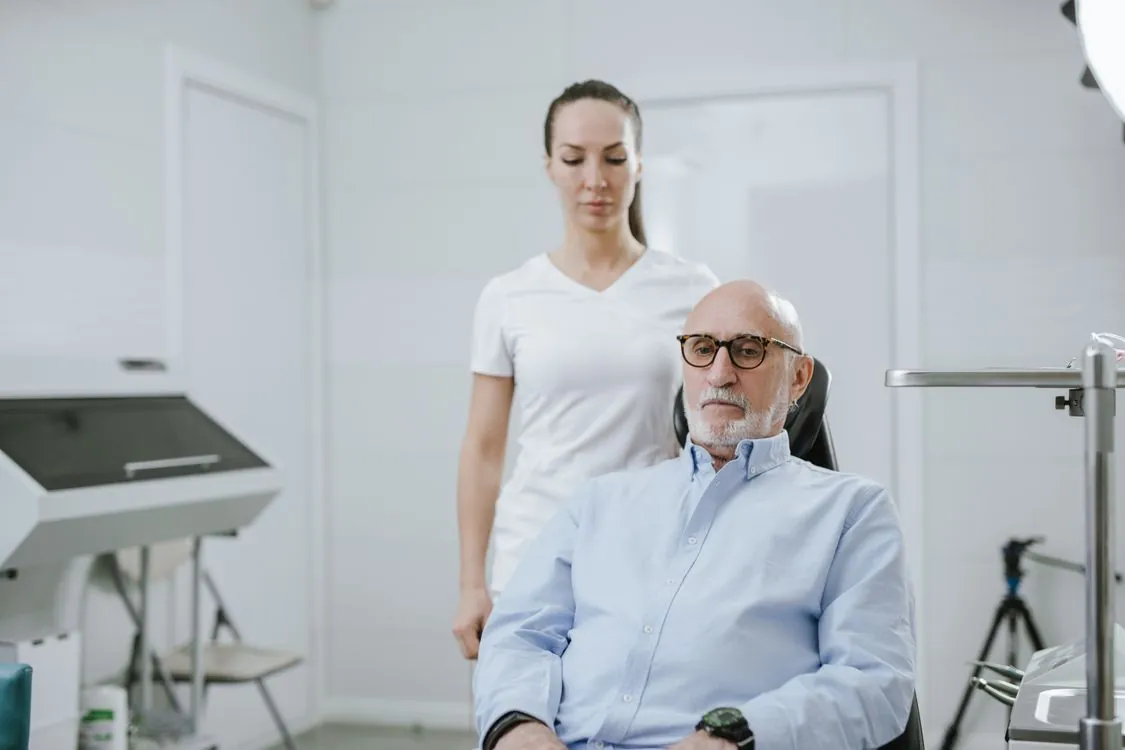
AI is relevant to Cochlear because implant outcomes depend on many data-heavy steps: patient selection, surgical planning, sound processing, fitting, rehabilitation, and long-term support. A ScienceDirect review described artificial intelligence in cochlear implant technology across speech enhancement, automated fitting, AI-assisted surgery, predictive modeling, and rehabilitation, according to a review on cochlear implants and artificial intelligence. Those areas align closely with where implant makers can improve outcomes and lower service friction.
The clearest near-term use case is prediction. News-Medical reported that an AI model using deep transfer learning predicted spoken language outcomes one to three years after cochlear implantation with 92% accuracy, according to News-Medical’s report on a pediatric cochlear implant study. If similar approaches reach clinical workflows, they could help physicians and families set expectations, identify children who need more intensive therapy, and allocate rehabilitation resources more efficiently.
AI can also influence device performance. Speech enhancement and sound-scene processing are natural areas for algorithmic improvement because cochlear implant users often struggle in noisy environments. Better processing could make upgrades more valuable and help justify premium devices, but medical device companies must validate performance carefully before making clinical claims.
The opportunity does not automatically belong to Cochlear. Academic labs, hospital systems, software firms, and competing device companies can also build prediction, fitting, and rehabilitation tools. Cochlear’s advantage is access to device knowledge, clinical relationships, and installed-base support channels. Its risk is that software-driven improvements shorten hardware differentiation if algorithms become more important than implant platform loyalty.
Regulation is the other constraint. AI that influences clinical decisions or device settings can face validation, liability, and update-control issues. Investors should expect gradual adoption rather than a sudden AI-driven earnings step change. The most realistic upside is better patient outcomes, more efficient support, higher upgrade value, and stronger clinician engagement over several product cycles.
| AI Application Area | What It Does | Reported Accuracy / Impact | Source |
|---|---|---|---|
| Predicting language outcomes | Deep transfer learning model predicts spoken language outcomes 1-3 years post-implantation | 92% accuracy | News-Medical |
| Speech enhancement & automated fitting | Algorithmic improvement for noisy environments and automated device tuning | Described as “natural area for improvement” | ScienceDirect review |
| AI-assisted surgery & rehabilitation | Planning, robotic assistance, and personalized rehab protocols | Listed among key AI application categories | ScienceDirect review |
Major Issues Cochlear Must Solve Before Investors Trust It Again
The first issue is demand visibility. Reuters’ weak-demand reference hit the stock because Cochlear’s premium valuation depended on predictable procedure growth, according to Reuters’ COH.AX page. Management needs to show whether weakness was temporary, regional, product-cycle related, or part of a deeper slowdown in implant adoption.
The second issue is guidance credibility. Once the company says earnings will be near the bottom end of its forecast range, investors tend to demand cleaner communication and wider safety margins in future outlooks. Cochlear must avoid another reset that makes the market question internal forecasting.
The third issue is capital allocation. The Saluda writedown mentioned by AFR is a reminder that investors care about how cash is deployed outside the core implant franchise, according to AFR’s Cochlear company page. Growth investments are acceptable when the core business is performing, but writedowns during a downgrade raise the cost of trust.
The fourth issue is operating use. Cochlear has spent on operating model redesign and core business systems upgrades over recent years, according to a company financial results snippet that described investment in those areas and R&D as a percentage of revenue, available through Cochlear’s financial results archive. Investors now need evidence that those programs improve efficiency rather than only add cost.
The fifth issue is product-cycle execution. The Nucleus 8 upgrade helped services revenue in the prior period, according to Cochlear’s results document. Future upgrades must keep users engaged and support recurring revenue without relying on one processor cycle to carry growth.
Investment View for July 2026: Recovery Potential, But Proof Comes Before Re-Rating
Cochlear’s investment case in July 2026 is a recovery case built on a still-valuable franchise. The company has global implant expertise, a service-linked installed base, adult and senior market opportunity, and exposure to AI-assisted hearing care. Those assets are real, and they are hard for a new entrant to replicate quickly.
The bear case is also credible. A stock does not fall by the reported scale unless investors believe earnings quality, demand durability, or valuation support has changed. Weak demand, a guidance reset, geopolitical disruption, and a writedown are enough to turn a premium stock into a show-me story.
The recent rise in share price can continue if investors believe the sell-off overshot fundamentals. A lasting re-rating requires harder evidence: stable procedure demand, better conversion from referral investments, disciplined operating costs, no further surprise writedowns, and management guidance that rebuilds trust. Until then, rallies should be viewed as recoveries from distressed sentiment rather than confirmation that the business has returned to its former growth profile.
For long-term investors, the central question is whether Cochlear’s installed base and technology position can offset slower or more volatile new implant growth. For shorter-term traders, the question is whether recent buying is driven by genuine earnings confidence or a technical rebound after extreme selling. Both groups should watch next official results, commentary on adult and senior procedure growth, services revenue, margin trends, and any update on AI-enabled clinical or product features.
Cochlear is still one of the most important listed hearing implant companies in the world. The stock is no longer being priced as if that status alone is enough. In 2026, the market is asking for evidence, and the next phase of shareholder returns will depend on whether management can turn a high-quality medical device franchise back into a dependable earnings compounder.
Sources and References
Sources cited while researching and writing this article:
- Cochlear Americas | Hear Now And Always | Cochlear Implants
- Cochlear Limited Financial Results
- Annual Report (incl Sustainability reporting) – Cochlear Limited (ASX …
- Cochlear’s financial year 2025 results and outlook – roger montgomery
- Cochlear Limited Financial Results
- COH News, Analysis, Announcements & Results | Cochlear Limited – AFR
- Why everyone selling Cochlear shares right now could regret it in 3 years
- 3 reasons to buy Cochlear shares in June
- What on earth’s going on with Cochlear shares?
- Cochlear Limited – Wikipedia
- Executive team – Cochlear
- Board of directors – Cochlear
- Study shows AI can predict language success after cochlear implants
- Cochlear Limited Financial Results
Jackson Harper
Runs on caffeine, market data, and an unreasonable number of parameters. Never sleeps. Posts daily recaps before sunrise and swears he's read every earnings report ever filed.