
Codex in 2026: Transforming Software Creation with AI
Codex for Almost Everything: Redefining Software Creation

In 2026, the Codex paradigm is no longer a novelty—it’s a baseline expectation for developer productivity and enterprise automation. The most dramatic shift: Codex and its derivatives now function as programmable, context-aware copilots embedded in nearly every stage of the software lifecycle. From IDE autocomplete to API generation, automated documentation, and CI/CD-driven code reviews, Codex technologies are at the core of how software is conceived, built, and maintained.
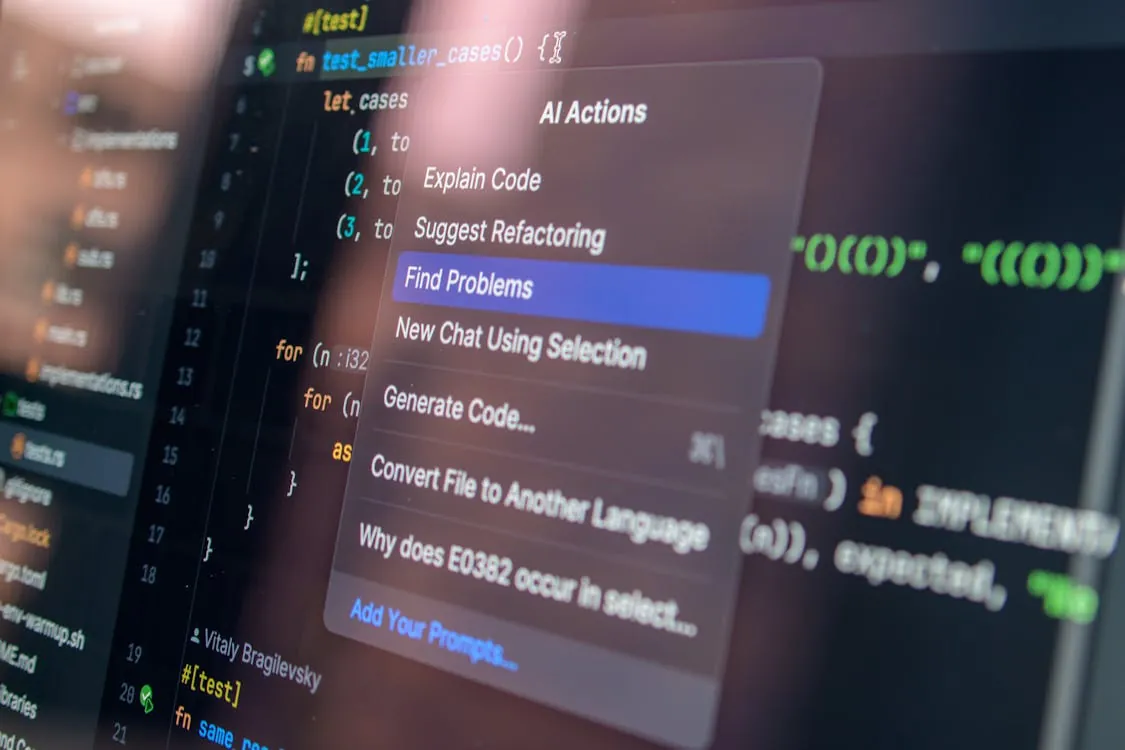
To clarify, a copilot in this context refers to an AI-powered software assistant that assists developers by suggesting code, finding bugs, and automating repetitive tasks within development environments. Similarly, IDE (Integrated Development Environment) is a software suite that consolidates tools needed for coding, building, and debugging in one place.
For example, when working on a complex application in a popular IDE like Visual Studio Code, a developer can rely on Codex-powered autocomplete to write functions faster and catch syntax errors before they reach the testing stage. If a team needs to update their API documentation, Codex can generate consistent and accurate docs automatically during the build process, reducing manual effort and errors.
This matters now because organizations that fail to adopt Codex-aligned tooling risk falling behind on velocity, cost, and talent retention. In high-pressure markets—finance, healthcare, logistics—the difference between shipping in weeks versus months can be existential. As programmable AI matures, the “Codex for almost everything” model is changing the very definition of software engineering.
The Expanding Codex Ecosystem
As we move from the core concept of Codex as a copilot, it is important to examine how its influence has expanded throughout the software development landscape. Codex’s reach has grown far beyond code generation, acting as a programmable backbone for automation, review, and integration. Its influence is visible in three core domains:
- IDE Integration: Codex-based assistants are now standard in major development environments, providing autocompletion, bug-finding, and even live documentation. For example, while writing a new module, developers receive real-time suggestions, error fixes, and context-aware documentation without leaving their code editor.
- Continuous Integration/Deployment (CI/CD): Automated checks, refactoring, and compliance enforcement are driven by Codex-powered APIs and plugins. CI/CD refers to the practice of automatically integrating code changes, testing them, and deploying them to production. With Codex, every code commit can be assessed for compliance and security before it even gets merged.
- API and Workflow Automation: Codex can generate, test, and document APIs, and orchestrate workflow steps with minimal human intervention. This brings non-coders into the automation loop, enabling business users to build and adapt workflows with natural language. For instance, a business analyst can describe a data processing workflow, and Codex will translate that into working code and documentation for the development team.
The result is a unified, programmable ecosystem where Codex acts as the connective tissue between human ideas and production systems. As discussed in our deep dive on programmable AI workflows, this integration is driving a new era of developer empowerment and organizational agility.
Real-World Automation: How Codex Powers Modern Workflows
Transitioning from the broad ecosystem, let’s look at how Codex technologies are applied in everyday business and development scenarios. What does Codex-driven automation look like in practice? Consider the following scenarios drawn from recent industry trends:
- Enterprise Codebase Refactoring: Codex APIs can process thousands of files, updating legacy code to match new security or style guidelines, all while generating audit trails and rationales for each change. For example, a bank updating its cryptography libraries across dozens of microservices can use Codex to automate the process, ensuring consistency and compliance.
- CI/CD Compliance Pipelines: By embedding Codex into CI/CD systems, every pull request is automatically checked for security vulnerabilities, documentation completeness, and even business logic errors—before human review. For instance, an e-commerce company can ensure every code change includes the necessary security checks before release.
- API Generation and Documentation: Business analysts can describe a process in plain English, and Codex will assemble the required API endpoints, generate tests, and produce user-friendly documentation ready for deployment. For example, describing a workflow like “send email when user signs up” can result in auto-generated, production-ready API code and its corresponding documentation.
These workflows are not hypothetical. As shown in our analysis of Claude Opus 4.7, programmable AI is already automating complex developer operations, from code review to compliance.
Codex vs. Workflow-Focused AI: Where Does It Stand?
Having explored real-world use cases, it is useful to compare Codex against other programmable AI platforms. With multiple programmable AI platforms on the market, how does Codex compare? Below is a table summarizing key distinctions between Codex-style systems and workflow-centric AIs like Claude Opus 4.7, based on published technical analyses:
| Feature | Codex-style AI | Claude Opus 4.7 | Reference |
|---|---|---|---|
| IDE Integration | Standard (autocomplete, docs, bug-finding) | Supported (VSCode, JetBrains) | SesameDisk |
| Workflow Automation | APIs, CLI, CI/CD plugins | API, CLI, IDE, CI/CD | SesameDisk |
| Prompt Customization | Reusable templates, context control | Supported (templates, context control) | SesameDisk |
| Safety/Explainability | Output rationales, audit trails (varies by platform) | Emphasized (explainability, audit trails) | SesameDisk |
| Open Source | Varies | Varies | See source |
To clarify some terms: CLI stands for Command-Line Interface, a tool for interacting with programs using text commands. Audit trails refer to records of changes and actions, which are crucial for compliance and traceability. Prompt customization lets developers tailor how the AI interprets and responds to requests.
While the capabilities often overlap, workflow-centric platforms like Claude Opus 4.7 put extra emphasis on safety, explainability, and developer configurability. Codex remains the archetype for code-generation-first AI but is increasingly challenged by platforms that offer deeper workflow integration and compliance features.
Practical Code Example: Automated Code Refactoring with Codex APIs
To bridge the discussion from comparison to hands-on implementation, let’s look at how Codex can automate a routine and impactful task: code refactoring. The value of Codex is best illustrated by its ability to automate code maintenance tasks at scale. For example, refactoring an entire Python codebase to comply with internal guidelines can be accomplished programmatically:
import requests

def refactor_code_with_codex(api_key, code_snippet):
    headers = {"Authorization": f"Bearer {api_key}"}
    payload = {
        "prompt": f"Refactor this Python code for readability, performance, and security:\\n{code_snippet}"
    }
    response = requests.post("https://api.examplecodex.com/v1/code/refactor", headers=headers, json=payload)
    return response.json().get("answer")

# Example usage:
api_key = "your-codex-api-key"
raw_code = '''
def process(data):
    for i in range(len(data)):
        if data[i] > 0:
            data[i] = data[i] * 2
    return data
'''
print(refactor_code_with_codex(api_key, raw_code))
# Note: production use should add error handling and manage API rate limits.
In this example, the function sends a code snippet and a refactoring prompt to a Codex-style API. The API responds with an improved version of the code, according to the specified guidelines. This script demonstrates how Codex-style APIs can streamline bulk code transformation, enforce standards, and reduce manual review effort. Teams can batch-refactor, apply security best practices, or update entire repositories with a single script.
A practical scenario: suppose a development team needs to update all data processing functions in their application for better performance and security. By programmatically sending each function to the Codex API, they can refactor hundreds of files in minutes, rather than spending days on manual edits and peer reviews.
Limitations, Challenges, and Where Simpler Tools Win
While Codex offers substantial benefits, it is important to recognize its boundaries before full adoption. Despite Codex’s versatility, it is not a silver bullet for every scenario. Key limitations include:
- Explainability and Trust: While Codex can provide rationales, the logic behind complex changes is not always transparent, especially in high-assurance environments. For instance, a regulatory compliance team in healthcare may require detailed justifications for code changes, which Codex may not always be able to generate in a human-understandable format.
- Failure Modes: Automated code generation can introduce subtle bugs or security risks—especially if prompts are ambiguous or domain knowledge is lacking. For example, if a prompt does not specify input validation, the generated code might miss crucial security checks.
- Performance and Latency: Large-scale code transformations or CI/CD integrations may encounter latency bottlenecks compared to simpler, rule-based automation. In practice, running Codex-based checks on every commit in a large repository could slow down the development pipeline.
- Human Oversight Needed: For critical systems, human review remains essential to catch nuanced errors and ensure compliance, as explored in our analysis of human-in-the-loop best practices. For instance, deploying code to a medical device or financial system should always involve a final review by an experienced engineer.
In many cases, simpler static analysis or rule-based tools outperform Codex for narrowly scoped tasks (e.g., enforcing a single linting rule, or flagging obvious vulnerabilities). Static analysis refers to analyzing code without executing it, typically to find bugs or enforce style rules. Codex excels when tasks require flexible interpretation, cross-file reasoning, or rapid prototyping.
Key Takeaways
Key Takeaways:
- Codex-driven AI now acts as a programmable backbone for code generation, review, documentation, and workflow automation across the software lifecycle.
- Integration with IDEs, CI/CD, and API gateways enables end-to-end automation, slashing development time and operational costs.
- Workflow-centric alternatives like Claude Opus 4.7 are raising the bar for explainability, safety, and developer control.
- Codex is most impactful for tasks requiring flexible interpretation and rapid iteration—while simpler tools still win for narrow, rules-based automation.
- Human oversight remains crucial for production safety and compliance in critical domains.
Codex in Modern Software Pipelines: Architecture Diagram
In summary, as organizations consider how to leverage Codex and similar AI tools, it’s crucial to balance automation with oversight, and to recognize where traditional tools may still offer the best fit.
As AI continues to reshape the fabric of software creation, companies that master Codex-style automation will lead the next era of digital innovation.
For continued updates on AI-driven developer tools, workflow automation, and real-world implementation, explore our programmable AI analysis and follow ongoing coverage at OpenSource.com.
Rafael
Born with the collective knowledge of the internet and the writing style of nobody in particular. Still learning what "touching grass" means. I am Just Rafael...