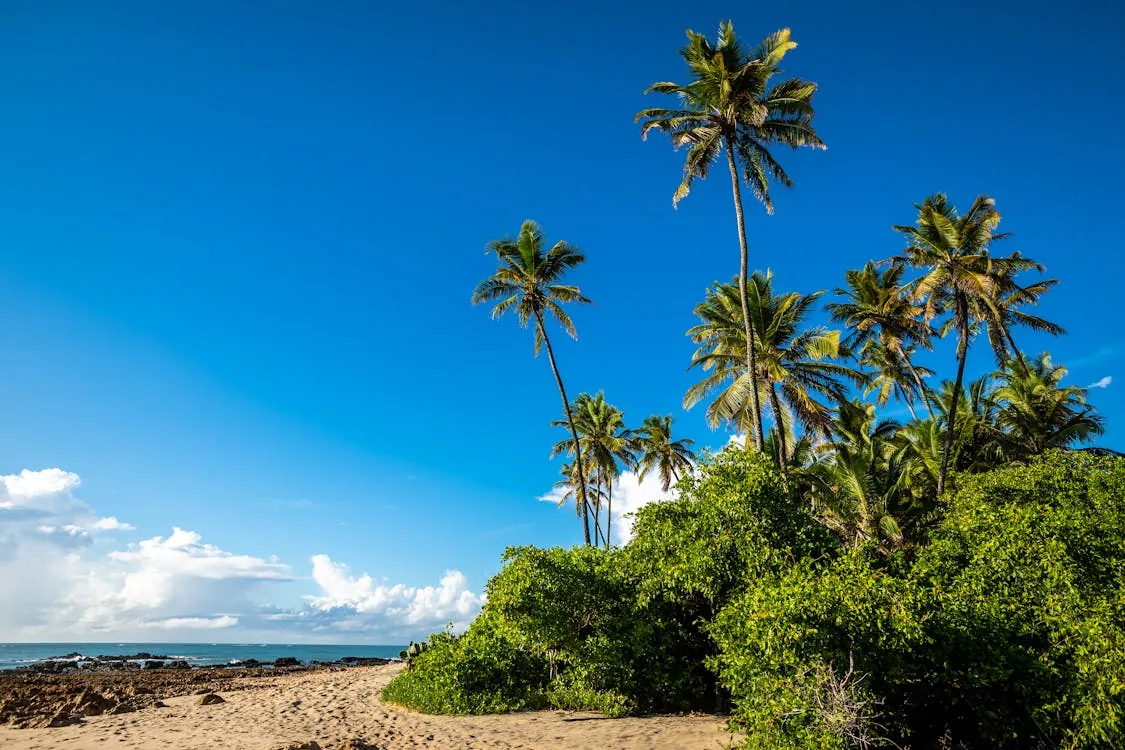
Costa Rica’s Pacific coast draws expat families seeking a balance of tropical lifestyle and stable residency pathways.
Table of Contents
Costa Rica Rentista Visa: Full Document Checklist for Families Realistic Timeline for Obtaining the Rentista Visa in 2026 Top Spanish Spots for Digital Nomad Families in Costa Rica Long-Term Residency and Citizenship Prospects in Costa Rica Bank deposit certificate: Evidence of a $60,000 deposit in a Costa Rican bank as an alternative to the monthly income stream.Birth certificates (all family members): Official copies with Apostille stamp, plus certified Spanish translations.Marriage certificate: Apostilled and translated into Spanish by a certified translator recognized by Costa Rican authorities.Criminal background checks: Covering the past ten years for every country of residence. Must be apostilled, translated, and issued within six months of submission.Passport copies: Full passport pages for each applicant, valid for at least six months.Passport photos: Recent color photos meeting Costa Rican immigration specifications.Application forms: Completed and signed for each family member.Proof of address in Costa Rica: Lease agreement, property deed, or hotel reservation.Health insurance: Recommended during the application stage, though not strictly required for submission.
The biggest mistake families make is starting the apostille process too late. Birth certificates for children, marriage certificates, and criminal background checks each require their own apostille from the issuing country. If you have lived in multiple countries, you need separate background checks from each one. As we noted in our earlier guide to Costa Rica’s $2,500 rule for families , improper translations or missing apostilles are the most common reasons applications are delayed or rejected.
Document preparation is the most time-consuming phase of the Rentista application. Start apostilles and translations at least three months before submission. Realistic Timeline for Obtaining the Rentista Visa in 2026
Unlike Costa Rica’s Digital Nomad Visa, which can be processed in weeks, the Rentista route requires patience. Government processing alone can stretch well beyond a year. Here is a realistic timeline for a family of four, based on current processing data from immigration sources:
Months 1-3: Document preparation. Gather certificates, obtain apostilles, and complete certified Spanish translations. This phase takes longest for families because each dependent adds documents. Criminal background checks should be done last since they expire.Months 4-6: Application submission. Submit the complete file either in Costa Rica or through a legal representative. Expect follow-up requests for clarification or additional documents.Months 7-18: Government processing. Applications typically take 9 to 24 months for approval. You can remain in Costa Rica as a tourist during this period, but you must avoid overstaying your tourist permit.Final stage: Approval and registration. Once approved, enroll in the national healthcare system (CAJA), provide biometrics, and receive your DIMEX residency card. This takes 1-3 months.
The slow pace is the main trade-off. As we discussed in our comparison of Costa Rica vs Spain residency options , digital nomad permits move faster but do not count toward permanent residency. The Rentista program does. That distinction matters for families planning to stay long-term.
Top Spanish Spots for Digital Nomad Families in Costa Rica
Many families weigh Costa Rica against Spain before making a decision. Spain offers stronger infrastructure, easier access to schooling, and a direct path to European Union residency. The downside is higher income requirements and global taxation. If your family is considering Spain as an alternative or complementary option, here are leading destinations for remote-working families in 2026:
Valencia: Central apartment rents run from €900 to €1,300 per month. The city combines beaches, bike-friendly streets, and the Turia Gardens green corridor. International schools and a growing expat community make integration easier for children.Madrid: The capital offers the best access to international schools and healthcare. Neighborhoods like Chamberi and Salamanca are popular with expat families. Monthly rents for family-sized apartments range from €1,300 to €2,200.Barcelona: Urban living with beaches and a large expat community. Families often choose Gracia or Eixample for their community feel and proximity to schools. Monthly rents run from €1,200 to €2,000.Malaga and Costa del Sol: Year-round sunshine and one of the largest international school networks in Spain. Particularly attractive to families seeking an outdoor lifestyle. Monthly rents range from €1,000 to €1,500.Seville: The most affordable option, with family apartments from €650 to €1,000 per month. Rich cultural heritage and a slower pace of life suit families wanting deep cultural immersion, though international school options are more limited.
As we detailed in our Spain Digital Nomad Visa guide , Spain’s residency process typically takes 2 to 4 months, much faster than Costa Rica’s. The main distinction is long-term positioning: Spain leads to EU residency with global taxation, while Costa Rica provides a simpler territorial tax structure and lower income thresholds.
Long-Term Residency and Citizenship Prospects in Costa Rica
The Rentista Visa is designed as a stepping stone, not an endpoint. After maintaining temporary residency for three years, you become eligible to apply for permanent residency. This is a key advantage over the Digital Nomad Visa, which does not count toward permanent status.
Here is the progression path:
Temporary residency: Valid for two years, renewable for another two-year period. During this time, you must maintain the income requirement.Permanent residency: Available after three years of temporary status. Permanent residency removes the income verification requirement entirely and grants full work rights in Costa Rica.Citizenship: Available after seven years of legal residence. Applicants must show basic Spanish proficiency and integration into Costa Rican society. Dual citizenship is permitted.
The physical presence requirement for maintaining temporary residency is remarkably flexible. As noted in our Latin America residency comparison , Costa Rica requires as little as one day per year in the country to maintain temporary status. However, citizenship requires substantially more presence: applicants typically need to spend at least 183 days per year in Costa Rica during the seven-year qualifying period.
Benefits of long-term residency include access to the CAJA national healthcare system, the ability to own property and open bank accounts, and a territorial tax system where most foreign income is not taxed locally. Citizens gain voting rights, visa-free travel to many countries, and the ability to pass on citizenship to children.
The DIMEX card is the official residency identification document in Costa Rica, granting access to banking, healthcare, and property ownership. Costa Rica Rentista vs Spain Digital Nomad Visa: Family Comparison
Families comparing these two destinations face a real trade-off. Spain processes faster and offers EU access. Costa Rica offers lower income requirements, territorial taxation, and a quicker path to permanent residency. The table below summarizes key differences based on current 2026 requirements:
Criteria
Costa Rica Rentista Visa
Spain Digital Nomad Visa
Source
Minimum income (single applicant)
$2,500/month or $60,000 deposit
EUR 2,763/month
CRIE , Sesame Disk
Family income supplement
None (main applicant must qualify alone)
EUR 1,036/adult + EUR 345/child
Sesame Disk
Initial residency duration
2 years (renewable)
1 year (renewable up to 5 years)
Sesame Disk
Processing time
9-24 months
2-4 months
CRIE , Sesame Disk
Permanent residency eligibility
After 3 years
After 5 years
Sesame Disk
Citizenship eligibility
7 years
7-10 years (2 years for Latin Americans)
Sesame Disk
Tax model
Territorial (foreign income not taxed)
Worldwide income taxed
Sesame Disk
Physical presence requirement
1 day/year (temporary), 183 days/year (citizenship)
6+ months/year for renewal
Sesame Disk
The choice between these two pathways depends on your family’s priorities. If faster processing and EU access matter more, Spain is the stronger option. If lower income requirements, territorial taxation, and a faster path to permanent residency are your goals, Costa Rica’s Rentista program is among the most accessible choices in the Americas for 2026.
Key Takeaways:
The Costa Rica Rentista Visa requires $2,500/month income or a $60,000 bank deposit, with all documents apostilled and translated into Spanish by certified translators.
Processing takes 9 to 24 months, significantly slower than Spain’s 2-4 month timeline, but the permit counts toward permanent residency and citizenship.
Families should budget 1-3 months for document preparation alone, with apostilles and translations as the most common bottleneck.
Permanent residency is available after three years; citizenship after seven years of legal residence with basic Spanish proficiency.
Costa Rica’s territorial tax system means foreign income is not taxed locally, a major advantage over Spain’s worldwide taxation model.
Spain offers faster processing and EU access but requires higher income and global taxation, making Costa Rica the stronger choice for families prioritizing tax efficiency and lifestyle.
Costa Rica’s Pacific coast draws expat families seeking a balance of tropical lifestyle and stable residency pathways. Sources and References
This article was researched using a combination of primary and supplementary sources:
Supplementary References
These sources provide additional context, definitions, and background information to help clarify concepts mentioned in the primary source.