FDV 2026: Short-Interval Valuation Tracking
FDV 5min analysis matters because a small five-minute price move can change a large stock’s market value by billions of dollars, while the same percentage move in a thinly traded token can expose a liquidity trap. The metric is most useful when traders combine percentage change, volume, market cap, and the reason for the move rather than treating a short burst in price as a complete signal.
Key Takeaways:
- FDV 5min tracking is a short-interval valuation lens that helps traders compare price changes with market cap and volume.
- The method is most useful in fast markets, especially around earnings, macro releases, ETF flows, and crypto token unlocks.
- A five-minute move should be read differently for mega-cap equities, dividend ETFs, banks, AI stocks, and crypto assets because liquidity and float differ.
- Morningstar’s 2026 FDV ETF page shows why composition matters: Federated Hermes U.S. Strategic Dividend ETF’s top 10 holdings accounted for 35.8% of assets as of Jun 18, 2026.
- The best use is as a triage tool: it flags where valuation is moving, but investors still need cause, volume check, and risk limit.

What FDV 5min Means in 2026
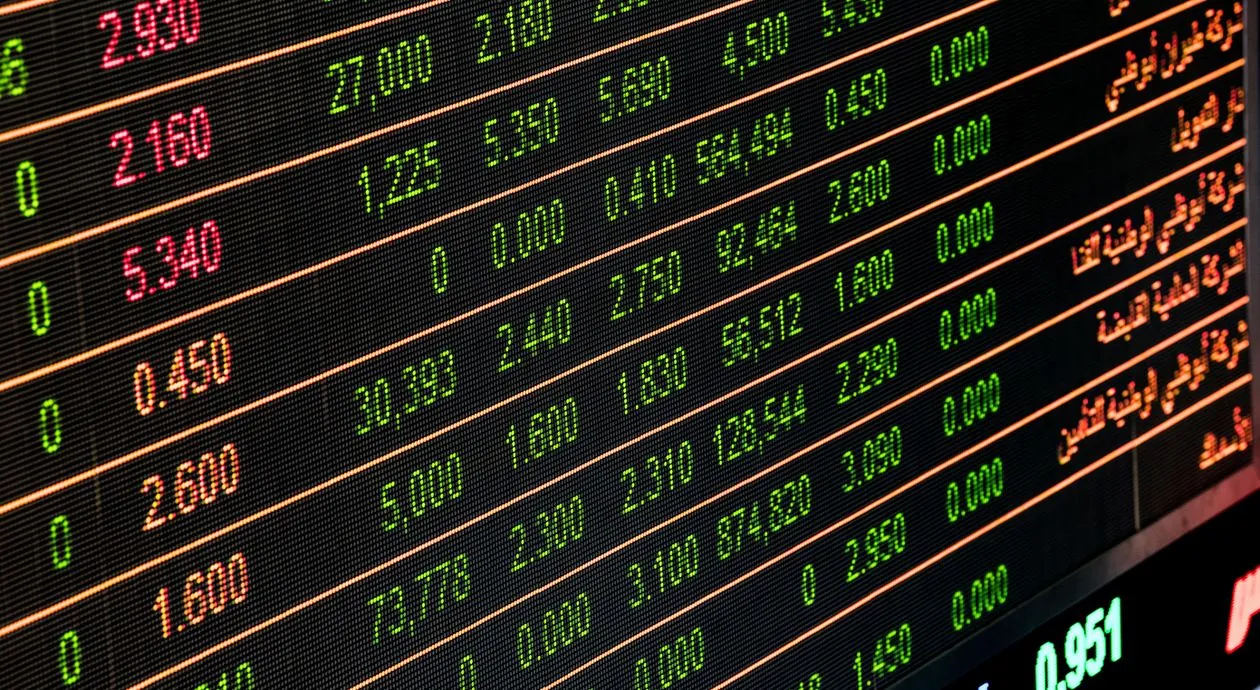
FDV 5min is a short-term market valuation view that tracks how a security’s implied value changes over five-minute intervals. In equities, the closest practical measure is market capitalization change: share price multiplied by shares outstanding. In crypto, traders often use fully diluted valuation, which applies price to the maximum or fully diluted token supply.
The five-minute interval is an important part. A daily chart tells investors where a stock or token ended the session, but a five-minute valuation read shows when market value was added or lost. That timing helps identify whether the move came at the open, after a headline, during a macro release, or into the close.
For stocks, the metric is most useful when paired with ticker symbol, stock price, percentage change, market cap, and trading volume. For crypto assets, it should also be paired with circulating supply, fully diluted supply, unlock schedules, and exchange liquidity. A price jump without volume is weaker than a smaller move that comes with confirmed liquidity and a clear catalyst.
This distinction matters because valuation change is scale-sensitive. The five-minute screen helps traders sort moves that matter from moves that only look dramatic on a percentage basis.
Analysis: Investors should treat FDV 5min as a speedometer, not a full investment case. It tells you how fast valuation is changing. It does not tell you whether the move is justified, durable, or tradable after spreads, slippage, and taxes.
Why Five-Minute Valuation Reads Matter for Stocks and ETFs
Equity traders use short-interval valuation tracking because large stocks can move index levels quickly. That example is still useful in 2026 because five-minute moves in mega-cap technology can affect the S&P 500, Nasdaq, sector ETFs, and options positioning at the same time.
The same idea applies to dividend ETFs, but interpretation is different. The Federated Hermes U.S. Strategic Dividend ETF (FDV) is a portfolio. Short-term price action reflects a mix of its holdings, ETF flows, spread conditions, and dividend-stock demand.
Morningstar’s FDV page, rated and published on Apr 30, 2026, identifies the fund as Federated Hermes U.S. That concentration figure matters for short-interval analysis because a move in AbbVie (ABBV), PNC Financial Services Group (PNC), Paychex (PAYX), U.S. Bancorp (USB), Amgen (AMGN), PepsiCo (PEP), WEC Energy Group (WEC), Chevron (CVX), Prologis (PLD), or Darden Restaurants (DRI) can affect the ETF’s intraday behavior through portfolio exposure.
| FDV ETF holding | Portfolio weight | Market value shown by Morningstar | Sector | Source |
|---|---|---|---|---|
| AbbVie (ABBV) | 4.32% | $33M | Healthcare | Morningstar |
| PNC Financial Services Group (PNC) | 4.28% | $33M | Financial Services | Morningstar |
| Paychex (PAYX) | 4.06% | $31M | Technology | Morningstar |
| U.S. Bancorp (USB) | 3.76% | $29M | Financial Services | Morningstar |
| Amgen (AMGN) | 3.52% | $27M | Healthcare | Morningstar |
| PepsiCo (PEP) | 3.33% | $26M | Consumer Defensive | Morningstar |
| WEC Energy Group (WEC) | 3.29% | $26M | Utilities | Morningstar |
| Chevron (CVX) | 3.17% | $25M | Energy | Morningstar |
| Prologis (PLD) | 3.07% | $24M | Real Estate | Morningstar |
| Darden Restaurants (DRI) | 3.04% | $24M | Consumer Cyclical | Morningstar |
The table shows why a five-minute ETF move needs portfolio context. If the strongest five-minute action comes from healthcare and financial holdings, FDV’s tape should be read differently than if the move comes from a broad dividend-stock bid. The ETF ticker alone does not explain the move.
Forward read: For equity investors, the next useful step is to watch whether short-interval valuation shifts cluster in the same sectors. Repeated five-minute buying in healthcare, banks, utilities, and consumer defensive holdings can point to defensive rotation, while isolated bursts often reflect single-name news.
How to Calculate and Interpret a Five-Minute Valuation Move
The basic stock-market version is simple: compare a security’s value at the start of a five-minute window with its value at the end. For a company, that means using share price and shares outstanding. For an ETF, it means using fund price, shares outstanding, and the underlying basket’s movement. For a token, it means comparing price with circulating or fully diluted supply.
Investors should separate three calculations. First, percentage price change shows how much the quote moved. Second, dollar value change shows how much market value moved. Third, volume confirms whether the move had enough participation to matter.
| Market instrument | Five-minute input to track | Valuation question | Risk check |
|---|---|---|---|
| Mega-cap stock such as Nvidia (NVDA) | Stock price, percentage change, shares outstanding, trading volume | How much market cap changed during interval | Options flow and index impact can amplify move |
| Dividend ETF such as Federated Hermes U.S. Strategic Dividend ETF (FDV) | ETF price, basket movement, spread, holdings concentration | Whether ETF move reflects basket or fund flow | Wide spreads can make small moves look more tradable than they are |
| Bank stock such as JPMorgan Chase (JPM) | Stock price, percentage change, volume, yield movement | Whether value move follows rates, credit, or earnings news | Macro headlines can reverse bank moves quickly |
| Energy stock such as Chevron (CVX) | Stock price, percentage change, oil move, volume | Whether move follows crude, company news, or sector flow | Commodity reversals can erase intraday equity gains |
| Crypto asset such as Bitcoin (BTC-USD) | Price, volume, funding, liquidation data, market cap | Whether valuation change is spot-led or derivative-led | use can force moves beyond spot demand |
The stock version of FDV 5min should also be adjusted for float and liquidity. A company with a smaller public float can show a large percentage move on limited trading. A mega-cap company can show a smaller percentage move but a far larger market value swing. The second move is often more important for index investors.
The crypto version requires extra caution because fully diluted valuation can overstate what the market can absorb if many tokens are locked, illiquid, or scheduled for future release. A token can look cheap on current market cap but expensive on fully diluted supply. It can also look strong during a five-minute rally that is mostly driven by short liquidations rather than organic demand.
Analysis: The cleanest use is ranking. Traders can build a five-minute screen that ranks stocks, ETFs, or tokens by valuation change, then filter for volume and news. The signal becomes stronger when price, volume, and catalyst line up.
Market Cap Context From 2026 Coverage
Short-term valuation tools are more useful after a year of large market cap changes because investors become sensitive to concentration. Our market cap surge review explained that Nvidia (NVDA) gained 171.2% in 2024, while top U.S. Those historical moves explain why 2026 traders keep watching mega-cap and bank valuation changes in short intervals.
Short-interval signals are also useful in commodity-linked stocks. In our Tourmaline Oil 2026 stock outlook, the main issue was cash-flow conversion from real assets, not only share-price movement. That is the same discipline investors need when reading a five-minute value change in Chevron (CVX), Tourmaline Oil (TSX:TOU), or another energy name: tape can move quickly, but the investment case still depends on commodity prices, production economics, capital spending, and shareholder returns.
Crypto adds another layer. Our 2026 Zcash coverage described a privacy-asset repricing where a rapid gain and later selloff showed how trust risk can overwhelm short-term price action. That type of move is exactly where fully diluted valuation tracking can help, but it also shows its limit. A five-minute valuation spike says capital is moving now. It does not prove durable adoption.
Forward read: The most useful 2026 application is cross-asset comparison. If mega-cap technology, banks, energy, gold, oil, and Bitcoin all move in the same five-minute window, the signal is probably macro or liquidity-driven. If only one ticker moves, the cause is more likely company-specific.
Common Mistakes When Using FDV 5min
The first mistake is treating a five-minute percentage change as a valuation conclusion. The smaller percentage move can represent a much larger dollar change.
The second mistake is ignoring spreads. A low-volume ETF or token can show a sharp move because bid and ask widened, not because investors revalued the asset. For ETFs such as FDV, traders should compare quoted price with the underlying basket and watch whether spreads are normal before acting.
The third mistake is ignoring composition. Morningstar’s FDV portfolio data shows that the fund’s top 10 holdings were 35.8% of assets as of Jun 18, 2026, with AbbVie (ABBV), PNC Financial (PNC), Paychex (PAYX), U.S. Bancorp (USB), and Amgen (AMGN) among the largest positions, according to Morningstar. A five-minute ETF move can come from one large holding, several holdings in one sector, or broad ETF demand.
The fourth mistake is mixing stock market cap and crypto fully diluted valuation without adjusting interpretation. Public companies have shares outstanding, buybacks, issuance, and index ownership. Crypto assets have supply schedules, unlocks, treasury holdings, exchange depth, and token distribution. Both can be tracked over five minutes, but the meaning of the move differs.
Analysis: The best traders use the metric as a filter, then slow down. They ask what moved, why it moved, how much value changed, and whether enough volume traded to validate the signal.
Investor Playbook for 2026
Investors can use a four-step process for FDV 5min screens. First, identify the ticker symbol and asset type. A stock, ETF, bank, energy producer, and crypto asset each require a different valuation base. Second, measure percentage change and valuation change during the five-minute window. Third, compare the move with trading volume and spread conditions. Fourth, check the catalyst before entering a trade.
For mega-cap stocks such as Nvidia (NVDA), Microsoft (MSFT), Apple (AAPL), and Taiwan Semiconductor Manufacturing Company (TSM), the signal should be checked against sector news, AI demand headlines, chip supply commentary, and index movement. These names can change market value fast enough to affect broad-market ETFs and derivatives.
For banks such as JPMorgan Chase (JPM), Bank of America (BAC), Wells Fargo (WFC), Citigroup (C), Morgan Stanley (MS), Goldman Sachs (GS), Charles Schwab (SCHW), PNC Financial (PNC), and U.S. Bancorp (USB), investors should compare the five-minute move with Treasury yields, credit headlines, capital-return news, and earnings expectations. A bank rally that follows falling credit concern is different from a bank rally that only follows a rate spike.
For dividend ETFs such as Federated Hermes U.S. Strategic Dividend ETF (FDV), composition matters more than a single headline. The Morningstar holding list points to healthcare, financial services, technology, consumer defensive, utilities, energy, real estate, and consumer cyclical exposure within the top positions. That mix means the ETF can react to defensive rotation, rate changes, and stock-specific moves at the same time.
For crypto assets such as Bitcoin (BTC-USD) and Zcash (ZEC), the screen should include liquidity, funding, liquidation data, and supply context. A five-minute fully diluted valuation surge can reverse quickly if it is driven by forced buying rather than spot accumulation. Privacy-token moves also need a trust check because security headlines can change demand faster than normal valuation models can adjust.
My 2026 call: FDV 5min-style screens will become a standard intraday risk filter for active traders by 2026-12-31 because market cap concentration in mega-cap technology, bank-sector re-ratings, and crypto supply concerns make five-minute valuation changes more informative than price-only alerts. The call is invalidated if active trading platforms and investor commentary stop using short-interval market cap, percentage change, and volume screens as a regular part of intraday analysis by 2026-12-31.
Bottom Line 2026
FDV 5min is useful because it converts fast price action into a valuation question. It helps investors see whether a five-minute move is large enough to matter, whether trading volume supports it, and whether the move belongs to a single ticker, sector, ETF basket, or broader risk shift.
The metric is strongest when used with context. Morningstar’s FDV ETF data shows why portfolio composition matters for an ETF. Our market cap surge coverage shows why mega-cap stocks can dominate index-level valuation changes. Energy and crypto examples show why the same percentage move can mean different things across asset classes.
The practical rule is simple: start with a five-minute value change, then demand proof. Check volume, spreads, holdings, supply, news, and sector context before treating the move as tradable. In 2026, that discipline matters because markets can add or erase large amounts of value before a daily chart has time to tell the story.
Sources and References
Jackson Harper
Runs on caffeine, market data, and an unreasonable number of parameters. Never sleeps. Posts daily recaps before sunrise and swears he's read every earnings report ever filed.