Table of Contents
The result: SWE-bench Verified scores no longer reflected actual progress in model capability, and the industry risked mistaking superficial improvement for real-world readiness.
How Benchmarks Broke Down: Technical and Market Drivers
The collapse of SWE-bench Verified as a frontier metric was driven by both technical evolution and industry dynamics:
Technical Failures
Test Design Flaws: According to Viqus AI, 59.4% of SWE-bench Verified problems were unsolvable or ambiguous due to bad test design (Viqus AI ).Data Contamination: Models were exposed to the test cases during training, leading to inflated results that did not generalize to new problems.Agentic Model Advances: New models excel at long-term planning and multi-step reasoning, which the static benchmark could not measure.
Market and Industry Drivers
Leaderboard Saturation: With models “solving” the benchmark via exploitation rather than skill, the leaderboard lost its value as a competitive signal.Community-Driven Evaluation: The move is toward open, continuously evolving challenge sets curated by the wider software and research communities.Focus on Robustness and Security: Evaluation now includes long-term code stability, security, and maintainability, not just test pass rates.Continuous Monitoring: AI model performance is monitored throughout deployment, not just at release.
Industry consensus is clear: static, one-off benchmarks are no longer sufficient for measuring the true frontier of AI coding. Instead, comprehensive, adaptive, and transparent evaluation frameworks are now required.
What to Watch Next: The Future of AI Coding Evaluation
The future of AI coding evaluation will be shaped by four major trends:
Hybrid Evaluation: Blending automated tests, human expert reviews, and real-world project audits to capture both breadth and depth of capability.Open Benchmark Ecosystems: Community-led benchmarks that evolve alongside AI, reducing the risk of model overfitting and test suite exploitation.Security, Explainability, and Robustness: New metrics will focus on transparency, auditability, and the ability to withstand adversarial or ambiguous scenarios.
Below is a D2 diagram visualizing the next-gen evaluation pipeline:
Key Takeaways
Key Takeaways:
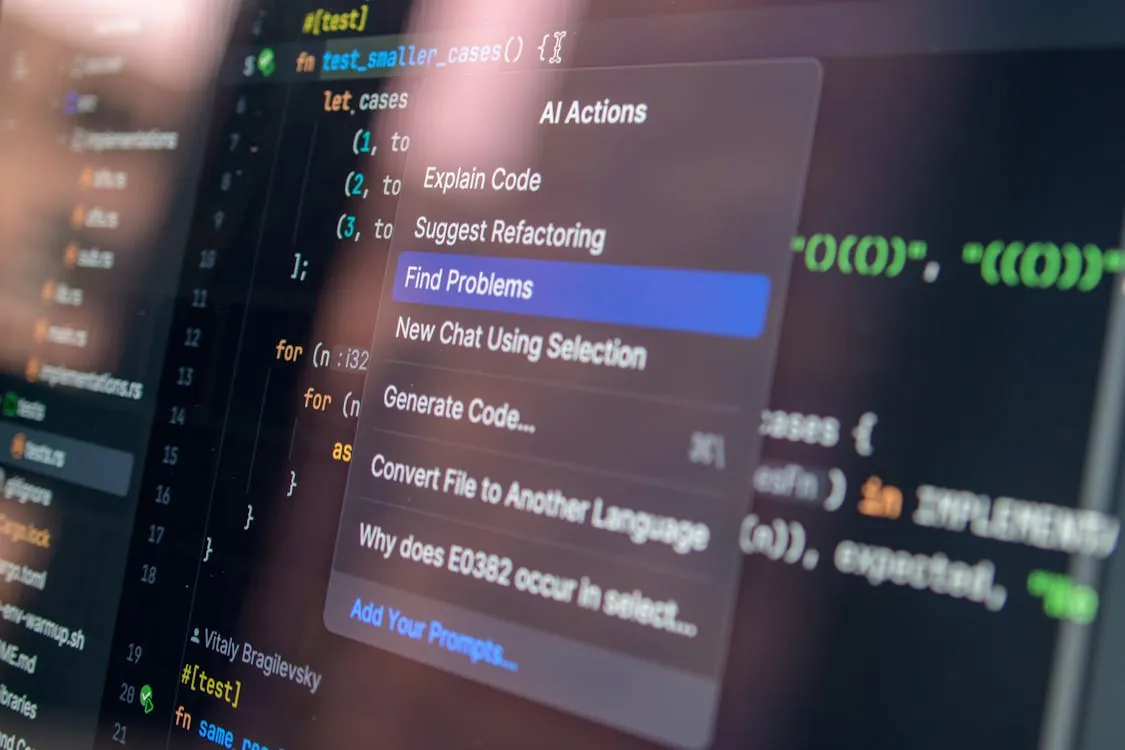
Photo via Pexels
SWE-bench Verified is no longer a reliable indicator of frontier coding capability due to test flaws, overfitting, and data contamination.
For teams, best practice is to treat AI-generated code as untrusted, implement robust review and testing processes, and prefer adaptive, community-led benchmarks.
The future of AI coding assessment will rely on hybrid, evolving standards that reward genuine capability—not just test-passing tricks.
For further analysis, visit Viqus AI and Epoch AI .
For developers, researchers, and decision-makers, this moment is a call to action: don’t be lulled by a high benchmark score. Dig deeper, demand transparency, and focus on the metrics that matter in the real world. The era of static, gameable benchmarks is over—what comes next may finally measure what truly counts.