Table of Contents
This innovation preserves the high-heat responsiveness needed for wok hei while lowering the barrier for home cooks.
Seasoning and Aromatic Infusions
Even with advanced surfaces, many chefs continue to build flavor by seasoning their woks with aromatic oils—sometimes infusing with ginger, scallion, or star anise during the first rounds of oiling. Some professionals are now experimenting with ultrasound-assisted seasoning to accelerate oil bonding and create a more uniform patina, though this remains mostly in commercial settings.
The Quest for Wok Hei (镬气)
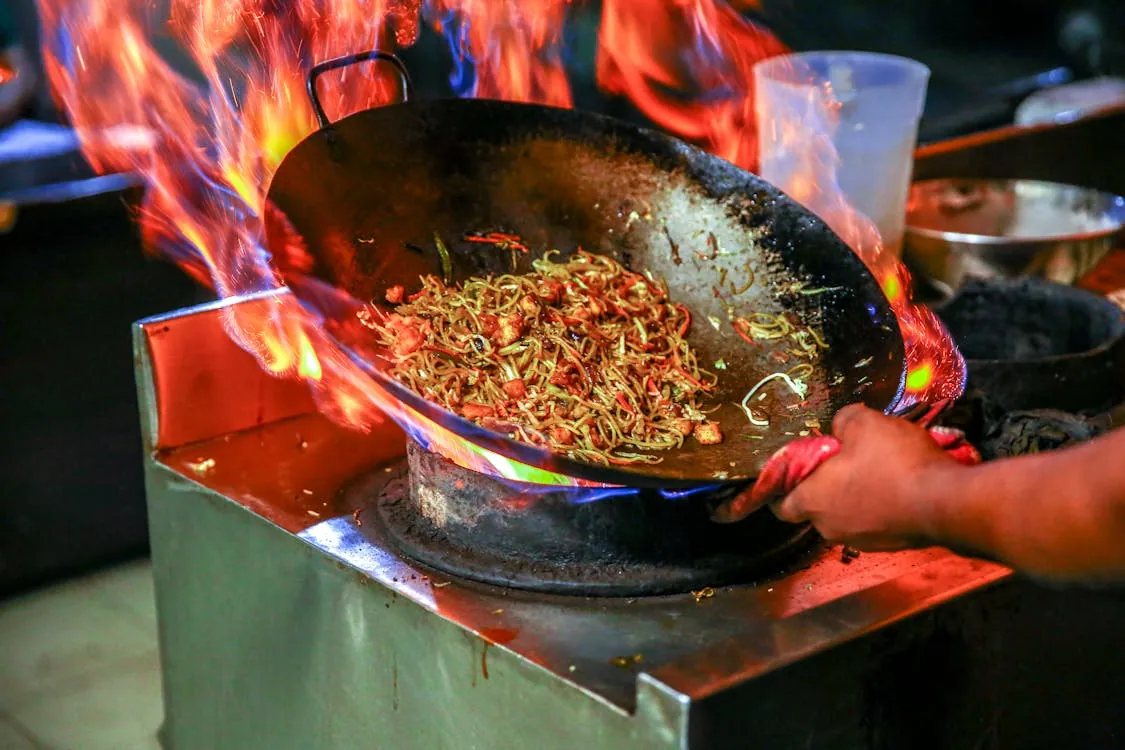
Wok hei is the “breath of the wok”—a fleeting, complex aroma and taste produced when food is tossed at searing heat, picking up smoky, caramelized notes. Traditionally, this was only possible on roaring gas stoves or open flames. Today, modern gas burners, high-performance induction woks, and even robotic machines can reach and sustain the 280–300ºC (536–572ºF) surface temperatures required for authentic wok hei. Infrared thermometers and smart sensors help ensure you hit this magic window, even at home.
Precision Heat: Modern Control of Oil and Fire
Stir-frying (chǎo 炒), deep-frying (zhá 炸), and smoking (xūn 熏) all depend on heat—but now, that heat is smarter and easier to control than ever.
Smart Burners and Induction Woks
Recent years have seen the rise of portable high-BTU gas burners and digitally controlled induction wok stoves. These devices offer:
Instant, adjustable heat—vital for stir-frying small batches
Flat-bottomed wok compatibility, expanding use to electric and induction kitchens
Consistent oil temperature for deep-frying, reducing splattering and uneven cooking
Bluetooth-enabled thermometers and infrared sensors allow precise monitoring of oil and surface temperature, helping both home cooks and professionals avoid the classic pitfalls of overheating or undercooking.
Oil Choices and Temperature Ranges
Peanut oil, sunflower oil, and grapeseed oil remain favorites for their high smoke points (above 220ºC/428ºF). For stir-frying, oil should shimmer and swirl easily at 200–250ºC, while deep-frying is best at 175–190ºC. These temperatures are easier to hit and maintain with today’s smart equipment.
Automation, Consistency, and the Future of the Wok
The biggest story in wok cooking this year is automation. In Los Angeles and beyond, restaurants and even school districts are deploying robot woks like Robby (from Next Robot) to prepare everything from fried rice to kung pao chicken (Los Angeles Times ).
How Robotic Woks Work
Ingredients are loaded into a spinning drum that heats and tosses food rapidly
Automated dispensers add sauces, oils, and aromatics at precise intervals
Temperatures can reach up to 700ºF (371ºC), well above traditional home stoves
After cooking, the wok self-cleans—ready for the next batch
Machines like Robby are already in use at airline catering companies, school kitchens, and restaurant chains needing consistency at scale. Early issues with nonstick coatings have been solved by switching to carbon steel, which now lasts up to three years in robotic use.
Balancing Tradition and Technology
While robots can now reliably replicate the wok hei and searing needed for classic Chinese dishes, many chefs see them as tools for consistency and efficiency, not replacements for human creativity. Some envision a future where kitchens combine human cooks and robot woks side by side—freeing up chefs to focus on plating, flavor adjustments, or customer interaction.
Recipe Demonstrations: Wok Techniques in 2026
Let’s put these innovations to the test with authentic recipes that showcase the breadth and depth of modern wok cooking.
1. Robotic-Style Fried Rice (炒饭 chǎo fàn)
Pre-cooked long-grain rice (400g/14 oz)
2 eggs, lightly beaten
Lap cheong (Chinese sausage), diced
Shrimp, peeled and deveined (100g/3.5 oz)
Scallions, chopped
Soy sauce, white pepper, and oil
Technique: On a smart gas or induction wok, preheat to 280ºC. Add oil, scramble eggs, then add sausage and shrimp. Toss in rice, drizzle soy sauce around the perimeter, and toss vigorously for caramelization. Add scallions at the end.
2. Modern Deep-Fried Lotus Root Chips (炸藕片 zhà ǒu piàn)
Lotus root, peeled and sliced thin
Rice flour for dusting
Peanut oil for frying
Chili oil, sesame seeds for garnish
Technique: Heat oil to 185ºC (using a digital thermometer). Fry lotus slices until golden and crisp. Drain, then toss with chili oil and sesame.
3. Tea-Smoked Duck (茶熏鸭 chá xūn yā) with Eco-Friendly Woods
Duck breast or legs, marinated with soy, ginger, and Shaoxing wine
Black tea leaves, uncooked rice, brown sugar
Applewood chips (for modern, sustainable smoke)
Technique: Line a wok with foil, add tea, rice, sugar, and wood chips. Place a rack above, add duck, and cover tightly. Smoke on medium heat for 15 minutes, then finish by roasting or steaming for tenderness.
4. Fusion Wok-Fried Rice with Truffle Oil & Black Garlic
Pre-cooked jasmine rice
Black garlic cloves, chopped
Eggs, scallions, and a drizzle of truffle oil
Technique: Stir-fry aromatics at high heat, add rice, toss rapidly, and finish with truffle oil for an East-meets-West luxury.
Comparison Table: Wok Technologies and Features in 2026
Wok/Technology
Surface/Material
Seasoning Required
Heat Compatibility
Key Features
Source
Our Place Super-Nitrided Wok
Super-nitrided carbon steel
Not measured
Gas, electric, induction
Nonstick, scratch/corrosion resistant, lid included
USA Today
Traditional Carbon Steel Wok
Carbon steel
Not measured
Best on gas, some electric
Develops patina, classic flavor, requires care
LA Times
Robot Wok (Robby)
Industrial carbon steel drum
Factory prepped
Automated electric heating
Automated cooking, self-cleaning, high volume
LA Times
Conclusion: Tradition, Technology, and the Breath of the Wok
The wok stands at a crossroads of old and new: from the thunderous flames of Cantonese kitchens to the cool precision of robot arms in Los Angeles. In 2026, mastering wok cooking means embracing both tradition and innovation—seasoning with care, controlling heat with science, and sometimes letting a machine toss your fried rice to perfection.
Whether you choose a time-honored carbon steel wok or the latest super-nitrided marvel, the essentials remain: high heat, fresh ingredients, and the pursuit of wok hei. As automation and smart tools become more accessible, they promise to bring the spirit of Chinese home cooking—the sizzle, aroma, and communal joy—to kitchens everywhere.
Key Takeaways:
Photo via Pexels
Super-nitrided carbon steel woks are the biggest material innovation, offering nonstick convenience without seasoning.
Smart burners, induction woks, and temperature sensors make high-heat cooking more accessible at home.
Robot woks deliver consistency and scale, especially in commercial kitchens, without sacrificing wok hei.
The future blends hands-on mastery with technological ease—honoring tradition while embracing progress.
For further reading on advanced wok technologies and the rise of robotic kitchens, see LA Times: Robot Woks and USA Today: Super-Nitrided Wok . For classic technique, consult J. Kenji López-Alt’s The Wok .