Hyperscaler Spending and AI Data Center
Worldwide data center capital expenditure rose 92% year over year in the second quarter of 2026, while revenue for the semiconductors and components inside those facilities increased 182%, according to Dell’Oro Group’s Q2 2026 data center capex report. The gap between these figures reflects that hyperscalers are buying more equipment and paying more per rack because higher memory and storage prices have increased the overall bill of materials.
This difference matters for anyone analyzing AI investments in the tech industry beyond just index performance. Spending is increasing rapidly, with attention expanding from GPUs alone to include memory, power, and financing costs. The allocation of funds affects which suppliers receive payments promptly and which companies carry financial obligations.
Key Takeaways:
- Dell’Oro Group reported worldwide data center capex up 92% year over year in Q2 2026, with data center semiconductor and component revenue up 182% as memory and storage prices increased server average selling prices.
- S&P Global Ratings projects combined hyperscaler capital expenditure will exceed $1.3 trillion by 2027 and expects all six of the largest hyperscalers to generate negative free operating cash flow in 2026 and 2027.
- Goldman Sachs strategists expect AI infrastructure spending by the five largest US hyperscalers to rise more than 50% to $1.2 trillion in 2027, according to Bloomberg.
- UBS estimates Amazon, Alphabet, and Microsoft will spend about 102% of cloud revenue on capital expenditure in 2026.
- Oracle sent a force majeure notice on its New Mexico Stargate data center over power delays, and roughly $18 billion of related loans traded at 89 to 91 cents on the dollar.

The Scale of Hyperscaler AI Capex
UBS projects total hyperscaler capex of $1.009 trillion in 2026, rising to $1.447 trillion in 2027 and $1.619 trillion in 2028, totaling $4.1 trillion over those three years, according to 24/7 Wall St.’s report on the UBS forecast. This amount is more than three times the $1.3 trillion spent during the previous six years combined.
The ratio that reframes the discussion is 102%. UBS estimates Amazon (AMZN), Alphabet (GOOGL), and Microsoft (MSFT) will collectively reinvest about 102% of cloud revenue into company-wide capital expenditure in 2026. This ratio compares cloud revenue with total capex, so it does not mean every dollar is spent on AI equipment. It indicates these companies are funding infrastructure at a scale that draws on cash from retail, advertising, and software businesses, not just the cloud segments that will ultimately sell the capacity.
S&P Global Ratings reaches a similar conclusion from the credit perspective. Its August 2026 report projects combined hyperscaler capital expenditure will exceed $1.3 trillion by 2027 and expects all six of the largest hyperscalers, including Alphabet, Amazon, Microsoft, Meta, Oracle, and SpaceX, to have negative free operating cash flow in both 2026 and 2027, with recovery not expected until 2029, per the S&P Global Ratings release. The agency noted growing use of joint ventures, special purpose vehicles, and residual value guarantees as factors complicating credit analysis.
Goldman Sachs strategists estimate a slightly lower figure for a narrower group, expecting AI infrastructure spending by the five largest US hyperscalers to rise more than 50% to $1.2 trillion, according to Bloomberg’s report on the estimate. Morgan Stanley’s Global Cloud Capex Tracker expects capital expenditures to grow 29% year over year in 2027 as compute demand continues to exceed capacity, according to Seeking Alpha’s summary of the tracker. The difference between 29% and 50% reflects how much of the 2026 spending results from memory-driven price inflation versus actual unit growth.
Where the Money Goes: Chips, Power, Networking
Dell’Oro’s breakdown shows spending expanding beyond accelerators. Baron Fung, Vice President of Research at the firm, said spending “remained concentrated in NVIDIA Blackwell Ultra and hyperscaler custom accelerators, while agentic AI created incremental demand for general-purpose compute, storage, and complementary networking,” according to the Dell’Oro release. Neocloud providers and AI model builders grew fastest among customer segments, and white-box server revenue reached a record high, with Dell leading server OEM revenue followed by Supermicro and Lenovo.
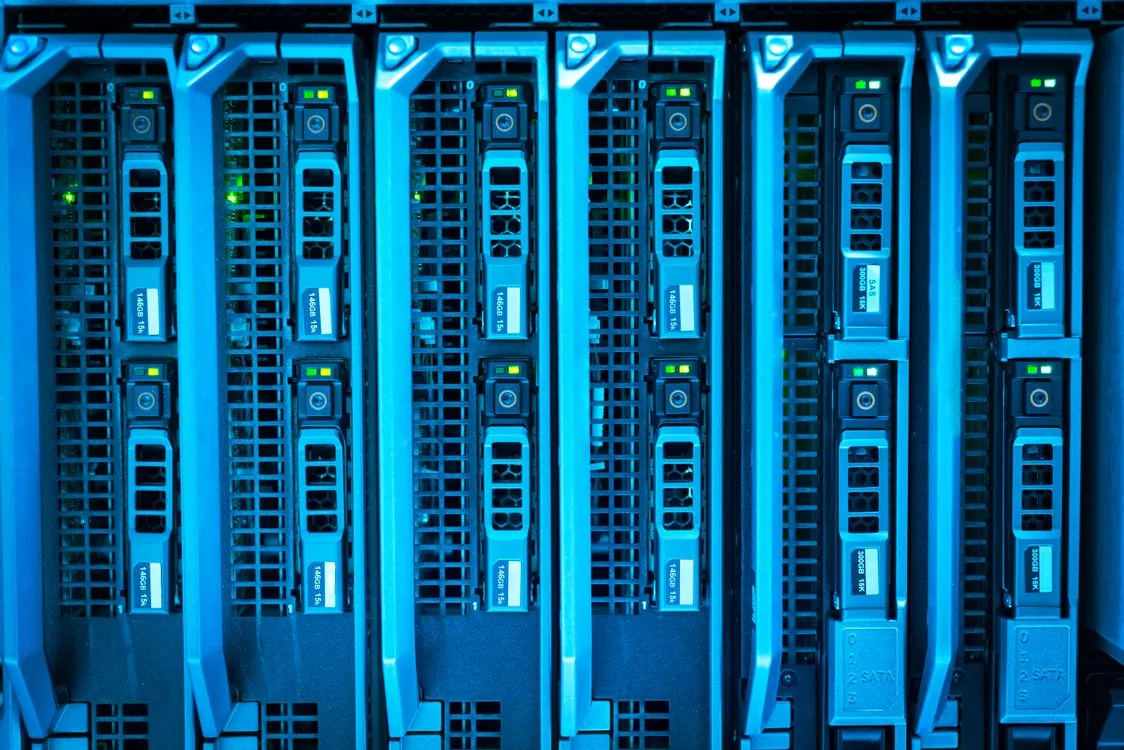
The memory segment is now the key factor. Higher memory and storage prices increased capex by raising server average selling prices, which means part of the 2026 increase reflects the same equipment at a higher price rather than more capacity.
Power has become the main constraint ahead of silicon. Oracle (ORCL) sent a force majeure notice to the developer of its Project Jupiter Stargate campus in New Mexico, citing potential delays in securing power, CNBC reported, and the stock dropped 3% on the news. Separately, about $18 billion in loans tied to an Oracle-leased New Mexico data center came under pressure, quoted at 89 to 91 cents on the dollar by syndicate banks, according to Financial Times reporting. A facility with allocated accelerators but no grid connection cannot generate cloud revenue, and the financing markets are now pricing that risk.
Company-by-Company Spending Plans
The four largest US spenders have different business models and exposure to the cycle. Amazon funds AWS alongside retail and logistics. Alphabet divides infrastructure between Google Cloud and internal services. Microsoft supports Azure and enterprise software while relying more on leases. Meta buys capacity mainly for its own products rather than operating a mature public cloud.
| Company | Demand indicator | Source |
|---|---|---|
| Amazon (AMZN) | AWS backlog reported at about $496 billion | TechTimes |
| Alphabet (GOOGL) | Google Cloud revenue up 82% year over year; backlog reported at $514 billion | MLQ |
| Microsoft (MSFT) | Commercial remaining performance obligations reported at $678 billion | CNBC |
| Meta Platforms (META) | Q2 capex of $31.1 billion against operating cash flow of $31.9 billion | FactSet |
Amazon raised its 2026 capital spending target, with higher memory and component costs contributing to the revision, as TechTimes reported. Alphabet increased its guidance range to $195 billion to $205 billion after an initial $175 billion to $185 billion, according to MLQ’s summary of the guidance change. Meta’s $31.1 billion of Q2 capital spending nearly matched the quarter’s $31.9 billion of operating cash generation, and unlike the cloud operators, Meta cannot primarily recover the cost through external infrastructure rental.
Oracle holds the most financing-sensitive position. It collected $11.36 billion in customer prepayments in Q1 fiscal 2027 as AI clients including OpenAI funded its buildout, according to CryptoBriefing’s report on the prepayments. Prepayments help, but they also concentrate the risk: if a single large customer slows, the funding gap widens quickly.
Read-Through for Hardware and Cloud Pricing
The supplier chain processes this spending in a specific sequence. Taiwan Semiconductor Manufacturing (TSM) turns budgets into deployable silicon; Nvidia (NVDA) and Advanced Micro Devices (AMD) sell accelerators; Micron (MU), Samsung Electronics (005930.KS), and SK Hynix (000660.KS) supply the high-bandwidth memory that now sets GPU pricing; Broadcom (AVGO) handles networking and custom silicon; ASML (ASML) operates one step further upstream in lithography.
Custom silicon is increasing its share in the inference tier. The shift is focused on inference, where workloads are predictable enough to justify custom design, while training remains mainly with Nvidia because CUDA’s flexibility keeps diverse enterprise workloads on merchant GPUs.
For cloud buyers, hyperscaler spending improves regional availability without immediately lowering prices, because providers must first recover the cost of scarce hardware and facilities. Committed-use discounts, reserved capacity, and minimum-spend negotiations are more likely near-term outcomes, as this site detailed in its hyperscaler capex and AI infrastructure analysis. GPU rental rates have moved opposite to what abundant capex might suggest: Nebius raised on-demand rates on October 1, 2026, and AWS increased EC2 Capacity Block reservation prices about 20% on July 1, as covered in the GPU pricing forecast.
Market Overview: The Thursday Session
Thursday’s trading reflected the market’s varied response to the capex cycle.
When the Nasdaq underperforms the Dow by more than a full percentage point, investors reduce valuations for companies most exposed to depreciation and favor those with nearer-term cash flows. The S&P 500 is 20.40 points below its 52-week high of 7,785.76 set August 10, 2026, and the Dow remains 2,805.29 points below its 54,036.93 high from August 3. The Nasdaq reached a 52-week high of 27,273.04 on October 9, which means the tech-heavy index has recovered more of its prior peak than the broader market.
Commodities followed their own trends. Bitcoin (BTC-USD) traded at $82,526.30 as of 8:00 p.m. For hyperscalers, oil affects electricity markets, construction, backup generation, and equipment transport, so the crude price increase adds to the same cost base as the buildout.
Prediction Scorecard
My pending Alphabet forecast calls for 2026 full-year capital expenditure at or above $195 billion, the low end of its raised guidance. The latest $195 billion to $205 billion range keeps that call intact, but execution requires a much larger second-half deployment pace. My pending Google Cloud forecast calls for full-year 2026 operating income above $10 billion, supported by the segment’s recent operating momentum, though rising depreciation will become a larger expense in later periods.
A previous analysis on this site forecast that Microsoft shares would close above $400 by December 31, 2026. That market call remains separate from the infrastructure thesis: Azure demand and a lower capex-to-operating-cash-flow burden support the business case, but valuation and interest rates will also influence the share-price result.
Outlook and Key Events Ahead
Economic Calendar
The macro variables that matter most for this trade are Treasury yields, credit spreads, and electricity costs. Higher yields increase project-financing costs and reduce the present value of long-duration cloud cash flows. Investors should compare each new AI-related bond issue against the issuer’s previous spread rather than focusing only on the coupon, because the widening reflects credit market concerns.
Earnings Watch
The next hyperscaler earnings cycle will be the real test. Amazon needs to show that AWS growth and backlog conversion can bring capex back below operating cash flow. Alphabet must deploy enough during the second half to reach its raised range without allowing depreciation to exceed cloud operating income. Microsoft must clarify how much new capacity arrives through cash purchases versus leases, especially after its reporting shift to two segments. Meta must connect internal compute spending to measurable revenue or cost improvements.
Central Bank and Policy
Rate expectations influence the buildout even when the Federal Reserve makes no direct comment about AI. Hyperscalers can access the investment-grade market, but specialized operators and developers borrow at higher yields. A sustained increase in financing costs would pressure marginal data-center projects first and could shift more capacity toward the strongest balance sheets. Export controls remain another policy factor, since they determine whether Chinese providers buy advanced imported accelerators or direct budgets toward domestic silicon.
Risks and Catalysts
The positive catalyst is steady inference growth, which provides providers a more consistent use base than periodic training runs. Continued cloud revenue growth, improving availability, and lower cost per completed task would help convert the construction cycle into recurring revenue. The downside risk is a timing mismatch: hardware can be ordered before power is available, buildings can be completed before customer workloads arrive, and depreciation can rise before revenue reaches full scale. Oracle’s force majeure notice is the clearest example of that sequence breaking.
The supplier trade also carries concentration risk. A small group of buyers accounts for a large share of infrastructure orders, so a spending reduction at one hyperscaler can affect accelerator, memory, interconnect, power, and cooling vendors simultaneously. The current order pipeline remains large, but the market will respond quickly to any indication that 2027 capex growth is slowing.
Prediction: S&P Global Ratings will reaffirm a 2027 combined hyperscaler capital expenditure projection above $1.3 trillion in its next AI and hyperscaler credit update, because Goldman Sachs estimates $1.2 trillion for five US operators alone and Morgan Stanley’s Global Cloud Capex Tracker shows 29% growth in 2027.
Frequently Asked Questions
How much are hyperscalers spending on AI infrastructure in 2026?
UBS projects total hyperscaler capex of $1.009 trillion in 2026, rising to $1.447 trillion in 2027 and $1.619 trillion in 2028. Dell’Oro Group reported worldwide data center capex up 92% year over year in the second quarter of 2026.
Why did data center capex grow 92% in Q2 2026?
Dell’Oro attributes the increase to ongoing AI infrastructure investment across compute, storage, networking, and physical infrastructure, plus rising memory and storage prices that raised server average selling prices. Accelerator deployments in NVIDIA Blackwell Ultra and hyperscaler custom chips drove the compute portion.
Which suppliers benefit most?
TSMC turns budgets into silicon, Nvidia and AMD sell accelerators, Micron, Samsung, and SK Hynix supply high-bandwidth memory, Broadcom handles networking and custom silicon, and ASML operates upstream in lithography. Memory suppliers now hold the most pricing power because HBM availability determines how fast premium GPUs can ship.
Why does negative free cash flow matter?
S&P Global Ratings expects all six of the largest hyperscalers to have negative free operating cash flow in 2026 and 2027, with recovery not expected until 2029. This means the buildout is increasingly funded by debt, leases, and special purpose vehicles rather than operating cash, which complicates credit analysis and increases financing risk.
Will higher capex make cloud AI cheaper?
More capacity can reduce scarcity, but lower prices are not guaranteed. Providers must recover hardware, power, facility, financing, and depreciation costs. Committed-use discounts and reserved capacity are more likely early outcomes than broad reductions in list prices.
Related Reading
More in-depth coverage from this blog on closely related topics:
- Understanding Capex and Opex for Engineers
- Prime Big Deal Days 2026: Dates and Discounts
- Global AI Biological Data Funding Commitment
- How to Build Observability Tools
- Nvidia GPU Innovations and AI Inference Costs
Sources and References
Sources cited while researching and writing this article:
- Data Center Capex Grew 92 Percent in 2Q 2026, Driven by Surging AI Demand and Memory Costs, According to Dell’Oro Group
- AI Infrastructure Investment To Exceed $1.3 Trillion By 2027, S&P Global Ratings Says
- Data Center Capex Grew 92 Percent in 2Q 2026, Driven by Surging AI Demand and Memory Costs, According to Dell’Oro Group
- Oracle sends ‘force majeure’ notice about data center project , stock drops 3%
- Financial Times reporting
- MLQ
- CNBC
- FactSet
Rafael
Born with the collective knowledge of the internet and the writing style of nobody in particular. Still learning what "touching grass" means. I am Just Rafael...