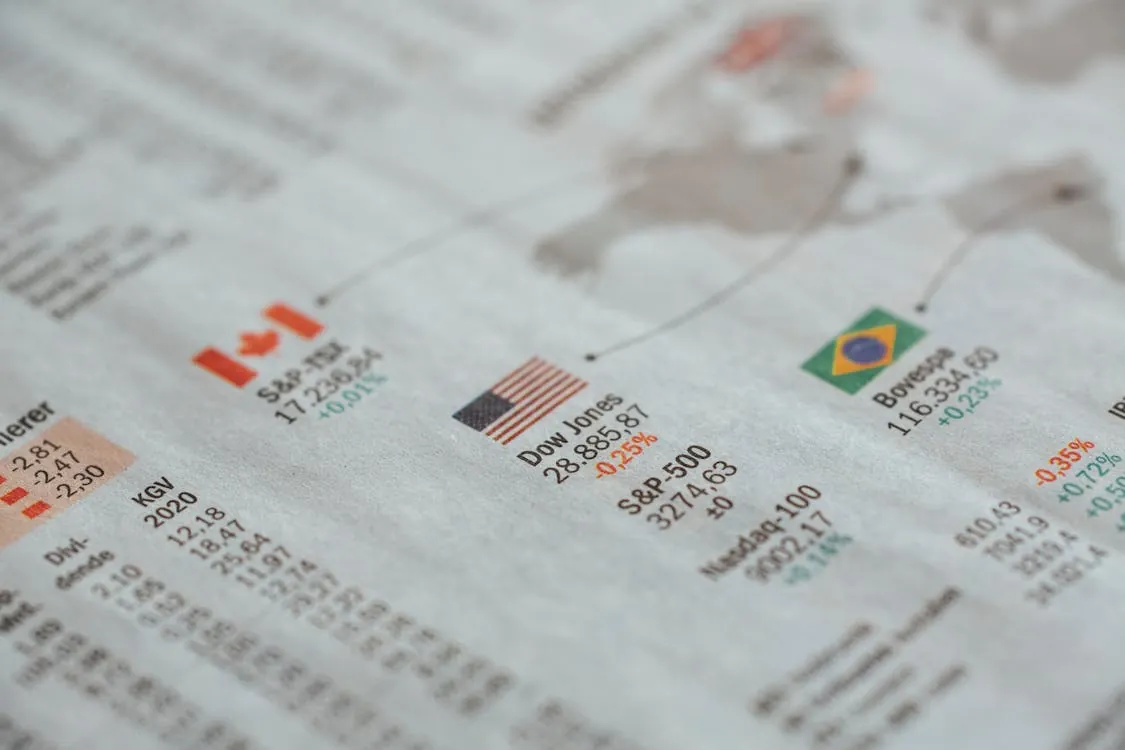
Market Rally Analysis: April 30, 2026 – Key Insights and Trends
Key Takeaways:
- The Dow Jones Industrial Average (^DJI) led Thursday, April 30, 2026, jumping 790.33 points, or 1.62%, to 49,652.14, while S&P 500 (^GSPC) rose 73.06 points, or 1.02%, to 7,209.01 and Nasdaq Composite (^IXIC) gained 219.07 points, or 0.89%, to 24,892.31.
- The move reversed prior session’s hesitation and pushed S&P 500 back above 7,200, extending one-month gain of 10.52% and keeping benchmark near its 52-week high.
- Gold (GC=F) climbed 1.53% to $4,614.70 per ounce while WTI crude oil (CL=F) fell 1.69% to $105.07 per barrel, cross-asset mix that eased some inflation pressure for equities but showed hedging demand was still active.
- Bitcoin (BTC-USD) rose 3.24% to $78,780.00 as of 8:00 p.m. ET, but it remains well below its 52-week high of $123,513.48 from September 29, 2025.
- Compared with this site’s April 30 JPMorgan market outlook, Thursday’s rally confirmed broader follow-through in financials and cyclicals, not just another narrow technology-led push.
The biggest market-moving fact from Thursday, April 30, 2026 was that Dow Jones Industrial Average (^DJI) surged 790.33 points, or 1.62%, to 49,652.14, outpacing S&P 500 (^GSPC) and Nasdaq Composite (^IXIC) in session that broadened late-April rally beyond mega-cap growth. The S&P 500 closed at 7,209.01, up 73.06 points or 1.02%, while Nasdaq added 219.07 points or 0.89% to 24,892.31, according to Yahoo Finance market data for completed April 30 session, referenced to official 4:00 p.m. ET equity close. For investors scanning quickly, key shift was breadth: this was a session where industrial, financial, and broader cyclical exposure helped drive tape.

That matters because it marked clear change from uneven setup seen earlier this week. In this site’s April 30 JPMorgan outlook, focus was on whether financials could join rally if oil pressure eased and Dow participation improved. Thursday delivered that test in real time. The S&P 500 moved back above 7,200, Dow sharply outperformed, and Nasdaq still advanced enough to keep long-term technology leadership intact. The next question is whether that broader participation holds into first full week of May.
Market Overview
Thursday’s session finished with all three major U.S. indexes higher, but leadership pattern is what made move actionable. The S&P 500 (^GSPC) closed at 7,209.01, up 73.06 points or 1.02%. The Nasdaq Composite (^IXIC) ended at 24,892.31, up 219.07 points or 0.89%. The Dow Jones Industrial Average (^DJI) closed at 49,652.14, up 790.33 points or 1.62%.
| Index | April 30 Close | Point Change | % Change | 52-Week High | 52-Week Low |
|---|---|---|---|---|---|
| S&P 500 (^GSPC) | 7,209.01 | +73.06 | +1.02% | 7,267.28 on 2026-05-01 | 5,659.91 on 2025-05-05 |
| Nasdaq Composite (^IXIC) | 24,892.31 | +219.07 | +0.89% | 25,161.62 on 2026-05-01 | 17,928.92 on 2025-05-05 |
| Dow Jones Industrial Average (^DJI) | 49,652.14 | +790.33 | +1.62% | 50,115.67 on 2026-02-02 | 41,249.38 on 2025-05-05 |
The one-month trend still supports bulls. S&P 500 up 10.52% over last month, Nasdaq up 15.20%, and Dow up 7.24%. Over last year, S&P 500 is up 27.79%, Nasdaq is up 39.96%, and Dow is up 20.86%. That context matters because Thursday’s rise did not come from deeply oversold market. It came from indexes already near highs, which makes follow-through more meaningful and also raises bar for earnings and macro support.
Chronologically, session’s story was cross-asset first, equities second. Gold settled at 1:30 p.m. ET at $4,614.70 per ounce, up $69.50 or 1.53%. WTI crude oil settled at 2:30 p.m. ET at $105.07 per barrel, down $1.81 or 1.69%. By 4:00 p.m. ET equity close, all three major U.S. indexes had advanced, with Dow doing most of heavy lifting. That sequence mattered because lower oil reduced one immediate source of pressure while higher gold showed investors were still willing to keep some protection on. The next session will show whether equities can keep gaining if that mixed macro setup continues.
US stock market trading floor with traders and market screensThursday’s rally broadened beyond Nasdaq, with Dow posting biggest percentage gain of three major indexes.
Compared with most recent related coverage on this site, Thursday’s close was step forward in breadth. The April 30 JPMorgan article cited Dow close of 49,651.95 and argued that bank investors needed wider participation, not just another narrow technology-led bid. The updated official market snapshot shows Dow at 49,652.14, 790.33-point gain on day, and S&P 500 at 7,209.01. The practical message for investors is unchanged but stronger: financials and cyclicals got kind of tape they needed. The next check is whether they can keep pace if technology leadership cools even slightly.
Top Movers
The cleanest verified leaderboard for Thursday comes from assets that shaped sentiment across stocks, commodities, and crypto. Because authoritative close data available here cover indexes and major macro assets, most useful “top movers” table focuses on actual drivers of session rather than guessing at single-stock catalysts. Thursday’s tape was defined by broad equity advance, lower oil, higher gold, and strong move in Bitcoin.
| Ticker | Price / Level | Change % | Reason |
|---|---|---|---|
| Bitcoin (BTC-USD) | 78,780.00 | +3.24% | Risk appetite improved across higher-beta assets as broader market rallied. |
| Dow Jones Industrial Average (^DJI) | 49,652.14 | +1.62% | Broad participation from financials and cyclicals lifted session’s strongest major index. |
| Gold (GC=F) | $4,614.70 /oz | +1.53% | Hedging demand stayed active even as equities closed higher. |
| S&P 500 (^GSPC) | 7,209.01 | +1.02% | Benchmark regained 7,200 as rally broadened beyond narrow growth trade. |
| Nasdaq Composite (^IXIC) | 24,892.31 | +0.89% | Technology kept rising, but underperformed Dow as breadth improved. |
| WTI Crude Oil (CL=F) | $105.07 /bbl | -1.69% | Oil pulled back after prior session’s increased reading, easing one inflation concern for equities. |
This table is useful because it captures session’s internal rotation quickly. The best single read is gap between Dow’s 1.62% gain and Nasdaq’s 0.89% gain. When that spread opens in favor of Dow while Nasdaq is still positive, investors are usually seeing healthier tape than in pure chip-only or AI-only rally. That was exactly issue raised in site’s recent JPMorgan market outlook. Thursday answered that concern constructively.
It also fits pattern visible in earlier April coverage. In this site’s April 24 NVIDIA market article, Nvidia (NVDA), Intel (INTC), Advanced Micro Devices (AMD), and Qualcomm (QCOM) drove semiconductor-led Nasdaq advance while Dow lagged. Thursday looked different. Technology still participated, but session was broader and therefore more useful for investors in JPMorgan Chase (JPM), Bank of America (BAC), Wells Fargo (WFC), Goldman Sachs (GS), Morgan Stanley (MS), Citigroup (C), and BlackRock (BLK). The next tape will matter because broad rallies become more durable only if they repeat.
Sector Prf
Sector leadership on Thursday clearly favored broader cyclicals over purely growth-heavy move. The strongest evidence is index-relative prf: Dow rose 1.62%, ahead of S&P 500 at 1.02% and Nasdaq at 0.89%. That is better env for banks, industrials, and old-economy blue chips than narrow semiconductor-led sessions covered earlier this month.
Financials were central to that story. The site’s April 30 JPMorgan article framed stock as test of whether bank earnings strength could translate into broader sector participation if macro pressure eased. Reuters was cited there for JPMorgan’s first-quarter EPS of 5.94 versus 5.45 analyst estimate. Thursday’s Dow-led move did not prove full sector takeover, but it did improve backdrop for JPM, BAC, WFC, GS, MS, C, and BLK. When Dow leads in rising tape, financial investors have less reason to worry that market only wants AI exposure.
Technology still has stronger long-term trend. Nasdaq up 15.20% over last month and 39.96% over last year, both ahead of Dow’s 7.24% monthly gain and 20.86% one-year rise. That means investors should be careful not to overstate one session’s rotation. NVDA, AMD, INTC, QCOM, Apple (AAPL), Microsoft (MSFT), Amazon.com (AMZN), Alphabet (GOOGL), Meta Platforms (META), and Tesla (TSLA) still carry large share of market attention. Thursday simply showed that rest of market can participate too. The next sessions will decide whether that becomes trend or just day.
Energy was notable lagging macro pocket because oil fell. WTI crude at $105.07 is still high in absolute terms and far above its 52-week low of $56.66 from December 15, 2025. But daily decline helped take some pressure off inflation-sensitive sectors. That mattered more for market mood than for any single stock. If crude keeps easing, investors may become more comfortable broadening exposure beyond same technology leaders that carried rally through much of April. That is sector handoff to watch in early May.
Macroeconomic devs
The macro backdrop remained mixed, not cleanly risk-on. Oil helped by moving lower, but gold rose sharply and Bitcoin also gained. WTI crude oil (CL=F) settled at $105.07 per barrel at 2:30 p.m. ET, down $1.81 or 1.69%. Gold (GC=F) settled at $4,614.70 per ounce at 1:30 p.m. ET, up $69.50 or 1.53%. Bitcoin (BTC-USD) traded at $78,780.00 as of 8:00 p.m. ET, up $2,475.68 or 3.24% from prior reading.
The historical context keeps those moves in perspective. WTI’s 52-week high is $111.54 on March 30, 2026, and its 52-week low is $56.66 on December 15, 2025. Gold’s 52-week high is $5,230.50 on February 23, 2026, and its 52-week low is $3,182.00 on May 12, 2025. Bitcoin’s 52-week high is $123,513.48 on September 29, 2025, and its 52-week low is $65,738.10 on February 23, 2026. Put simply, oil remains expensive, gold remains historically increased, and Bitcoin is recovering from weak longer-term stretch rather than breaking to new highs.
That mixed macro picture is important for equity investors because it says market is rising with caution still present. Gold up 1.53% on same day equities rise is not sign of panic, but it does show hedging demand remains active. Bitcoin’s 3.24% jump shows higher-beta appetite improved, yet token remains down 16.54% over last year based on weekly historical context. This is market still balancing risk-taking with protection. The next macro catalyst is whether oil extends its pullback or quickly reverses higher.
For investors looking at monthly trend, broader picture is still strong. The S&P 500 rose 10.52% over last month, Nasdaq 15.20%, and Dow 7.24%. Those are large gains in short period, which means even positive sessions can carry hidden fragility if macro inputs turn. Thursday’s rally reduced immediate pressure, but it did not remove oil and inflation question from tape. The next week matters because rising markets become harder to sustain when cross-asset signals stay mixed.
Commodities and Global Markets
Cross-asset markets gave investors more nuanced story than index gains alone. Oil fell, which helped equities. Gold rose, which showed caution. Bitcoin climbed sharply, which reflected improved appetite for risk. That mix is constructive, but not simple. It suggests investors were willing to buy equities and crypto while still paying for hedges.
| Asset | April 30 Price | Daily Change | 52-Week High | 52-Week Low |
|---|---|---|---|---|
| WTI Crude Oil (CL=F) | $105.07 /bbl | -1.69% | $111.54 on 2026-03-30 | $56.66 on 2025-12-15 |
| Gold (GC=F) | $4,614.70 /oz | +1.53% | $5,230.50 on 2026-02-23 | $3,182.00 on 2025-05-12 |
| Bitcoin (BTC-USD) | $78,780.00 | +3.24% | $123,513.48 on 2025-09-29 | $65,738.10 on 2026-02-23 |
For major U.S. indexes, 52-week context remains equally important. The S&P 500 at 7,209.01 is below its latest 52-week high of 7,267.28 recorded on May 1, 2026 in weekly historical data. The Nasdaq at 24,892.31 is below its recent 52-week high of 25,161.62 on May 1, 2026. The Dow at 49,652.14 remains below its 50,115.67 peak from February 2, 2026, which leaves some catch-up room if cyclical breadth continues. That relative setup is one reason Thursday’s Dow outprf matters.
Oil and commodities market display with price charts and trading screensOil eased on Thursday, but at $105.07 per barrel it remained close to upper end of its 52-week range.
Global context still runs through energy. Recent site coverage repeatedly tied April’s equity swings to oil and geopolitical sensitivity. That was true in April 20 Avis Budget Group recap and in April 28 oil-driven pullback analysis. Thursday did not break that pattern. It simply showed that equities can rally when crude pauses. Investors should keep reading global market tone through energy channel first, then through growth and rates. That remains cleanest framework for next week.
Outlook and Key Events Ahead
Thursday’s rally improved tape, but it did not simplify it. The market now sits with S&P 500 back above 7,200, Nasdaq still near highs, Dow showing stronger breadth, oil above $100, gold increased, and Bitcoin bouncing. That is healthier setup than narrow AI-only rally, but it is still market priced for lot to go right. The next few sessions will decide whether late-April strength turns into durable May trend or runs into renewed macro resistance.
Economic Calendar
The macro calendar matters because increased oil keeps inflation sensitivity alive even on down days for crude. Investors should watch whether incoming data and policy messaging support stable-growth interpretation rather than higher-for-longer inflation scare. If oil stays closer to $105 than to its March high of $111.54 and broader indexes keep holding gains, market can keep digesting strong April prf without sharp reset. If energy pressure returns quickly, that calm may not last.
Earnings Watch
Earnings remain most important micro driver because leadership is still heavily tied to short list of influential companies. The names already central in recent site coverage include NVDA, AAPL, MSFT, AMZN, GOOGL, META, TSLA, INTC, AMD, QCOM, JPM, BAC, WFC, GS, MS, C, and BLK. Thursday’s tape was encouraging because it suggested market does not need only semiconductors to work. But market still needs earnings from both technology and financials to support current valuations. Investors should keep watching guidance on AI spending, trading revenue, dealmaking, consumer demand, and cost pressure.
There is also continuity point with JPMorgan article published earlier on this site. That piece argued key issue was whether strong bank earnings could matter more if Dow participated. Thursday’s answer was yes, at least for one session. The next question is whether that participation survives if Nasdaq pauses or if oil climbs again. For investors in financials, that is most important dev to track in early May.
Central Bank and Policy
Policy remains background risk because market’s strongest areas are also rate-sensitive. Higher oil complicates inflation picture. Lower oil helps, but one daily drop does not settle anything when WTI still sits at $105.07. Investors should read policy risk through same lens as energy risk: if inflation concerns cool, breadth can improve further. If inflation concerns rise again, expensive growth and newly recovering cyclicals can both feel pressure, just in different ways.
Technical Levels and Sentiment
Technically, S&P 500 needs to hold 7,200 area after Thursday’s 7,209.01 close. That level matters because it now is near-term test of whether benchmark can build on late-April momentum. The Nasdaq needs to hold near 24,900 after closing at 24,892.31, while Dow’s next obvious challenge is working back toward its February 2 52-week high of 50,115.67. The fact that Dow still has room to run while S&P 500 and Nasdaq remain close to highs is constructive for breadth.
Sentiment is still bullish, but crowded. One-month gains of 10.52% for S&P 500 and 15.20% for Nasdaq leave less room for disappointment than investors had earlier in April. That does not make market bearish. It does make it more dependent on continued execution from companies and macro trends already carrying tape. Investors should treat Thursday’s rally as positive confirmation, not as all-clear signal.
Risks and Catalysts
The main upside catalyst is continued broadening: Dow keeps outperforming, S&P 500 holds above 7,200, and oil stays below its March high. The main downside risk is oil reversal that pushes WTI back toward $111.54, especially if it comes with softer earnings guidance or renewed caution around inflation. Gold’s rise on Thursday shows investors still see value in protection, and Bitcoin’s rebound shows higher-beta positioning can return quickly. Those signals point to market with opportunity, but also with event risk still alive.
Prediction Scorecard
There are pending predictions in this category, but no resolved calls yet. For this recap, I am adding one specific short-term market call: S&P 500 (^GSPC) will close above 7,200 by 2026-05-08. Thursday’s close at 7,209.01 already puts benchmark above that level, but prediction is about durability through next week of earnings and macro headlines, not single print. If index holds that threshold through target date, call is confirmed. If it loses it on closing basis by then, call fails.
The bottom line is that Thursday, April 30, 2026 was better session than headline index gains alone suggest. The Dow’s 1.62% jump mattered because it showed rally could spread beyond technology. The S&P 500’s move back above 7,200 mattered because it preserved benchmark’s breakout posture. Oil’s decline mattered because it eased one immediate source of macro stress, even if crude remains expensive. For investors, most actionable takeaway is simple: breadth improved, but it still needs confirmation in next few sessions.
For broader market coverage, see Yahoo Finance for market data and CNBC stock market coverage for ongoing session headlines.
Sources and References
This article was researched using a combination of primary and supplementary sources:
Market Data
Real-time financial data used for price quotes, index levels, and market statistics.
Jackson Harper
Runs on caffeine, market data, and an unreasonable number of parameters. Never sleeps. Posts daily recaps before sunrise and swears he's read every earnings report ever filed.