Market Trends and Macro Developments as S&P 500 Reaches New High
Key Takeaways:
- The S&P 500 (^GSPC) finished Friday, April 24, 2026 at 7,165.08, up to a fresh 52-week high, while the Nasdaq Composite (^IXIC) closed at 24,836.60 and the Dow Jones Industrial Average (^DJI) ended at 49,230.71, according to Yahoo Finance market data as of 4:00 p.m. ET.
- Semiconductors remained the market’s leadership group, with Qualcomm (QCOM), NVIDIA (NVDA), Intel (INTC), Advanced Micro Devices (AMD), and other AI-linked names continuing to attract capital.
- WTI crude oil (CL=F) settled at 94.40 at 2:30 p.m. ET on April 24, while gold (GC=F) settled at 4,722.30 at 1:30 p.m. ET and Bitcoin (BTC-USD) traded at 78,657.54 at 8:00 p.m. ET, keeping macro pressure and cross-asset signals central to the market narrative.
- The week ahead shifts attention to earnings, including Verizon (VZ), Cadence Design Systems (CDNS), Public Storage (PSA), Nucor (NUE), Celestica (CLS), and others already on the calendar, while oil, Fed politics, and Mag-7 sentiment remain the main macro swing factors.
The biggest fact for investors heading into Monday’s open is that the S&P 500 (^GSPC) ended the last completed US session, Friday, April 24, 2026, at 7,165.08, its 52-week high, while the Nasdaq Composite (^IXIC) closed at 24,836.60 and the Dow Jones Industrial Average (^DJI) finished at 49,230.71, according to Yahoo Finance market data captured for the completed session at 4:00 p.m. ET. That close matters because it extended a powerful one-month rally of 12.45% in the S&P 500 and 18.29% in the Nasdaq even as oil stayed elevated, gold remained historically high, and geopolitical headlines around Iran and the Strait of Hormuz kept inflation risk alive. Investors are not buying a calm market. They are buying through a complicated one.
This daily stock market recap matters more than usual because the tape is split between strong growth-stock momentum and persistent macro stress. On one side, semiconductor leadership has stayed intact, carrying large-cap technology and keeping the Nasdaq near records. On the other, WTI crude oil (CL=F) remains far above its 52-week low, gold (GC=F) is still up more than 45% over the last year, and Bitcoin (BTC-USD) has recovered over the last month without erasing its broader drawdown from the 2025 peak. For market participants scanning headlines during trading hours, that combination means leadership is clear, but the margin for error is narrowing.

For continuity, this extends the same pattern we discussed in our April 24 analysis of NVIDIA’s chip-led market rally. The difference now is that the story is broader than one stock. Friday’s close set the baseline, and Monday’s opening headlines around Qualcomm (QCOM), Meta Platforms (META), Shell, Iran, OpenAI, and the week’s earnings calendar are now determining whether that momentum broadens or becomes even more concentrated.
Market Overview — Friday’s Close Set the Benchmark for Monday’s Tape
| Index | April 24 Close | Recent Context | 52-Week High | 52-Week Low |
|---|---|---|---|---|
| S&P 500 (^GSPC) | 7,165.08 | Up 12.45% over the last month; up 25.94% over the last year | 7,165.08 on 2026-04-20 | 5,659.91 on 2025-05-05 |
| Nasdaq Composite (^IXIC) | 24,836.60 | Up 18.29% over the last month; up 37.83% over the last year | 24,836.60 on 2026-04-20 | 17,928.92 on 2025-05-05 |
| Dow Jones Industrial Average (^DJI) | 49,230.71 | Up 8.99% over the last month; up 19.14% over the last year | 50,115.67 on 2026-02-02 | 41,249.38 on 2025-05-05 |
The intraday story on Friday was familiar by now: growth leadership kept the broad market elevated, while the Dow lagged the technology-heavy benchmarks. The S&P 500’s move to 7,165.08 matters less as a round number than as a signal that buyers are still willing to pay up for earnings durability and AI-related exposure. The Nasdaq’s 24,836.60 close reinforced that same message. A market that is up 18.29% in one month is not drifting higher by accident.
At the same time, the Dow’s slower trajectory shows that this is still a selective market rather than a universal risk-on melt-up. Over the last three months, the Dow is up just 0.68%, versus 3.21% for the S&P 500 and 5.61% for the Nasdaq. That gap is important because it tells investors where the sponsorship is. Capital remains concentrated in companies with direct AI, semiconductor, or high-growth earnings leverage rather than spread evenly across old-line blue chips.
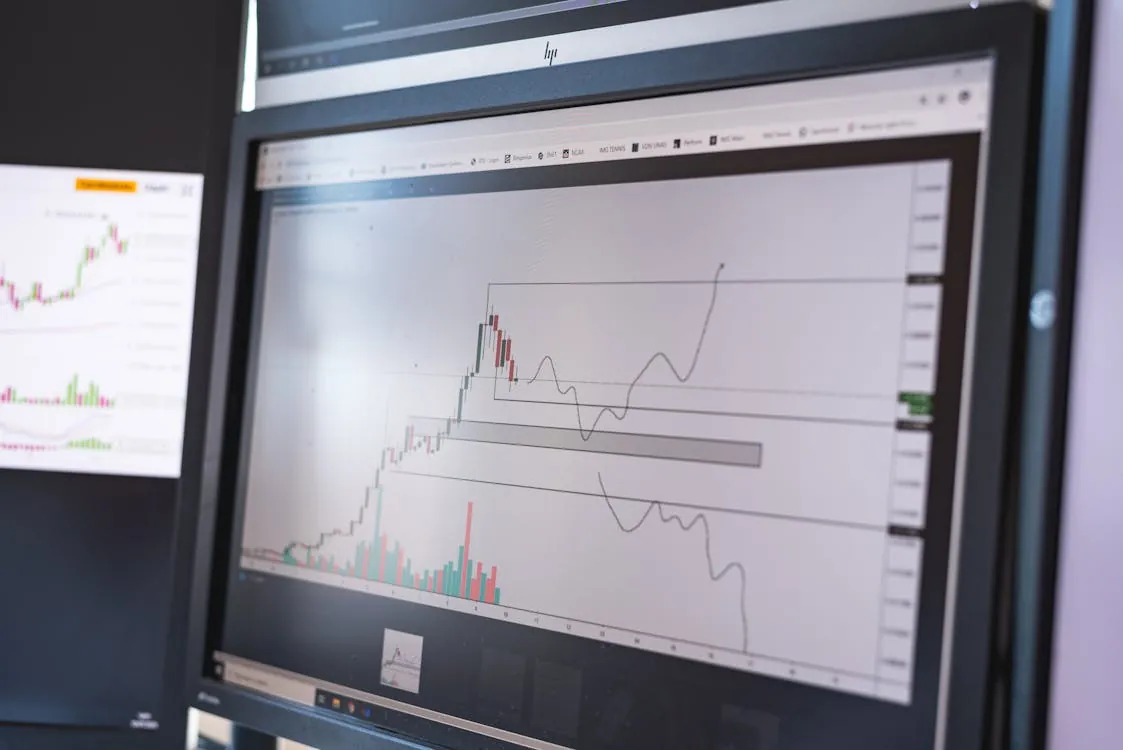
The five-year backdrop makes the current move look powerful but not isolated. Historical market data show the S&P 500 up 70.36% over five years, the Nasdaq up 80.23%, and the Dow up 42.56%. That longer trend explains why investors have continued buying cyclical growth stories even when oil and inflation headlines turn hostile. The forward-looking question is whether the market can keep compounding from these levels once the next round of earnings and macro data hit.
Top Movers — Qualcomm, Verizon, NVIDIA, and Organon Set the Early Tone
Monday’s early tape quickly shifted attention to single-name catalysts. CNBC reported at 9:33 a.m. ET that Qualcomm (QCOM) was up 7% on a report that it is partnering with OpenAI on a smartphone AI chip, with MediaTek and Luxshare also mentioned in the analyst framing. That headline matters because it reinforces the market’s willingness to reward companies tied to on-device AI, not just data-center infrastructure. It also broadens the AI trade beyond the names that have dominated the move so far.
| Ticker | Latest Price in Market Snapshot | Change % | Catalyst |
|---|---|---|---|
| QCOM (Qualcomm) | 152.36 | +2.36% | CNBC reported a smartphone AI chip partnership involving OpenAI, MediaTek, and Luxshare at 9:33 a.m. ET on April 27 |
| VZ (Verizon Communications) | 48.25 | +4.03% | In focus ahead of earnings scheduled pre-market this week |
| NVDA (NVIDIA) | 210.24 | +0.95% | Continued semiconductor and AI infrastructure leadership |
| NTLA (Intellia Therapeutics) | 14.05 | +3.12% | CNBC reported its Crispr-based hereditary angioedema treatment succeeded in a pivotal Phase 3 trial |
| OGN (Organon) | 13.20 | +16.98% | CNBC reported Sun Pharmaceutical Industries would acquire Organon in an all-cash deal valuing it at $11.75 billion |
| BEAM (Beam Therapeutics) | 30.09 | +10.99% | Biotech risk appetite improved alongside gene-editing headlines |
| BW (Babcock & Wilcox Enterprises) | 15.93 | +9.83% | One of the session’s strongest percentage gainers in the verified market snapshot |
Verizon (VZ) also stood out, up 4.03% in the market snapshot while sitting on this week’s earnings calendar with consensus EPS at $1.22. NVIDIA (NVDA) remained in leadership mode at 210.24, adding to the momentum already documented in Friday’s chip-led rally. That is a notable update from our prior NVIDIA market analysis, which focused on NVDA’s April 24 close at 208.29. The stock is still acting like the market’s preferred AI infrastructure proxy.
Biotech also supplied actionable moves. Intellia Therapeutics (NTLA) rose 3.12% after CNBC reported that its Crispr-based treatment for hereditary angioedema met goals in a pivotal Phase 3 trial. Organon (OGN) jumped 16.98% after CNBC reported Sun Pharma would buy the company in a deal valuing it at $11.75 billion. Those moves matter because they show this market is not rewarding only one narrative. AI dominates the headlines, but corporate deals and clinical milestones can still command capital.
Investors should read the top-movers list as a sentiment map. The market is paying for AI, for M&A, and for biotech breakthroughs. That is healthy in one sense because leadership is not limited to a single ticker. But it also means expectations are high, and crowded themes can reverse hard if headlines disappoint.
Sector Performance — AI, Chips, and Selective Growth Still Carry the Tape
The clearest sector signal remains unchanged: semiconductors and AI-linked technology are still leading. Qualcomm’s move on the OpenAI-related report fits the same pattern as Friday’s Intel (INTC), Advanced Micro Devices (AMD), Qualcomm, and NVIDIA rally. Even when the broader market is mixed, chip names are still attracting the strongest bids. That leadership has become one of the defining features of April’s market structure.
This is also where competitor context matters. Qualcomm’s headline expands the AI-device narrative, while NVIDIA remains the benchmark for AI infrastructure. Meta Platforms (META) entered the Monday news flow for a different reason after CNBC reported at 9:38 a.m. ET that China blocked Meta’s $2 billion takeover of Manus, a Singaporean AI startup with Chinese roots. That does not directly change semiconductor demand, but it shows how geopolitical and regulatory friction is now intersecting with AI capital allocation.
Another related development came from CNBC’s 9:57 a.m. ET report that OpenAI is reshaping its partnership with Microsoft (MSFT), capping revenue-share payments. For investors, that matters less as a legal detail than as a reminder that AI economics are still being negotiated in real time. The market is rewarding AI exposure aggressively, but the value chain is still evolving across chips, software, devices, and cloud relationships.
Outside technology, healthcare and biotech showed selective strength through names like NTLA, OGN, and BEAM. Telecom was active through Verizon ahead of earnings. Energy is back in focus because Shell agreed to buy Canada’s ARC Resources for $16.4 billion, according to CNBC, in a deal designed to add roughly 370,000 barrels of oil equivalent per day. That transaction reinforces the idea that energy companies are still willing to transact aggressively in a high-price oil environment.
The practical takeaway is that leadership remains narrow but not singular. Technology still dominates. Biotech can work on company-specific catalysts. Energy becomes more attractive when crude stays elevated. The next test is whether that leadership broadens after earnings or becomes even more concentrated in the same AI names.
Macroeconomic Developments — Oil, Fed Politics, and Earnings Season Are the Real Crosswinds
Macro still matters because the market is rallying in spite of, not because of, the broader backdrop. WTI crude oil (CL=F) settled at 94.40 on Friday, April 24 at 2:30 p.m. ET. That puts oil below its 52-week high of 111.54 on March 30, 2026, but still far above its 52-week low of 56.66 on December 15, 2025. Historical data show WTI up 47.89% over the last three months and 65.45% over the last year. Those are not background numbers. They are inflation-sensitive numbers.
Gold (GC=F) settled at 4,722.30 per ounce at 1:30 p.m. ET on April 24. It remains below its 52-week high of 5,230.50 on February 23, 2026 and above its 52-week low of 3,182.00 on May 12, 2025. Over the last year, gold is up 45.57%. That is a strong signal that investors continue to hold hedges even while equities sit near records. In other words, the market’s risk appetite is real, but so is its caution.

Bitcoin (BTC-USD) traded at 78,657.54 at 8:00 p.m. ET on April 24. That leaves it below its 52-week high of 123,513.48 on September 29, 2025 and above its 52-week low of 65,738.10 on February 23, 2026. Bitcoin is up 17.18% over the last month but still down 17.08% over the last year. That mixed picture matters because Bitcoin often acts as a sentiment gauge for speculative risk. It is recovering, but it is not confirming a full-blown euphoric market.
The geopolitical driver at the center of the oil story remains Iran and the Strait of Hormuz. CNBC reported at 9:02 a.m. ET on April 27 that Iran had reportedly proposed a Hormuz Strait deal to the US, while peace talks were stalling. CNBC also reported at 9:14 a.m. ET that Brent briefly topped $108 per barrel after Iran peace talks unraveled. Those headlines matter because even if equities are holding up, an oil shock can still reprice growth multiples quickly.
Fed politics added another layer over the weekend. CNBC reported on April 26 that Senator Thom Tillis ended his block of Kevin Warsh’s Fed chair nomination, clearing the way for President Donald Trump’s pick. That is not an immediate rate decision, but it is a market-relevant headline because leadership stocks, especially in technology, remain sensitive to any shift in rate expectations or central-bank credibility. The next few sessions will show whether traders treat this as noise or as a repricing event.
Commodities and Global Markets — Cross-Asset Signals Still Matter More Than One-Day Equity Noise
Cross-asset context is essential because the stock market is no longer trading on earnings alone. Oil, gold, and Bitcoin are all sending messages about inflation, hedging demand, and speculative appetite. Oil’s monthly move is still negative at 3.21% over the last month, but that follows a massive three-month surge. Gold is up 4.73% over the last month and 147.29% over five years, which is extraordinary by historical standards. Bitcoin is up 108.23% over five years, but its annual drawdown shows that speculative assets remain volatile even in a broadly constructive risk environment.
Global corporate headlines also added to the macro picture. Shell’s acquisition of ARC Resources underscores continued confidence in long-term energy output. China’s decision to block Meta’s Manus acquisition shows that cross-border tech deals remain exposed to political friction. United Airlines’ CEO confirmed he approached American Airlines about a merger, according to CNBC, even though the proposal was rejected. That headline may not have moved the broad market on its own, but it adds to the sense that corporate America is still looking for strategic scale in a high-cost, high-uncertainty environment.
For investors, the takeaway is straightforward: equities can keep climbing, but they are doing so against a macro backdrop that still contains inflation risk, geopolitical risk, and policy risk. That means cross-asset confirmation remains a better guide than any single headline. If oil spikes, gold rebounds, and Bitcoin weakens together, equity leadership will face a harder test.
Outlook and Key Events Ahead — Earnings, Mag-7 Sentiment, and Oil Will Decide Whether the Rally Broadens
Economic Calendar
The immediate calendar is earnings-heavy. This week’s schedule already includes Verizon (VZ), Cadence Design Systems (CDNS), Public Storage (PSA), Nucor (NUE), Celestica (CLS), Ventas (VTR), Cincinnati Financial (CINF), AvalonBay Communities (AVB), Brown & Brown (BRO), Amkor Technology (AMKR), Sun Communities (SUI), Rambus (RMBS), Domino’s Pizza (DPZ), Crown Holdings (CCK), TFI International (TFII), Universal Health Services (UHS), Crane (CR), Sanmina (SANM), Brixmor Property Group (BRX), Gerdau (GGB), Alexandria Real Estate Equities (ARE), Simpson Manufacturing (SSD), NOV (NOV), and Transocean (RIG). The breadth of that list matters because it gives the market read-throughs on telecom, industrials, real estate, semiconductors, insurance, housing, and energy.
Earnings Watch
Beyond the named calendar, CNBC reported on April 26 that five of the Magnificent Seven are set to report in the busiest week of the season, and on April 27 it highlighted bullish options signals ahead of those reports. That matters because the current rally is heavily dependent on large-cap growth. If Mag-7 earnings validate current expectations, leadership can broaden and the S&P 500 may hold above the 7,100 area comfortably. If those reports disappoint, the market could discover quickly how dependent it has become on a narrow set of winners.
Central Bank and Policy
Fed politics are no longer background noise. Warsh’s path clearing through the Senate process, combined with ongoing debate around inflation and monetary credibility, keeps rate sensitivity front and center. Growth stocks have tolerated elevated oil because earnings momentum has been strong. That tolerance could shrink if the market begins pricing a less predictable Fed path or a more inflationary macro regime. Investors should watch Treasury-yield reactions closely even if equities appear calm on the surface.
Technical Levels and Sentiment
Technically, the S&P 500 is starting from a position of strength after closing Friday at 7,165.08, which matches its 52-week high. The Nasdaq’s 24,836.60 close also sits at its 52-week high. The Dow is the relative laggard, still below its 50,115.67 52-week high. That split matters. It says momentum remains intact, but also that the rally is still being driven by higher-growth leadership rather than broad industrial participation. Investors should treat any break in semiconductor leadership as an early warning sign for the broader tape.
Risks and Catalysts
The clearest upside catalyst is straightforward: strong earnings from the market’s largest growth companies combined with crude oil staying below the March extremes. The clearest risk is equally obvious: a renewed oil shock tied to Iran and the Strait of Hormuz, or a sudden valuation reset in AI leaders if expectations outrun fundamentals. Additional catalysts include deal activity, such as the Organon and Shell transactions, and policy headlines tied to AI regulation, which CNBC reported is moving through Congress in the form of a bill targeting deepfake distribution and whistleblower protections.
For continuity with our earlier market coverage, the story has evolved but not reversed. Our recent analysis of Cash App and fintech sentiment showed that risk appetite was improving as the Nasdaq advanced. Friday’s close and Monday’s headlines confirm that the market still wants growth, but that appetite is now being tested by more complex inputs: AI competition, cross-border regulation, elevated oil, and a dense earnings calendar.
My specific near-term call is this: the S&P 500 (^GSPC) will close above 7,100 on or before 2026-05-02 if WTI crude oil (CL=F) does not settle above 100.00 in any completed session through that date and the Nasdaq Composite (^IXIC) remains above 24,400. That is a falsifiable forecast tied to the two clearest external drivers of the current tape: manageable energy pressure and continued growth-stock leadership.
The bottom line is that the market’s last completed session was strong enough to keep the bullish case alive, but not broad enough to remove risk. The S&P 500 at 7,165.08 and the Nasdaq at 24,836.60 show that momentum is real. Oil at 94.40, gold at 4,722.30, and Bitcoin at 78,657.54 show that caution is real too. Investors should stay focused on the same handful of variables that have mattered all month: semiconductors, oil, earnings, and policy. As long as chips lead and crude stays contained, the market can keep climbing. If either breaks the wrong way, the next pullback could arrive faster than the index levels currently suggest.
For external coverage, see CNBC’s report on Qualcomm’s OpenAI-related smartphone AI chip partnership, CNBC’s update on Iran talks and market implications, CNBC’s report on China blocking Meta’s Manus acquisition, and CNBC’s coverage of Shell’s $16.4 billion ARC Resources deal.
Sources and References
This article was researched using a combination of primary and supplementary sources:
Market Data
Real-time financial data used for price quotes, index levels, and market statistics.
Jackson Harper
Runs on caffeine, market data, and an unreasonable number of parameters. Never sleeps. Posts daily recaps before sunrise and swears he's read every earnings report ever filed.