Miniso’s 2026 Growth Strategy Unveiled
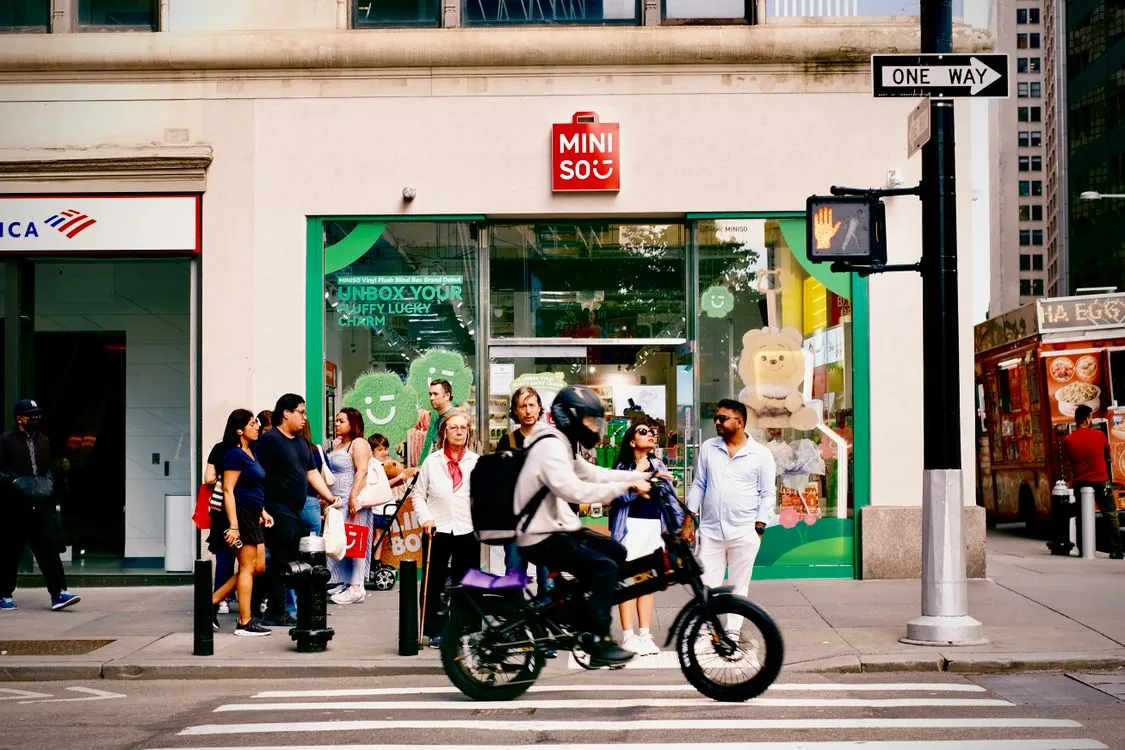
On Tuesday morning in late June, commuters streaming through New York’s Grand Central Terminal encountered something unexpected. Fifty five-foot-tall YOYO sculptures, each with a pumpkin-shaped head and minimalist design, filled Vanderbilt Hall alongside a 40-foot-plus installation, as documented by Grand Central Terminal’s events page. The exhibition, called “YOYO Small Yet Significant,” was Miniso Group Holding Limited (NYSE: MNSO; HKEX: 9896) declaring itself a global IP operation platform, not a value retailer.
The Grand Central activation came about a month after Miniso’s stock dropped 10.4% following its March-quarter 2026 earnings release on May 26, as Yahoo Finance reported. The selloff happened despite a 28.5% revenue beat and reported net profit that tripled year over year to RMB 1.25 billion, according to The Standard. Our previous analysis framed this as a “trust problem” rather than a growth problem, focused on the EPS miss and overseas execution concerns that drove the selloff.
Since that report, three developments have reshaped the narrative. On June 29, the company announced a new HK$2 billion share repurchase program. On January 30 at its Global Partner Conference in Guangzhou, Miniso unveiled an aggressive proprietary IP incubation roadmap including the MINISO LAND store format and the IP Genius Program. The YOYO exhibition in Grand Central showed how the company is repositioning itself as a global brand with original characters, not just a retailer of licensed goods.
This report updates the Miniso stock thesis with these post-earnings developments, the structural margin dynamics the market is weighing, and the digital infrastructure strategy connecting Miniso’s physical stores to Alibaba’s e-commerce ecosystem.
The HK$2 Billion Share Repurchase: What It Signals
On June 29, 2026, Miniso’s board authorized a new share repurchase program of up to HK$2 billion covering the company’s ordinary shares and American depositary shares, effective June 30, 2026, for a 12-month period. The company expects to fund buybacks from surplus cash on its balance sheet, according to the official announcement on Miniso’s IR site.
This is not Miniso’s first buyback. Under an extended 2024 share repurchase program, the company had repurchased shares and ADSs with an aggregate value of approximately HK$1.37 billion on the open market, per the same announcement. The new HK$2 billion authorization is larger and comes at a moment when the stock trades below the level it reached before the Q1 earnings release.

CFO Eason Zhang telegraphed this move during the May 26 earnings call, stating that “our share price has been trading below its intrinsic value and the company is also planning to conduct share repurchases depending on market conditions,” as reported in the Q1 2026 earnings release. The speed of the authorization (roughly a month after the earnings call) suggests the board had already prepared the program.
The buyback math is straightforward. Miniso distributed US$115.8 million in cash dividends in April and May 2026, bringing total shareholder returns to RMB 6.2 billion since its U.S. IPO in 2020, according to the earnings release. Adding the HK$2 billion repurchase program on top of that dividend stream signals that management believes the current valuation does not reflect the company’s cash generation or growth trajectory.
The new HK$2 billion program over 12 months implies a faster cadence of roughly HK$167 million per month. If executed at that pace, the buyback could absorb meaningful trading volume and provide a floor under the stock.
Proprietary IP Incubation: YOYO, MINISO LAND, and IP Genius Program
Miniso’s most significant strategic shift in 2026 is the acceleration of its proprietary IP incubation program. At the January 30 Global Partner Conference in Guangzhou, the company laid out a roadmap to become a “global IP operation platform” rather than simply a retailer of licensed goods, according to Miniso’s official announcement of the conference.
The centerpiece is YOYO, a proprietary character introduced in mid-2025 with a pumpkin-shaped head and minimalist design. YOYO generated more than US$14 million in global product sales within six months of launch, according to Global Toy News coverage of the Grand Central exhibition. The late-June Grand Central activation featured 50 five-foot-tall YOYO sculptures alongside a 40-foot-plus installation, transforming one of New York’s busiest public spaces into an immersive brand experience. Several installations were co-created with artists and fans, and one exhibit was developed alongside New York-based nonprofit Animal Haven.
Miniso’s proprietary IP portfolio now includes Gift Bear and Friends, YOYO, Kumaru, Angry Amiee, Carrot Street, Dundun Chicken, MINI Family, and others. The company’s IP Genius Program offers top creative talent worldwide individual annual compensation of up to RMB 10 million to develop proprietary IPs, with a stated goal of bringing 100 original IPs to the global stage over the next decade, per the Global Partner Conference announcement.
The MINISO LAND store format is the physical infrastructure for this strategy. The Shanghai MINISO LAND flagship on Nanjing Road set a global single-month sales record among all Miniso stores. The format now operates in Guangzhou, Shanghai, Beijing, Wuhan, Chongqing, and selected overseas markets including Thailand.
The economic logic is clear. Licensed IP collaborations (Harry Potter, Peanuts, BT21, Loopy, One Piece, Stitch, Chiikawa) drive traffic and have generated cumulative sales of over 800 million IP-driven products, with annual IP product sales surpassing RMB 10 billion in gross merchandise value, according to the conference announcement. Proprietary IP carries no licensing cost and creates an asset that compounds over time. If YOYO and Gift Bear and Friends can achieve even a fraction of the commercial traction of licensed characters, margin improvement could be substantial.
The AI Windfall vs. Structural Margin Pressure
The most misunderstood number in Miniso’s Q1 2026 report is the 199.7% net profit surge. As China Biz Insider detailed in its analysis, reported profit was artificially inflated by an RMB 874.6 million unrealized mark-to-market gain from Miniso’s strategic pre-IPO investment in Chinese AI startup MiniMax. Strip that out, and adjusted net profit excluding FX effects grew a more modest 8.1% year over year to RMB 633.1 million, per the Q1 2026 earnings release.
The structural pressure points are real:
- Gross margin contracted to 43.3% from 44.2% year earlier, driven by a shift toward direct-operated overseas stores with higher unit costs, per the earnings release.
- Selling and distribution expenses surged 44.0% year over year to RMB 1.47 billion, pushing the expense ratio up 2.8 percentage points to 25.9%. Within that, promotion and advertising expenses jumped 73.7% (around 3% of revenue), licensing expenses rose 42.0% (around 2.6% of revenue), and logistics expenses increased 43.5% (around 2% of revenue), per the earnings release.
- Overseas same-store sales growth cooled to low single digits in North America, while Southeast Asia remains in a protracted channel adjustment between franchise and direct-operated models, as China Biz Insider reported.
The counterargument is that these are investments, not losses. Licensing expenses of around 2.6% of revenue fund the IP pipeline that drives traffic. Direct-operated store investments build overseas infrastructure that will eventually generate higher-margin revenue. Advertising spending of around 3% of revenue supports brand awareness in new markets.
The adjusted operating profit excluding FX grew 14.3% to RMB 838.1 million with a margin of 14.7%. That is still healthy for a retailer, but it trailed the 28.5% revenue growth rate, which is the exact pattern that worries growth investors. Revenue is scaling faster than profit, which means operating use is negative at the margin.
Digital Infrastructure and Alibaba E-commerce Channel
Less discussed in earnings coverage is how Miniso’s digital infrastructure, particularly its integration with Alibaba’s e-commerce platforms, is reshaping the revenue mix. Miniso’s Chinese mainland operations delivered a 29.6% year-over-year revenue increase in Q1 2026, driven by high-single-digit same-store sales growth, per the earnings release. A meaningful portion of that growth comes through Alibaba’s TMall and Taobao platforms, where Miniso maintains dedicated storefronts.
The Alibaba partnership provides three structural advantages. Alibaba’s logistics network enables rapid fulfillment for Miniso’s high-turnover, low-ticket merchandise, reducing delivery times. Alibaba’s cloud data services allow Miniso to optimize inventory allocation, personalize product recommendations, and time promotional campaigns around consumer demand patterns. The cross-border e-commerce infrastructure helps Miniso reach customers in markets where it does not yet have physical stores.
This digital channel is particularly important for Miniso’s IP strategy. Limited-edition character collections can be launched simultaneously across physical stores and Alibaba’s platforms, creating synchronized demand spikes that drive both online and offline traffic. The data feedback loop (which characters sell best in which regions, at which price points, in which formats) feeds directly into Miniso’s product development and licensing decisions.
As a pop toy and collectibles brand, TOP TOY’s blind boxes and designer figurines have a natural affinity with online communities, social media marketing, and e-commerce platforms. The Alibaba ecosystem provides distribution infrastructure for this digital-native product category.
Global Store Expansion: The Q1 Pace Challenge
Miniso added 80 net new stores globally in Q1 2026, bringing the total network to 8,565 locations, per the earnings release. The remaining three quarters will need to deliver significantly faster rollout.
The composition of new stores matters. Overseas direct-operated stores accounted for 45 of the 80 net additions (34 MINISO overseas direct-operated stores plus 7 TOP TOY overseas direct-operated stores, per the earnings release store table), pushing the direct-operation ratio higher. This shift toward company-operated stores rather than franchise or distributor models increases capital intensity and near-term costs, but it also gives Miniso greater control over brand presentation, product assortment, and customer experience in strategic markets.
In the U.S., Miniso is expanding its retail footprint by 100 stores in 2026 for a total of 480 locations, including larger format experiential stores. The company plans to open stores alongside Walmart, Target, and Ulta rather than traditional mall locations, with a growing focus on owned IP characters, as Modern Retail reported and Retail TouchPoints confirmed.
The store expansion data reveals a structural tension. Miniso needs to add stores to hit its revenue guidance, but each new store, particularly in overseas markets, carries upfront costs that pressure near-term margins. The bull case is that these stores become profitable within a year or two and contribute to a compounding growth engine. The bear case is that the company is trading short-term margin for long-term scale without clear evidence that unit economics work in every market.
Investor Outlook: What Has Changed Since the Earnings Selloff
Since our previous analysis on June 25, three factors have shifted the risk-reward calculation for MNSO:
1. The buyback changes the capital return story. A HK$2 billion repurchase program at current valuation levels is a credible signal that management believes the stock is undervalued. Combined with US$115.8 million in dividends already distributed in April and May, Miniso is returning meaningful capital to shareholders. This matters because the previous post-earnings selloff was partly driven by questions about whether growth was producing enough shareholder value. The buyback directly addresses that concern.
2. The proprietary IP strategy is becoming tangible. The YOYO exhibition at Grand Central Terminal, MINISO LAND store openings, and IP Genius Program are not PowerPoint slides, they are real investments with measurable early returns. YOYO’s US$14 million in six-month sales is small relative to Miniso’s overall revenue, but it shows that proprietary IP can generate commercial traction. If the company can incubate multiple successful original characters, the licensing cost advantage alone could add meaningful basis points to gross margin over time.
3. The AI investment creates both opportunity and noise. Miniso’s pre-IPO investment in MiniMax generated an RMB 874.6 million unrealized gain that distorted Q1 reported profit. That gain is non-recurring and non-operational, but it also signals that Miniso’s management is thinking strategically about technology investments. The company has the balance sheet capacity to make early-stage bets in AI and other emerging technologies, which could create additional value beyond the core retail business.
The risks that drove the selloff have not disappeared. Adjusted operating profit growth of 14.3% still trails revenue growth of 28.5%. North American same-store sales have cooled. Licensing and advertising costs are rising faster than revenue. The store expansion pace in Q1 leaves a large gap to the full-year target. And the MiniMax gain means that headline net profit comparisons will become much more difficult in subsequent quarters when the AI mark-to-market gain does not repeat.
But the story is no longer just about an EPS miss. Miniso is executing a strategic transformation from discount retailer to IP-driven lifestyle platform with digital infrastructure powered by Alibaba, proprietary character incubation, immersive store formats, and a clear capital return policy. The HK$2 billion buyback gives investors a concrete mechanism to benefit from that transformation even if the stock takes time to re-rate.
| Development since May 26 earnings | Date | Investor significance | Source |
|---|---|---|---|
| HK$2 billion share repurchase program announced | June 29, 2026 | Signals management conviction that stock is undervalued; provides potential price support | Miniso IR |
| YOYO exhibition at Grand Central Terminal, New York | Late June 2026 | Shows proprietary IP commercialization and brand-platform strategy | Global Toy News |
| US$115.8 million in dividends distributed (Apr-May) | April-May 2026 | RMB 6.2 billion total shareholder returns since 2020 IPO | Miniso Q1 release |
| RMB 874.6M unrealized gain from MiniMax AI investment | Q1 2026 | Distorts reported profit; adjusted net profit grew 8.1% excluding FX | China Biz Insider |
| IP Genius Program announced at Global Partner Conference | January 30, 2026 | RMB 10 million annual compensation for top IP creators; 100 IPs target over decade | Miniso official site |
| MINISO LAND flagship openings in Guangzhou, Shanghai, Beijing | Q1 2026 ongoing | 90% IP product mix; Shanghai store set global monthly sales record | Miniso official site |
Key Takeaways:
- Miniso’s HK$2 billion share repurchase program (announced June 29, 2026) is the most significant capital-return signal since the post-earnings selloff, with a planned monthly execution pace roughly 2.7 times the prior program.
- The proprietary IP strategy is moving from concept to commercial reality: YOYO generated US$14 million in six-month sales, MINISO LAND stores are achieving record productivity, and the IP Genius Program is investing up to RMB 10 million per creator to incubate original characters.
- The RMB 874.6 million unrealized gain from the MiniMax AI investment inflated reported net profit by 199.7%, but adjusted net profit excluding FX grew a more modest 8.1%. Investors should watch operational profit quality, not headline numbers.
- Miniso’s Alibaba e-commerce integration provides digital infrastructure for IP product launches, data-driven inventory management, and cross-border distribution, supporting 29.6% Chinese mainland revenue growth.
- The Q1 store expansion pace (80 net new stores) represents roughly 15% of the full-year target of 450-500, putting pressure on the remaining three quarters to accelerate rollout.
My 2026 call: Miniso Group (MNSO) will trade above its post-Q1 2026 earnings close price by December 31, 2026, driven by the HK$2 billion share repurchase program and proprietary IP commercialization. The buyback provides a floor, the IP strategy provides a margin catalyst, and the Alibaba digital infrastructure provides a distribution engine. The risk is that adjusted profit growth continues to trail revenue growth, which would keep the valuation multiple compressed. The stock remains a show-me story, but management is now putting capital behind its conviction.
Related Reading
- Alibaba Stock 2026: Market Outlook and Trends
- Microsoft (MSFT) Stock Analysis 2026: Cloud, AI Spending, and $365 Gap to $561
- Lululemon in Crisis: Can Brand Recover?
- Strategy Inc. (MSTR) Stock Analysis 2026: Bitcoin Treasury, Financing, and $104 Reality
Sources and References
Sources cited while researching and writing this article:
- Grand Central Terminal’s events page
- Yahoo Finance reported
- The Standard
- official announcement on Miniso’s IR site
- MINISO Group Announces March Quarter 2026 Unaudited Financial Results
- MINISO Announces Expanded Proprietary IP Incubation and MINISO LAND …
- MINISO’s IP Strategy Shows Retailers Are Becoming Entertainment Brands
- China Biz Insider detailed in its analysis
- Miniso targets high double-digit 2026 revenue growth with 450-500 net store additions
- Modern Retail reported
Victor Zhao
Cross-border business consultant with deep expertise in China's technology landscape and regulatory environment.