Lululemon in Crisis: Can the Brand Recover?
Lululemon in Crisis: Guidance Cut, CEO Transition, China Trust Damage, Can the Brand Recover?
Since our previous analysis of Lululemon on June 24, the story has moved from a single cultural controversy to a broader crisis of confidence. The May 30 Great Wall yoga event backlash is no longer the only headline. In the weeks since, the company cut its full-year guidance, reported a persistent sales slump in its core North American market, settled a proxy fight with founder Chip Wilson, and appointed a new CEO from Nike, a move that landed at a moment of maximum vulnerability.
This is about whether Lululemon has entered a cycle where multiple problems compound faster than management can fix them.
The June 2026 Guidance Cut: What Changed and Why
On June 4, 2026, Lululemon released its first-quarter fiscal 2026 results for the period ended May 3, 2026. The headline numbers showed a solid start, interim co-CEO and CFO Meghan Frank said teams “executed with speed.” But forward guidance told a different story.
The company cut its full-year net revenue forecast to between $11.0 billion and $11.15 billion, according to Reuters. That range represents a decline of up to 1% from earlier expectations. The diluted EPS forecast was set at $10.95 to $11.15, well below Wall Street estimates. Second-quarter projections also missed analyst targets.

The guidance cut was driven by a persistent sales slump in Lululemon’s key U.S. market. The company cited “negative media commentary” and disappointing product launches as contributing factors, according to CNBC. Products failed to win back shoppers who had drifted to competitors or reduced discretionary spending.

LULU shares have fallen roughly 43-45% year-to-date as of July 2026, reflecting the convergence of multiple headwinds.
Net income fell 38% to $195 million from $314.6 million a year earlier, as reported by WWD. The stock dropped about 8% on the day of the guidance cut, hitting its lowest level since 2018, per Reuters. The Wall Street Journal separately reported that the stock was down 45% for the year as of early June.
The guidance cut shifts the analytical frame. In our June 24 analysis, the central question was whether the Great Wall controversy would damage China demand. Now the question is broader: is Lululemon’s core North American business (still the majority of revenue) also under structural pressure?
Chip Wilson Proxy Fight Settlement and Board Changes
Founder Chip Wilson, who owns 8.4% of Lululemon according to Forbes, launched a proxy fight in December 2025 to remake the company’s board. Wilson had been publicly critical of management, pointing to market share losses to competitors including Alo Yoga and Vuori.
In May 2026, Lululemon entered into a cooperation agreement with Wilson that ended the proxy fight. Under the agreement, the company appointed Laura Gentile, former Chief Marketing Officer of ESPN, and Marc Maurer, former co-CEO of On, to the board. Lululemon also agreed to appoint an additional director with apparel and brand expertise. Wilson agreed to standstill and non-disparagement provisions for about 18 months, according to Wikipedia’s Lululemon profile.
The settlement removed the immediate threat of a messy board battle, but it did not resolve the underlying tension. Wilson’s public criticism of management had already damaged investor confidence, and the board refresh (while constructive) signals that governance changes were needed at a time when operational focus was most critical. The proxy fight also contributed to the “negative media commentary” that Lululemon itself cited as a factor in its sales weakness.
For investors, the proxy fight settlement is a neutral to mildly positive development. It reduces distraction, but the fact that the founder felt compelled to launch a proxy fight tells you how far the company’s performance had deteriorated.
China Crisis Deepens: From Great Wall to Trust Meltdown
The May 30 Great Wall event remains the most visible 2026 reputational event. As reported in our previous analysis, Lululemon staged a yoga campaign near the Great Wall featuring Chinese actor Zhu Yilong and roughly 2,000 attendees. A Japanese taiko drum appeared in promotional materials, triggering backlash on Chinese social media. Lululemon apologized and withdrew the materials.
But the story did not end there. On June 29, Forbes reported that new controversy emerged, deepening the crisis of trust. Pam Danziger’s Forbes piece described “quality concerns” reviving questions about Lululemon’s credibility and consumer trust, giving customers “reason to look elsewhere.”

Lululemon’s China growth strategy depends on community events and cultural resonance, both of which suffered damage from the Great Wall controversy.
The convergence of a cultural misstep and product quality questions is particularly dangerous for a premium brand. One incident can be dismissed as a one-off. Two different types of trust failures within weeks suggest a pattern. The Seeking Alpha analysis from July 7 described demand softness, profitability pressures, and China-related risks as clouding near-term prospects, maintaining a Hold rating and advising that the bottom may not yet be in.
China remains Lululemon’s most important international growth market. The country’s rising middle class and fitness participation rates make it a natural expansion target. But the brand now faces a trust deficit in that market that will take months (not weeks) to repair. Local partners, influencers, and landlords may become more cautious about associating with a brand that appears culturally careless.
The New CEO from Nike: A Hire That Raises Questions
In April 2026, Lululemon named Heidi O’Neill, a Nike veteran, as its new chief executive officer, effective September 8, 2026. The appointment was reported by multiple outlets including CBC and BizJournals. O’Neill brings decades of athletic apparel experience from the world’s largest sportswear company.
The market reaction was negative. Lululemon shares fell about 8% on June 5 after the company cut its forecast, with the selloff highlighting growing investor unease over the challenges awaiting the incoming CEO, Reuters reported. Jefferies analysts said “brand momentum is fading, share losses are building, and sales per foot are deteriorating,” adding that the company needs a full strategic reset.
The negative reaction is instructive. Hiring a Nike executive sounds good on paper: Nike is the world’s largest athletic brand, and its executives understand global retail, product cycles, and brand management. But investors saw several problems.
First, Nike itself is facing pressure. The company’s Europe, Middle East, and Africa revenue fell 7% in fiscal Q3 2026, with WWD citing sportswear softness and a highly promotional retail market. If Lululemon hired someone from a company that is also struggling, what specific expertise does that person bring?
Second, Lululemon’s business model is fundamentally different from Nike’s. Lululemon is direct-to-consumer, premium-priced, and community-driven. Nike is wholesale-heavy, mass-market, and promotion-dependent. A Nike-trained executive may not be the right fit for a brand that needs cultural sensitivity and premium positioning.
Third, timing matters. A CEO transition during a sales slump, proxy fight, and cultural controversy creates execution risk. O’Neill does not take over until September 8, leaving the company in an interim leadership structure during a critical period.
Competitive Pressure in Premium Athletic Apparel
Lululemon is losing market share to rivals. The premium athletic apparel segment in China and North America has become more competitive. Alo Yoga and Vuori have gained traction, particularly among younger consumers who see them as fresher alternatives. Nike and Adidas remain dominant at scale. Chinese domestic brands like Li-Ning and Anta offer culturally authentic alternatives that benefit when global brands make cultural missteps.
Seeking Alpha’s July 7 analysis described Lululemon as a potential value trap, citing execution, tariff, and competition risks. The piece noted that FY2026 guidance was cut, China and North America comparable sales are diverging, and margin risks are rising. The TIKR.com blog, tracking Lululemon’s 2026 outlook after roughly 60% decline from prior highs, noted that margins could normalize from current pressure, supporting potential 24% upside, but that scenario depends on execution that has so far been lacking.
The competitive threat is about losing pricing power. If consumers start comparing Lululemon’s premium pricing to alternatives and perceive Lululemon’s cultural judgment as weaker, the premium multiple erodes.
| Competitor | Positioning | 2026 Relevance for Lululemon | Source |
|---|---|---|---|
| Alo Yoga | Premium yoga apparel, celebrity-backed, strong social media | Direct competitor for younger female demographic in China and US | Wikipedia Lululemon profile |
| Vuori | Premium performance lifestyle, men’s and women’s | Gaining share in premium athleisure segment | Wikipedia Lululemon profile |
| Nike (NKE) | Mass-market athletic, footwear dominant, global scale | EMEA revenue down 7% in fiscal Q3 2026, shows sector-wide pressure | WWD |
| Li-Ning / Anta | Chinese domestic brands with strong local cultural resonance | Benefit when global brands make cultural missteps in China | Industry context |
The table shows that Lululemon faces pressure from multiple directions. Western premium competitors are chasing the same customer. Chinese domestic brands offer culturally authentic alternatives. And Nike’s struggles show that even the largest players cannot take demand for granted.
Valuation and What Comes Next
LULU stock has fallen roughly 43-45% year-to-date as of early July 2026. The stock hit its lowest level since 2018, according to the Wall Street Journal. The forward P/E ratio has compressed from over 45x at the start of the year to approximately 28x. That multiple contraction reflects the market’s reassessment of Lululemon’s growth trajectory and risk profile.
The Seeking Alpha analysis from July 7 described the stock as a potential value trap, meaning it looks cheap on traditional valuation metrics but may deserve to be cheap because of structural problems. The key risks cited include execution challenges, tariff exposure, and intensifying competition. The MSN analysis from July 6 noted that the stock “hasn’t been trading this low since 2018” and asked whether Lululemon can bounce back in the second half of 2026.
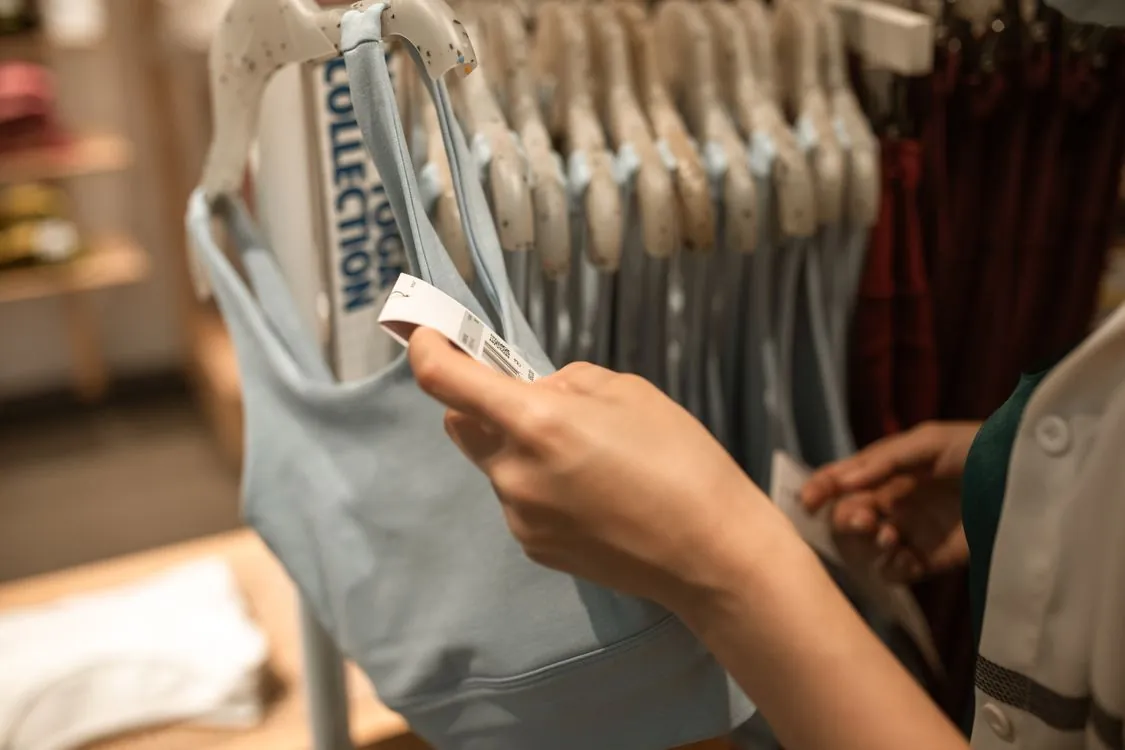
Lululemon operates over 800 stores globally, with China stores among the highest-growth locations, but cultural trust is now a variable.
The bull case, articulated by some analysts including TIKR.com, is that Lululemon’s brand remains strong, a new CEO can reset the product cycle, and the China backlash will fade. The TIKR analysis noted that margins could normalize from current pressure, supporting potential 24% upside without relying on multiple expansion. The Seeking Alpha analysis from July 7, while cautious, acknowledged that valuation is getting closer to attractive levels for long-term investors.
The bear case is that Lululemon faces a multi-quarter turnaround. North American demand is soft, China trust is damaged, leadership is in transition, and competitors are circling. The guidance cut in June may not be the last. If the second quarter disappoints, the stock could test lower levels. The Forbes June 29 piece on the growing crisis of trust suggests that consumer perception is deteriorating faster than financial statements currently show.
My view is that LULU is not yet a buy. The stock needs to prove three things before the risk-reward becomes attractive: first, that North American same-store sales stabilize without heavy discounting; second, that China demand recovers measurably in the next reported quarter; and third, that incoming CEO Heidi O’Neill articulates a credible product and localization strategy before taking over in September. Until those proofs emerge, the value-trap risk outweighs recovery potential.
Prediction: Lululemon (LULU) will not close above $280 by December 31, 2026, because the convergence of the guidance cut, CEO transition, China trust damage, and competitive pressure will keep the stock under valuation pressure through year-end. This call is invalidated if LULU closes above $280 on or before December 31, 2026.
Key Takeaways
- Lululemon cut its FY2026 revenue forecast to $11.0-11.15 billion in June, citing a U.S. sales slump and disappointing product launches. Net income fell 38% year over year.
- The Great Wall controversy has evolved into a broader crisis of trust, with a second controversy around quality concerns emerging in late June per Forbes.
- The proxy fight with founder Chip Wilson (8.4% owner) was settled in May with board appointments, but the distraction has already taken a toll on investor confidence.
- Incoming CEO Heidi O’Neill, a Nike veteran, takes over in September 2026. The stock dropped about 8% after the guidance cut, with Jefferies analysts calling for a full strategic reset.
- Competition from Alo Yoga, Vuori, and Chinese domestic brands is intensifying, and Lululemon’s premium pricing power is under threat.
- LULU stock is down roughly 43-45% YTD, trading near eight-year lows at a forward P/E of ~28x, a potential value trap until North America and China both show recovery signals.
Related Reading
More in-depth coverage from this blog on closely related topics:
- Microsoft (MSFT) Stock Analysis 2026: Cloud, AI Spending, and $365 Gap to $561
- Miniso Group Holding Stock Report 2026: Business Model, Assets, and Market Trust
- Strategy Inc. (MSTR) Stock Analysis 2026: Bitcoin Treasury, Financing, and $104 Reality
Sources and References
Sources cited while researching and writing this article:
Victor Zhao
Cross-border business consultant with deep expertise in China's technology landscape and regulatory environment.