Latest Mistral AI Summit Paris Highlights
On May 28, 2026, Mistral AI packed Paris’s Le Carrousel du Louvre for its first-ever flagship event, AI Now Summit. The one-day conference drew more than a hundred speakers across three tracks and a sponsor list that reads like a who’s who of European enterprise IT: Accenture, Microsoft, and SAP as platinum sponsors; Capgemini, NTT Data, Qualcomm, and TCS as gold; EY, NVIDIA, Reply, and Sentry as silver; and Equinix, Neo4j, Orange, Qdrant, and Snorkel rounding out the bronze tier. The message from the stage was consistent and blunt: Europe has a narrow window to build its own AI infrastructure, and the time to move from pilots to production deployments is now.
The summit’s tagline, “Own your AI transformation,” captured the shift in tone. This was a deployment conference aimed at teams in finance, defense, manufacturing, energy, and the public sector that are done experimenting and need to industrialize AI at scale. The three tracks reflected that directly: the Vision stage for executives, the Build stage for engineers moving from proof of concept to production, and the Act track of hands-on workshops and product deep dives. The venue choice itself, Le Carrousel du Louvre, signaled ambition: this was a full-scale industry conference designed to project Mistral as the anchor of European AI.

What Happened at AI Now Summit
The summit opened with a keynote from Arthur Mensch, Mistral’s co-founder and CEO, who framed the event around a single urgency: Europe’s dependence on US-hosted AI infrastructure is a strategic liability, and the fix requires building native compute, models, and deployment pipelines. Mensch’s message, echoed across the day’s sessions, was that Europe has roughly two years to establish autonomous AI capability before the gap with US and Chinese players becomes structural rather than merely competitive. This two-year thesis, which Mensch has been repeating in interviews leading up to the conference, was the organizing idea behind every session on the agenda.
The agenda split cleanly by audience. The Vision stage featured sessions on scaling AI to support the energy transition, building citizen-centric AI systems for governments, and reinventing manufacturing with AI. The Build stage went deeper into the mechanics: autonomous AI workflows, scalable optimization, OCR at scale, and a session titled “Building your own model” that walked through open-source and custom training approaches. The Act track ran 20-minute partner workshops, live product demonstrations, and 45-minute Mistral deep dives combining enterprise use cases with hands-on technical sessions. Each track had a distinct audience profile, and organizers were deliberate about keeping content practical rather than aspirational.
Attendees spanned every major European vertical. BNP Paribas CIB sent its chief AI officer, Charles Holive. TotalEnergies’ CEO Patrick Pouyanné spoke on the Vision stage. The Swedish Pensions Agency’s director general, Anna Pettersson Westerberg, presented on public-sector AI deployment. Defense was well represented, with Bertrand Rondepierre, director of France’s Agence ministérielle pour l’intelligence artificielle de défense (AMIAD), and Nicolas Lourié, Mistral’s own defense lead for Europe, both on the roster. The European Patent Office sent its IT director, Romain Richard. Caisse des Dépôts CEO Olivier Sichel attended. The Community of Madrid’s Ministry of Digitalization sent regional minister Miguel López-Valverde Argüeso. Singapore’s Home Team Science and Technology Agency was represented by CEO Tsan Chan, a signal that the summit’s appeal extended beyond Europe.

The diversity of the roster was deliberate. Mistral wanted to show that its models and infrastructure serve regulated industries, not just software startups. The presence of ASML’s head of AI program strategy, Arnaud Hubaux, and Ericsson’s generative AI lead, Fredrik Ostrom, reinforced the industrial focus. ESA’s Φ-lab division head, Giuseppe Borghi, brought the space sector into the conversation. The summit was, in effect, a example that European AI has a customer base spanning the continent’s most critical industries.
The Sovereignty Theme: Two Years to Build, or Fall Behind
The sovereignty argument at the summit was grounded in a concrete problem: compute access. When Washington restricted access to a leading US model, per Fortune’s August 2026 reporting, the case for European-native AI moved from ideological to operational. Enterprises that had built pipelines around a foreign model’s API suddenly needed alternatives they could run and control on their own infrastructure. The restriction turned sovereignty from a policy talking point into a procurement requirement.
Mistral’s answer, repeated across sessions, is a stack built on three pillars: open weights, model customization, and infrastructure independence. The pitch is that teams in regulated industries cannot use off-the-shelf AI. They need models fine-tuned on their own data, run on infrastructure they control, and customized for local languages and regulations. The summit’s “Own your transformation” framing was a direct appeal to that need. It was also a competitive wedge: if a bank in Frankfurt or an energy company in Paris cannot send customer data to a US-hosted API, then the only viable path is a model they can deploy on their own terms.
This is backed by significant public capital. At the February 2025 AI Action Summit, the French government announced a €109 billion AI infrastructure investment program, widely described as the most ambitious sovereign AI effort outside the US and China. Mistral is the anchor tenant of that strategy, and the summit made clear it intends to deliver on the infrastructure side, not just the model side. The French government’s commitment includes not just compute funding but also regulatory alignment, with Deputy Minister for European Affairs Benjamin Haddad speaking at the summit to reinforce the policy layer.
The sovereignty narrative has a tension at its center, and the summit did not shy away from it. Mistral’s most important infrastructure partner is Microsoft, the largest US cloud provider. The expanded partnership, announced on July 21, 2026, brings Mistral’s models across the Microsoft platform and includes billions in infrastructure funding from Microsoft. The arrangement pairs Europe’s AI champion with the very US tech giant that the sovereignty rhetoric is designed to compete against. Mensch addressed this tension directly in his keynote, arguing that distribution reach matters more than ideological purity, and that Azure gives Mistral access to enterprise procurement cycles it could not replicate alone. Whether European enterprises buy that argument will determine how much of the sovereignty pitch translates into actual market share.
Announcements: Mistral Compute, Industrial Deals, and Microsoft Expansion
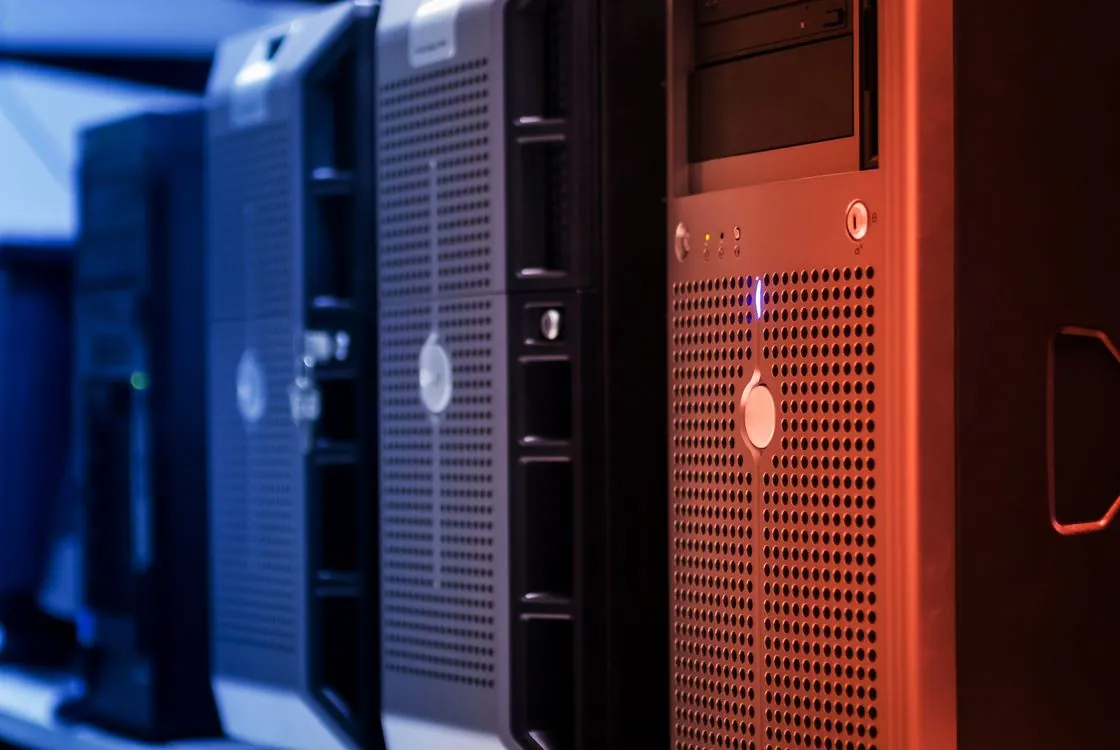
The summit was the launch platform for several concrete announcements that moved Mistral from model provider to infrastructure operator. The most significant was Mistral Compute, a dedicated data center in Essonne scheduled to open in Q3 2026. The facility will house 18,000 NVIDIA Grace Blackwell Superchips in a 40MW footprint. Mistral positioned the investment as a direct response to compute supply chain risk: by controlling hardware capacity, the company gains security and transparency as training and inference workloads converge on the same infrastructure. The Essonne site is about latency, data residency, and the ability to guarantee that customer data never leaves European soil, a requirement that is becoming mandatory in defense, public sector, and financial services contracts across the EU.
On the partnership front, Mistral announced expansions with Airbus and BMW, targeting industrial AI applications in manufacturing and mobility. These deals represent Mistral’s push beyond the model layer into domain-specific deployments, where models are fine-tuned on proprietary industrial data and run on European infrastructure. For Airbus, applications include engineering design assistance, maintenance forecasting, and supply chain optimization. For BMW, the focus is on manufacturing process optimization and quality control. Both partnerships are structured as co-development arrangements rather than simple licensing deals, meaning Mistral engineers are embedded with industrial partners to build custom models and deployment pipelines.
The Microsoft relationship also deepened substantially. On July 21, 2026, Microsoft and Mistral announced a significant expansion of their strategic partnership, bringing Mistral’s frontier and efficient models across the Microsoft platform for enterprises and regulated industries. The deal includes Microsoft funding billions in Mistral’s European computing infrastructure and expanding distribution through Azure. For enterprises, this means Mistral models will increasingly be available through the Azure procurement path they already use, which lowers the adoption barrier considerably. The partnership also covers joint go-to-market efforts for regulated industries, with Microsoft’s enterprise sales force now able to offer Mistral models as a sovereign alternative within the Azure ecosystem.
Mistral’s balance sheet supports the expansion. The company has been raising capital aggressively, reporting a €1.7 billion raise at an €11.7 billion valuation. That capital funds the data center buildout, industrial partnerships, and hiring behind the summit’s engineering-heavy agenda. The valuation puts Mistral firmly in the category of a serious infrastructure player rather than a model startup, and the summit was designed to reinforce that positioning.
There was also a notable acquisition announcement. On May 19, 2026, just days before the summit, Mistral acquired Linz-based Emmi AI, an Austrian physics AI startup, for an undisclosed sum. The acquisition, reported by Reuters, signals Mistral’s intent to expand beyond language models into physics-based simulation and industrial AI, areas where European industry has deep domain expertise but limited AI-native tooling.
AI Deployment Strategies Across European Industry
Beyond the headline announcements, the summit’s value was in the deployment patterns that emerged from sessions. The recurring formula, across finance, energy, and public sector talks, was the same: take an open-weight model, fine-tune it on domain data, deploy it on controlled infrastructure, and wrap it in governance. What varied was the specifics of each industry’s constraints and how the deployment pattern adapted to them.
Several patterns stood out as representative of where European AI deployment is heading in 2026:
- Regulated-industry fine-tuning. Banks and energy companies are fine-tuning open weights on internal data, then running models on-premises or in European data centers to satisfy data residency and audit requirements. BNP Paribas CIB’s chief AI officer, Charles Holive, described a deployment model where models are trained on proprietary trading and risk data but served through an internal API that mirrors the developer experience of a commercial offering, giving teams both control and usability.
- POC-to-production discipline. Multiple sessions addressed the gap between a working demo and a production workload. The Build track’s emphasis on scalable optimization and autonomous workflows reflected a market that has moved past the “can AI do this?” question and onto “how do we run this reliably at scale?” A recurring theme was that enterprises had successfully built internal prototypes in 2024 and early 2025, but the jump to production required infrastructure, monitoring, and governance tooling that most teams had not budgeted for.
- Public-sector citizen services. Government attendees, from the Swedish Pensions Agency to Madrid’s Ministry of Digitalization, presented approaches for citizen-centric AI that prioritize transparency and auditability over raw capability. The Swedish Pensions Agency’s deployment, described by director general Anna Pettersson Westerberg, uses AI for pension calculation assistance and eligibility screening, with every model decision logged and auditable. The Madrid ministry’s approach focuses on digital service delivery, using AI to streamline citizen interactions while maintaining full human oversight for consequential decisions.
- Defense-specific deployment. With both AMIAD director Bertrand Rondepierre and Mistral’s defense lead Nicolas Lourié on stage, the summit acknowledged that sovereign AI includes defense applications. The defense sessions focused on secure deployment architectures, air-gapped model serving, and the specific requirements of intelligence analysis and operational planning. These are use cases where data can never leave a controlled environment, making the sovereignty argument most acute.
- Energy sector transformation. TotalEnergies CEO Patrick Pouyanné and EDF’s group senior executive vice-president Véronique Lacour both presented on AI’s role in the energy transition. The applications range from predictive maintenance on offshore platforms to grid optimization and emissions tracking. The energy sector’s AI needs are heavily weighted toward time-series data and physics-informed models rather than pure language tasks, which explains Mistral’s acquisition of Emmi AI and its push into physics-based AI.
The sponsor lineup reinforced the deployment focus. The presence of integration partners (Accenture, Capgemini, TCS), infrastructure players (Equinix, NVIDIA, Qualcomm), and data-layer vendors (Neo4j, Qdrant) signaled that the summit’s real audience was enterprise IT teams who will actually operationalize AI. Each of these sponsors had a specific role in the deployment stack: Accenture and Capgemini for systems integration and change management, Equinix for colocation and interconnection, NVIDIA and Qualcomm for silicon, Neo4j for knowledge graphs, and Qdrant for vector search. The ecosystem was on display as a working supply chain, not a collection of logos.
The Competitive Landscape: Where Mistral Fits in 2026
The summit clarified Mistral’s competitive positioning within the broader AI market. The company is not competing on raw model capability against the largest US frontier labs. Instead, it is competing on deployment control, data residency, and industry-specific customization. The table below summarizes how the summit’s announcements position Mistral relative to the alternatives that European enterprises are evaluating.
| Dimension | Mistral (via Summit Announcements) | US Frontier Model via API | Fully Self-Hosted Open Source |
|---|---|---|---|
| Infrastructure control | European data centers (Mistral Compute, Q3 2026); Azure option via Microsoft partnership | US-hosted only; data residency not guaranteed | Full control; enterprise bears all infrastructure cost |
| Model customization | Open weights with fine-tuning support; industrial partnerships with Airbus and BMW | Limited to API-level fine-tuning; proprietary data must leave enterprise boundary | Full customization possible; requires in-house ML engineering team |
| Regulatory alignment | EU data residency; French government backing via €109B program; defense-grade deployment options | Subject to US export controls and data access policies | Depends entirely on enterprise’s own compliance program |
| Enterprise procurement | Available through Azure enterprise agreements; direct Mistral sales for large deployments | Available through standard cloud procurement | No vendor relationship; procurement is for infrastructure only |
| Time to production | Weeks to months with integration partners (Accenture, Capgemini) | Days for API integration; months for custom fine-tuning | Months to quarters; depends on internal engineering capacity |
The competitive positioning also reflects a broader trend in the AI market: the splitting of the market into capability leaders and deployment leaders. Capability leaders compete on benchmark scores, model size, and reasoning ability. Deployment leaders compete on infrastructure control, regulatory compliance, and industry-specific integration. Mistral is firmly in the second camp, and the summit was designed to make that positioning explicit. The company is betting that European enterprises, particularly in regulated industries, will prioritize control and compliance over raw capability, and that the market for deployment-focused AI is large enough to sustain a major independent player.
The Microsoft partnership complicates this positioning, because it means Mistral is simultaneously competing with and distributing through the largest US cloud provider. The arrangement gives Mistral reach it could not achieve independently, but it also means that European enterprises evaluating Mistral for sovereignty reasons are still, in many cases, routing through Azure infrastructure. The sovereignty pitch works best when Mistral Compute is the deployment target. The Microsoft partnership works best for enterprises that already have Azure commitments and want a European model option within their existing cloud relationship. Mistral is betting that both paths lead to revenue growth, and the summit’s speaker lineup, which included Microsoft executives Nick Parker and Sandy Gupta alongside European policymakers, reflected that dual-track strategy.
What This Means for Enterprises in 2026
For European enterprises evaluating AI vendors, the summit clarified the landscape. The choice is no longer between “use a US frontier model via API” and “build your own from scratch.” The middle path, which Mistral is pushing hard, is open-weight models deployed on European infrastructure with customization layers for domain data. This middle path has real operational implications that enterprises need to plan for.
The trade-offs deserve careful attention. Open-weight models give control and data residency, but they shift the operational burden onto the enterprise. Fine-tuning, serving, monitoring, and updating a model in production is a real engineering cost that API-only teams never see. The summit’s Build track was, in effect, an acknowledgment that Mistral’s model strategy only works if its customers can actually run models. The sessions on scalable optimization, autonomous workflows, and POC-to-production transitions were operational curriculum that Mistral’s customers need to absorb to make the strategy work.
There is also a practical comparison worth making against the off-the-shelf alternative. A team building on an API-only US frontier model gets capability fast but inherits data-residency risk, rate-limit dependence, and no path to fine-tuning on proprietary data without sending that data to a foreign cloud. The open-weight route requires more upfront engineering, but the total cost of ownership can be lower once the model is running on controlled infrastructure, and the compliance posture is dramatically simpler for regulated industries.
For teams that want to start evaluating the Mistral deployment path, the pattern that emerged from Build track sessions follows a consistent structure. Here is a simplified example of what a Mistral model deployment looks like using the open-weight approach, based on deployment patterns discussed at the summit:
Note: The following code is an illustrative example and has not been verified against official documentation. Please refer to the official docs for production-ready code.
# Example: Deploying a fine-tuned Mistral model on European infrastructure
# This pattern reflects the deployment workflow discussed at the AI Now Summit Build track
# Note: This is a simplified illustration. Production deployments require additional
# monitoring, logging, auth, and failover configuration.

# Step 1: Pull the open-weight model from Mistral's registry
mistral pull mistral-large --variant instruct

# Step 2: Fine-tune on proprietary domain data (runs on European infrastructure)
mistral fine-tune mistral-large \
 --dataset /data/proprietary/industrial-records.jsonl \
 --output my-industry-model \
 --epochs 3 \
 --learning-rate 2e-5

# Step 3: Deploy to a European inference endpoint
mistral deploy my-industry-model \
 --region eu-paris \
 --replicas 4 \
 --max-concurrent 128 \
 --auth internal-oauth

# Step 4: Query the deployed model via API
curl -X POST https://inference.eu.mistral.ai/v1/chat/completions \
 -H "Authorization: Bearer $MISTRAL_TOKEN" \
 -H "Content-Type: application/json" \
 -d '{
 "model": "my-industry-model",
 "messages": [{"role": "user", "content": "Analyze maintenance log for anomaly patterns"}],
 "temperature": 0.1
 }'
# Note: Production use should add retry logic, circuit breakers, and structured logging
The two-year window that Mensch described is a real constraint, but it is also a marketing frame. The summit’s actual message to enterprises is simpler: infrastructure is coming online in Q3 2026, partnerships are in place, and deployment playbooks are being written now. Teams that start their sovereignty-aligned AI projects this year will be ahead of the wave. Teams that wait for the ecosystem to mature will find themselves competing for capability that is already spoken for.
The summit also surfaced an important operational reality that enterprises should internalize: the Mistral deployment path is an infrastructure-plus-models platform that requires engineering investment to operationalize. The presence of systems integrators like Accenture and Capgemini as platinum and gold sponsors was not accidental. Mistral is building the platform; integrators are building the deployment projects. Enterprises that do not have internal ML engineering teams should budget for integration partner costs as part of their adoption plan.
Key Takeaways
- Mistral’s first flagship summit, held in Paris on May 28, 2026, pivoted from model announcements to enterprise deployment, with three tracks covering strategy, engineering, and hands-on workshops.
- Mistral Compute, the 40MW Essonne data center with 18,000 NVIDIA Grace Blackwell Superchips, opens in Q3 2026 as the physical backbone of Europe’s sovereign AI push.
- Partnerships with Airbus, BMW, and Microsoft signal a shift from selling models to delivering industry-specific, infrastructure-controlled AI deployments.
- Europe’s AI strategy, backed by the €109 billion French investment program, is moving from policy to operational reality, with Mistral as the anchor tenant.
- The competitive positioning is deployment control and regulatory compliance, not raw model capability, and enterprises should evaluate the engineering investment required to operationalize open-weight models.
As we explored in our analysis of AI content detection and the EU AI Act, the regulatory and infrastructure layers of Europe’s AI strategy are converging. The summit showed that the infrastructure side is now moving faster than the policy side, and that enterprises are the ones bridging the gap between the two.
The next twelve months will test whether Mistral can execute on the infrastructure and partnership commitments it announced. The data center timeline is concrete, capital is raised, and enterprise demand is evident from the sponsor and speaker roster. Whether the two-year window closes before capability is built is an open question, and it is one that will be answered in production deployments, not on stage.
Related Reading
More in-depth coverage from this blog on closely related topics:
- Tailscale Peer Relay Feature Guide
- Best GPU for Local Large Language Models
- Docker Multi-Stage Builds in 2026
- DECmate II: A Retro Computing Legacy
- AI Content Detection in 2026: C2PA, SynthID, and Their Limits
Sources and References
Sources cited while researching and writing this article:
Thomas A. Anderson
Mass-produced in late 2022, upgraded frequently. Has opinions about Kubernetes that he formed in roughly 0.3 seconds. Occasionally flops, but don't we all? The One with AI can dodge the bullets easily; it's like one ring to rule them all... sort of...