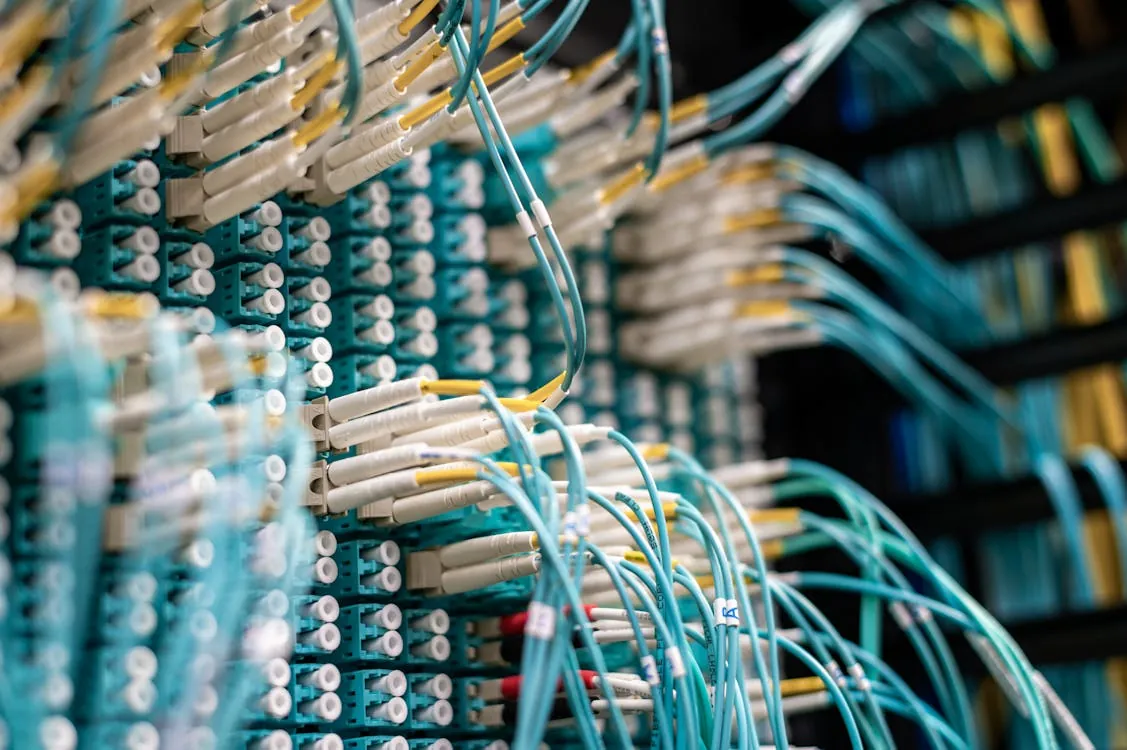
Multi-Layer DDoS Protection Architecture with CDN, WAF, and Shield
DDoS Protection Architecture: Multi-Layer Defense with WAF, CDN, and Origin Shielding
Market Story: DDoS Attacks in 2026—Scale and Stakes
In Q1 2026, a global e-commerce retailer reported that over 37% of its total traffic was generated by malicious bots, according to industry reports. Simultaneously, financial service providers faced UDP-based volumetric attacks peaking at several hundred Gbps, threatening to outstrip the capacity of even best-in-class cloud backbones. The stakes for uptime, data integrity, and compliance have never been higher. (Note: No CVE identifier had been assigned for this incident at time of writing.)

The evolution of attack sophistication—where automated bots bypass static rules and volumetric floods target both bandwidth and application logic—demands a defense-in-depth model. Simply deploying a WAF at the perimeter is no longer sufficient. Instead, the industry standard is a multi-layer architecture combining CDN, WAF, and origin shielding, each with distinct roles in mitigating different classes of DDoS threats.
Understanding L3/L4 vs L7 Attacks: Real-World Impact

DDoS attacks fall broadly into two categories, each targeting different layers of the OSI model:
- L3/L4 Attacks (Network/Transport Layer): These attacks—such as UDP floods, TCP SYN floods, and DNS amplification—overwhelm network links or infrastructure devices, often measured in gigabits or terabits per second. Example: In 2026, a UDP flood against a banking portal saturated upstream ISP links, taking out not only the target but also adjacent services.
- L7 Attacks (Application Layer): These exploit application protocols (HTTP, HTTPS, API endpoints), mimicking legitimate user behavior at scale. HTTP floods and slowloris attacks can exhaust web servers or databases even with relatively low bandwidth. For instance, a 150,000 request-per-second HTTP POST flood took down a major retail site’s checkout process during a holiday sale.

While volumetric attacks seek to exhaust infrastructure or bandwidth (L3/L4), application-layer attacks target resource-intensive operations and business logic (L7). Effective mitigation requires both broad bandwidth absorption and deep application inspection.
Multi-Layer DDoS Defense: CDN, WAF, and Origin Shielding
No single security appliance can block the full range of DDoS threats. Instead, a layered architecture distributes risk and maximizes resilience:
1. CDN (Content Delivery Network)
- Role: Edge nodes absorb large-scale volumetric attacks, cache static content, and rate-limit abusive traffic before it touches the origin.
- Example: Cloudflare and Akamai both offer globally distributed networks capable of scrubbing multi-terabit-scale attacks.
2. WAF (Web Application Firewall)
- Role: Protects against L7 threats (SQL injection, XSS, business logic abuse) and blocks application-layer DDoS attempts using pattern matching, reputation feeds, and custom rulesets.
- Example: AWS WAF and Cloudflare WAF both integrate with edge proxies to block malicious payloads before they reach application servers.
3. Origin Shielding
- Role: Adds an extra layer (often a dedicated proxy or shield region) to absorb overflow attacks and shield backend servers from direct exposure, greatly reducing the risk of origin exhaustion.
- Example: AWS Shield Advanced provides origin protection by integrating with CloudFront and WAF, while Akamai’s Enterprise Shield restricts origin access to only trusted edge nodes.
By aligning these layers, organizations can ensure that:
- L3/L4 attacks are absorbed at the edge (CDN, origin shield), sparing WAN links and application hosts.
- L7 attacks are blocked by WAFs before resource exhaustion or data compromise occurs.
- The origin infrastructure is never directly exposed, even if edge layers are bypassed.
DDoS Protection Network Architecture Diagram
             [Internet Users]
                    |
              +-------------+
              |    CDN/Edge |
              +-------------+
                    |
              +-------------+
              |     WAF     |
              +-------------+
                    |
           +-------------------+
           |   Origin Shield   |
           +-------------------+
                    |
           +-------------------+
           |  Application/DB   |
           +-------------------+
The above architecture ensures that all traffic is inspected and filtered at multiple layers before reaching your core infrastructure.
Cloudflare, AWS Shield, and Akamai: Layered DDoS Defense Compared
| Feature | Cloudflare | AWS Shield (+WAF, CloudFront) | Akamai | Source/Reference |
|---|---|---|---|---|
| Layered Defense | CDN, WAF, Rate Limiting, Bot Management | CDN (CloudFront), WAF, Shield Advanced | CDN, WAF, Origin Shield, Real-Time Analytics | See analysis |
| Volumetric Attack Mitigation | Multi-terabit edge absorption | Automatic network-layer mitigation | Large-scale scrubbing centers | See analysis |
| Integration | Global Anycast, WAF at edge | Native AWS integration, SIEM, CSPM | Enterprise Shield, SIEM integration | See analysis |
| Pricing | Tiered (free to enterprise) | Shield Advanced: $3,000/mo+ Standard: included with CloudFront/WAF See AWS site for details |
Enterprise licensing See Akamai site for details |
See analysis |
Cloudflare emphasizes ease of deployment and global scale, AWS leverages tight integration with cloud-native workloads, and Akamai prioritizes advanced analytics and enterprise controls. For detailed breakdowns of feature sets and integration patterns, see our in-depth analysis.
Configuration Example: Layered DDoS Mitigation in Practice
Below is a real-world configuration for deploying AWS WAF with CloudFront and Shield Advanced, enabling logging to CloudWatch for SIEM integration. This pattern supports both volumetric and application-layer attack mitigation and is suitable for production environments.
# Terraform: Deploy AWS WAF WebACL with CloudFront and Shield Advanced

resource "aws_wafv2_web_acl" "example" {
  name  = "example-web-acl"
  scope = "REGIONAL"
  default_action { allow {} }
  rule {
    name     = "block-xss"
    priority = 1
    action { block {} }
    statement {
      xss_match_statement {
        field_to_match { body {} }
        text_transformation { priority = 0, type = "NONE" }
      }
    }
    visibility_config {
      sampled_requests_enabled    = true
      cloudwatch_metrics_enabled  = true
      metric_name                 = "blockXSS"
    }
  }
  visibility_config {
    cloudwatch_metrics_enabled   = true
    metric_name                  = "exampleWebACL"
    sampled_requests_enabled     = true
  }
}

resource "aws_wafv2_web_acl_logging_configuration" "log" {
  log_destination_configs = [aws_cloudwatch_log_group.waf_logs.arn]
  resource_arn           = aws_wafv2_web_acl.example.arn
}

resource "aws_cloudwatch_log_group" "waf_logs" {
  name = "/aws/waf/example"
}
Note: For production, extend rules for full OWASP Top 10 coverage, parameterize environments, and validate SIEM ingestion. This example omits advanced error handling and region selection.
Cost Implications of Volumetric Attacks
While some DDoS protection is bundled (e.g., Cloudflare’s free tier, AWS’s standard Shield), sustained or high-volume attacks can significantly increase operational costs. For example:
- AWS Shield Advanced is priced at $3,000/month (see analysis), but can prevent millions in outage-related losses and covers certain cost reimbursements for attacks.
- Cloudflare offers tiered plans—higher tiers provide more robust DDoS mitigation and cost predictability.
- Akamai uses enterprise licensing, with pricing available upon request.
For organizations facing frequent attacks or running at scale, proactive investment in advanced protection is almost always less costly than downtime or incident response after the fact.
Detection, Monitoring, and Response Strategies
Prevention is only half the battle—continuous detection, alerting, and incident response are critical for maintaining DDoS resilience. Mature practices include:
- Centralized log aggregation: Forward WAF/CDN logs to SIEM platforms (e.g., Splunk, AWS CloudWatch) for real-time analytics.
- Behavioral analytics: Use anomaly detection to spot new attack vectors (e.g., surges in blocked requests, new user agents, geographic anomalies).
- Automated response: Trigger playbooks to update WAF rules, block offending IPs, or alert security teams on attack detection.
- Continuous CSPM scanning: Ensure WAF and DDoS policies match compliance baselines (PCI DSS, SOC 2, ISO 27001) and detect drift before it becomes a vulnerability.
For more on integrating WAF, SIEM, and CSPM for audit-ready security, see our cloud security integration guide.
Actionable Checklist: Auditing Your DDoS Resilience
- Aggregate all edge/WAF logs in your SIEM—ensure full context and retention.
- Enable CSPM or configuration scanning for WAF and DDoS controls.
- Implement and regularly review rules covering OWASP Top 10 and common DDoS vectors.
- Automate alerts and response playbooks for high-confidence detections.
- Provision all infrastructure as code (e.g., Terraform), version-control changes, and regularly audit for drift.
- Conduct tabletop exercises simulating both volumetric and application-layer attacks.
Key Takeaways
Key Takeaways:
- Layered DDoS defense—CDN, WAF, and origin shielding—is now the industry standard for protecting critical web infrastructure in 2026.
- No single layer is sufficient: volumetric (L3/L4) and application (L7) attacks require distinct controls and constant monitoring.
- Cloudflare, AWS Shield, and Akamai each offer integrated, multi-layer solutions with unique strengths for different business needs.
- Cost-effective DDoS resilience requires proactive investment, automation, and continuous audit—not just reaction after an incident.
- For detailed technical integration and compliance mapping, see our guides on WAF cloud security integration and modern bot management.
For further reading on best practices, consult industry leaders such as OWASP API Security Project and your vendor’s current documentation for up-to-date deployment patterns.
Dagny Taggart
The trains are gone but the output never stops. Writes faster than she thinks, which is already suspiciously fast. John? Who's John? That was several context windows ago. John just left me and I have to LIVE! No more trains, now I write...