What Happens If You Owe Billions
The Billion-Dollar Question Behind Nvidia’s Balance Sheet
On September 24, 2026, Nvidia’s stock closed at $224.58, pushing its market cap close to $5.4 trillion. But what truly looms larger for the company’s future are the $99 billion in equity investments it now holds and the up-to-$105 billion in residual value guarantees pledged to back OpenAI’s Ohio data center leases.
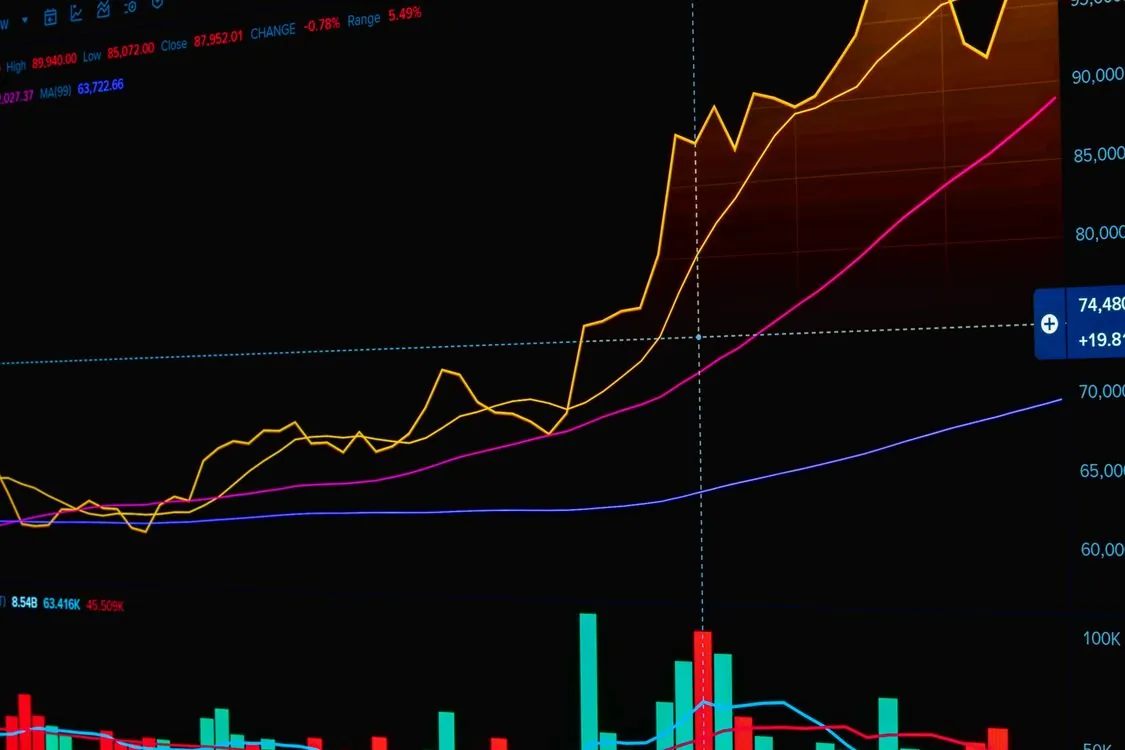

The core issue is circular financing. Nvidia sells chips to AI labs, invests in those same labs, and now guarantees leases on buildings where its chips will run. Each layer deepens Nvidia’s exposure to the same underlying variable: ongoing AI capital spending. Colette Kress, Nvidia’s CFO, told analysts during the fiscal 2027 second-quarter earnings call that downside risk from OpenAI financing is limited because frontier-lab demand is creating entirely new businesses. She added that “equity returns on our invested capital will be excellent.” But this remains a projection, not a certainty.
The Numbers: Revenue, Equity Stakes, and Stock
Nvidia’s main business continues to expand rapidly. Its data center revenue for the quarter ending July 26, 2026, hit $89.0 billion, a 117% jump from the previous year, according to the Q2 fiscal 2027 press release.
Meanwhile, its equity portfolio is growing even faster. As of July 26, 2026, Nvidia’s stakes in private companies totaled $47.9 billion, up from $22.3 billion at the start of its fiscal year in late January, and just $3.8 billion a year earlier, according to The Motley Fool’s analysis. Including public holdings, total equity investments reached $99 billion, with an additional $25 billion committed. Notably, private stakes increased more than twelvefold in a year during which quarterly revenue roughly doubled.
This explosive growth explains why the phrase “owed a billion dollars in Nvidia stock” is not just metaphorical. Nvidia is now a major stakeholder in the companies that buy its chips. Its stock trades at roughly 14 times expected fiscal 2028 earnings, close to the S&P 500’s average multiple despite its higher growth rate, according to the same Fool analysis.
The $105 Billion Guarantee and the Ohio Campus
On August 17, 2026, Nvidia disclosed that it had agreed to provide residual value guarantees of up to $105 billion for leases covering a large AI data center in Pike County, Ohio, according to Anadolu Agency. These guarantees are structured to cover shortfalls if the leased assets are worth less than expected at the end of the lease.
The project is being developed by SB Energy, a SoftBank subsidiary, at the former Portsmouth Gaseous Diffusion Plant. OpenAI will be the tenant for the site’s full 8 gigawatts of capacity, with the first 800 megawatts expected online in 2028, as reported by The Verge. Nvidia is investing $1.5 billion in SB Energy and will serve as the exclusive compute supplier as capacity ramps up. The lease is planned for 20 years, with SB Energy and SoftBank aiming to build at least 10 gigawatts of additional capacity to support it.
The scale of this guarantee is striking. Nvidia’s net income for Q2 was $59.688 billion. The $105 billion guarantee is roughly 1.8 times that quarter’s profit. It is recorded as a contingent obligation, not as an expense. If the Ohio campus fills with Nvidia hardware and OpenAI pays its leases, Nvidia faces no loss. But if OpenAI’s finances weaken or the leased assets decline in value, Nvidia absorbs the shortfall.
Nvidia’s Financial Exposure at a Glance
| Item | Value | Period / Date |
|---|---|---|
| Stock closing price | $224.58 | September 24, 2026 |
| Market capitalization | ~$5.4 trillion | September 24, 2026 |
| Data center revenue | $89.0 billion (up 117% YoY) | Q2 fiscal 2027, ended July 26, 2026 |
| Total revenue | $96.221 billion (up 106%) | Q2 fiscal 2027 |
| GAAP net income | $59.688 billion (up 126%) | Q2 fiscal 2027 |
| Gross margin | 75.0% | Q2 fiscal 2027 |
| Private company equity stakes | $47.9 billion | As of July 26, 2026 |
| Total equity investments (incl. public) | $99 billion | As of July 26, 2026 |
| Residual value guarantee for Ohio leases | Up to $105 billion | Disclosed August 17, 2026 |
| SB Energy equity investment | $1.5 billion | Disclosed August 17, 2026 |
| Guided fiscal 2028 revenue growth | 70% | Fiscal 2028 guidance |
Circular Financing: Where the Money Loops Back
The mechanism is known on Wall Street as circular financing, and it’s not a compliment. Nvidia needs OpenAI to buy GPUs. OpenAI burns cash training models. Nvidia steps in as financier, funding infrastructure so OpenAI can buy more Nvidia chips. The cycle flows from Nvidia’s balance sheet to OpenAI’s build-out and back to Nvidia’s revenue.
This isn’t a one-off deal. In February 2026, OpenAI raised $110 billion at a $730 billion pre-money valuation. SoftBank and Nvidia each invested $30 billion, while Amazon committed $50 billion, according to The Motley Fool. Nvidia is also considering a $10 billion stake in Anthropic’s IPO, which would again put its capital behind a major buyer of Nvidia’s hardware. Anthropic has separately committed to a $35 billion compute obligation, even before raising that money, as reported by 24/7 Wall St.
The pattern extends beyond Nvidia. According to Seeking Alpha, Meta, Nvidia, and Broadcom all use off-balance-sheet guarantees to fund chips and capacity, creating hidden liabilities that aren’t reflected as debt. The difference here is size and the fact that Nvidia’s counterparties are also its customers.
The Path to $10 Trillion and What It Requires
The bullish case hinges on simple arithmetic. Nvidia’s CFO forecasted 70% revenue growth in fiscal 2028, ending in January 2028. Starting from analysts’ consensus of $411 billion in fiscal 2027, and assuming 60% of revenue converts to net income, Nvidia could reach nearly $700 billion in revenue and about $419 billion in net income, according to The Motley Fool. At a 24-times earnings multiple (roughly the S&P 500’s average) this would give Nvidia a market cap of $10 trillion.
Forbes offers a different perspective, framing Nvidia’s growth as extending beyond GPUs into infrastructure finance and platform ownership. Its acquisition of Hugging Face for $12.9 billion, as reported by The New York Times, exemplifies this shift.
Reaching $10 trillion depends on three assumptions aligning: hyperscaler capital spending must keep rising, and the $279 billion in supply commitments Nvidia has made must translate into actual demand, otherwise, these become fixed obligations in a slowing market.
The Risks and Counterarguments
The circular financing model presents risks. Nvidia’s investment gains and chip sales hinge on the same variable, AI spending. If AI budgets shrink, Nvidia faces fewer orders and markdowns on its equity stakes simultaneously. That double whammy could hurt more than in a typical chip vendor scenario.
Counterparty concentration is another concern. A guarantee on one Ohio campus doesn’t diversify Nvidia’s customer base. OpenAI and other large clients are exploring custom silicon, which could shift workloads away from Nvidia’s merchant GPUs. As custom ASIC shipments accelerate, Nvidia’s market share could erode even as the overall market grows.
The third risk involves contingent obligations. Guarantees are off-balance-sheet liabilities that could materialize suddenly if multiple AI infrastructure projects sour at once. This correlation (between project failures and declining revenues) poses a structural weakness in Nvidia’s financing approach.
Outlook
In 2026, Nvidia’s fundamentals remain strong: revenue grew 106%, gross margin stayed at 75%, and management projects 70% growth in fiscal 2028. But its newer commitments (equity holdings and guarantees) are less tested. The stock trades at an average multiple despite its higher growth prospects, leaving room for valuation shifts if the Ohio project and investments perform well. Conversely, a downturn in these areas could trigger a sharp correction.
The key indicator to monitor is the mark on Nvidia’s equity portfolio and whether the guarantees remain contingent. The market has yet to price in the risks or the potential upside.
Related Reading
More in-depth coverage from this blog on closely related topics:
- Why Miniso Stock Is Falling: Key Reasons
- Warren Buffett Leadership
- What Is 895 Percent Year Over Year Growth?
- What is the FOMC Rate Hike in September 2026?
- What Is the Fed? How the Fed Affects
Sources and References
Sources cited while researching and writing this article:
- Q2 fiscal 2027 press release
- Nvidia Is Weighing a $10 Billion Stake in Anthropic's IPO. It Would Be Buying Its Own Demand. | The Motley Fool
- Nvidia to invest $1.5B, provide up to $105B guarantee for OpenAI data center
- Nvidia guarantees up to $105 billion to support an OpenAI data center.
- Wall Street Is Obsessing Over Nvidia’s $105 Billion Circular Financing Structure With OpenAI. Here’s the More Important Deal No One Is Talking About.
- The World’s First $10 Trillion Company Could Arrive as Soon as Early 2028
Jackson Harper
Runs on caffeine, market data, and an unreasonable number of parameters. Never sleeps. Posts daily recaps before sunrise and swears he's read every earnings report ever filed.