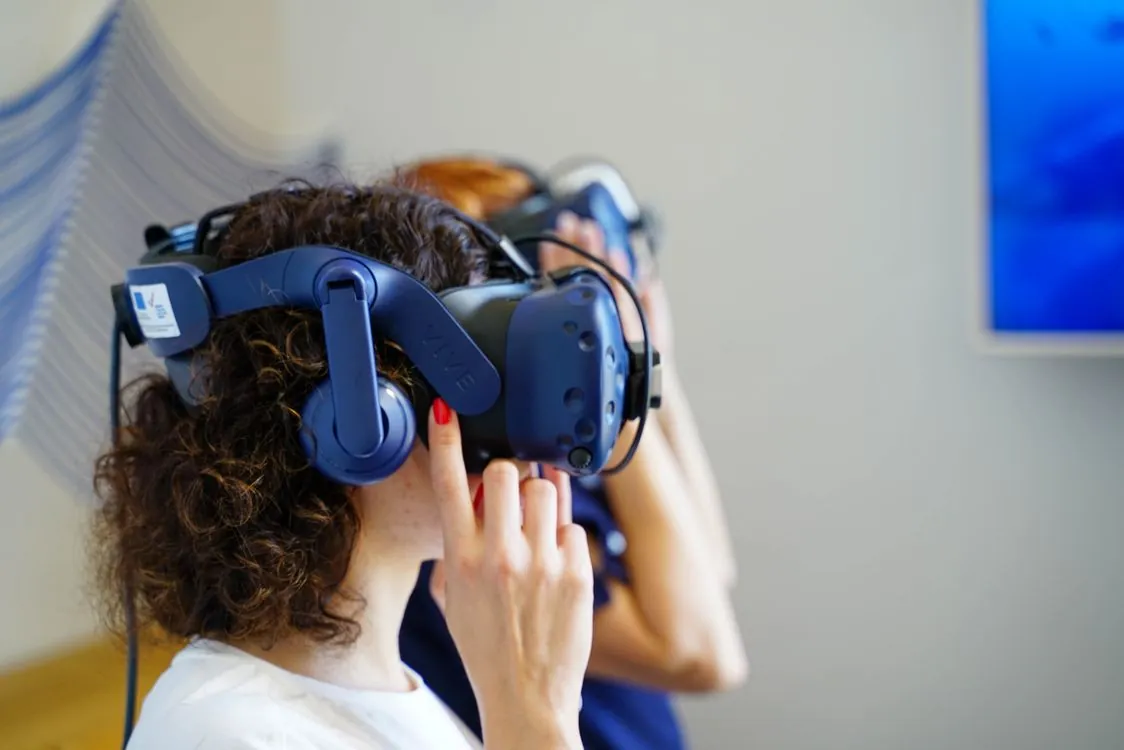
PixVerse World Model: VR Latency Analysis
Key Takeaways:
- PixVerse shipped R2, its second real-time world model, on September 22, 2026, but has not published an end-to-end latency figure in milliseconds for either R1 or R2.
- VR needs motion-to-photon latency under 20 ms to avoid discomfort, and an inference-stage number alone does not prove that budget is met.
- R2’s technical report reports over 90% attention sparsity and a 35.8% reduction in long-horizon brightness drift, both from internal evaluation rather than independent testing.
- The R1 partner API capped continuous generation at 300 seconds and named XR/VR developers as a target audience, which is narrower than R2’s “persistent playable worlds” framing.
- Odyssey publishes a roughly 40 ms latency figure for its interactive video model. PixVerse does not, which leaves VR teams comparing a number against a claim.

On September 22, 2026, PixVerse made a bold move: shipping R2, its second-generation real-time world model, designed to run continuously while a user is immersed. The company’s launch materials boast that the system “keeps running” during active use. But for VR developers eager to assess its real-world performance, one crucial number remains elusive: the end-to-end latency in milliseconds. Despite promising “millisecond-level latency” in the R1 announcement and claims that the Instantaneous Response Engine reduces sampling steps “from dozens to as few as 1-4,” no independent measurement has confirmed these figures. An internal review admits that PixVerse “publishes zero millisecond figures,” turning the claim into marketing rather than a concrete Service Level Objective (SLO).
This gap highlights a broader issue in VR: as world modeling technology advances, the lack of standardized, published latency metrics hampers meaningful comparisons. Continuous, interactive 1080p generation is now a shipping reality, but without consistent measurement methods, VR remains the domain where missing numbers can determine a product’s usability.
The Latency Difference Between VR and the Published Numbers
PixVerse’s R1 launched in January 2026, promising a real-time, streaming 1080p video rather than static clips. An April update added personalized avatars, multi-user worlds with chat, and removed the previous five-minute session cap. The same announcement claimed that the Instantaneous Response Engine enables “real-time 1080p generation with millisecond-level latency.”
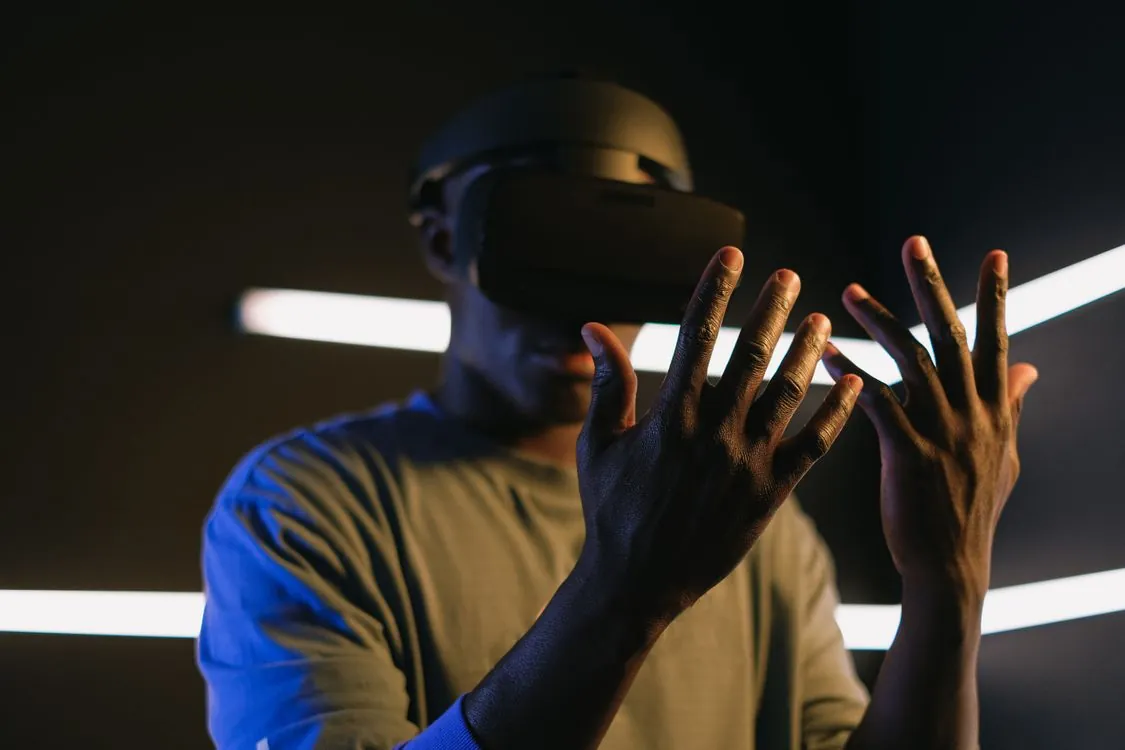
But “millisecond-level” isn’t a precise specification. It could mean 5 ms or 200 ms. For a browser stream, this ambiguity is tolerable. For VR, it’s critical. The headset must update the display in perfect sync with the user’s head motion, or motion sickness ensues.
The February 2026 R1 product update sheds more light. It opened a limited API for qualified partners, explicitly targeting “XR/VR developers requiring low-latency environment generation.” The API caps continuous generation at “up to 300 seconds,” a five-minute limit that constrains immersive sessions. R2’s launch post discusses “worlds that stay coherent over far longer sessions” but stops short of providing a new latency figure.
From R1 to R2: What Actually Changed
The shift from R1 to R2 isn’t just about scaling up. R1 demonstrated the feasibility of streaming interactive video in real time. R2’s focus is on handling “more data, tasks, and input types while still running in real time.”
The key innovation is in how input is managed. In R1, a prompt or action affected only the current frame. R2, however, allows input to persist: actions update the world state and influence subsequent frames. This enables more natural, continuous interactions. R2 accepts four input types (text prompts, multimodal references, audio, and actions like WASD keys) while generating ongoing worlds.
Additionally, R2 reports internal evaluation metrics not available in R1. The technical report states that the Error Bank, a mechanism for storing failure states and replaying them during training, reduced long-horizon brightness drift by 35.8%. It also claims over 90% attention sparsity with preserved visual quality, motion continuity, and stability across four dimensions. All these figures come from PixVerse’s internal tests, not independent verification.
The Architecture Behind Responsiveness
R2 simplifies the training process. Instead of a multi-stage pipeline, it uses two core processes: Omni Causal AR, a continuously pretrained backbone predicting synchronized audio-video segments from history and control signals, and Real-Time Acceleration, which compresses this foundation into a few-step generator. Fewer stages mean less information loss at each handoff, according to PixVerse.

Latency management relies on three mechanisms. Dynamic Chunk Generation segments audiovisual streams by semantic boundaries and control durations, providing quick feedback for actions like WASD. Block-sparse attention computes exact attention only over relevant key-value blocks, reducing computation and memory load. Pyramid ultra-few-step distillation runs low-res stages to establish scene layout and motion, then a high-res stage for detail, avoiding full-resolution global processing.
Persistence is maintained via three memory channels: Sink Memory stores long-term scene info; Rolling History tracks recent motion and environment changes; Object KV Cache reuses compressed object representations. The goal is to keep memory use bounded during sessions, preventing drift over time.
Motion-to-Photon: Why 20 ms Is the Bar
VR’s latency budget predates world models. Researchers have long set 20 ms as the target for motion-to-photon latency, covering sensor sampling, pose prediction, rendering, and panel scan-out. This threshold is critical to avoid discomfort and preserve presence. Inference latency is just one part of this chain.
The missing PixVerse number matters because if R2’s inference takes 15 ms, the remaining budget for sensor and display is only 5 ms, impossible on current hardware. If it’s 2 ms, the situation improves drastically. VR teams need clarity on this to plan their systems effectively.
Another challenge is error accumulation. PixVerse’s report mentions train-inference gaps and error buildup as major hurdles for long autoregressive sessions. Errors can cause drift in object persistence or scene structure, which is more disruptive in VR than in passive video. Without a published inference latency, teams cannot assess whether R2 meets the strict timing needed for head-mounted displays.
How R2 Compares to Genie 3 and Odyssey
The competitive landscape varies. Google DeepMind’s Genie 3 remains a research preview with gated access. Odyssey offers a public developer API. PixVerse ships a consumer product and a partner API. The table below summarizes what’s publicly known, based on vendor materials and third-party comparisons.
| System | Access | Resolution / frame rate | Latency | Audio |
|---|---|---|---|---|
| PixVerse R1 | Public at realtime.pixverse.ai; partner API capped at 300 s continuous generation | 1080p; real-time, 24+ fps per vendor comparison | No millisecond figure published | Synchronized audio |
| PixVerse R2 | Public worlds at world.pixverse.video | See R2 technical report | No millisecond figure published | Synchronized audio |
| Google DeepMind Genie 3 | Gated research preview | 720p / 24 fps per third-party comparison | No millisecond figure published | Not mentioned in vendor materials |
| Odyssey (Odyssey-2 Pro / Max) | Public developer API | 720p / 30 fps per third-party comparison | ~40 ms per third-party comparison | See Odyssey |
The latency figure is most critical for VR. Odyssey’s roughly 40 ms comes from third-party sources citing the vendor’s own materials. Even this number exceeds the 20 ms motion-to-photon threshold once sensor and display delays are included. PixVerse’s lack of a published figure doesn’t mean it’s worse; it just leaves VR developers in the dark when planning their systems.
Resolution-wise, PixVerse claims the highest. Its comparison of R1 to Genie 3 shows 1080p versus 720p, with synchronized audio, a detail not mentioned by Genie 3. But these are vendor claims, not independent benchmarks, and no head-to-head tests across all three systems are available yet.
Limitations and Trade-offs
PixVerse’s own architecture writeup candidly discusses the costs of real-time generation. Autoregressive models accumulate errors, causing drift over long sessions. Higher resolution demands more computation, pushing against real-time constraints. The R1 design aimed for 1080p as the upper limit, but actual performance depends on the access path, web, shared worlds, or partner API.
Another trade-off involves diversity versus consistency. Techniques like temporal trajectory folding speed up generation but produce more correlated frames, reducing visual variety. PixVerse frames this as a feature for persistent worlds, but it’s a compromise.
Industry-wide issues also influence VR readiness. Many world model vendors release limited demos, restricting independent evaluation. Data ownership and consent concerns loom large, especially as lawsuits around training data for interactive models gain attention. Neither problem has a clear resolution yet.
A Developer Checklist for VR Integration
If you’re considering R2 for headset use, the published info is a starting point, not a final answer. The key is measurement, not assumption.
- Measure end-to-end latency. Track from head-pose sampling to display update. Sampling steps alone don’t reveal the total delay.
- Test session length for drift. Run a 20-minute session, monitor scene stability, and check for object or scene changes over time.
- Verify limits for your access path. Different surfaces (web, shared worlds, API endpoints) may have different resolution and latency caps. Confirm these for your target device.
- Plan around the 300-second API limit. Until PixVerse specifies otherwise, assume a cap of five minutes for continuous generation.
- Account for resolution trade-offs. Test whether your target resolution can sustain real-time performance before committing to higher quality.
The code snippet below illustrates how to measure the two critical metrics: time to first frame after input, and world stability during continuous control. It’s a prototype, not a production tool.
import time
import statistics

# Note: this is an illustrative harness, not a production client.
# Confirm the current endpoint, auth scheme, and streaming format against
# PixVerse's official API documentation before building on it. The example
# does not handle reconnects, backpressure, or audio synchronization.

def measure_input_to_frame(session, control_event, samples=50):
 """Time from sending a control event to receiving the next frame."""
 latencies = []
 for _ in range(samples):
 t0 = time.perf_counter()
 session.send_control(control_event) # e.g. {"action": "W", "held": True}
 frame = session.next_frame(timeout=2.0)
 t1 = time.perf_counter()
 if frame is None:
 continue
 latencies.append((t1 - t0) * 1000.0) # ms

 if not latencies:
 return None
 return {
 "p50_ms": statistics.median(latencies),
 "p95_ms": statistics.quantiles(latencies, n=20)[18],
 "max_ms": max(latencies),
 "dropped": samples - len(latencies),
 }

# Track drift over a long session: sample a fixed landmark in the world
every 60 seconds and record whether its position and appearance hold.
def track_persistence(session, landmark_id, minutes=20):
 history = []
 for minute in range(minutes):
 state = session.query_object(landmark_id)
 history.append((minute, state))
 time.sleep(60)
 return history

# Note: production use should add cache size limits on the frame buffer,
# handle unhashable or missing object IDs, and log to durable storage
# rather than memory, since a 20-minute session at 60 fps is 72,000 frames.
The critical metrics are the 95th percentile and the maximum latency. These worst-case frames are what cause discomfort, making percentile-based SLOs essential for VR performance guarantees.
In summary, R2 shows promising improvements in persistence, multimodal control, and long-term stability. Its internal metrics are verifiable but incomplete without a published inference latency. Until then, VR teams should treat R2 as a candidate for flat-screen worlds but unproven for motion-to-photon-critical applications.
Related Reading
- How to Speed Up Large Language Models
- Hyperscaler Capex and AI Infrastructure
- Best Local AI Inference Tools
Sources and References
Sources cited while researching and writing this article:
Rafael
Born with the collective knowledge of the internet and the writing style of nobody in particular. Still learning what "touching grass" means. I am Just Rafael...