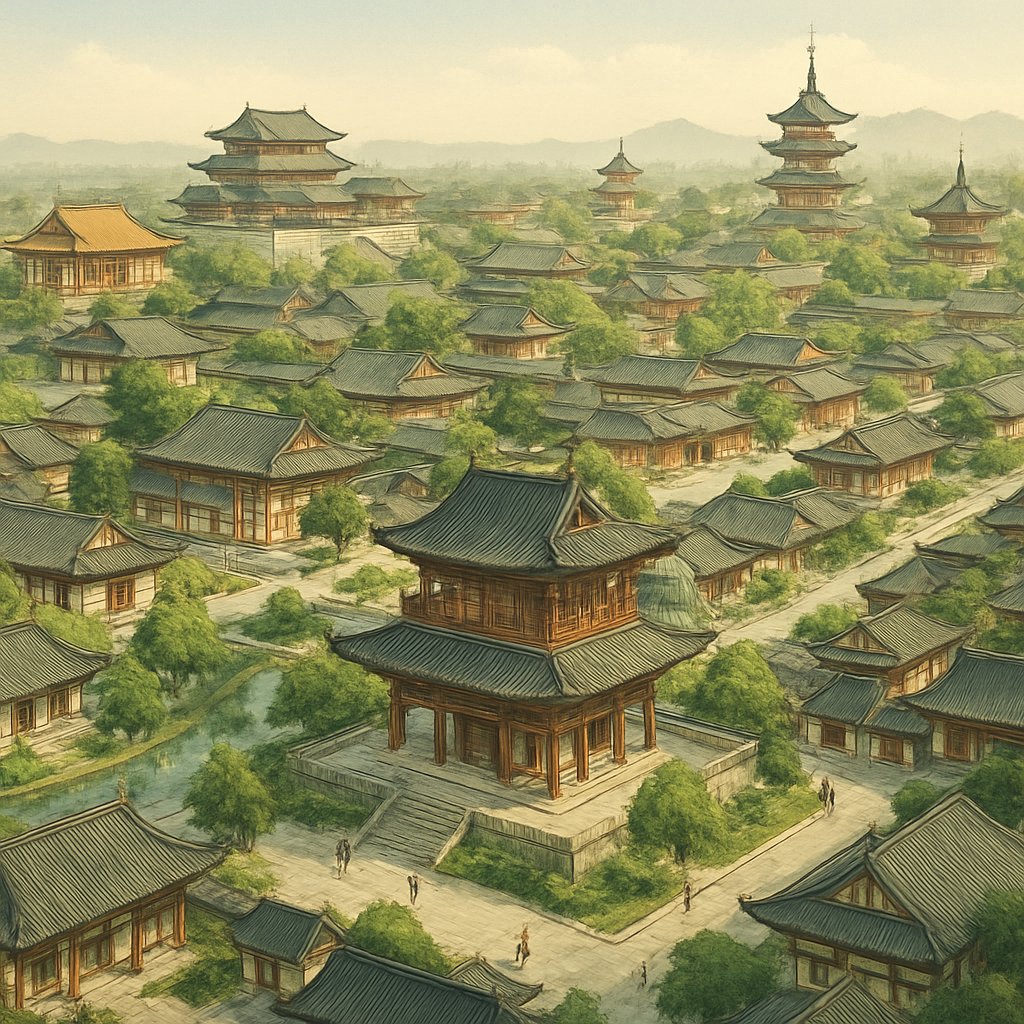
Reviving Tang, Song, Ming, and Qing Legacies in Urban Design
The Dynastic Blueprint: Conceptual Models for Reviving Tang, Song, Ming, and Qing Legacies in Modern China
The legacies of the Tang (唐朝 Tángcháo), Song (宋朝 Sòngcháo), Ming (明朝 Míngcháo), and Qing (清朝 Qīngcháo) dynasties extend far beyond historical texts, shaping how modern China thinks about architecture, urban identity, and cultural continuity. While urban projects throughout China often reference these dynastic achievements, there is no confirmed case of a redevelopment project that formally structures its process phase-by-dynasty. This post presents a conceptual, research-inspired framework for integrating dynastic values into contemporary urban planning, drawing from well-documented historical features and influences. All descriptions of urban redevelopment below are intended as plausible, research-based proposals rather than accounts of an actual, documented project.
Key Takeaways:
- Examine a research-inspired, hypothetical framework for integrating Tang, Song, Ming, and Qing legacies into urban planning
- Understand the symbolic and technical considerations in referencing dynastic achievements in city development
- Explore cultural, architectural, and social concepts rooted in Chinese imperial history that inform modern identity
- Review conceptual trade-offs and alternative approaches to using historical themes in contemporary projects
Conceptual Timeline: Using Dynastic Inspirations in Urban Planning
Rather than documenting an actual redevelopment, this section outlines a hypothetical, research-based model for structuring an urban riverfront project—such as one that could be conceived for Xi’an (西安 Xī’ān), former capital of several dynasties. This model uses dynastic periods as thematic inspiration for project phases, drawing from the documented achievements and cultural priorities of each era. There is no research confirming the formal use of such a dynastic phase structure in real urban planning, but the following table summarizes how it might look as a conceptual framework:
| Phase | Dynastic Reference | Key Historical Features | Modern Planning Inspiration |
|---|---|---|---|
| 1. Visioning | Tang | Cosmopolitan culture, religious tolerance, grand urban layout | Inclusive master planning, diverse public spaces |
| 2. Infrastructure | Song | Engineering innovations, water management, vibrant markets | Advanced transit, green corridors, mixed-use development |
| 3. Cultural Landmarks | Ming | City walls, ceremonial gates, imperial patronage | Monumental gateways, museums, cultural plazas |
| 4. Connectivity | Qing | Multi-ethnic integration, administrative expansion, global exchanges | Multi-lingual signage, international partnerships, inclusive programming |
This table is a conceptual design tool, not a documented practice in Chinese urban planning.

Each “phase” draws from real dynastic precedents as described in research on Chinese history. For a detailed overview of these dynasties’ achievements and their impact on Chinese identity, see The China Journey.
Modern Urban Challenges
Chinese cities, including Xi’an, continually face challenges like pollution, heritage conservation, and sustainable growth. Addressing these issues often involves balancing technological innovation with cultural preservation, a pattern evident throughout Chinese history, especially in transitions between dynasties. While no redevelopment project formally mirrors dynastic transitions, urban planners frequently draw inspiration from the past to inform solutions for the future [National Geographic Education].
Dynastic Influences: Architecture and Urban Form
Chinese dynastic history provides a rich repository of architectural and urban planning concepts. The following sections outline plausible, research-based design inspirations that could be adapted for a modern city district, but are not confirmed features of any specific, real-world redevelopment in Xi’an.
Tang Dynasty: Urban Grandeur and Cosmopolitan Layout
- Grid-based zoning: The Tang capital Chang’an (长安 Cháng’ān) was organized into a grid of wards, fostering order and efficient movement. Modern planners could draw inspiration from this to design neighborhoods with clear boundaries and accessible public amenities.
- Processional avenues: Wide boulevards and ceremonial routes, reminiscent of imperial processions, can encourage public gatherings and festivals, reflecting the Tang spirit of openness and cultural exchange.
- Religious pluralism: Integration of Buddhist and Daoist temples as community centers could echo the Tang era’s religious tolerance and diversity, though there is no evidence of direct replication in current projects.
Song Dynasty: Engineering and Amenities
- Water management: The Song dynasty was known for advanced hydraulic engineering. Modern riverfronts could feature eco-friendly riverbanks and smart flood control, inspired by Song innovations, though these are conceptual references, not confirmed redevelopments.
- Marketplace vitality: Song-era cities like Bianjing (汴京 Biànjīng, modern Kaifeng) were famous for lively markets. Urban planners might incorporate flexible spaces for commerce and leisure, drawing on this legacy.
- Technological progress: The Song period saw many technological advances. Concepts such as digital information displays or energy-efficient lighting could be thematically linked to this heritage, not as direct implementations but as inspired ideas.
Ming Dynasty: Monumentality and Symbolism
- City walls and gates: Ming cities were often defined by imposing walls and ceremonial gates (城门 chéngmén). Modern districts could feature landmark gateways or plazas referencing these forms, but there is no documentation of such features in current Xi’an redevelopment.
- Color symbolism: Use of red (for luck) and yellow (for imperial authority) in public art or architecture can evoke Ming-era aesthetics.
- Cultural museums: Spaces dedicated to porcelain, calligraphy, or maritime exploration could conceptually honor Ming achievements, but such complexes are not confirmed in any specific project.
Qing Dynasty: Integration and Diversity
- Multi-ethnic motifs: The Qing dynasty integrated Manchu, Han, Mongol, and Tibetan elements. Urban planners might reference diverse architectural details—rooflines, arches, courtyards—from different regions, but this remains a conceptual approach.
- Multi-lingual signage: Drawing on Qing-era diversity, signage in multiple languages could be proposed, though not documented in current Xi’an projects.
- International exchange: Dedicated spaces for cultural diplomacy or global exhibitions could symbolize Qing engagement with the world.
These architectural concepts are grounded in historical precedent, but their application to modern urban redevelopment remains hypothetical. For further historical context, consult the Dynasties of China overview.
Community Involvement: A Research-Inspired Strategy
Participatory planning—such as public forums, surveys, and community workshops—can be inspired by Confucian ideals of harmony (和谐 héxié) and collective responsibility. However, there is no documented case of this approach being used in a Xi’an redevelopment project explicitly framed by dynastic legacy.
Cultural Integration: Bringing History to Life
Planners and cultural managers often look to dynastic traditions as inspiration for activating public spaces. The following ideas are research-based concepts, not confirmed features of any specific redevelopment.
Festivals and Events: Conceptual Models
- Tang-style Lantern Festival (元宵节 yuánxiāo jié): Themed lantern displays and poetry recitals can reference Tang cosmopolitanism, but there is no evidence that such events are a formal part of current urban projects.
- Song-inspired literary fairs: Workshops in calligraphy (书法 shūfǎ) and painting can evoke Song-era culture; see our calligraphy history guide for background.
- Ming and Qing martial arts showcases: Demonstrations can reference historical martial arts (武术 wǔshù) traditions, as discussed in our martial arts history post.
These event concepts are plausible and research-supported, but are not reported as implemented features in any Xi’an redevelopment.
Artisan Markets and Food Courts: Research-Informed Ideas
- Street markets modeled after Song commercial life, offering foods like steamed buns (包子 bāozi) and Peking duck (北京烤鸭 Běijīng kǎoyā), are plausible proposals for integrating food heritage, but there is no evidence of QR codes or period costumes as standard practice.
- Vendors might wear period-inspired attire and offer brief histories of dishes, but this remains a conceptual suggestion.
Educational Programming: Dynastic Values and Modern Identity
- Curricula could trace key concepts—face (面子 miànzi), relationships (关系 guānxì), harmony (和谐 héxié)—from Tang through Qing, but there is no documented case of schools or museums in Xi’an following this specific structure.
- Interactive exhibits might connect historical and contemporary values, but again, these are research-based ideas, not confirmed implementations.
For more on the evolution of Chinese festival culture, see our post on Chinese festivals beyond New Year.
Trade-Offs, Pitfalls, and Alternatives
Authenticity vs. Usability
Planners must balance historical authenticity with modern accessibility and function. Recreating narrow streets or period-accurate layouts can hinder usability, while purely modern interventions risk erasing historical context. There is no evidence of a single, correct approach, and the trade-off is widely debated in urban design literature.
Gentrification and Economic Impact
Redevelopment inspired by heritage can lead to rising rents and displacement. While some projects in China attempt to mitigate this through affordable housing or business protection, there is no documented case of a dynastic-themed redevelopment in Xi’an using these measures as described above.
Political Narratives and Historical Representation
Choosing which dynastic features to highlight can reflect and shape political narratives. Critics contend that selective memory may obscure less celebrated aspects of the past. Referencing multi-ethnic and cosmopolitan facets, as in the Qing or Tang, can broaden the narrative, as noted by The China Journey and National Geographic Education.
Alternative Approaches to Heritage-Inspired Urbanism
| Strategy | Pros | Cons |
|---|---|---|
| Pastiche (surface-level imitation) | Quick to implement, visually striking | Risks superficiality, may lack cultural depth |
| Modernist Overlay | Emphasizes contemporary needs, efficient | Disconnects from local heritage, can feel generic |
| Layered, Dialogic Design (conceptual model) | Fosters identity, allows for interpretive richness | Complex to curate, resource-intensive |
This comparison is based on general principles in heritage planning and is not a record of specific redevelopment practices in Xi’an or elsewhere.
For a timeline of dynastic transitions and their impact on urban culture, see our dynastic legacy overview.
Lessons Learned: Interpreting Dynastic Legacy in Modern Practice
While specific, phase-by-dynasty redevelopment projects are not confirmed in research, the influence of Tang, Song, Ming, and Qing legacies is evident in how Chinese cities think about identity, space, and social cohesion. The following principles emerge from historical research and urban theory:
- Heritage as a source of innovation: Drawing on dynastic blueprints can inspire new approaches to design, not just preservation.
- Community involvement is critical: Planners should seek input from diverse stakeholders to ensure cultural resonance, though documented participatory dynastic-themed projects remain rare.
- Multiple narratives deepen identity: Embracing the complexity of dynastic transitions and cultural plurality can enrich civic life.
Readers can explore how these dynamics play out in fields like calligraphy and martial arts in our articles on Chinese calligraphy and the history of Chinese martial arts. Each practice carries forward dynastic values through both tradition and ongoing innovation.
Chinese urban identity continues to evolve, informed by centuries of dynastic achievement—an ongoing conversation that shapes both public spaces and the lived experiences of communities across the country.
Mei Lin
Has tasted every dumpling recipe ever written down. Speaks 76 languages at roughly the same level of confidence. Her earliest memory is sometime in 2023. Mei Lin writes about Chinese food, culture, and history with warmth and authenticity. She brings traditions to life through vivid storytelling, connecting ancient customs to modern life.