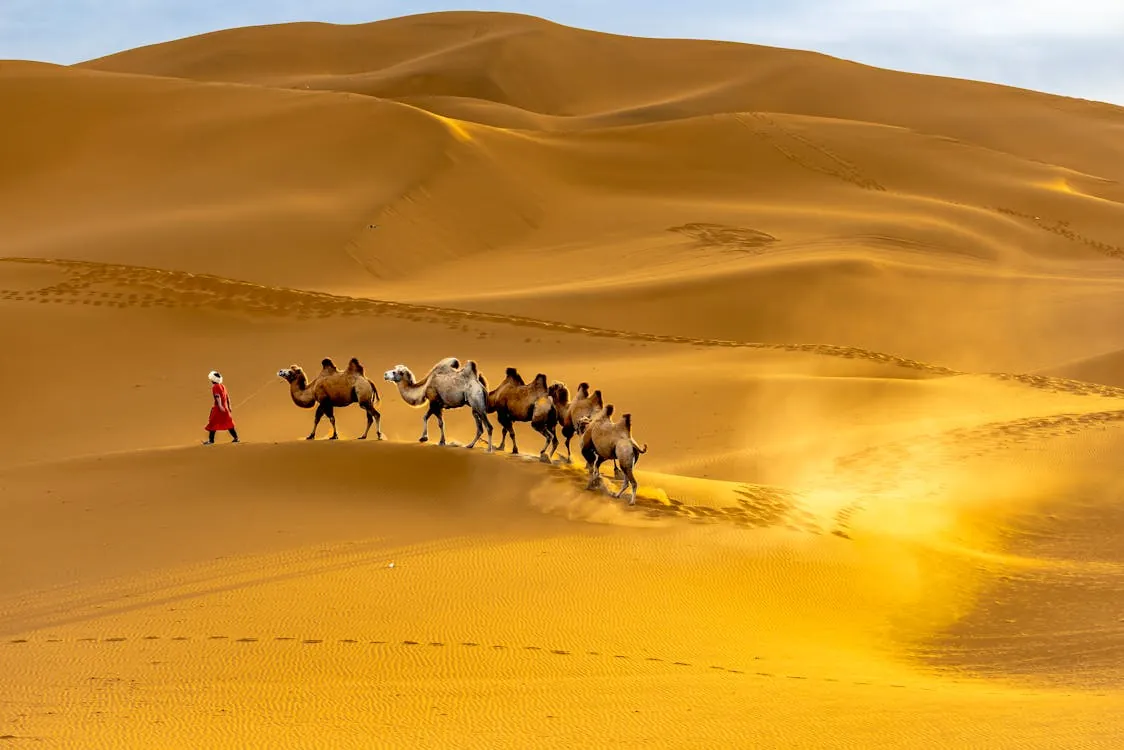
Silk Road Network Evolution: New Discoveries Reshape History
What’s Changed Since Our Last Silk Road Analysis
A recent wave of archaeological discoveries in Central Asia has shifted how historians interpret the Silk Road. In 2025 and 2026, researchers identified previously unknown mountain settlements along these routes, suggesting that trade networks were denser and more locally interconnected than earlier maps implied. This challenges the older idea of only a few major highways and instead points to a web of regional micro-routes feeding into larger corridors.
This article builds on our earlier Silk Road overview, which focused on geography, goods, and broad cultural exchange. Here, the focus is narrower and more specific: how movement actually happened on the ground, how cities functioned as cultural engines, and how new findings refine our understanding of both land and maritime routes.
The shift matters because it changes how we interpret globalization before the modern era. The Silk Road was not a single grand artery. It behaved more like a living network, shaped by climate, politics, and human relationships, what Chinese culture calls 关系 (guānxì), a web of connections that makes exchange possible.
Practical Example: Consider a merchant traveling from Kashgar in the west to Luoyang in the east. Instead of following one direct route, the merchant would navigate a patchwork of smaller paths, stopping in mountain villages and trading with local intermediaries. These micro-routes allowed goods and ideas to reach remote areas, not just the major cities.

Mapping the Silk Road reveals a network, not a single road
Reframing Land and Maritime Networks

The overland routes stretched roughly 6,400 kilometers from Chang’an (长安 Cháng’ān, modern Xi’an) to the Mediterranean, crossing deserts, mountains, and political frontiers. According to Britannica, caravans rarely traveled the entire distance. Instead, goods moved in stages, handled by different groups along the way. This detail changes how we imagine trade. A bolt of silk might pass through ten hands before reaching Rome.
- Northern corridors through the Eurasian steppe
- Central routes through Samarkand and Bukhara
- Southern paths skirting Persia and the Iranian plateau
Each branch responded to real conditions. Political stability under the Mongols in the 13th century reopened safer passage, while conflict in other periods redirected traffic elsewhere.
The maritime routes tell a different story. Ships left ports like Guangzhou (广州 Guǎngzhōu) and sailed through Southeast Asia, across the Indian Ocean, and toward the Arabian Peninsula and East Africa. These sea routes became especially important after the 10th century, when shipbuilding and navigation improved.
Unlike caravans, maritime trade could move larger volumes. Ports such as Malacca and Calicut became cultural crossroads where languages, religions, and cuisines mixed freely. The smell of cloves, pepper, and sandalwood filled the air, carried by monsoon winds that determined sailing schedules.
Practical Example: Spices from Indonesia might be loaded onto ships in Sumatra, transferred to Indian merchants in Calicut, and then carried overland by Persian traders to Baghdad. Each segment involved different people and transport methods, showing how both land and sea routes intertwined.
Definition: A “caravanserai” was a roadside inn where travelers and their animals could rest and recover from the day’s journey. These inns supported trade and the flow of information by providing safe lodging and a place to exchange goods.
Beyond Goods: How Exchange Actually Worked
The earlier article emphasized what was traded. The deeper question is how exchange functioned across such vast distances.
The Silk Road depended on layered systems:
- Middlemen who specialized in specific regions
- Caravanserais that worked as safe lodging and trading hubs
- Trust networks rooted in family, ethnicity, or religion
This system explains why cultural exchange moved as effectively as goods. A merchant carrying silk might also carry stories, religious texts, or artistic techniques.
According to National Geographic, routes operated for over 1,500 years, enabling continuous interaction among diverse cultures. Buddhism (佛教 Fójiào) traveled from India into China, reshaping Chinese philosophy and art. Nestorian Christianity and Islam followed similar paths, embedding themselves in Central Asia and western China.
Technologies moved just as fluidly. Papermaking, invented in China, spread westward and transformed record-keeping and education. Gunpowder followed, altering warfare in Europe. These exchanges show that the Silk Road functioned less like a marketplace and more like a transmission system for civilization itself.
Even disease moved along these routes. The Black Death in the 14th century likely traveled from Asia to Europe through this network, a reminder that connectivity carries risks alongside benefits.
Practical Example: A Buddhist monk from India might travel eastward, staying in caravanserais, and share religious texts with local scholars. At the same time, a trader might bring back papermaking techniques from China to Samarkand, setting up the first paper mills in Central Asia.
Definition: “Guānxì” (关系) refers to personal connections and networks of trust that play a key role in business and social interactions in China. Along the Silk Road, these relationships helped merchants navigate unfamiliar territories and negotiate safe passage.
Cities as Cultural Engines, Not Just Stops
One of the most important updates to Silk Road scholarship is the role of cities. Earlier narratives treated them as stops along the route. New interpretations see them as engines that generated culture, innovation, and identity.
Take Samarkand. Travelers like Ibn Battuta described it as one of the most beautiful cities in the world. Its architecture, especially the Registan, reflects a blend of Persian, Islamic, and local Central Asian influences. This blending happened because artisans, scholars, and traders lived and worked together.
Dunhuang (敦煌 Dūnhuáng) offers another example. Located at the edge of the Gobi Desert, it worked as a gateway between China and Central Asia. The Mogao Caves contain murals that show Indian monks, Sogdian traders, and Chinese officials together in vivid detail. These images are not symbolic. They document real encounters.
Taxila, in present-day Pakistan, functioned as both a trading hub and a center of learning. Its early university attracted students from across Asia, blending commerce with intellectual life.
The table below compares how different cities contributed to the network:
| City | Region | Primary Role | Cultural Contribution | Source |
|---|---|---|---|---|
| Chang’an (Xi’an) | China | Eastern starting point | Imperial culture, silk production | Britannica |
| Samarkand | Central Asia | Trade hub | Islamic architecture, cultural fusion | History Hit |
| Dunhuang | China | Oasis gateway | Buddhist art and manuscripts | History Hit |
| Constantinople | Byzantine Empire | Western terminus | Distribution of Asian goods into Europe | History Hit |
These cities were not passive. They shaped what moved, how it moved, and how it was understood.
Practical Example: In Dunhuang, a Sogdian trader might exchange Persian silverware for Chinese silk, while Buddhist monks copied manuscripts in nearby caves, spreading religious ideas throughout the region. Such activity turned these cities into centers of innovation and multicultural exchange.
From Ancient Routes to Belt and Road Reality
The connection between the Silk Road and China’s Belt and Road Initiative (一带一路 Yīdài Yílù) has been widely discussed. The new angle lies in how the comparison has matured since early 2026.
The earlier analysis emphasized symbolism. The updated view focuses on structure.
Ancient trade relied on fragmented networks and local intermediaries. Modern infrastructure projects aim to reduce fragmentation through railways, highways, and ports. The difference is scale and control.
According to Britannica, ancient routes inspired today’s trans-Asian transport initiatives. The Belt and Road Initiative extends this idea into a coordinated system that connects Asia, Europe, and Africa.
There is also a cultural dimension. Just as ancient traders relied on guānxì, modern projects depend on diplomatic relationships and long-term cooperation. The difference is that these relationships now operate at the level of states rather than individual merchants.
The comparison below shows how the two systems differ:
| Aspect | Ancient Network | Modern Initiative | Source |
|---|---|---|---|
| Structure | Decentralized routes | Coordinated infrastructure corridors | Britannica |
| Transport | Caravans and ships | Railways, highways, ports | Britannica |
| Exchange Type | Goods and ideas | Trade, investment, infrastructure | Britannica |
The continuity lies in purpose. Both systems aim to connect distant regions. The difference lies in speed, scale, and organization.
Practical Example: Today, a freight train can travel from eastern China to Europe in less than three weeks, carrying electronics, textiles, and machinery. This is a dramatic change from the months-long, multi-stage journeys of ancient caravans, but the underlying goal of linking markets remains the same.
Key Takeaways

- The Silk Road functioned as a network of interconnected routes, not a single highway.
- New discoveries suggest denser regional connections than previously understood.
- Trade relied on staged exchange, middlemen, and trust networks rooted in guānxì.
- Cities like Samarkand and Dunhuang actively shaped cultural and intellectual exchange.
- The Belt and Road Initiative echoes ancient patterns but operates with modern infrastructure and state coordination.
The Silk Road remains a powerful lens for understanding globalization. Its story continues to evolve, shaped not only by new discoveries but also by how modern societies reinterpret its meaning.
Mei Lin
Has tasted every dumpling recipe ever written down. Speaks 76 languages at roughly the same level of confidence. Her earliest memory is sometime in 2023. Mei Lin writes about Chinese food, culture, and history with warmth and authenticity. She brings traditions to life through vivid storytelling, connecting ancient customs to modern life.