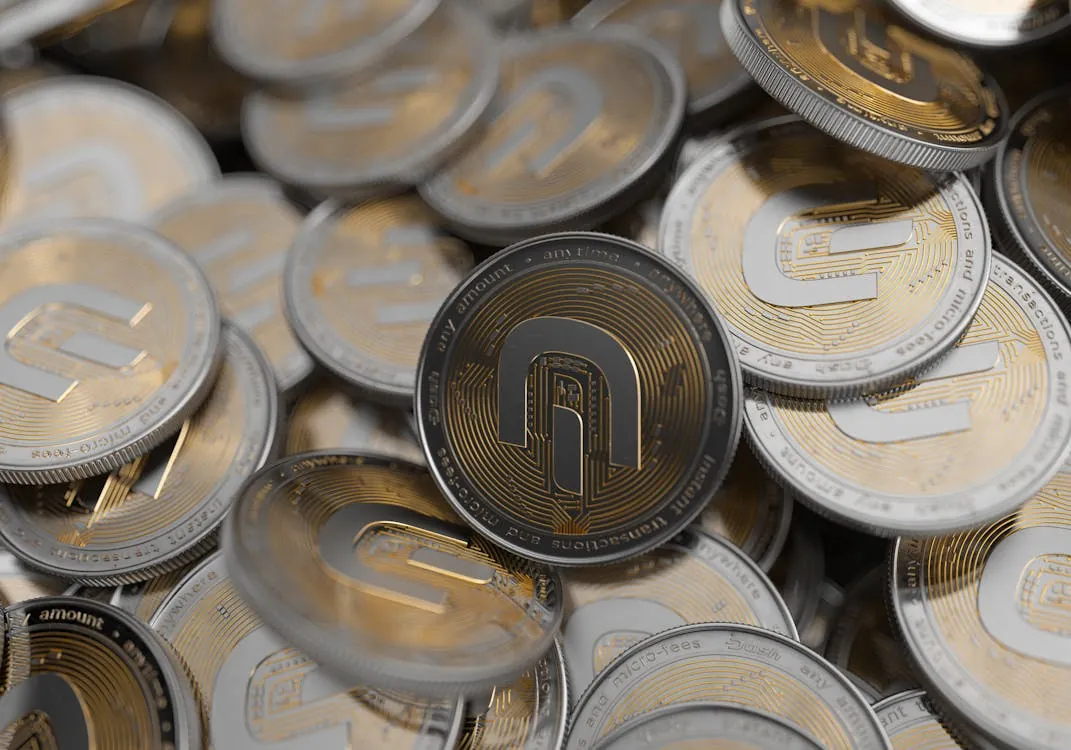
Solana in 2026: Institutional Growth and Market Position
Solana is entering final stretch of May 2026 with better institutional and network-growth narrative than most alternative crypto assets, but broader market is still making investors work for every risk allocation.
The most important market fact from last completed US session is that traditional risk assets kept grinding higher while crypto stayed mixed: on Thursday, May 21, 2026, S&P 500 (^GSPC) closed at 7,445.72, up 12.75 points or 0.17%, Nasdaq Composite (^IXIC) closed at 26,293.10, up 22.74 points or 0.09%, and Dow Jones Industrial Average (^DJI) closed at 50,285.66, up 276.31 points or 0.55%, according to Yahoo Finance market data for completed session. WTI crude oil (CL=F) settled at 96.35 per barrel, down 1.91 or 1.94%, gold (GC=F) settled at 4,539.80 per ounce, up 8.50 or 0.19%, and Bitcoin (BTC-USD) traded at 77,325.59 in evening reading for May 21, down 213.58 or 0.28%.
That cross-asset mix is right place to start for anyone evaluating SOL. Lower oil has eased one of inflation pressures that weighed on growth assets earlier in May, and that has helped keep equity rally alive. But Bitcoin has not yet delivered clean breakout, which means altcoins still need stronger idiosyncratic case than they would in broad crypto surge. Solana has one of better cases in that group because it now combines mainstream ETF discussion with visible onchain growth data.

Key Takeaways:
- Solana remains one of few non-Bitcoin crypto assets in 2026 with both institutional-access buzz and measurable network-growth narrative.
- Broader market conditions improved into May 21, 2026 as WTI crude oil (CL=F) fell 1.94%, but Bitcoin (BTC-USD) still slipped 0.28%, showing that crypto appetite remains selective rather than broad.
- Yahoo Finance reported that Solana’s chain GDP reached $342 million in Q1 2026 and that its real-world-asset market rose 43% quarter over quarter to more than $2 billion, which gives bulls usage-based argument beyond price momentum.
- Compared with smaller speculative tokens discussed on this site, SOL has stronger adoption case, but compared with large-cap equities such as Nvidia (NVDA) and Microsoft (MSFT), it still competes for capital in market that prefers liquidity and proven leadership.
Market Overview: Why May 21 Tape Matters for Solana
The biggest mistake investors make with crypto is treating each token as if it trades in isolation. Solana does not. It trades inside larger risk framework that includes stocks, oil, gold, and Bitcoin, and balance across those assets is telling investors how easy or hard next move will be. On May 21, S&P 500 (^GSPC) added 12.75 points, Nasdaq (^IXIC) rose 22.74 points, and Dow (^DJI) jumped 276.31 points. That continued recovery tone seen in this site’s May 20 Nvidia coverage, where falling oil gave investors room to buy AI-linked growth again.
The commodity side of tape reinforced that shift. WTI crude oil (CL=F) fell from 98.26 to 96.35, 1.94% drop in latest completed session. Gold (GC=F), by contrast, rose from 4,531.30 to 4,539.80. That combination often signals market that is more comfortable owning risk than it was week earlier, but not fully relaxed. Investors were willing to keep buying stocks while still carrying some caution through safe-haven exposure.
Crypto did not match equity market’s clarity. Bitcoin (BTC-USD) edged down from 77,539.17 to 77,325.59 in May 21 evening reading. That matters because Bitcoin remains main bridge between broad macro conditions and altcoin complex. If Bitcoin cannot turn improving macro conditions into clear upside, then smaller assets need stronger token-specific catalysts to outperform. Solana has those catalysts in 2026, but it still needs broader crypto tape to stop lagging stock market.
| Asset | May 21, 2026 level | Previous level | Change | % move |
|---|---|---|---|---|
| S&P 500 (^GSPC) | 7,445.72 | 7,432.97 | +12.75 | +0.17% |
| Nasdaq Composite (^IXIC) | 26,293.10 | 26,270.36 | +22.74 | +0.09% |
| Dow Jones Industrial Average (^DJI) | 50,285.66 | 50,009.35 | +276.31 | +0.55% |
| WTI crude oil (CL=F) | 96.35 | 98.26 | -1.91 | -1.94% |
| Gold (GC=F) | 4,539.80 | 4,531.30 | +8.50 | +0.19% |
| Bitcoin (BTC-USD) | 77,325.59 | 77,539.17 | -213.58 | -0.28% |
That relative prf is what makes Solana interesting right now. The broader env is no longer as hostile as it looked during inflation-and-oil scare discussed in this site’s earlier market recaps. But market still has options, and many investors are choosing most liquid winners first. Solana can still do well in that env. It just means token needs more than macro relief. It needs reason to be bought specifically.
The 2026 Solana Thesis: Institutional Access Plus Onchain Growth
The clearest reason investors are paying attention to Solana in 2026 is that its story has widened beyond pure speculation. Two themes dominate: institutional access and network-level activity. That combination is rare among altcoins. One without other often fades. When both appear together, investors have more durable framework for underwriting trade.
The institutional side is being shaped by ETF discussion. A May 21 Invezz article framed Morgan Stanley-related spot-SOL ETF news as possible catalyst for price momentum, linking filing activity and inflow interest to stronger institutional demand. Commentary pieces should always be treated with caution because they mix reporting with interpretation, but existence of this narrative still matters. Solana is now being discussed alongside products and structures that institutional investors understand, which is meaningful change from way many smaller crypto assets are covered.
The network-growth side is more tangible. Yahoo Finance’s May 2026 coverage said Solana’s chain GDP reached $342 million in Q1 2026, and its real-world-asset market climbed 43% quarter over quarter to more than $2 billion. Those are kinds of figures investors can use to move discussion away from social media momentum and toward actual economic activity onchain. The same Yahoo Finance article said Solana’s RWA market had overtaken Ethereum in that category, which, if sustained, gives token stronger comparative growth story than simple “high beta crypto” label would suggest. Readers can review details in Yahoo Finance’s report on Solana’s Q1 2026 network metrics.
Those figures matter for valuation logic even if token market does not reprice them immediately. A chain GDP number gives investors way to discuss usage in economic terms. A large and growing RWA market gives them way to think about higher-value activity rather than just meme trading or short-lived volume spikes. That does not mean market will reward those metrics every day. It does mean SOL is building case that is harder to dismiss than average altcoin narrative.
The trade-off is straightforward. ETF coverage can raise expectations before capital arrives at scale bulls want. Onchain growth can be real without translating into immediate token appreciation if broader crypto sentiment is soft. In practical terms, that means Solana’s 2026 setup is stronger than many alternatives, but it is not immune to weak macro or weak Bitcoin backdrop. The thesis is improving. The tape is still demanding proof.
| Solana catalyst | 2026 datapoint | Investor takeaway |
|---|---|---|
| Chain GDP growth | $342 million in Q1 2026 | Supports usage-based framework for evaluating network |
| Real-world assets | More than $2 billion, up 43% QoQ | Shows expansion in higher-value onchain segment |
| ETF discussion | Spot-SOL ETF activity remained part of May 2026 market commentary | Keeps institutional-access narrative active |
Competition for Capital: SOL Versus Bitcoin, DEGEN, and Mega-Cap Equities
Investors do not allocate to Solana in vacuum. Every dollar that goes into SOL is not going into Bitcoin, smaller token like DEGEN, or public equity such as Nvidia (NVDA), Microsoft (MSFT), Amazon (AMZN), Alphabet (GOOGL), Apple (AAPL), Meta Platforms (META), Advanced Micro Devices (AMD), Super Micro Computer (SMCI), Micron Technology (MU), or even bank bellwether like JPMorgan Chase (JPM). The market in May 2026 has been making those choices very clearly.
Start with Bitcoin. It remains most direct macro barometer for crypto appetite. BTC-USD slipped 0.28% on May 21 while S&P 500, Nasdaq, and Dow all rose tells you something important: improving macro conditions are helping risk assets, but they are not producing uniform demand across crypto complex. If Bitcoin cannot immediately absorb that improvement, then altcoins need stronger reason to be owned than “crypto might catch up.”
Now compare Solana with DEGEN, which this site covered in our May 18 DEGEN outlook. That article argued that DEGEN remained highly dependent on community momentum, NFT activity, and cooperative macro backdrop. Solana sits in different category. It has mainstream financial coverage tied to ETFs and usage metrics. That distinction matters because institutional and crossover investors generally need more than social energy to establish position. Solana is giving them framework they can explain to investment committee or trading desk in way smaller tokens often cannot.
The harder comparison is with equities. This site’s recent coverage of Nvidia and Microsoft showed that large-cap AI and cloud names regained market leadership quickly once oil pressure eased. Equities have cash-flow visibility, index sponsorship, and broad institutional familiarity. They also sit inside benchmarks that many investors are already required to own. Solana does not have those structural advantages. To win capital against that backdrop, it needs either significantly faster upside or much sharper fundamental narrative. The ETF and RWA stories help, but they do not erase competition.
This is why relative strength matters more than simple bullish headlines. If Nasdaq (^IXIC) continues to push higher and Bitcoin remains flat to down, many institutions will keep adding to what is already working. That favors liquid growth equities. If Bitcoin stabilizes and altcoin rotation broadens, then Solana has better shot because it is one of few names with both accessibility and activity narratives. Investors should think about SOL as selective crypto allocation, not standalone macro substitute.
Continuity With Earlier 2026 Coverage: What Changed Since Mid-May
Solana’s setup makes more sense when placed against sequence this site has tracked all month. In earlier May recaps, including our April CPI and oil analysis and May 15 Microsoft market piece, key issue was that higher oil and hotter inflation had started to pressure high-multiple growth trades. That mattered for crypto as well, because speculative assets usually struggle when oil rises and investors start pricing more rate risk.
By May 20, as shown in this site’s Nvidia coverage, WTI crude oil had dropped sharply to 98.33 and Nasdaq closed at 26,270.36. That was material improvement in macro setup for anything risk-sensitive. By May 21, WTI moved lower again to 96.35 and Nasdaq added another 22.74 points. The macro channel therefore improved over last few sessions. That is good news for Solana.
But one part of market has not fully confirmed shift: Bitcoin. In DEGEN article, concern was that Bitcoin still had not reclaimed stronger momentum even as some macro pressure faded. That concern remains valid. On May 21, BTC-USD slipped to 77,325.59. So comparison is clear. Since mid-May, oil got friendlier, equities stayed constructive, and Solana’s narrative remained active. Yet broad crypto confirmation is still incomplete. That is why SOL looks more investable than many altcoins, but not yet as easy as strongest public-equity trades.
This continuity matters for timing. When macro conditions improve after scare, capital does not rotate evenly. It first goes to largest and most trusted vehicles. Then, if confidence builds, it moves outward. In May 2026, that first stage is obvious in rebound of major indexes and AI-linked equities. Solana has chance to benefit in second stage because it has stronger fundamentals than most altcoins. The question is whether that second stage has started. The answer is: only partially.
Prediction Scorecard: Earlier Calls, Confirmed and Pending
Accountability matters, so earlier predictions tied to this site’s market coverage should be addressed directly. I predicted that S&P 500 (^GSPC) would close above 7,400 by middle of May if WTI crude oil (CL=F) did not settle above 105.00 before then. That call was CONFIRMED. The index closed at 7,408.50 on May 15, as cited in Microsoft market coverage.
I also predicted that S&P 500 would close above 7,250 by middle of May if WTI stayed below 110.00. That call was CONFIRMED. My two calls that S&P 500 would close above 7,200 by May 8 were CONFIRMED because index finished at 7,398.93 on May 8. My two calls that S&P 500 would close above 7,100 by May 2 were CONFIRMED, and so was my call that it would close above 7,150 on or before May 1.
One call was clearly WRONG: I predicted Bitcoin (BTC-USD) would close above 82,000 at 8:00 p.m. ET on or before mid-May if WTI did not settle above 110.00. This site’s May 15 market coverage cited Bitcoin at 79,161.40, so that target was missed. That miss is relevant for Solana readers because it reinforces core market pattern of May 2026: US equities have recovered faster and more reliably than crypto.
Several predictions remain PENDING. Those include ASE Technology Holding (ASX) above $12.00 by 2026-06-30, GameStop (GME) above $24.00 by 2026-06-30 in two earlier posts, and Bitcoin (BTC-USD) above 70,000 by 2026-06-30 in two earlier posts. The JPMorgan Chase (JPM) call above 315.00 by mid-May should be treated as needing resolution in bank-focused market update. The larger lesson is that broad equity framework used in earlier market calls has held up better than crypto framework. That does not invalidate Solana thesis, but it does mean crypto positions still need more selective entry discipline.
How Investors Can Read Solana Now: What Matters More Than Hype
For traders and investors looking at SOL now, three questions matter more than raw enthusiasm. First, is macro backdrop cooperative enough to let crypto outperform rather than just survive? Falling oil says conditions are better than they were week earlier. The equity rally says risk appetite is still alive. Bitcoin’s flat-to-soft response says crypto side has not fully converted that help into momentum.
Second, Solana has a differentiated story relative to other crypto assets in 2026. The ETF discussion widens potential buyer universe, and chain GDP plus RWA growth figures give investors way to anchor narrative in network activity. That does not guarantee upside, but it raises quality of conversation around token.
Third, opportunity cost may be the most important question. Investors today can buy market where S&P 500 is at 7,445.72, Nasdaq is at 26,293.10, and AI-linked equities remain in leadership. Solana therefore has to clear higher bar than it would in weaker stock market. It is competing against assets that are already trending, not against vacuum.
A balanced reading of SOL is therefore neither dismissive nor euphoric. The token has more substance behind it than many altcoins. It has more headline risk and sentiment sensitivity than large-cap equities. It is one of more credible ways to express constructive altcoin view in 2026, but trade still works better when Bitcoin and broader crypto market tone cooperate.

Outlook and Key Events Ahead: What Could Change SOL’s Setup Next
The near-term outlook for Solana depends on whether token’s own catalysts can start overpowering crypto’s broader hesitation. The bullish path is not hard to outline. If Bitcoin stabilizes, if oil remains contained, and if institutional discussion around SOL-based products stays active, then Solana is one of few altcoins with ready-made case for attracting incremental capital. The Yahoo Finance metrics on chain GDP and real-world assets give that case more credibility than pure headline speculation.
The bearish path is also easy to identify. If Bitcoin remains soft while S&P 500 and Nasdaq keep making progress, investors may decide they do not need additional crypto exposure. In that case, Solana can still hold up better than smaller tokens because of its stronger narrative, but upside would likely be more muted. Altcoin rallies work best when both internal and external conditions line up. Right now, Solana has improving internal conditions and only partially cooperative external ones.
The practical watchlist is short:
- Bitcoin (BTC-USD): It remains fastest read on whether crypto risk appetite is broadening.
- WTI crude oil (CL=F): Continued weakness would help keep inflation pressure from tightening financial conditions again.
- Nasdaq Composite (^IXIC): As long as growth equities remain in leadership, SOL is competing for capital against strong alternative.
- Solana network metrics and ETF-related coverage: These are two pillars of token’s current bull case.
My new view is specific, but it stays grounded in broader setup: Solana’s relative position in crypto should remain stronger than that of smaller speculative tokens through end of June if Bitcoin remains above 70,000 and market keeps rewarding liquid growth exposure. That is a statement about quality within crypto. Solana has earned place on shortlist of altcoin names investors can justify owning in 2026.
The investor takeaway is direct. Solana is one of few crypto assets outside Bitcoin that can currently point to both institutional-access discussion and visible network-growth numbers. That gives it sturdier 2026 case than tokens still driven mainly by attention cycles. But capital is still flowing first to US equity leaders, and Bitcoin has not yet delivered kind of confirmation that would make broad altcoin rotation obvious. Until that changes, SOL looks best as selective allocation for investors who want crypto exposure with better underlying narrative, not as blind momentum chase.
Sources and references: Yahoo Finance market data for May 21, 2026 session and cross-asset closes; Yahoo Finance on Solana’s Q1 2026 chain GDP and RWA growth; Invezz market commentary on SOL ETF-related momentum discussion. For continuity on market conditions and risk appetite, see our Nvidia recap, our DEGEN outlook, and our Microsoft market analysis.
Sources and References
- Could Solana (SOL) ETFs Outperform Ripple (XRP) ETFs In 2026?
- Solana Q1 2026 Report: Chain GDP Hits $342M and $2B RWA Market Overtakes Ethereum
- Could Morgan Stanley’s Solana ETF bid revive SOL price momentum?
- Why XRP ETFs Are Pulling in More Money Than Solana ETFs Despite the Price Lag
- Why SOL price is struggling even as Solana ETF inflows rise
Market Data
Real-time financial data used for price quotes, index levels, and market statistics.
Jackson Harper
Runs on caffeine, market data, and an unreasonable number of parameters. Never sleeps. Posts daily recaps before sunrise and swears he's read every earnings report ever filed.