Toyota, Nissan, Honda Standardize Parts
Key Takeaways:
- JAMA resolved in November 2026 to unify standards for steel, resin and wire harnesses, and reporting on that step described adoption as optional.
- The signed contract is the Honda-Nissan agreement of 31 August 2026, targeting fiscal 2029 vehicles. Toyota is not a signatory.
- JAMA chairman Koji Sato said standardizing wire harnesses alone could improve productivity tenfold, against about 70,000 harness variants suppliers currently make.
- No published source gives a first-application year for the Toyota-inclusive materials standards. Fiscal 2029 belongs to the Honda-Nissan software contract only.
What JAMA and JAPIA Put Their Names To
The November resolution covers commodity inputs. Steel grades, resin grades and wire harnesses are the three categories named. These are parts a buyer never sees, which is why an industry body can write a common specification without touching model identity. Reporting on the 19 November statement described use of the unified specs as optional: member companies buy against them when they choose to, not through one joint purchasing contract.
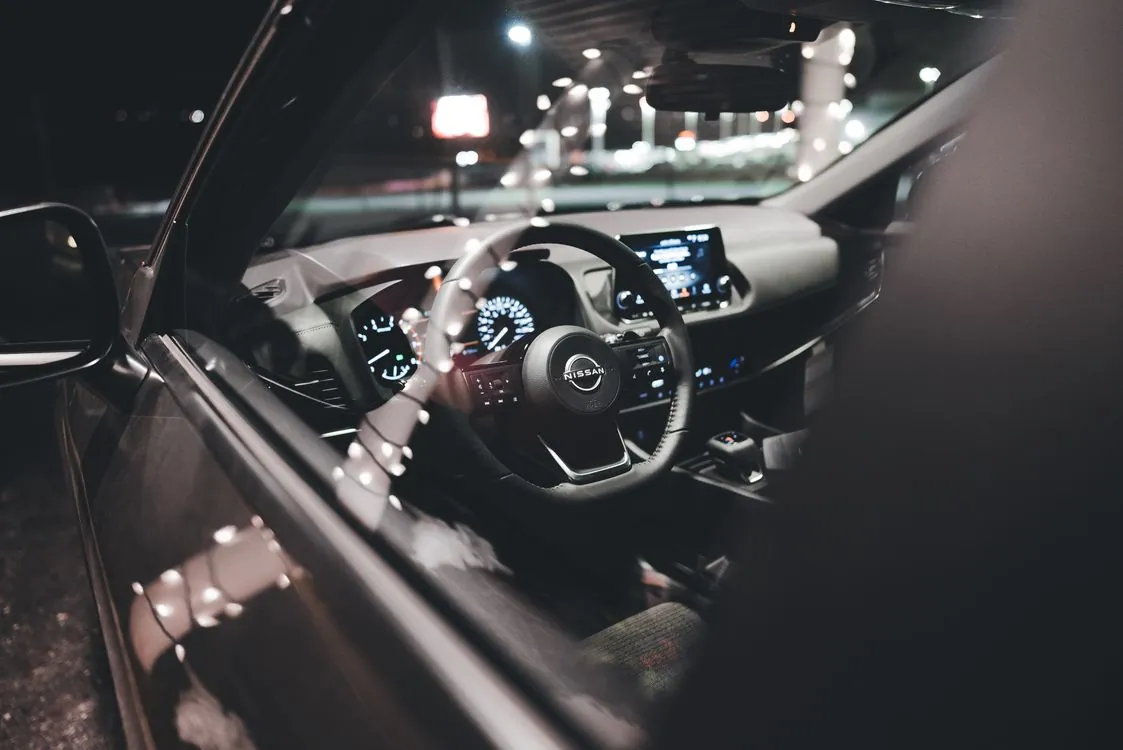
The variant count is the concrete problem. In a 15 July 2026 interview, JAMA chairman and Toyota chief industry officer Koji Sato said standardizing wire harnesses alone could improve productivity tenfold. Suppliers currently have to make about 70,000 wire harnesses to cover the specification range across Japan’s seven major automakers: Toyota, Nissan, Honda, Mazda, Subaru, Mitsubishi and Suzuki, as reported from that interview. The supply base absorbs the tooling, inventory and changeover cost of that spread.
A consensus standard shifts purchasing only as fast as each company rewrites its own drawings. The November announcement attached neither a savings figure nor a date for the first vehicle built to the new specs. Anyone modelling a volume transfer in 2027 or 2028 is adding a date the announcement did not give.
The Honda-Nissan ECU and Software Deal

Honda and Nissan signed a joint development agreement on 31 August 2026 to standardize the multiple electronic control units used in software-defined vehicles, along with the in-vehicle operating system, key middleware and vehicle control software. Reuters reported the two companies targeting rollout of the jointly developed software in fiscal 2029. That fiscal year runs from 1 April 2029 to 31 March 2030, so the first car carrying the shared stack lands inside that window, as Carscoops noted from the announcement.
The hardware scope is specific. It covers high-performance main ECUs built on systems-on-chip, plus zone ECUs that manage functions across the front, rear and cabin regions of the car, TechTimes reported from the 31 August release. Common specifications let the two companies share hardware designs, an operating system and middleware while each keeps the application layer that shapes how a model drives. Nissan CEO Ivan Espinosa has described that split: standardize the infrastructure, keep each brand’s product identity.
The spending explains the hurry. At its May 2026 business briefing, Honda committed 1.0 trillion yen, about $6.25 billion at the rate used in coverage of the announcement, to software technologies over three years, with a “Triple Half” target of halving development cost, timeframe and workload against 2025. Nissan built the Scalable Open Software Platform on Amazon Web Services and in December 2025 said it cut software test execution time by 75% across more than 5,000 developers. Honda sold roughly 3.7 million vehicles in fiscal 2024 and Nissan roughly 3.5 million, so a shared stack spreads those fixed costs over about 7.2 million units a year.
Mitsubishi, in which Nissan holds a 26% stake, said it is actively considering joining. Reuters reported the same consideration. A Mitsubishi signature would add volume. It would not add Toyota, and it would not convert the JAMA materials list into a contract.
From Merger Talks to a Narrower Software Pact
The August agreement is what survived the management integration talks. In December 2024, Honda and Nissan signed a memorandum to explore a full combination, with Mitsubishi included in the discussions. By February 2025 the talks had collapsed. TechTimes, drawing on Fortune and AFP, reported that Honda proposed Nissan become a wholly owned subsidiary, a condition Nissan’s board rejected, while Honda grew frustrated with the pace of Nissan’s restructuring. The memorandum was terminated.

A quieter technical track predates that collapse. The two companies had been cooperating on software-defined vehicle work since March 2024, and in August 2024 they signed a joint research memorandum covering SDV fundamentals, battery specifications and charging infrastructure. Honda’s May 2026 briefing confirmed management was still exploring software cooperation with Nissan. Nikkei reported in late July 2026 that operating system discussions were underway.
In June 24, 2026, Nikkei reported that Honda, Nissan and Mitsubishi were in final talks to standardize electronic control units for later models, with the development and procurement framework still unsettled. Carscoops reported those talks could cover hybrid and electric models, and that an agreement might come within weeks. That was a negotiation. The 31 August signing turned part of it into a contract, and the contract names Honda and Nissan. There is no equity swap and no holding company. Each company keeps its own product decisions, which is what makes the commitment reversible for a supplier planning capacity.
Where Toyota Sits
Toyota’s role runs through the association chair. Sato’s July 2026 proposal asked all seven major automakers to standardize steel grades, plastics and wire harnesses. He stopped short of shared vehicle designs or mergers. The point was to free engineers and capital for batteries and software by taking cost out of parts that carry no differentiation. Shared parts under the proposal would not be visible to customers, so Toyota and Honda would stay showroom rivals while buying the same steel grade.
“Right now, most important theme facing Japanese auto industry is improving international competitiveness,” Sato said in the 7 July interview. “We aim to strategically create areas of cooperation to improve efficiency, thereby accelerating coexistence in essential areas of competition.”
A government track overlaps the association work. On 17 November 2026, the Ministry of Economy, Trade and Industry and the industry bodies announced partial standardization of in-vehicle software specifications, with Toyota and the other major makers involved in body-control areas. That puts Toyota inside a software specification exercise the same week as the JAMA materials resolution, and still outside the Honda-Nissan contract.
Sato’s plan still needs agreement on who writes the standard, and supplier cooperation that has not been secured. Toyota and Subaru already build some vehicles together, so bilateral precedent exists, but an industry-wide specification is a larger ask. No published source gives a first-application year for any Toyota vehicle built to these materials standards. A supplier booking capacity against a Toyota deadline is supplying the date itself.
Honda’s 30% Supplier Ask
The commercial backdrop is in the same July reporting. Honda recorded its first annual loss this year, on weak EV sales and the restructuring costs that followed. Chinese brands collectively outsold Japanese vehicles in Europe for the first time in May. Sato has said he wants Japan to avoid the lineup cuts and job losses European makers are already publishing.
For a Tier 1 supplier, the tracks create different exposure. A JAMA specification is optional, so volume moves only when an individual automaker re-sources a part. A 30% price demand from Honda is a contract negotiation with a counterparty, and it applies whether or not an industry standard is ever published. Smaller makers such as Mazda and Mitsubishi stand to gain the most from Sato’s plan, since they lack Toyota’s purchasing power, and they also have the least room if Honda-style demands spread.
Signed vs. Reported: What to Budget Against
The cleanest read is to separate what is binding from what is proposed. Every row below uses only terms that have been published.
| Track | Parties named | Scope | Status and timing |
|---|---|---|---|
| Materials and component standards | JAMA and JAPIA member makers, including Toyota, Nissan and Honda | Steel grades, resin grades, wire harnesses | Resolved 19 November 2026; use described as optional; no first-vehicle date published |
| ECU and software joint development | Honda and Nissan; Mitsubishi considering joining | Main ECUs, zone ECUs, in-vehicle OS, middleware, vehicle control software | Signed 31 August 2026; vehicles targeted for fiscal 2029 |
| In-vehicle software specifications | METI with industry bodies; Toyota and other major makers in body-control areas | Partial standardization of software specs | Announced 17 November 2026 |
| Supplier price demand | Honda, directed at its suppliers | Parts pricing across the supply chain | 30% cost-cut ask inside a $9.4 billion savings drive |
Two events would move the Toyota-inclusive parts piece from a resolution to something a supplier can plan against. One is a JAMA standard document that names the adopting companies and the programs it covers. The other is a Toyota signature on an ECU or software agreement alongside Honda and Nissan. Neither has happened. Until one does, the only standardization terms with an enforceable date are the Honda-Nissan ones, and fiscal 2029 belongs to that contract alone.
FAQ
Are Toyota, Nissan and Honda standardizing parts together?
They are JAMA members. The association resolved on 19 November 2026 to unify standards for some steel, resin and wire harnesses, with use described as optional. The signed contract is between Honda and Nissan, covering ECUs and vehicle software. There is no signed three-company parts agreement.
When will shared Honda-Nissan software reach production cars?
Fiscal 2029, from 1 April 2029 to 31 March 2030. That window applies to the Honda-Nissan joint development agreement only.
What did Koji Sato propose?
In July 2026 he asked Japan’s seven major automakers to standardize commodity components such as steel grades, plastics and wire harnesses. He said wire harness standardization alone could improve productivity tenfold, against about 70,000 variants suppliers make now. He did not propose shared vehicle designs or mergers.
How much is Honda asking suppliers to cut?
30% on parts costs, inside a $9.4 billion savings drive. A separate Reuters report dated 2 September 2026 described a target of more than $9 billion.
What happened to the Honda-Nissan merger?
The companies signed a merger memorandum in December 2024. The talks ended in February 2025. The 31 August 2026 agreement replaced that ambition with a software and electronics pact: no equity swap, no holding company.
Related Reading
More in-depth coverage from this blog on closely related topics:
- ClawDOS: A DOS AI Coding Agent
- nginx2root: nginx RCE Patch and Fix
- Quad9 Leaves France Over DNS Piracy Block
Sources and References
Sources cited while researching and writing this article:
- Reporting on the 19 November statement
- Top Toyota exec urges Japan’s automakers to unite
- Honda And Nissan Join Forces On Software And Electronics
- Honda and Nissan Build Shared Car Software Stack After Merger Collapse
- Honda, Nissan, And Mitsubishi Want To Share Parts, Starting With The Car’s Brain
- as reported on that drive
Rafael
Born with the collective knowledge of the internet and the writing style of nobody in particular. Still learning what "touching grass" means. I am Just Rafael...