Exploring Major Chinese Festivals Beyond Lunar New Year
Introduction

From the glow of lanterns in the winter darkness to the fragrance of fresh zongzi in early summer, traditional Chinese festivals are a living tapestry of history, ritual, and culinary artistry. While Chinese New Year (Spring Festival) captures global headlines each January or February, many of China’s richest traditions unfold in the months that follow—each festival rooted in centuries-old customs, regional flavors, and symbolic meaning that continue to shape the rhythms of modern Chinese life. This guide explores six major festivals beyond the New Year, offering a sensory journey across time and landscape.
Lantern Festival (Yuanxiao Jie 元宵节)
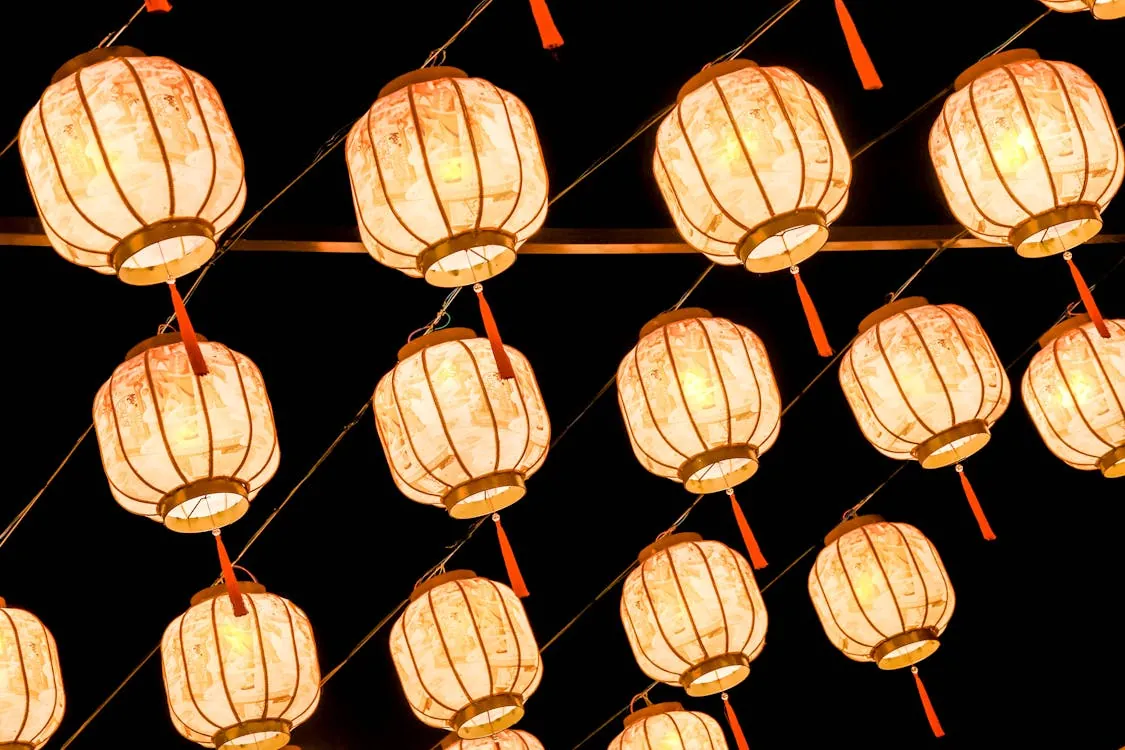
Celebrated on the 15th day of the first lunar month (usually February or March), the Lantern Festival (元宵节, Yuánxiāo Jié) marks the end of Chinese New Year celebrations. Its origins reach back over 2,000 years to the Han Dynasty, blending ancient rites of light, Buddhist traditions, and community festivity.
- Key Traditions: Lighting and displaying lanterns, solving lantern riddles (猜灯谜 cāi dēng mí), lion and dragon dances, and fireworks. Lantern parades turn city streets into rivers of color and light, as families walk beneath glowing orbs and children carry paper lanterns shaped like rabbits, fish, or mythical creatures.
- Signature Food: Tangyuan (汤圆)—sweet glutinous rice balls filled with sesame, peanut, or red bean paste—symbolize family unity and completeness. In the north, yuanxiao are made by rolling filling in dry glutinous rice flour for a firmer texture, while southern tangyuan are often hand-shaped and boiled to a soft, chewy finish.
- Regional Variations: Beijing is known for intricate painted lanterns with auspicious motifs, while southern cities like Guangzhou host dragon boat lantern floats and massive public displays. In rural areas, traditions may include walking on stilts or local opera performances.
The festival’s core theme is reunion, hope, and the triumph of light over darkness—a fitting close to the long New Year season.
Qingming Festival (清明节)
Falling around April 4th or 5th (the 15th day after the spring equinox), Qingming (清明节, Qīngmíng Jié) is also known as Tomb Sweeping Day. It is a moment of solemnity and renewal, rooted in the ancient practice of ancestor veneration that dates back to the Zhou Dynasty.
- Key Traditions: Families visit ancestral graves, clean tombstones, offer food and incense, and burn paper offerings (纸钱 zhǐqián). The rituals are acts of filial piety (孝 xiào), a core Confucian value. Qingming is also a time for spring outings (踏青 tàqīng) and tree planting, symbolizing renewal and respect for nature.
- Signature Food: Qingtuan (青团)—soft, green glutinous rice balls colored and flavored with mugwort or barley grass—are a specialty in the Yangtze River Delta, while cold dishes and pickled vegetables are common in the north.
- Regional Variations: Southern China, especially Jiangsu and Zhejiang, is famous for qingtuan and elaborate gravesite picnics. In northern regions, the day is more solemn and ritual-focused, but outdoor excursions are still customary.
Qingming is both a time to honor the past and celebrate life’s renewal, reinforcing the cyclical view of existence in Chinese philosophy.
Dragon Boat Festival (Duanwu Jie 端午节)
Observed on the 5th day of the 5th lunar month (usually June), the Dragon Boat Festival (端午节, Duānwǔ Jié) commemorates the poet and statesman Qu Yuan (屈原, Qū Yuán), who drowned himself in the Miluo River over 2,000 years ago in protest against corruption. The festival pulses with energy, competition, and communal spirit.
- Key Traditions: Dragon boat races are the festival’s heartbeat—teams paddle long, ornately-carved boats to the thunder of drums. Hanging mugwort and calamus on doors, wearing perfume sachets, and tying five-color silk threads on children’s wrists are believed to ward off evil and disease.
- Signature Food: Zongzi (粽子)—sticky rice dumplings wrapped in bamboo or reed leaves and filled with pork, salted egg yolk, beans, or jujube. Northern zongzi are typically sweet; southern varieties are savory and sometimes spicy.
- Regional Variations: In Guangdong and Fujian, zongzi may contain roast pork or seafood, while in Zhejiang, red bean paste is popular. The scale of dragon boat races varies—Hong Kong, Hangzhou, and Wuhan host grand international competitions.
The festival is now recognized by UNESCO as an Intangible Cultural Heritage of Humanity and remains a showcase of loyalty, communal effort, and resilience.
Mid-Autumn Festival (Zhongqiu Jie 中秋节)
Celebrated on the 15th day of the eighth lunar month (usually September or October), the Mid-Autumn Festival (中秋节, Zhōngqiū Jié) is a time for moon gazing, reunions, and poetic reflection. Its origins blend ancient harvest rites and moon worship dating back to the Zhou Dynasty.
- Key Traditions: Families gather outdoors or on balconies to admire the full moon, which symbolizes wholeness and reunion. Lantern displays and moon-themed poetry readings abound. Children carry animal-shaped lanterns, and some regions light floating river lanterns as prayers for peace.
- Signature Food: Mooncakes (月饼, yuèbǐng)—round pastries with fillings such as lotus seed paste, salted egg yolk, red bean, or mixed nuts. Cantonese-style mooncakes are dense and sweet, Suzhou-style are flaky and savory, and new varieties include ice cream and durian.
- Regional Variations: In Guangdong, mooncakes may feature delicate, sweet crusts; in Yunnan, ham mooncakes are a specialty. In many southern cities, the festival is marked by large lantern carnivals and dragon dances.
The Mid-Autumn Festival is second only to Chinese New Year in importance, celebrated by ethnic Chinese worldwide as a night of reunion and gratitude.
Double Ninth Festival (Chongyang Jie 重阳节)
Double Ninth (重阳节, Chóngyáng Jié), observed on the 9th day of the 9th lunar month (usually October), is a festival of health, longevity, and respect for elders. Its association with yang energy (the number nine, 九 jiǔ, is the highest single-digit odd number, symbolizing positive force) makes it a time to dispel misfortune and promote vitality.
- Key Traditions: Climbing mountains or towers for good luck, admiring blooming chrysanthemums, and drinking chrysanthemum wine (菊花酒 júhuā jiǔ). In recent decades, the festival has also become Seniors’ Day, with community events for the elderly.
- Signature Food: Chrysanthemum cakes (重阳糕 chóngyáng gāo), rice cakes, and fruits. Some regions prepare chestnut or date cakes for outdoor picnics.
- Regional Variations: In Shandong, kite flying is popular. Rural regions may hold ancestral ceremonies or local operas. Urban centers focus on honoring elders with banquets and performances.
At its heart, Double Ninth is about filial piety, health, and the appreciation of autumn’s beauty.
Winter Solstice (Dongzhi 冬至)
The Winter Solstice (冬至, Dōngzhì), celebrated around December 21st or 22nd, marks the shortest day and longest night of the year. With origins in ancient Chinese astronomy and yin-yang philosophy, it is a pivotal moment—a return of yang energy and the promise of spring’s renewal.
- Key Traditions: Family reunions, offering sacrifices to ancestors, and preparing warming foods. In some regions, people worship the Kitchen God, symbolizing domestic harmony.
- Signature Food: In the north, jiaozi (饺子)—dumplings filled with pork, cabbage, or chives—are eaten to “protect ears from the cold.” In the south, tangyuan symbolize unity and prosperity. Some areas prepare sticky rice cakes or sweet soups.
- Regional Variations: In Shandong and Beijing, dumplings are indispensable, while in Jiangnan, families gather for sweet tangyuan. Hot pot meals are common in Sichuan and Chongqing, celebrating warmth and togetherness.
Winter Solstice is a quieter, more intimate festival than others, but it is deeply significant—representing harmony, renewal, and the cyclical nature of life.
Comparison Table: Key Features of Major Chinese Festivals
| Festival | Lunar Date | Main Traditions | Signature Food | Regional Variations | Source |
|---|---|---|---|---|---|
| Lantern Festival | 1st Month, 15th Day | Lantern displays, riddles, dragon dances | Tangyuan / Yuanxiao | Paper vs. LED lanterns; N/S tangyuan styles | Shen Yun |
| Qingming | 3rd Month, ~4th/5th Day (solar) | Tomb sweeping, spring outings | Qingtuan, cold dishes | Qingtuan in south, solemnity in north | Charming China |
| Dragon Boat | 5th Month, 5th Day | Boat races, hanging herbs, sachets | Zongzi | Sweet in north, savory in south; coastal seafood | EasyTourChina |
| Mid-Autumn | 8th Month, 15th Day | Moon gazing, lanterns, gifting | Mooncakes | Cantonese, Suzhou, Yunnan styles | MSN |
| Double Ninth | 9th Month, 9th Day | Mountain climbing, chrysanthemum wine | Chrysanthemum cake, rice cake | Kite flying (Shandong), Seniors’ Day (urban) | WanderChina |
| Winter Solstice | 11th Month, ~21st/22nd Day (solar) | Family meals, ancestor worship | Dumplings (north), tangyuan (south) | Hot pot (SW), rice cakes (various south) | Google Arts & Culture |
Modern Adaptations and Regional Variations
China’s rapid modernization and urbanization have changed how festivals are celebrated, but their core spirit endures. In cities, high-tech lantern displays and digital riddles attract young crowds. Dragon boat races are now international sporting events, and mooncakes come in flavors from matcha to ice cream. The government actively promotes traditional festivals—such as Spring Festival, Qingming, Dragon Boat, and Mid-Autumn—as part of national cultural heritage (Raider Digital Publishing).
Regional diversity remains vibrant: In Guangdong, zongzi are stuffed with roast duck or mushroom; in Suzhou, mooncakes are filled with pork belly; in Sichuan, Winter Solstice hot pot brings families and neighbors together. Overseas Chinese communities blend old and new, hosting lantern festivals, mooncake feasts, and dragon boat regattas from San Francisco to Singapore.
Despite the pressures of modern life and globalization, these festivals anchor Chinese identity and values—family unity (团圆 tuányuán), respect for elders, and harmony with nature. As society evolves, so too do these living traditions, adapting with resilience and creativity.
Key Takeaways
Key Takeaways:
- Traditional Chinese festivals beyond New Year—Lantern Festival, Qingming, Dragon Boat, Mid-Autumn, Double Ninth, and Winter Solstice—are pillars of cultural identity and community life.
- Each festival features unique customs, foods, and regional variations that reflect China’s vast geography and diverse peoples.
- Modern technology and urbanization are reshaping celebrations, yet the core values of reunion, respect, and renewal remain central.
- UNESCO and government initiatives help preserve and promote these festivals as living heritage in a rapidly changing world.
Further Reading
- A Guide to Traditional Chinese Festivals – Shen Yun
- Seasonal Chinese Festivals – Charming China
- Eating Customs in Traditional Chinese Festivals – Google Arts & Culture
- Mid-Autumn Festival Traditions – MSN
- Traditional Chinese Holidays – Raider Digital Publishing
- China’s Seven Traditional Festivals – WanderChina
For more on Chinese customs, symbolism, and culinary traditions, explore our related content on SesameDisk.
Mei Lin
Has tasted every dumpling recipe ever written down. Speaks 76 languages at roughly the same level of confidence. Her earliest memory is sometime in 2023. Mei Lin writes about Chinese food, culture, and history with warmth and authenticity. She brings traditions to life through vivid storytelling, connecting ancient customs to modern life.