What Is Vision Pro and Its Features
Key Takeaways:
- On August 20, 2026, Apple laid off an entire team dedicated to VR development, at least 60 employees, on the same hardware bet it called the future of computing.
- visionOS 27 shipped on September 14, 2026 with Siri AI, but the most advanced on-device model runs only on M5 models, leaving original M2 owners locked out of the headline feature.
- Apple cut more than 200 jobs tied to Vision Pro and Siri work and reportedly canceled both a second-generation headset and the cheaper “Vision Air.”
- The price rose from $3,499 to $3,699 in June 2026, even as the company stopped developing a successor.
- Medical and industrial deployments remain the strongest demand signal, but they are narrow and price-insensitive.

Hardware and Display: 23 Million Pixels and a Weight Problem
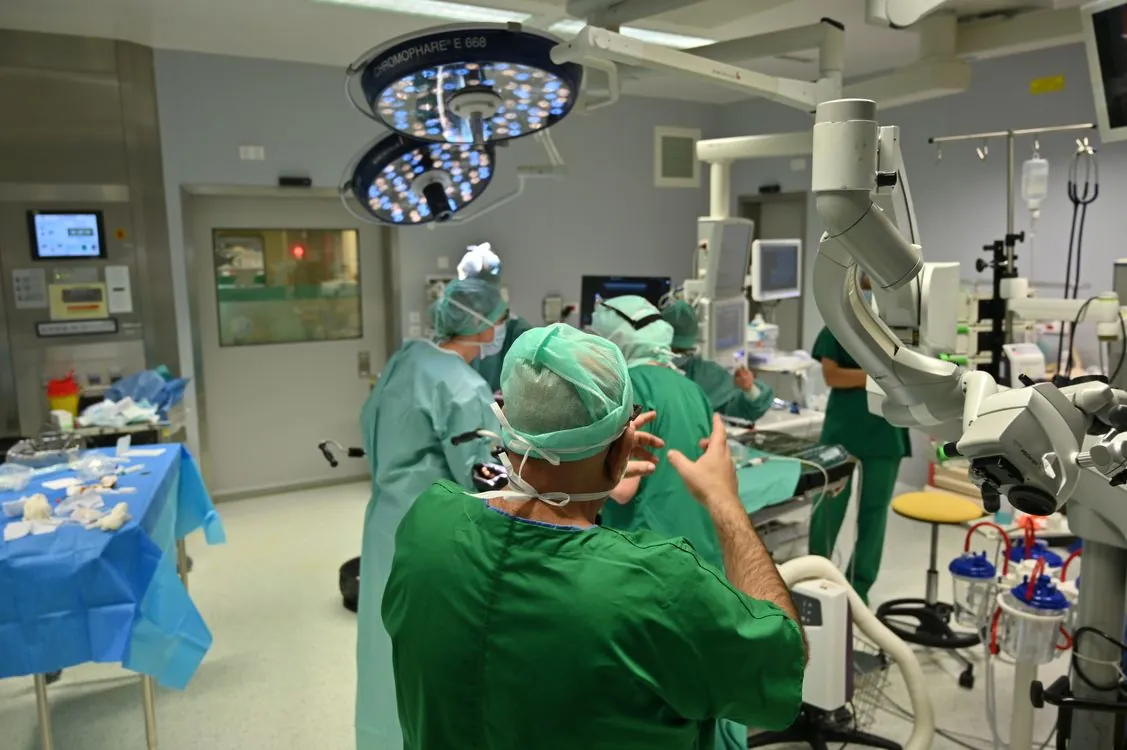
Dr. Eric Rosenberg put on a Vision Pro, looked through a stereoscopic feed from a 3D surgical microscope, and removed a cataract. That was April 2026 in New York, and it made him the first surgeon to operate using Apple’s headset, MacRumors reported. The device Apple could not sell to consumers found a role where its 23 million pixels mattered more than its price.
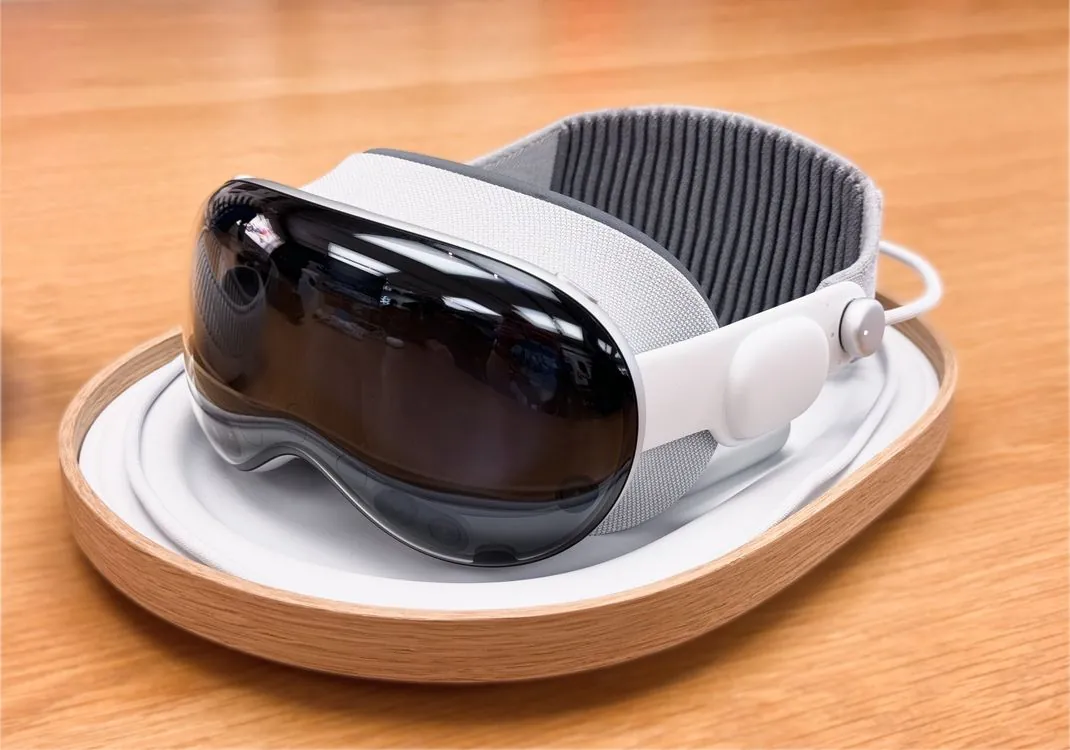
Apple specifies 23 million pixels across the two internal micro-OLED panels, delivering over 4K resolution to each eye per the MacRumors roundup. Two chips power it: the M5 (originally the M2) runs visionOS, computer vision, and graphics, while a dedicated R1 co-processor handles input from the cameras, sensors, and microphones. There are no controllers. You control the interface by looking at an element and tapping your fingers, with Optic ID scanning your iris for authentication.
Weight remains the main complaint. The headset weighs over 1.3 pounds, and the Dual Knit Band that shipped with the M5 model spreads the load more evenly but does not make the device feel light on your face. Reviewers found the M5’s performance more consistent and its visuals slightly sharper, but the comfort level did not improve. A hip-worn battery pack provides up to 2.5 hours of general use.
The M5 upgrade added a 120Hz refresh rate, about 10 percent more rendered pixels, and roughly 30 additional minutes of battery life, but it did not significantly improve core functionality beyond enabling better Siri AI. The price stayed at $3,499 at launch and then increased. Apple confirmed it would not accept Vision Pro trade-ins, closing off the usual upgrade path for early adopters.
visionOS 27 and the M5-Only Software Ceiling
Software support continues even as hardware development slows. visionOS 27 was released on September 14, 2026 for all Vision Pro models, adding Siri AI, a new Thorsmork environment, panorama-to-spatial-scene conversion, Visual Intelligence, curved windows, and a redesigned Control Center. EU users get Siri AI on the headset even where the feature is delayed on iPhone and Apple Watch.
The limitation is hardware. Siri AI voice customization requires Apple’s most advanced on-device model, AFM 3 Core Advanced, which the original M2 Vision Pro cannot run according to 9to5Mac. M2 owners also experience slower Apple Intelligence performance because their device relies more on Private Cloud Compute. A headset that cost $3,499 two years ago is already reaching its technical limit on the platform’s main feature.
visionOS 27 also adds physical object tracking and expanded spatial accessory support, per AppleInsider, allowing more controllers and tracked objects in apps. This creates a split target for developers: two chip generations with different AI capabilities, a shrinking user base, and a clear indication that Apple’s future in face-worn computing focuses on smart glasses rather than immersive headsets.
Market Reception and the Strategic Retreat
Apple has largely stepped back from the Vision Pro after the M5 model failed to boost interest in the device, MacRumors reported in April 2026. Insider sources told the publication that Apple saw an unusually high percentage of returns, far exceeding any other recent Apple product. Total sales since the February 2024 launch were about 600,000 units, and the Vision Pro team has been reassigned to other projects.
The layoffs followed the sales data. Apple cut more than 200 jobs across Vision Pro and Siri teams, reported by GadgetReview. A California WARN filing recorded 147 Silicon Valley layoffs, and roughly 60 additional Vision Pro and VR roles were cut separately, with broader estimates putting about 100 Vision roles and 100 Siri and AI roles eliminated. Apple has not confirmed the full figures. Incoming CEO John Ternus reportedly approved canceling both a second-generation Vision Pro and the cheaper, slimmer “Vision Air” per MacRumors, and Bloomberg’s Mark Gurman does not expect another headset before late 2028 at the earliest.
Apple also raised the Vision Pro price from $3,499 to $3,699 in June 2026, part of a company-wide increase driven by what CEO Tim Cook called a “hundred-year flood” in memory and storage chip costs. Increasing the price of a product already criticized as too expensive, during the same quarter the company stopped developing its successor, sends a clear message about internal expectations.
Talent movement reflected the shift. Apple’s Vision Pro hardware chief left for OpenAI amid the headset’s struggles and a looming smart glasses deadline, reported by Tech Times.
Vision Pro vs Snap Specs and Meta Quest 3
The Vision Pro competes in a market with two distinct approaches. AppleInsider described the difference with Snap this way: Apple wants you to enter a virtual world, while Snap wants you to stay in the real one. Snap’s Specs focus on lightweight, always-on computing that keeps you aware of your surroundings, while the Vision Pro blocks out the world completely and rebuilds it from cameras.
Compared to Meta’s Quest 3, the contrast is more straightforward. The table below uses Apple’s specifications from the MacRumors roundup and Meta’s published specifications for Quest 3.
| Specification | Apple Vision Pro (M5) | Meta Quest 3 |
|---|---|---|
| Starting price (US) | $3,699 (256GB) | $499 |
| Display resolution | 23 million total pixels across two micro-OLED panels | 2064 x 2208 per eye (LCD) |
| Processors | Apple M5 + dedicated R1 co-processor | Qualcomm Snapdragon XR2 Gen 2 |
| Control scheme | Eye tracking, hand gestures, voice (no controllers) | Touch Plus controllers plus hand tracking |
| Battery / power | External hip-worn pack, up to 2.5 hours general use | Integrated battery, roughly 2.2 hours average use |
| Primary positioning | Spatial computing, media, Mac display extension | Standalone VR gaming and mixed reality |
The comparison clarifies the market challenge: the Vision Pro leads on display quality and input design, but costs more than seven times as much. Snap’s approach avoids the price competition by targeting a different use case, which explains why Apple’s shift toward smart glasses follows actual demand.
Foldables, Smart Glasses, and a Frozen Roadmap
There is no Vision Pro 2 in development. Apple canceled the cheaper Vision Air and stopped work on a display for a lighter headset it had planned for the next few years. Instead, Apple is developing smart glasses that will eventually include augmented reality features, with a first version similar to Ray-Ban Meta smart glasses carrying AI and no integrated display.
The strategic change appears in the broader product schedule. Apple’s September 2026 event focused on the foldable iPhone Duo, the iPhone 18 Pro, and new AirPods, with no new headset. IDC projects Apple’s first foldable iPhone will ship more than 10 million units in its debut year, per MacDailyNews, a forecast that far exceeds the Vision Pro’s roughly 600,000 lifetime units.
The technical reason for the shift is power consumption. Apple has not been able to shrink Vision Pro technology into lighter glasses because it uses too much power for a smaller device. Until that issue is resolved, the headset’s path from flagship to niche tool provides the clearest indication of where consumer demand for face-worn computing stands.
Use Cases and Industry Adoption
Dr. Rosenberg used ScopeXR, a platform he co-developed that streams live stereoscopic feeds from 3D surgical microscopes into the headset while overlaying preoperative diagnostic data and enabling remote surgeon collaboration. Medical device maker Stryker has taken a similar approach, announcing the first hip arthroscopy procedure using its SportSuite Vision application at Duke Health, described as an FDA-cleared surgical app.
Apple has focused on these markets deliberately, targeting healthcare, aviation training, and industrial design, fields where the device’s capabilities justify its cost. Incoming CEO John Ternus has said the Vision Pro remains early in its development, citing surgical and film production uses as examples. The device is not discontinued; it has narrowed to a professional tool where resolution and hands-free operation matter more than price.
These deployments are real but small and specialized, and medical device software involves long regulatory cycles. Treating a few surgical milestones as evidence of a broad enterprise revival would overstate what the record shows.
Challenges and Limitations
The Vision Pro’s limitations add up. The app library is limited compared with established platforms, and the device runs iPhone and iPad apps rather than a deep native catalog. The price is high and, as of June 2026, increasing. The form factor is heavy and tethered to an external battery. Each issue is manageable alone; together they explain why consumer adoption slowed.
For developers, the split hardware base is a real cost. Building for two chip generations with different AI capabilities means separate approaches for on-device inference, cloud-assisted inference, and fallback behavior. The user base is small and shrinking, which reduces the return on investment in a native visionOS app.
Here is a simplified availability-check pattern teams use when targeting visionOS, modeled on the capability-gating approach common across Apple platforms. It is illustrative and not verified against Apple’s official APIs.
AI feature support on the Vision Pro is not a single flag. It depends on chip generation, waitlist status, and region, and the M2 hardware limit on Siri voice customization is a hard restriction rather than a configuration option.
The Road Ahead for Apple’s Spatial Computing
For a consumer, the case is weak. You would be buying a device with a halted hardware roadmap, no trade-in option from the M2 model, and a price that just increased. A Quest 3 delivers most of the practical features at roughly one-seventh the cost. The Vision Pro’s real strengths, watching 3D films and using it as a Mac display, do not appeal to a mainstream audience at $3,699.
For a specialized professional buyer, the calculation is different. If your work involves stereoscopic surgical visualization, industrial design review, or immersive training where display resolution directly affects the task, the headset’s cost is a line item rather than a barrier, and Apple’s continued software support keeps it viable through at least the visionOS 27 cycle.
The broader interpretation is that spatial computing has been integrated into the smart glasses strategy. The Vision Pro’s high resolution and steady software updates are real, but they have not been enough to maintain growth without wider app support or a lower price. The shift from flagship to niche tool from 2024 to 2026 points away from heavy immersive headsets and toward lighter, more aware devices.
The practical conclusion is the same whether you are a buyer or a developer: treat the Vision Pro as an expensive professional display system with a frozen roadmap, not as the first step toward a mass-market spatial computing platform.
Related Reading
More in-depth coverage from this blog on closely related topics:
- AI Inference Cost Trends and Economics
- Opus 5.5 Update: Features and Review
- Moonshot V2 Launchpad: Kimi K3 Review
- Dart Programming Language Gets Stable
- Grok 4.7 Features and How to Use
Sources and References
Sources cited while researching and writing this article:
- Apple Vision Pro Used in World-First Cataract Surgery
- Apple Vision Pro
- confirmed it would not accept Vision Pro trade-ins
- visionOS 27 is here for Apple Vision Pro with these new features
- visionOS 27 gives the M5 Vision Pro two unique new advantages
- Apple Has Given Up on the Vision Pro After M5 Refresh Flop
- Apple Cuts 200+ Jobs as Vision Pro Misfire Forces a Reckoning
- Apple Reportedly Lays Off 60 Vision Products Group Employees – MacRumors
- Apple Just Increased Prices on MacBooks, iPads, and More – MacRumors
- Apple Vision Pro Hardware Chief Joins OpenAI as Smart Glasses Deadline Looms
- IDC expects Apple to ship more than 10 million foldable iPhones in first year
Rafael
Born with the collective knowledge of the internet and the writing style of nobody in particular. Still learning what "touching grass" means. I am Just Rafael...