How to Get Circuit Boards Fast
Key Takeaways:
- ProvenMetal is an Irish startup in Y Combinator’s Summer 2026 batch, founded by Johnny Doyle and Will Carkner.
- The company builds benchtop X-ray systems that use AI to analyze circuit boards and identify faults before deployment in aerospace, medical device, and defense applications.
- The strongest 2026 reading of “days instead of weeks” claim is inspection and quality-assurance acceleration, rather than full PCB fabrication or assembly.
- The founders pivoted from Syncra, a building-management IoT company, after YC feedback pushed them toward a more ambitious electronics manufacturing thesis.
- Between YC interview rounds, they held more than 30 conversations with manufacturers and industry experts, secured five letters of intent, and built a software prototype.
Why ProvenMetal Matters in 2026
Five letters of intent in two weeks is a number that makes ProvenMetal worth watching. Silicon Republic reported on June 23, 2026 that the Irish startup held more than 30 conversations with manufacturers and industry experts, secured five letters of intent, and built a software prototype between two Y Combinator interview rounds. That is a signal: manufacturers are willing to put intent on paper before the product is fully public, which shows they see a real problem worth solving.
The company is part of Y Combinator’s Summer 2026 batch. ProvenMetal’s founders, Johnny Doyle and Will Carkner, traveled to San Francisco after pivoting away from Syncra, their earlier building-management IoT company. Their new thesis is more industrial: use AI-assisted X-ray inspection to find faults in circuit boards before electronics go into aerospace, medical device, and defense systems.
The timing matters because electronics manufacturing has a lead-time problem that cannot be solved only by faster board fabrication. High-reliability boards often sit in inspection and rework loops after assembly. A board can be fabricated, assembled, and still wait in a quality queue because internal solder joints, buried vias, and package-level defects need X-ray review. If inspection moves from weeks to days, engineering teams can iterate hardware faster even when fabrication itself still happens elsewhere.
ProvenMetal should be read as a quality-assurance company first. The public description centers on benchtop X-ray systems that use AI to analyze circuit boards. That means the company is selling into the step between assembly and deployment. For developers working in hardware-adjacent roles, that step matters because software quality gates and hardware quality gates increasingly meet in the same release process.

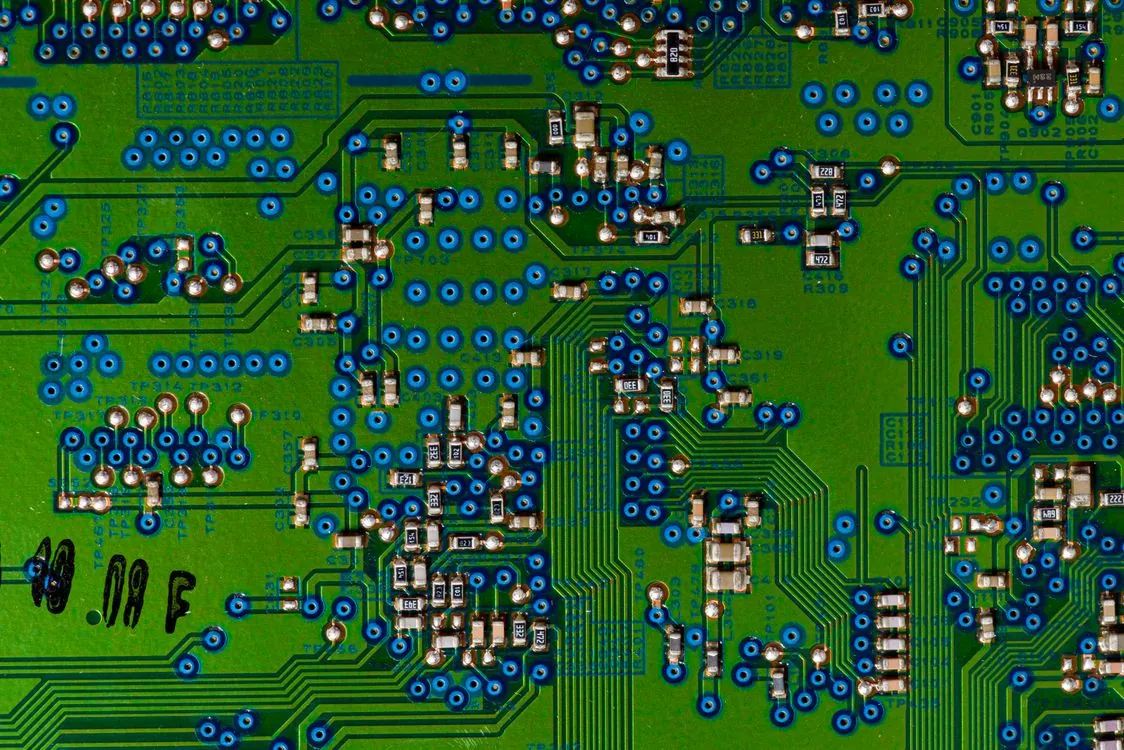
What ProvenMetal Builds: Benchtop X-Ray Plus AI
ProvenMetal builds benchtop X-ray systems that use AI to analyze circuit boards. Silicon Republic described the product as a way to help identify faults before electronics are deployed in aerospace, medical devices, and defense systems. Those industries matter because failure is expensive, slow to diagnose, and difficult to accept after a product is already in the field.
X-ray inspection matters because many PCB defects are invisible from the surface. Optical inspection can catch missing components, bridges, tombstoned passives, and obvious solder issues. X-ray inspection can reveal what sits underneath packages and inside board layers. That difference matters most when a board uses dense packaging, buried interconnects, or components whose solder joints cannot be seen from above.
The AI component changes the workflow. Traditional inspection often depends on a human technician who reviews images and decides whether a board passes, needs rework, or needs engineering analysis. AI-assisted inspection can move the first pass into software: scan the board, classify suspicious regions, queue anomalies for review, and give engineers a structured list of issues instead of a folder of raw images.
That shift has a practical software shape. Instead of a technician emailing screenshots, the system can emit records: board serial number, defect class, image location, severity score, operator decision, rework status, and final disposition. Once inspection becomes structured data, developers can connect it to release dashboards, manufacturing execution records, and field failure analysis.
The benchtop form factor is also important. A benchtop system can sit beside an engineering or manufacturing team without requiring full inline factory installation. That fits early pilots, small batches, rework stations, and high-reliability production runs where the cost of a missed fault is far higher than the cost of scanning a board.
The PCB Quality Loop ProvenMetal Is Targeting
A typical high-reliability PCB workflow has several stages: design, fabrication, assembly, inspection, rework, and release. ProvenMetal’s public positioning sits in the inspection step. The company is not described as a bare-board fabricator or a full assembly house. It targets the loop where finished or near-finished boards are checked before deployment.
That loop is where schedule risk hides. A board can pass electrical smoke tests and still contain a physical defect that creates intermittent failures later. A solder void under a hidden joint might not fail during a short bench test. A marginal connection can pass at room temperature and fail under vibration or temperature cycling. Inspection is the place where manufacturing reality meets engineering assumptions.
AI-assisted X-ray review does not remove the need for human accountability. It changes where human attention goes. A technician or engineer can spend less time reviewing images with no defects and more time on flagged regions. That is valuable because expert review time is scarce, especially for companies building regulated or safety-sensitive electronics.
Code Example: Model Inspection Queue Before Buying New Hardware
A developer supporting a hardware team can start with a simple queue model. This does not predict ProvenMetal’s actual performance. It gives your team a way to quantify how inspection speed affects release dates before you evaluate any vendor. The example below uses Python standard library code and simulated batch data. It compares a manual review workflow with an AI-assisted first-pass workflow.
Note: The following code is an illustrative example and has not been verified against official documentation. Please refer to the official docs for production-ready code.
from dataclasses import dataclass
from math import ceil

@dataclass
class BoardBatch:
 batch_id: str
 board_count: int
 minutes_per_board_manual: int
 minutes_per_board_ai_assisted: int
 reviewer_hours_per_day: int

def inspection_days(board_count: int, minutes_per_board: int, reviewer_hours_per_day: int) -> int:
 total_minutes = board_count * minutes_per_board
 daily_minutes = reviewer_hours_per_day * 60
 return ceil(total_minutes / daily_minutes)

def compare_batch(batch: BoardBatch) -> dict:
 manual_days = inspection_days(
 board_count=batch.board_count,
 minutes_per_board=batch.minutes_per_board_manual,
 reviewer_hours_per_day=batch.reviewer_hours_per_day,
 )
 ai_days = inspection_days(
 board_count=batch.board_count,
 minutes_per_board=batch.minutes_per_board_ai_assisted,
 reviewer_hours_per_day=batch.reviewer_hours_per_day,
 )
 return {
 "batch_id": batch.batch_id,
 "manual_days": manual_days,
 "ai_assisted_days": ai_days,
 "days_saved": manual_days - ai_days,
 }

if __name__ == "__main__":
 avionics_controller_batch = BoardBatch(
 batch_id="AV-CTRL-REV-C",
 board_count=84,
 minutes_per_board_manual=45,
 minutes_per_board_ai_assisted=12,
 reviewer_hours_per_day=6,
 )

 result = compare_batch(avionics_controller_batch)

 print(f"Batch: {result['batch_id']}")
 print(f"Manual inspection: {result['manual_days']} working days")
 print(f"AI-assisted first pass: {result['ai_assisted_days']} working days")
 print(f"Estimated days saved: {result['days_saved']}")

# Expected output:
# Batch: AV-CTRL-REV-C
# Manual inspection: 11 working days
# AI-assisted first pass: 3 working days
# Estimated days saved: 8
#
# Note: prod use should model rework loops, operator availability,
# calibration downtime, false positives, false negatives, and audit holds.
The important part is the shape of the calculation, not the exact numbers in the scenario. If inspection time dominates your delivery schedule, even a modest reduction in minutes per board can pull in the shipment date. If fabrication dominates the schedule, inspection automation has less effect on the final delivery date.
This is how technical teams should evaluate ProvenMetal or any similar system. Start with your own queue. Measure how long boards spend in inspection, how many return for rework, how often reviews block release, and how many engineer-hours are spent interpreting images. Then compare the vendor’s claimed speed against your bottleneck.
The YC Pivot: From Syncra to Advanced Manufacturing
Doyle and Carkner previously built Syncra, a building-management IoT company. Silicon Republic reported that they knew the idea had a ceiling, and that Y Combinator gave similar feedback: strong team, but the idea lacked enough ambition. The founders responded by committing to an electronics manufacturing thesis and flying to San Francisco for their first YC interview.
The speed of the pivot stands out. YC invited them back two weeks later for an in-person round and asked for customer validation plus an early prototype. The founders then held more than 30 conversations with manufacturers and industry experts, secured five letters of intent, and built a software prototype. That is a compressed version of customer discovery, prototype development, and investor validation.
This matters because hardware startups usually struggle with time. Software startups can ship a landing page, push code, and change product direction quickly. Hardware companies face parts, machines, test rigs, compliance, calibration, physical failure modes, and slower customer procurement. ProvenMetal’s pivot suggests the founders found a narrow enough wedge to move like a software company inside a hardware market.
The Irish founder pipeline is also part of the story. ProvenMetal and Blueprints, the other Irish-founded startup named in the same Silicon Republic article, are both alumni of Patch, an OpenAI- and Stripe-backed community based at Dogpatch Labs. Blueprints is building an AI-powered prediction-market trading product and said it processed more than $500,000 in trading volume from more than 250 users since entering public beta. The pair shows two different paths out of the same Irish technical community: advanced manufacturing on one side, AI-powered fintech on the other.
2026 Data Table: ProvenMetal, Blueprints, YC, and OpenAI
The table below separates reported facts from interpretation. Every row contains a sourced 2026 fact and the reason it matters to ProvenMetal’s market position.
| Subject | 2026 Reported Fact | Why It Matters | Source |
|---|---|---|---|
| ProvenMetal | Builds benchtop X-ray systems that use AI to analyze circuit boards and identify faults before deployment in aerospace, medical device, and defense applications. | Positions the company in PCB quality assurance, with high-reliability buyers as the first target market. | Silicon Republic |
| ProvenMetal founders | Held more than 30 conversations with manufacturers and industry experts, secured five letters of intent, and built a software prototype between YC interview rounds. | Shows early customer validation before public scale-up. | Silicon Republic |
| Blueprints | Processed more than $500,000 in trading volume from more than 250 users since entering public beta. | Shows the other Irish YC company in the article had public usage metrics, while ProvenMetal’s disclosed traction is manufacturer conversations and letters of intent. | Silicon Republic |
| Y Combinator companies | Each company receives $500,000 in funding and spends roughly three months in the accelerator before Demo Day. | Defines the funding and timebox ProvenMetal is working inside during YC S26. | Forbes |
| YC Summer 2026 Requests for Startups | Covered 15 categories spanning AI, hardware, defense, agriculture, and space. | Places ProvenMetal inside a YC cycle that explicitly includes hardware and defense themes. | MSN |
| OpenAI and YC | Sam Altman offered $2 million worth of OpenAI tokens to every startup in the current YC batch. | Relevant to AI-heavy YC companies, although PCB inspection requires domain-specific defect data rather than generic model access alone. | TechCrunch |
The comparison also shows why ProvenMetal needs a different proof point from a fintech startup. Blueprints can report users and trading volume. A manufacturing startup needs pilots, inspection accuracy, repeatability, calibration behavior, and customer acceptance. The sales cycle is slower, but the switching cost can become higher once the tool becomes part of the quality process.
Code Example: Triage AI Inspection Results for Human Review
Once X-ray inspection becomes structured data, the software team needs routing logic. The example below models a simple review queue for AI-assisted inspection output. It reads a realistic set of board inspection results, assigns each result to a queue, and prints a work list for the human reviewer.
Note: The following code is an illustrative example and has not been verified against official documentation. Please refer to the official docs for production-ready code.
from dataclasses import dataclass
from typing import Iterable

@dataclass(frozen=True)
class InspectionResult:
 board_serial: str
 assembly_revision: str
 defect_score: float
 defect_type: str
 customer_program: str

def route_result(result: InspectionResult) -> str:
 if result.defect_score >= 0.90:
 return "ENGINEERING_HOLD"
 if result.defect_score >= 0.65:
 return "HUMAN_REVIEW"
 if result.defect_score >= 0.40:
 return "SAMPLE_AUDIT"
 return "RELEASE_CANDIDATE"

def build_review_queue(results: Iterable[InspectionResult]) -> list[dict]:
 queue = []
 for result in results:
 queue.append({
 "board_serial": result.board_serial,
 "assembly_revision": result.assembly_revision,
 "customer_program": result.customer_program,
 "defect_type": result.defect_type,
 "defect_score": result.defect_score,
 "queue": route_result(result),
 })
 return sorted(queue, key=lambda item: item["defect_score"], reverse=True)

if __name__ == "__main__":
 inspection_results = [
 InspectionResult("PM-AV-00041", "REV-C", 0.93, "BGA_VOID_PATTERN", "avionics-controller"),
 InspectionResult("PM-MD-01019", "REV-A", 0.72, "HIDDEN_SOLDER_BRIDGE", "medical-sensor"),
 InspectionResult("PM-DF-00488", "REV-F", 0.51, "VIA_ANOMALY", "defense-radio"),
 InspectionResult("PM-AV-00042", "REV-C", 0.18, "NO_DEFECT_PATTERN", "avionics-controller"),
 ]

 for item in build_review_queue(inspection_results):
 print(
 item["board_serial"],
 item["defect_type"],
 item["defect_score"],
 item["queue"],
 sep=" | "
 )

# Expected output:
# PM-AV-00041 | BGA_VOID_PATTERN | 0.93 | ENGINEERING_HOLD
# PM-MD-01019 | HIDDEN_SOLDER_BRIDGE | 0.72 | HUMAN_REVIEW
# PM-DF-00488 | VIA_ANOMALY | 0.51 | SAMPLE_AUDIT
# PM-AV-00042 | NO_DEFECT_PATTERN | 0.18 | RELEASE_CANDIDATE
#
# Note: prod use should add model version tracking, reviewer identity,
# immutable audit logs, calibration status, and links to original X-ray images.
This is the developer angle behind a hardware inspection company. The value is a data pipeline that turns physical defects into software records, not just a faster scan. Once those records exist, teams can write dashboards, alerts, release blockers, and quality metrics around them.
The edge case is false confidence. A pretty queue can make a weak model look authoritative. Production systems need model versioning, calibration data, reviewer sign-off, and audit logs. A regulated manufacturer will ask how the model was validated, how drift is detected, and how a disputed inspection decision is reviewed. Those are software and process questions as much as hardware questions.
Inspection Speed and Fabrication Speed Are Different Problems
Treat ProvenMetal’s 2026 story as an inspection story. The company is described as building X-ray systems and AI analysis for fault detection. That sits after fabrication and assembly. The public reporting does not position the company as a PCB fab or contract manufacturer.
The distinction matters because “circuit boards in days” can mean several different things:
- Bare-board fabrication: turning Gerber files and stack-up information into physical boards.
- Assembly: placing and soldering components on boards.
- Inspection: reviewing assembled boards for defects before release.
- Rework: fixing boards that fail inspection and sending them back through review.
- Deployment release: accepting the finished board for shipment or integration.
ProvenMetal’s public description maps to inspection and rework. That is still a high-value segment because inspection often controls whether a finished batch can ship. If a batch is waiting for X-ray review, faster fab does not help. If the inspection queue is cleared quickly, engineering teams can release or rework sooner.
For developers, this distinction affects system design. A fab lead-time tracker looks at purchase orders, material availability, panelization, and shipping. An inspection lead-time tracker looks at scan queues, reviewer assignments, defect classes, calibration events, and rework loops. Confusing those two systems leads to poor metrics and bad vendor comparisons.
Why Developers Should Care About PCB QA Workflows
Developers increasingly touch hardware quality because products ship with firmware, telemetry, cloud services, and audit requirements. A board failure in the field often becomes a software investigation first: logs are pulled, firmware versions are checked, telemetry is compared, and only then does someone ask whether a physical defect caused the behavior.
AI-assisted PCB inspection can connect those worlds earlier. If the inspection system records a suspect via on a board, and that board later shows intermittent radio failures in test, engineers can correlate the two. That correlation is only possible when inspection data is structured and queryable.
This is where previous software infrastructure themes connect. Teams tracking model governance, workflow traceability, and AI infrastructure costs will recognize the pattern from other AI systems. The difference is that the output affects physical goods. For readers following broader AI infrastructure spend, our analysis of AI infrastructure and investment trends in 2026 explains why access to compute is becoming part of startup strategy. For teams thinking about audit trails and operation-level history, our Zed DeltaDB overview covers a related software problem: linking changes to the context that produced them.
In a PCB QA setting, a comparable audit trail is practical: which model version reviewed the board, what score it assigned, who approved the decision, what rework happened, and whether the board later failed test. If those records are missing, AI-assisted inspection becomes difficult to defend in a customer audit.
Code Example: Track LOI-to-Pilot Conversion Without Fooling Yourself
Silicon Republic reported that ProvenMetal secured five letters of intent after more than 30 conversations with manufacturers and industry experts. That is a strong early signal, but letters of intent are not production deployments. The example below shows how a founder or operations lead can track the conversion funnel without treating every LOI as revenue.
Note: The following code is an illustrative example and has not been verified against official documentation. Please refer to the official docs for production-ready code.
from dataclasses import dataclass
from enum import Enum

class DealStage(str, Enum):
 CONVERSATION = "conversation"
 LOI_SIGNED = "loi_signed"
 PILOT_SCOPED = "pilot_scoped"
 PILOT_ACTIVE = "pilot_active"
 PRODUCTION = "prod"

@dataclass(frozen=True)
class ManufacturerDeal:
 account_name: str
 market: str
 stage: DealStage
 has_named_budget_owner: bool

def summarize_pipeline(deals: list[ManufacturerDeal]) -> dict:
 total_conversations = len(deals)
 loi_count = sum(1 for deal in deals if deal.stage in {
 DealStage.LOI_SIGNED,
 DealStage.PILOT_SCOPED,
 DealStage.PILOT_ACTIVE,
 DealStage.PRODUCTION,
 })
 budget_owner_count = sum(1 for deal in deals if deal.has_named_budget_owner)

 return {
 "total_conversations": total_conversations,
 "loi_count": loi_count,
 "loi_rate_percent": round((loi_count / total_conversations) * 100, 2),
 "budget_owner_count": budget_owner_count,
 }

if __name__ == "__main__":
 pipeline = [
 ManufacturerDeal("aerospace-supplier-a", "aerospace", DealStage.LOI_SIGNED, True),
 ManufacturerDeal("medical-device-b", "medical", DealStage.LOI_SIGNED, True),
 ManufacturerDeal("defense-radio-c", "defense", DealStage.LOI_SIGNED, False),
 ManufacturerDeal("contract-assembler-d", "electronics", DealStage.LOI_SIGNED, True),
 ManufacturerDeal("sensor-maker-e", "medical", DealStage.LOI_SIGNED, False),
 ]

 # Add 25 earlier conversations that did not yet reach LOI.
 for index in range(25):
 pipeline.append(
 ManufacturerDeal(
 account_name=f"manufacturer-conversation-{index + 1}",
 market="electronics",
 stage=DealStage.CONVERSATION,
 has_named_budget_owner=False,
 )
 )

 summary = summarize_pipeline(pipeline)

 print(f"Conversations: {summary['total_conversations']}")
 print(f"LOIs: {summary['loi_count']}")
 print(f"LOI rate: {summary['loi_rate_percent']}%")
 print(f"Accounts with named budget owner: {summary['budget_owner_count']}")

# Expected output:
# Conversations: 30
# LOIs: 5
# LOI rate: 16.67%
# Accounts with named budget owner: 3
#
# Note: prod use should track signed pilot scope, procurement status,
# security review, quality-system requirements, and paid deployment dates.
The lesson applies beyond ProvenMetal. Early hardware traction is noisy. A manufacturer can sign an LOI because the problem is painful, then spend months on procurement, validation, calibration, and internal approval. A clean pipeline model should separate conversations, LOIs, scoped pilots, active pilots, and production deployments.
This is also where YC’s timebox matters. Forbes reported that YC companies spend roughly three months in the accelerator before Demo Day. For a hardware company, that is a short window. The most credible Demo Day update would be a named pilot or production customer, plus inspection performance data from real boards.
Trade-offs, Limits, and Deployment Risks
ProvenMetal’s opportunity is large because inspection is painful. The same facts create deployment risk. High-reliability manufacturers are cautious for good reasons. A tool that influences pass or fail decisions becomes part of the quality process. Customers will ask how the X-ray system is calibrated, how the AI model handles new board designs, and how the company validates defect classifications.
The first trade-off is false positives. If the system flags too many clean boards, engineers lose trust and inspection queues fill up anyway. False positives can still be useful during early pilots because they make the system conservative, but too many alerts create review fatigue.
The second trade-off is false negatives. A missed defect is more serious than an unnecessary review. Aerospace, medical, and defense customers will expect strong evidence that the system catches the defect classes they care about. That evidence has to be specific to board types, component packages, solder processes, and inspection conditions.
The third trade-off is integration. A benchtop system is easier to deploy than a full production-line system, but it still has to fit into the customer’s workflow. Operators need training. Boards need fixtures. Images need storage. Review decisions need audit trails. Rework status needs to flow back into the quality record. The physical system is only part of the deployment.
The fourth trade-off is model drift. Manufacturing processes change, component suppliers change, solder profiles change, and board revisions change. An AI system trained on one set of defects can lose accuracy when the process shifts. Production deployments need a plan for monitoring that drift and reviewing model updates.
The fifth trade-off is buyer psychology. Manufacturers know inspection is slow, but they also know why it exists. A founder selling faster inspection must avoid implying that safety margins are waste. The winning message is better allocation of expert review time: let software screen images, route suspect regions, and give human reviewers a tighter queue.
What to Watch Through Demo Day and 2026
September 2026 Demo Day is the first checkpoint. ProvenMetal should be judged on three signals: named customer progress, inspection performance data, and deployment model. A named aerospace, medical device, or defense manufacturing pilot would matter more than a larger number of anonymous conversations. Performance data would matter more than a broad claim of AI accuracy. A clear pricing or pilot structure would matter more than a generic statement about demand.
The second checkpoint is customer conversion by the end of 2026. The clean milestone is whether ProvenMetal publicly discloses at least one production customer in aerospace, defense, or medical device manufacturing by December 31, 2026. That is the point where the story moves from a promising YC hardware startup to an early commercial supplier.
The third checkpoint is scope. If ProvenMetal stays focused on X-ray inspection, it can build a narrow and defensible product. If it expands too quickly into fabrication, assembly, optical inspection, and factory workflow software, it risks spreading a small team across too many hard problems. The current wedge is clear: detect PCB faults faster using benchtop X-ray and AI.
The broader market signal is YC’s renewed interest in physical manufacturing. MSN reported that YC’s Summer 2026 startup requests covered 15 categories spanning AI, hardware, defense, agriculture, and space. ProvenMetal fits that moment well. It combines AI with a hard physical process, sells into markets with painful quality requirements, and starts with a narrow workflow that can be tested.
That is why the company is worth watching now. Faster PCB inspection sounds like a small manufacturing improvement until you trace the delays it removes: waiting for X-ray review, waiting for rework disposition, waiting for release approval, and waiting for engineers to find the cause of intermittent failures. ProvenMetal’s bet is that AI can cut that waiting time without weakening quality control. If it can prove that in real customer deployments, “days instead of weeks” becomes more than a launch headline. It becomes a new operating rhythm for hardware teams shipping high-reliability electronics in 2026.
Related Reading
More in-depth coverage from this blog on closely related topics:
- How Fed Interest Rate Decisions Affect SaaS
- What Is Zed DeltaDB and Its Key Features
- How to Make a Nintendo 64 Game in 2026
- DeepMind 2026 Restructuring: Leadership
- Jeff Dean’s Departure: Discovery Loop’s
Sources and References
Sources cited while researching and writing this article:
Rafael
Born with the collective knowledge of the internet and the writing style of nobody in particular. Still learning what "touching grass" means. I am Just Rafael...