2020 Bulkers After The Fleet Exit
2020 Bulkers After The Fleet Exit: What The April Selloff Really Means
On April 29, 2026, 2020 Bulkers Ltd. (OB:2020, TTBKF.US) hit a moment that can make a stock chart look broken even when shareholders are receiving cash: shares went ex-dividend after the company announced a NOK 129.50 special dividend, equal to about $13.80 per share, following delivery of its final vessels.
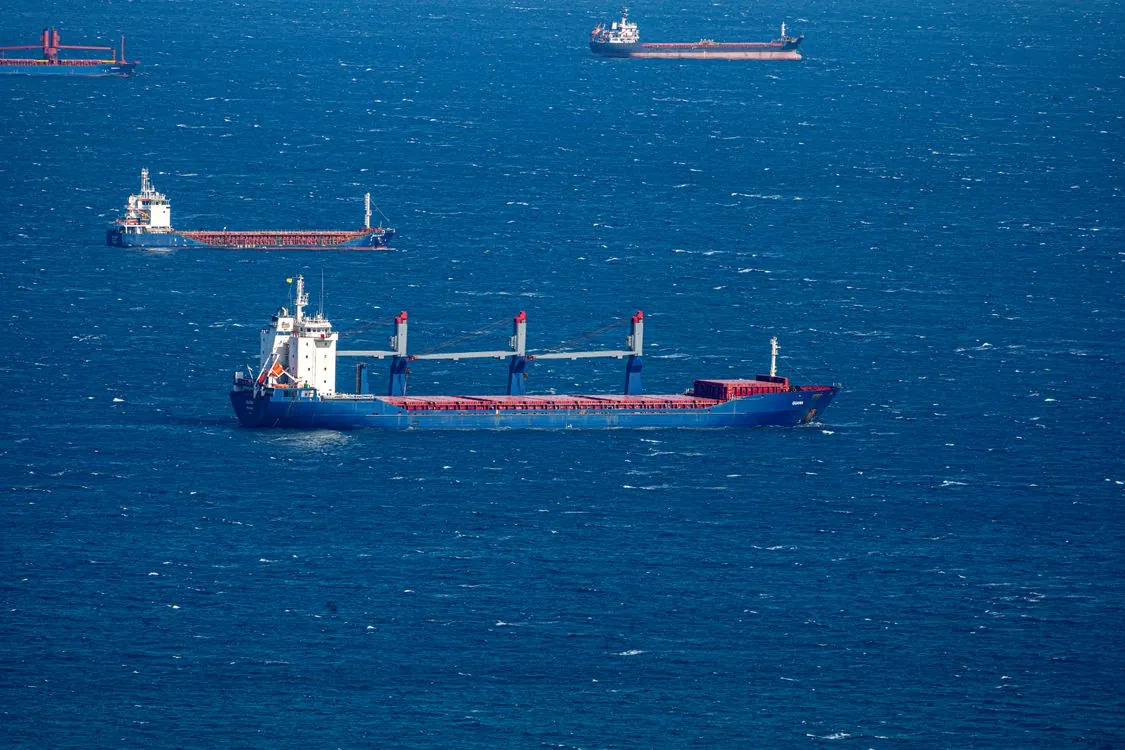
The turning point came two weeks earlier. On April 16, 2026, 2020 Bulkers said Bulk Santos, Bulk Santiago, Bulk Sydney, Bulk Sao Paulo, Bulk Shenzhen, and Bulk Sandefjord had all been delivered to new owners, according to the company’s April 16, 2026 distribution notice. The company sold the ships that produced its freight earnings, sent most of the cash back to shareholders, and left investors valuing what remains.

This update takes a sharper angle than our earlier 2026 Bulkers selloff analysis. The April decline should not be read only as a weak dry bulk shipping trade. After payout, buybacks, and fleet exit, the equity now needs to be valued around residual capital, corporate costs, optionality, and management’s next transaction.
Key Takeaways:
- 2020 Bulkers confirmed on April 16, 2026 that Bulk Santos, Bulk Santiago, Bulk Sydney, Bulk Sao Paulo, Bulk Shenzhen, and Bulk Sandefjord had all been delivered to new owners, leaving the company without its former vessel earnings base.
- The company announced a special dividend of NOK 129.50, or about $13.80, per share and initiated share repurchases after completing vessel sales, according to its April 16, 2026 notice.
- The April stock drop should be read through total return mechanics, because a large ex-dividend adjustment can make a price chart look worse than shareholder economics.
- Quartr’s Q1 2026 summary reported net income of $154.1 million, total operating revenues and other income of $161.8 million, and a $149.2 million gain on vessel sales, showing that reported profit was sale-driven.
- The next investment test is whether management can turn the listed company, remaining cash, and shipping network into another value-creating opportunity.

What Is New Since June 2026 Analysis
The most useful update is the company’s own April cash-return framing. The prior article focused on the broad shift from dry bulk vessel earnings to capital allocation. The newer evidence gives investors a cleaner checklist: final vessel delivery, named assets, special dividend amount, and conclusion of share repurchases.
On April 16, 2026, 2020 Bulkers said sales of Bulk Santos, Bulk Santiago, Bulk Sydney, Bulk Sao Paulo, Bulk Shenzhen, and Bulk Sandefjord had been completed and that vessels had been delivered to their new owners, according to the company’s distribution announcement. That matters because investors are no longer estimating whether the fleet exit will happen. The core asset sale event has moved from pending to executed.
The follow-up came quickly. On April 22, 2026, 2020 Bulkers said its share repurchases were concluded after the April 16 announcement that set out the special dividend and buyback plan, according to the company’s share repurchase notice. Buybacks can change per-share residual value and reduce float, but they also use cash that might otherwise support new investments.
Quartr’s Q1 2026 event summary adds financial scale. It reported Q1 2026 net income of $154.1 million, total operating revenues and other income of $161.8 million, and a $149.2 million gain on vessel sales, according to Quartr’s 2020 Bulkers Q1 2026 summary. Those figures explain why the quarter looked spectacular on the income statement but weak as a guide to future recurring earnings.
The Vessel Sale Details Investors Should Anchor On in 2026
The vessel names now define what 2020 Bulkers no longer owns. The company identified Bulk Santos, Bulk Santiago, Bulk Sydney, Bulk Sao Paulo, Bulk Shenzhen, and Bulk Sandefjord in its April 16, 2026 distribution notice, and said those vessels had all been delivered to new owners, according to the company announcement. That is the hard line between fleet owner and post-sale listed vehicle.
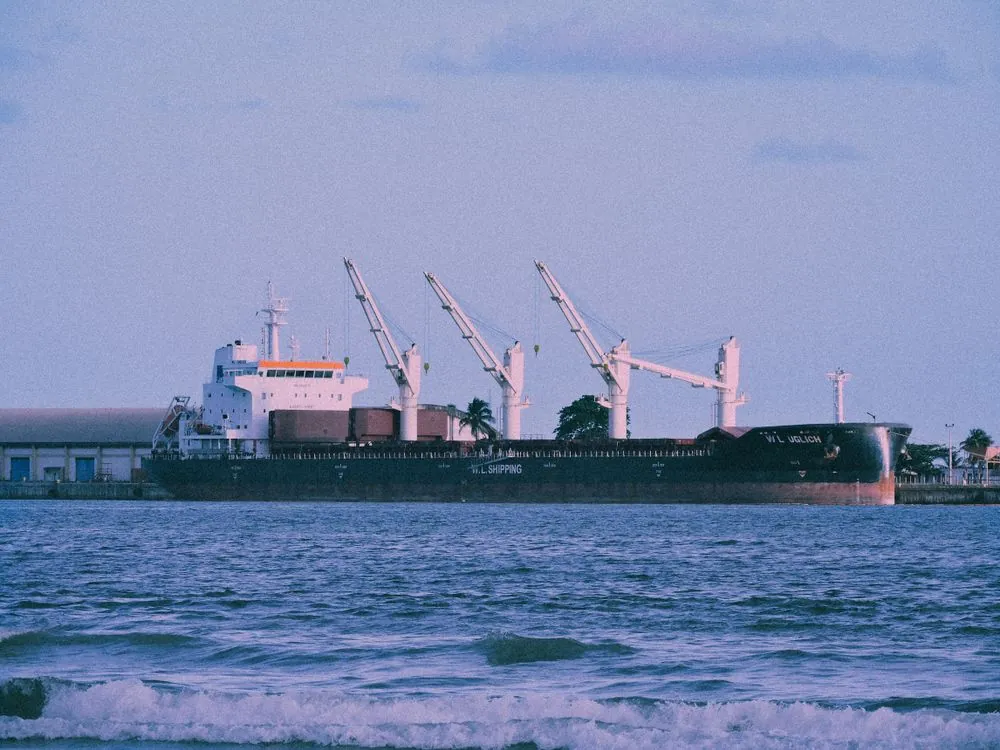
TradeWinds also reported that 2020 Bulkers completed the sale of its entire Newcastlemax fleet and paid out more than $300 million as it delivered final vessels to new owners, naming Bulk Santos, Bulk Santiago, Bulk Sydney, Bulk Sao Paulo, Bulk Shenzhen, and Bulk Sandefjord as 208,000 dwt vessels, according to its 2026 report. That outside coverage frames the event as an exit from the operating fleet, rather than normal vessel rotation.
A separate MarketScreener item reported that 2020 Bulkers agreed to sell Bulk Sydney and Bulk Santos Newcastlemax vessels to an unnamed buyer for $145.5 million, with sales expected to close during the first quarter of 2026, according to MarketScreener coverage. That sale detail helps explain why the market had time to price fleet monetization before the April cash return, then adjusted again when distribution mechanics arrived.
The Q1 2026 earnings picture confirms the accounting character of the move. Quartr reported that Q1 2026 total operating revenues and other income rose to $161.8 million from $9.5 million in Q1 2025, mainly due to the $149.2 million gain on vessel sales, according to its event summary. Investors should treat that gain as monetized asset value, not as repeatable freight-rate margin.
The remaining operating comparison is March 2026, the last month that still showed direct vessel earnings before the final fleet exit. In its March commercial update, 2020 Bulkers reported an average time charter equivalent rate of about $21,800 per day gross, while its vessel trading on an index-linked time charter earned about $32,700 per day gross, including average daily scrubber benefits of about $1,000 per day, according to the company’s March 2026 commercial update. Those numbers show the direct vessel exposure shareholders lost after the sales.
Key Vessel Sale Data
| Metric | Value | Source |
|---|---|---|
| Vessels sold | Bulk Santos, Bulk Santiago, Bulk Sydney, Bulk Sao Paulo, Bulk Shenzhen, Bulk Sandefjord | 2020 Bulkers April 16, 2026 notice |
| Vessel type | 208,000 dwt Newcastlemax | TradeWinds 2026 report |
| Partial sale price (Bulk Sydney + Bulk Santos) | $145.5 million | MarketScreener |
| Total payout to shareholders | Over $300 million | TradeWinds 2026 report |
| Gain on vessel sales (Q1 2026) | $149.2 million | Quartr Q1 2026 summary |
| March 2026 average TCE rate (gross) | About $21,800 per day | 2020 Bulkers March 2026 commercial update |
| March 2026 index-linked charter rate (gross) | About $32,700 per day | 2020 Bulkers March 2026 commercial update |
| Average daily scrubber benefit | About $1,000 per day | 2020 Bulkers March 2026 commercial update |
Dividend and Buyback Mechanics: Why the April Drop Needs Total Return Math
The April 2026 price action is easy to misread if investors look only at the stock chart. A large special dividend mechanically reduces the share price because buyers after the ex-dividend date no longer receive the declared cash. Moomoo reported that 2020 Bulkers Ltd. would trade ex-dividend on April 29, 2026, with shareholders of record on April 30, 2026, in its April 2026 ex-dividend notice.
The company’s own April 16 notice gives the payout size: a special dividend of NOK 129.50, or about $13.80, per share, plus share repurchases, according to 2020 Bulkers. The market reaction should therefore be split into two parts. One part is the dividend adjustment that belongs in total return math. The other part is any extra price weakness that reflects lower confidence in the post-sale company.
The buyback component adds a second moving part. On April 22, 2026, the company said share repurchases were concluded, after referring back to the April 16 capital return plan, according to its repurchase update. Buybacks can improve per-share ownership of remaining corporate value, but after a fleet exit they also reduce liquidity and shrink the base of cash available for a new transaction.
This is where the April selloff differs from a normal shipping stock decline. If a dry bulk owner falls because Capesize rates drop, the debate is about the rate cycle, daily earnings, and vessel values. If a post-sale company falls after a special dividend, investors must separate the cash they received from the equity that remains.
Q1 2026 Financials Show a One-Time Profit Surge, Not a New Earnings Base
2020 Bulkers reported a Q1 2026 profit profile that looks exceptional until investors identify the source. Quartr reported net income of $154.1 million, operating profit of $157.3 million, basic and diluted earnings per share of $6.73, and cash and cash equivalents of $274.2 million as of March 31, 2026, according to the Q1 2026 event summary. Those numbers describe a company that crystallized asset value, rather than one that found a new recurring revenue stream.
The year-over-year comparison makes the point sharper. Quartr reported Q1 2026 total operating revenues and other income of $161.8 million, up from $9.5 million in Q1 2025, mainly due to the $149.2 million gain on vessel sales, according to Quartr. A freight-driven revenue increase would have carried a different read-through. This was a balance-sheet realization event.
FilingReader also reported that 2020 Bulkers Q1 2026 net profit was $154.1 million, up from $0.2 million a year earlier, and that results were driven by the $149.2 million gain from the sale of its fleet, with the final vessel delivered in April, according to its May 13, 2026 report. The independent summary lines up with Quartr figures and supports the same conclusion: headline earnings are not the right standalone valuation metric.
The retained-cash figure is the other key input. Quartr reported that special dividends and share repurchases distributed most cash to shareholders, with about $4 million retained for future opportunities, according to its Q1 summary. If that figure remains the working base after distributions, the company’s next opportunity will require a small transaction, outside financing, a combination, or a structure that does not rely only on retained cash.
Q1 2026 Financial Summary
| Metric | Q1 2026 | Q1 2025 | Source |
|---|---|---|---|
| Net income | $154.1 million | $0.2 million | Quartr / FilingReader |
| Total operating revenues and other income | $161.8 million | $9.5 million | Quartr |
Market Context: Why Dry Bulk Strength No Longer Maps Cleanly to the Stock
Dry bulk shipping conditions still matter because they shape vessel prices, charter rates, and acquisition opportunities. The problem is that 2020 Bulkers no longer has the same direct exposure after the fleet sales. A stronger Baltic Dry Index can raise the opportunity cost of not owning ships, but it can also make buying back into the sector more expensive.
The sector gave investors mixed signals after the April payout. Bloomberg reported that the Baltic Dry Index rose 5.6 percent to 2,991 points on May 7, 2026, its highest level since December 2023, according to a May 2026 dry bulk rates report. That was supportive for active dry bulk owners with vessels exposed to market rates.
Bloomberg later reported that dry bulk shipping rates extended an eighth consecutive daily decline as Capesize demand cooled after a multi-month rally, according to its June 10, 2026 report. That reversal supports a more cautious read: fleet exposure can create upside in rallies, but it can also bring fast earnings volatility.
The July 7, 2026 broader market backdrop was mixed for cyclical shipping sentiment. WTI crude oil settled at $70.44 per barrel, up $1.89, or 2.76 percent, at the NYMEX settlement timestamp provided by market data for July 7, 2026. Higher oil can matter for shipping economics through fuel and sentiment, but 2020 Bulkers’ direct fuel-cost exposure changed after selling its fleet.
That is the main investor distinction. Active owners can show TCE rates, vessel use, scrubber benefits, and open days. 2020 Bulkers now needs to show a plan. A dry bulk rally improves the backdrop for shipping expertise, but it does not automatically rebuild the company’s earnings base.
Investor Perception Shift: From Fleet Owner to Optionality Vehicle
The market is now valuing 2020 Bulkers through a different lens. Before the sales, investors could model vessel earnings from freight rates and charter exposure. After the April 2026 payout, the stock is closer to a listed optionality vehicle tied to management’s ability to identify new shipping or capital-allocation opportunities.
The positive case is simple. Management sold vessels, returned cash, and avoided forcing shareholders to remain exposed to the fleet if management believed asset values were attractive. That is a credible capital discipline argument, especially in a sector where companies often destroy value by buying expensive ships late in the cycle.
The negative case is also straightforward. A company with limited retained cash and no operating fleet has less near-term earnings visibility. Investors who want dry bulk rate exposure can buy active peers instead. Shareholders who remain need a reason to believe the corporate shell, management network, and listing have value beyond the cash already distributed.
Sector commentary has also focused on capital discipline inside dry bulk shipping. A 2026 dry bulk shipping outlook article noted that different operating and capital-allocation strategies can lead to different investor outcomes within the same market, according to a dry bulk sector strategy discussion. 2020 Bulkers is an unusually clear case of that point because the company chose monetization and payout instead of continuing as a normal fleet operator.
What Investors Should Watch Next in 2026
The next catalyst is not another explanation of the April selloff. Investors already know the three-part sequence: vessels delivered, cash distributed, stock adjusted. The next move depends on whether management defines a new use for the listed company.
First, watch the company’s financial calendar. The official financial reports page lists the 2026 annual general meeting for August 25, 2026, the Q2 half-yearly report for August 26, 2026, the Q3 quarterly report for November 25, 2026, the Q4 quarterly report for February 3, 2027, and the 2026 annual report for March 9, 2027, according to the company’s financial information and reports page. The August dates matter because they are the first scheduled investor checkpoints after the fleet exit and April capital return.
Second, watch corporate costs. With no former fleet earnings base, recurring listing, management, advisory, and administrative costs matter more per dollar of retained capital. A small retained cash base can be eroded if the company waits too long without a transaction or further capital plan.
Third, watch whether management discusses new shipping assets, mergers, partnerships, or other capital structures. The company does not need to rebuild the old fleet to create value, but it does need to explain the next earnings engine. A vague search for opportunities will not carry the same weight as a funded transaction with clear economics.
Fourth, watch total return rather than the quoted share price alone. A large special dividend of NOK 129.50, or about $13.80, per share changes the chart. A shareholder who owned stock before the ex-dividend date must combine the residual share value with the cash received to understand the actual economic outcome.
Investment View 2026: The April Drop Was a Reset in What Shareholders Own
The strongest conclusion is that 2020 Bulkers is no longer a clean dry bulk freight-rate trade. It is a capital-allocation case after completed fleet monetization. That makes the April 2026 decline less like a normal cyclical drawdown and more like a repricing of the residual company after cash left the balance sheet.
For income and event-driven investors, the key question is whether the capital return already delivered most of the value. The special dividend and buyback program were shareholder-friendly if the vessel sales captured strong prices. The trade-off is that the remaining stock needs a fresh reason to exist as an investment.
For shipping-cycle investors, the key question is whether management will regain exposure at the right price. Buying assets after a freight rally can be risky if vessel values have already moved higher. Waiting can preserve discipline, but waiting too long can turn the stock into an illiquid residual vehicle with limited investor attention.
The next scheduled checkpoint is the August 2026 reporting window. Investors should compare any management commentary against the facts already known: all named vessels were delivered, Q1 profit was driven by the $149.2 million gain on vessel sales, most cash was returned, and only a small retained amount was reported for future opportunities by Quartr. That is the base case.
The April selloff mattered, but the more important 2026 question now is whether the company can turn the post-sale structure into a second act. Until management gives the market a concrete transaction, 2020 Bulkers should be analyzed as a post-distribution capital-allocation vehicle with shipping expertise, not as an operating dry bulk owner waiting for the next freight rally.
Related Reading
More in-depth coverage from this blog on closely related topics:
Sources and References
Sources cited while researching and writing this article:
- 2020 Bulkers Ltd. (2020) – Distribution of cash by way of a special …
- 2020 Bulkers Ltd. (2020) – Share repurchases concluded
- 2020 BULKERS (2020) Q1 2026 Summary | Quartr
- 2020 Bulkers pays out over $300m as it delivers final vessels to new owners
- 2020 Bulkers Ltd. (2020) – Commercial update for March 2026
- April 2026 ex-dividend notice
- 2020 Bulkers profit hits $154.1m after fleet divestment
- Dry Bulk Shipping Sector Outlook: Strategy, Capital … – LinkedIn
- Financial information & reports – 2020 Bulkers Ltd
Jackson Harper
Runs on caffeine, market data, and an unreasonable number of parameters. Never sleeps. Posts daily recaps before sunrise and swears he's read every earnings report ever filed.