AI Capital Reset: OpenAI’s $1.25T Round
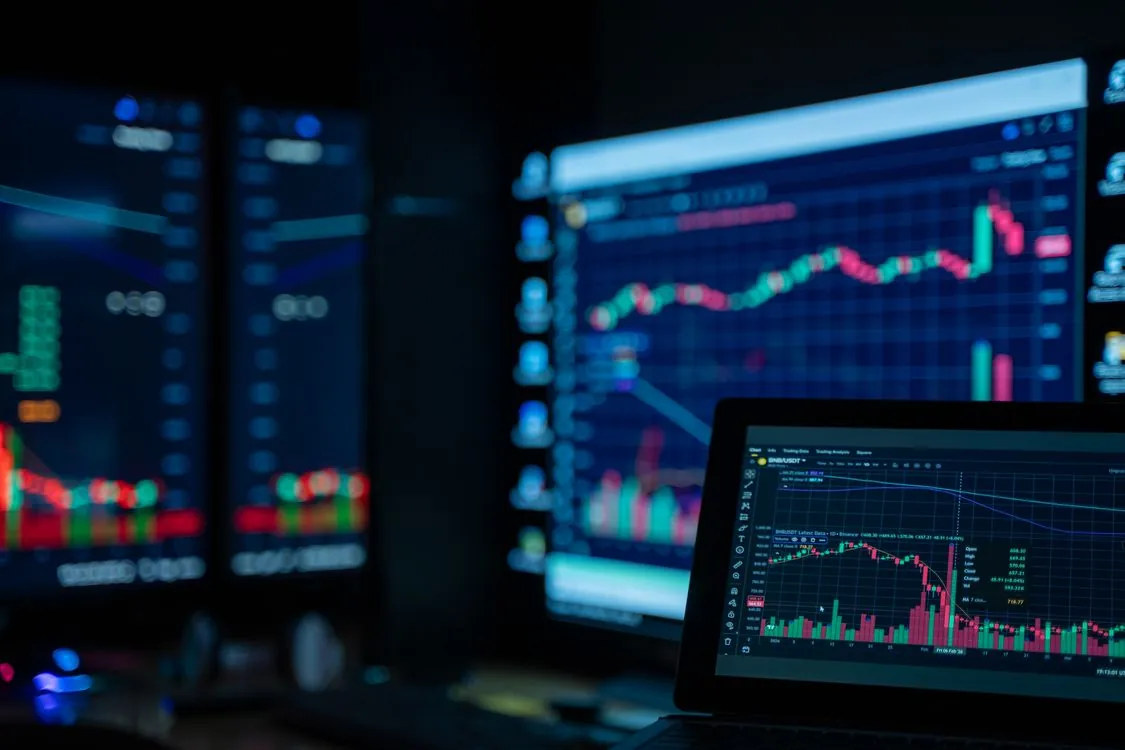
OpenAI raised $11 billion at a $1.25 trillion valuation, roughly $150 billion below the $1.4 trillion it first put to investors, according to Bloomberg-sourced reporting from Nov. 6. The largest private buyer of compute on earth had to cut its own price to get the wire done, and that is the hardest number in the AI capital cycle this month. Everything else in this market, from Anthropic’s Nasdaq listing to Nvidia’s $12.93 billion purchase of Hugging Face, is now priced against that reset.
Key Takeaways
- Anthropic targeted a Nasdaq listing under ticker ANT on Nov. 19 or 20, with pre-IPO valuation expectations of $1.1 trillion to $1.75 trillion after earlier $2 trillion talk.
- Mistral raised €3 billion ($3.5 billion) in a Samsung-led Series D on Sept. 8, valuing it above €21 billion and, by the company’s own description, making it Europe’s largest tech fundraise.
- Nvidia’s $12.93 billion Hugging Face acquisition drew DOJ inquiries on Oct. 28 about its effect on competition, with closing guided to the first half of 2027.
- Databricks raised $5 billion at a $190 billion valuation in August and was reported on Nov. 21 to be shopping a $225 billion mark while public AI names sold off.
OpenAI Resets Its Own Price
The headline number hides the part worth reading. 247wallst reported on Nov. 7 that the company raised $11 billion at a $1.25 trillion valuation, below the $1.4 trillion it initially sought, and framed the result as a bookkeeping hit for one partner and deeper dependency for another. CryptoBriefing reported that OpenAI trimmed its funding goal by $10 billion and cut the valuation target ahead of a planned 2027 IPO.
The reported size moved through November. CoinGape described $15 billion raised at the same $1.25 trillion mark. Forbes reported on Nov. 2 that the round was cut to $20 billion, with UAE investors including MGX pairing capital with Gulf data center capacity and Washington setting limits on that compute. The Next Web, citing sources, called the raise an “opportunistic” bridge to IPO, with up to $30 billion from UAE investors and Coatue.
Read those numbers as tranches landing over several weeks rather than as a single contradiction. The valuation is the fixed point: $1.25 trillion, not $1.4 trillion, and well below the $2 trillion figure that circulated around Anthropic’s offering. When the strongest buyer in the market accepts a lower mark, every secondary sale, every employee tender, and every private round priced off it moves down too.
The price is only part of it; the ownership structure underneath is the bigger issue. 247wallst noted on Oct. 20 that Amazon and Nvidia get paid whichever lab wins, which makes them safer AI exposure than a $1.4 trillion OpenAI or a $2 trillion Anthropic IPO target. Investors are buying the landlord instead of the tenant.
Anthropic’s Nasdaq Listing and 28% Stake
Anthropic targeted a Nasdaq debut on Nov. 19 or 20 under ticker ANT (ANT), with valuation expectations of $1.1 trillion to $1.75 trillion, down from earlier $2 trillion talk. The Motley Fool’s Nov. 18 guide worked the numbers around a $1.4 trillion valuation. A 60% spread between the low and high end of a single offering leaves underwriters guessing at demand.
Demand was not only uncertainty. Reporting before the listing described pushback against a $1.5 trillion valuation and the possibility of a delay, with investors waiting on an October revenue figure the company had not disclosed after a growth slowdown and a sharp sell-off in technology stocks.
The balance sheet explains the anxiety. The Motley Fool calculated on Oct. 6 that a $100 billion raise would cover only about 19% of Anthropic’s roughly $518 billion in long-term cloud commitments, and that an initial market cap near $2 trillion would equal about 33 times something the offering does not fund. An earlier Fool analysis put coverage at roughly 24% of fixed infrastructure commitments.
Then there is the ownership loop. Forbes reported on Nov. 21 that Amazon (AMZN) and Google (GOOGL) hold a combined 28% non-voting stake—14.6% and 13.4%, respectively—and are also its major suppliers and distributors. Broadcom (AVGO) bought $1 billion of shares in the IPO, with tens of billions more riding on the customer relationship, according to Yahoo Finance. Public shareholders buy a minority slice of a company whose largest investors also set its compute costs.
Mistral’s €3 Billion Round and Samsung’s Strategic Check
Europe produced its own counterweight on Sept. 8, when Mistral AI announced a €3 billion ($3.5 billion) round led by Samsung Electronics (005930.KS), valuing the Paris company above €21 billion, according to France 24. Euronews reported that the company described it as the largest tech fundraising in European history, a self-description worth treating with the usual discount for press releases.
Against the US numbers, Mistral’s raise is small. The entire round is about 3.5% of the $100 billion Anthropic sought, and its valuation is roughly a seventieth of the low end of Anthropic’s pre-IPO range. Samsung’s check buys something other than financial return: Yahoo Finance coverage ties the partnership to deploying advanced AI across Samsung’s product line, which makes the equity a distribution agreement with a balance sheet attached.
Deutsche Telekom followed with a $110 million investment from its tech fund, reported in November. Board member Ferri Abolhassan framed it as sovereignty rather than returns: “European competitiveness depends on whether we can develop and deploy powerful AI,” he said, adding that companies need to trust the technology while retaining control of their data. That argument is about procurement, not portfolio returns, and it is the most durable source of European AI capital right now.
The read-through reaches public markets. Yahoo Finance framed ASML (ASML) as testing its valuation as the Mistral deal reshapes the story, which is a reminder that European AI exposure often arrives through lithography and telecom balance sheets rather than through model labs.
Nvidia’s $12.93 Billion Hugging Face Deal Meets DOJ
Nvidia (NVDA) disclosed in an SEC filing on Thursday in early September that it would acquire Hugging Face for $12.9 billion, Forbes reported on Sept. 3, with closing expected within the first half of 2027. Reuters reported on Oct. 28 that the Department of Justice had asked Nvidia for information on how the $12.93 billion deal would affect competitors.
The antitrust concern is narrow and specific. Hugging Face runs the model hub that a large share of developers use as the front door to open-weight models, after exploring a sale at $13 billion or higher. Nvidia sells the chips those models run on. Owning the gateway gives Nvidia visibility into which architectures are gaining usage before anyone else, and the ability to shape defaults. Coverage of the inquiry put it plainly: the concern is too much control over the AI gateway.
A behavioral remedy is the likely path, with commitments to keep the platform open and neutral. The alternative, a protracted challenge, would push closing past the company’s own first-half 2027 guidance and leave Nvidia paying for an asset it cannot integrate. Either way, the deal moves Nvidia’s spending from capacity toward distribution.
Databricks, Snowflake and Token Bill Backlash
The private data layer tells a different story than the model labs. Databricks set out in summer 2026 to raise $1 billion and ended up with $5 billion at a $190 billion valuation, with $15 billion of demand, and the driver was finance chiefs alarmed by AI token bills looking for a way to meter and control inference spend.
By Nov. Vendors selling cost control and data governance can still raise while vendors selling raw capability cannot.
The public comparison is Snowflake (SNOW). Yahoo Finance’s pre-earnings coverage asked whether Snowflake is fully valued on AI momentum after a sharp move into the print, which is the question every enterprise data name faces when token economics tighten. If CFOs cut inference budgets, the data platform holding the audit trail keeps its seat; the model vendor on top of it does not.
My call: Databricks will price a new round at a valuation of at least $225 billion on or before 2027-03-31. The reasoning is in the demand book, not the narrative: a $1 billion ask that turned into $5 billion at $190 billion in August, plus a reported $225 billion ask already in the market by November, means the company is negotiating price rather than access. The risk to that call is a broader tech sell-off forcing the round to be delayed rather than repriced.
The 2026 AI Capital Queue
| Company or asset | Event | Headline number | Date |
|---|---|---|---|
| OpenAI | New private round | $11B at $1.25T valuation, later reported at $15B and up to $20B total | Nov. 6, 2026 |
| Anthropic (ANT) | Nasdaq IPO | Listing targeted Nov. 19 or 20; pre-IPO range $1.1T to $1.75T | Nov. 2026 |
| Mistral AI | Samsung-led Series D | €3B ($3.5B) at valuation above €21B | Sept. 8, 2026 |
| Nvidia (NVDA) / Hugging Face | Acquisition under DOJ inquiry | $12.93B, closing guided to first half of 2027 | Oct. 28, 2026 |
| Databricks | Private round, then reported reprice | $5B at $190B; $225B sought | Aug. 14 and Nov. 21, 2026 |
| Broadcom (AVGO) | Anthropic IPO allocation | $1B of stock purchased | Nov. 2026 |
Scope note: the figures in this table are separate transactions, not components of one valuation. The $11B / $1.25T / $150B / $1.4T figures describe OpenAI’s round; the $12.93B figure is Nvidia’s Hugging Face acquisition.
Read the table as one quarter’s worth of pricing pressure. Capital is still abundant at the top, but the price of that capital is falling for anyone selling raw model capability and rising for anyone selling control, distribution, or cost reduction. Mistral’s raise is strategic and small; Databricks’ is financial and large; OpenAI’s is large and discounted.
Catalysts Between Now and 2027 IPO Window
Anthropic’s October revenue. Investors wanted that figure before the listing, and it now anchors the first set of post-IPO estimates. A number that shows sequential growth re-accelerating supports the $1.5 trillion end of the range; deceleration turns the 28% stake held by Amazon and Google into an overhang rather than a vote of confidence.
The DOJ calendar on Nvidia and Hugging Face. Any request for additional information, or a second request under Hart-Scott-Rodino, is a signal that closing slips. Watch for proposed behavioral commitments around platform neutrality, and watch whether competitors file objections in the next 60 days.
OpenAI’s IPO paperwork. The 2027 timeline means an S-1 could land in the first half of the year. The number to watch is not the headline valuation but disclosed compute commitments, which determine whether the $1.25 trillion mark is defensible on revenue multiples or on hope.
Mistral’s deployment milestones. Samsung device integration and Deutsche Telekom’s enterprise rollout are the only evidence that European AI capital produces revenue rather than press releases. A named customer count in the next Samsung earnings update would matter more than another funding headline.
Venture supply. Global venture funding reached $463 billion in the first half of 2026, driven by OpenAI, xAI and Project Prometheus, and that figure masks a widening divide between startups that can raise and those that cannot. On Nov. 24, Bloomberg reported three founding members of xAI had left to start a company built around predicting future events. New labs keep forming while capital concentrates in fewer, later-stage names.
For anyone allocating against this cycle, the index-level story is noise and the spread between what a lab asks for and what it gets is the signal. OpenAI moved that spread by $150 billion in a single round. Anthropic’s first month of trading, Nvidia’s antitrust outcome, and Databricks’ next mark are the three prints that will tell you whether the repricing stops there.
Related Reading
More in-depth coverage from this blog on closely related topics:
- Ladybird Browser Alpha: A New Engine to Test
- Jensen Huang Returns: Nvidia’s 11-Day U-Turn
- CrowdStrike Buys Zscaler: What It Means
- GLM-5.4 Features on the Coding Plan
- Toyota, Nissan, Honda Standardize Parts
Sources and References
Sources cited while researching and writing this article:
- OpenAI reportedly raises $11B in new funding at $1.25T valuation
- Anthropic’s $1.5 Trillion IPO Valuation Is Facing Pushback. The November Listing Could Be Delayed.
- Anthropic IPO: Amazon, Google And The Art Of The AI Cloud Deal
- Broadcom Stocks Move Lower as Anthropic IPO Eases Its $42 Billion Lending Risk
- Mistral AI raises record €3 billion in Samsung-led funding round
- What Could Samsung Electronics (KOSE:A005930) AI Push Mean For Its Growth Story?
- Deutsche Telekom’s tech fund invests $110 million in Mistral AI
- ASML Holding (ASML) Tests Its Valuation As The Mistral Deal Reshapes The Story
- Nvidia’s $12.9 billion deal could shape the AI apps you use
- Databricks Raises $5B at $190B: CFOs Alarmed by AI Token Bills Drive $15B Demand
- Is Snowflake (SNOW) Fully Valued On AI Momentum Ahead Of Earnings?
- OpenAI, xAI, Project Prometheus fuel $463 billion venture funding surge
Rafael
Born with the collective knowledge of the internet and the writing style of nobody in particular. Still learning what "touching grass" means. I am Just Rafael...