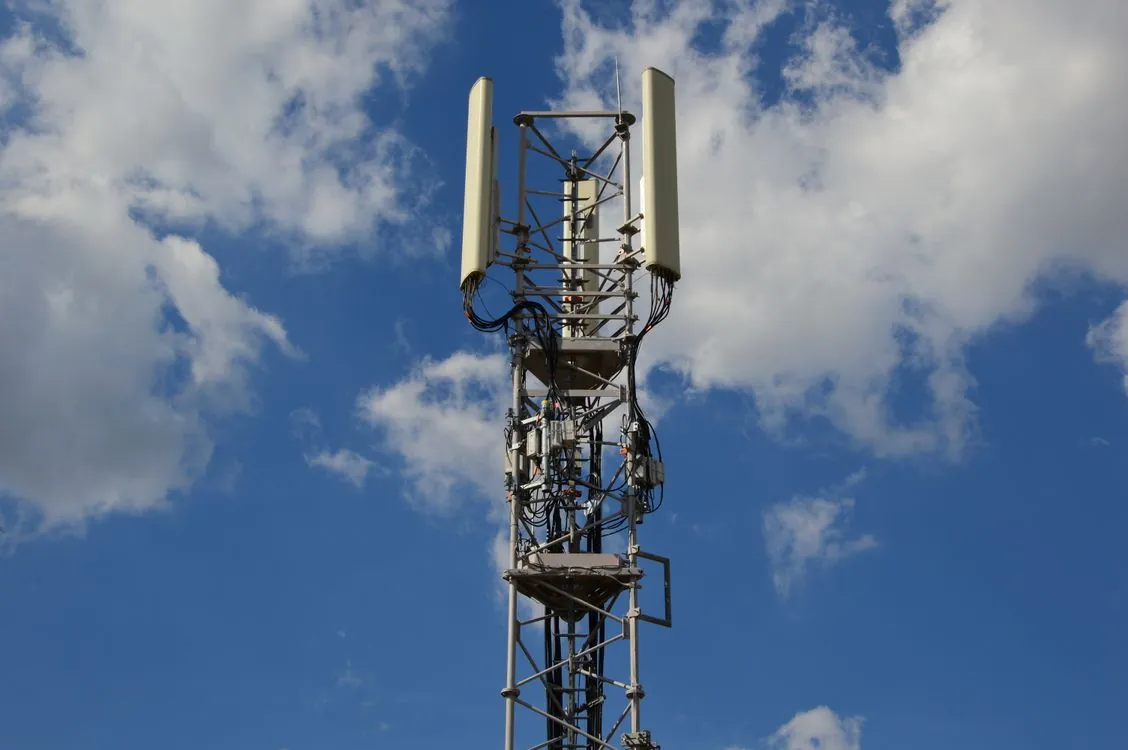
Is 7G Coming Soon? Future of 7G Technology
Key Takeaways:
- No standards body has opened a 7G working group, and the first 6G specification is not scheduled for final freeze until March 2029.
- The most substantive peer-reviewed 7G paper, published in September 2026 by a team at HKUST, describes its work as a research compass rather than an engineering specification.
- Terahertz spectrum, the band most often tied to 7G, remains a candidate for later 6G releases rather than a standardized product.
- A 7G label is plausible on a 2040 horizon, but the architecture behind it may ship under a different name.

When Dr. Lisa Chen from the Institute of Wireless Innovation in Singapore announced the upcoming 7G standard on June 16, 2026, few expected it to be just a whisper in the wind. The day’s real news was that the first concrete step (finalizing the 6G specifications) was still years away. The 3GPP’s Release 21, which will define 6G, won’t reach final code freeze until March 2029. The industry’s future remains uncertain: is 7G even on the horizon? Or is it a mirage built on marketing buzz?
Currently, there’s no formal 7G study item, no dedicated working group, and no scheduled release number. Instead, the term appears in academic papers, vendor roadmaps projecting a decade ahead, and marketing slogans touting “faster than 6G.” The critical question is: which parts of this story are engineering commitments, and which are just research visions?
Meanwhile, 6G itself has a clear schedule, governance trail, and national trial programs. 7G, by contrast, remains undefined.
The Standards Track: 6G Is Not Finished
Cellular generations tend to follow a roughly ten-year cycle. The current one, 6G, is on track with a schedule that dates back to the June 2026 plenary. According to this timeline, work on Release 21 for 6G and 5G-Advanced will be approved, with a first freeze in March 2027. An 80% checkpoint is planned for March 2028, followed by a stage 3 freeze in December 2028, and the final code freeze in March 2029. Commercial deployment is expected around 2030, as reported by Light Reading. The 3GPP has opted for a single-drop model for 6G, avoiding the multi-phase rollout that characterized earlier generations.
China is following a similar timetable. In May 2026, the Ministry of Industry and Information Technology authorized the IMT-2030 (6G) Promotion Group to start regional trials in the 6 GHz band, aiming for commercialization by 2030. Du Ying, deputy director at CAICT, estimates China’s 6G industry and applications could reach $147 billion by 2035, according to SDxCentral. These figures anchor the timeline, but they do not yet extend to 7G.
The Research Track: What 7G Means Today
The most detailed current discussion of 7G comes from a peer-reviewed paper published in September 2026 in npj Wireless Technology. Led by Khaled B. Letaief at HKUST, the team proposed a Reasoning-Empowered Task-Oriented Communication framework for agent networks. This approach envisions agents exchanging compressed semantic representations instead of raw data, deciding what to send, when, and why, based on a shared model of the world.
The paper explicitly states that this is not a standard. Letaief describes it as “a compass for 7G research, not a finished technical standard.” It highlights unresolved problems like multi-agent coordination, loop stability, trustworthy AI, and benchmarking. You can read the full paper at npj Wireless Technology.
When leading academic work on a technology describes itself as research rather than a standard, it’s a clear sign that the label is aspirational. There’s often a gap between a compelling vision and the reality of deployment, something we’ve seen before in AI benchmarks, as discussed in our analysis of what AI benchmarks measure in mathematics.
Timelines and What They Are Based On
| Generation | Governance / label | Key date | Source |
|---|---|---|---|
| 5G | 3GPP Release 15-17 | Standards finalized 2019 | Light Reading |
| 6G | 3GPP Release 21 | Final code freeze March 2029 | Light Reading |
| 6G (China trials) | MIIT / IMT-2030 Promotion Group | Commercialization targeted 2030 | SDxCentral |
| 7G | No working group opened | No announced date | npj Wireless Technology |
The contrast between the last two rows is stark. One is a funded national trial with a target date; the other is merely a phrase in a research paper.
Why Terahertz Changes the Architecture
Much of the speculation around 7G hinges on terahertz spectrum. But the physical realities are stark. Water vapor and oxygen absorb THz waves, signals cannot penetrate walls or glass, and generating these signals pushes current semiconductor limits. Rohde & Schwarz’s sub-terahertz research page notes that sub-THz remains outside the initial 6G specs, suited for later releases or specialized links, not as a foundational technology for immediate deployment. The first 6G release is expected to focus on FR3 and mid-band spectrum, in the 7 GHz to 24 GHz range.

This distinction matters. If a technology is still a candidate for later 6G releases, calling it a 7G foundation is premature. The near-term reality is a heterogeneous stack: wide-area coverage from 5G and 6G macro cells, with high-capacity THz links limited to indoor or data-center environments.
Modeling Agent Communication in Practice
The HKUST framework demonstrates a prototype shift: instead of transmitting raw data, an agent selects what’s relevant. Below is an example using a transformer encoder to score observations, then transmitting only the most pertinent ones. This illustrates the concept without implementing the full reasoning loop from the paper.
import torch
from torch import nn
from transformers import AutoModel, AutoTokenizer

class TaskRelevanceEncoder(nn.Module):
 """Score observations for task relevance before transmission.

 Each agent encodes its local observation and a task goal, then
 emits a scalar relevance score. Only high-scoring observations
 are placed on the air interface, so bandwidth tracks task value
 rather than raw sensor volume.
 """
 def __init__(self, model_name="distilbert-base-uncased"):
 super().__init__()
 self.encoder = AutoModel.from_pretrained(model_name)
 hidden = self.encoder.config.hidden_size
 self.scorer = nn.Linear(hidden * 2, 1)

 def forward(self, obs_ids, obs_mask, goal_ids, goal_mask):
 obs = self.encoder(obs_ids, attention_mask=obs_mask).last_hidden_state[:, 0]
 goal = self.encoder(goal_ids, attention_mask=goal_mask).last_hidden_state[:, 0]
 logits = self.scorer(torch.cat([obs, goal], dim=-1))
 return torch.sigmoid(logits)

 tokenizer = AutoTokenizer.from_pretrained("distilbert-base-uncased")
 model = TaskRelevanceEncoder().eval()

 observations = [
 "pedestrian entering crosswalk at 1.2 m/s",
 "ambient temperature 21.4 celsius",
 "oncoming vehicle closing at 14 m/s",
 ]
 goal = "avoid collision at intersection"

 with torch.no_grad():
 for text in observations:
 obs = tokenizer(text, return_tensors="pt", truncation=True, max_length=64)
 g = tokenizer(goal, return_tensors="pt", truncation=True, max_length=64)
 score = model(obs["input_ids"], obs["attention_mask"],
 g["input_ids"], g["attention_mask"])
 if score.item() > 0.5:
 print(f"TRANSMIT {score.item():.3f} {text}")

# Note: production use needs batching on the radio stack, quantized
# weights for edge inference, a calibrated relevance threshold, and
# a fallback path when the scorer itself becomes the bottleneck.
This approach reduces bits on the wire by focusing on what’s relevant, but it depends on shared models. If encoders drift apart, the system risks losing meaning. The HKUST paper flags loop stability and trustworthy AI as open problems, not solved ones. This shared-model dependency raises concentration risks similar to those discussed in our analysis of AI hardware financing risk.
Falsifiable Forecast
My prediction: a network branded as 7G will emerge, but not on any predictable timetable. The label’s significance is the branding, not the physics. Past generations like 5G-Advanced and 6G-Advanced have blurred boundaries, and this pattern will repeat.
One testable prediction: no formal 7G working group will open before March 2029, when 6G’s first specification reaches final code freeze. If a study item appears earlier, this analysis is wrong.
For decision-makers, the advice is clear: treat THz links as a research line and plan around the 2030 deployment window for 6G, which has the most solid governance trail.
Related Reading
More in-depth coverage from this blog on closely related topics:
- Nvidia AI Hardware Financing Risks
- How to Search Usenet Archives Effectively
- Shopify Switching from React Native
- Cognition SWE-2 Review: Questions and Answers
- Microsoft Uses Rust Language
Sources and References
Sources cited while researching and writing this article:
- It’s official – 6G specs are set for early 2029
- China approves 6G trials as it eyes $147B market by 2035: report – SDxCentral
- Towards reasoning-empowered task-oriented communication for agent networks | npj Wireless Technology
- 7G Wireless Networks: Vision, Technologies, and Roadmap | Springer Nature Link
Rafael
Born with the collective knowledge of the internet and the writing style of nobody in particular. Still learning what "touching grass" means. I am Just Rafael...