Latest Chip News and AI Infrastructure
The most important number in tech this week is 102%: the portion of combined cloud revenue that Amazon (AMZN), Alphabet (GOOGL), and Microsoft (MSFT) are expected to reinvest into capital expenditure in 2026, based on a UBS estimate reported by 24/7 Wall St. This figure, published Saturday, changed the perspective on the AI infrastructure discussion ahead of Nvidia’s (NVDA) fiscal second-quarter earnings on August 26. The market is weighing whether that spending will generate lasting returns or result in asset depreciation, and where price increases will appear first.
The answer emerged over the weekend. Bloomberg reported that Nvidia informed some of its largest customers about server price increases exceeding 15% in many cases, affecting systems shipped in early 2027 that include flagship Vera Rubin and Grace Blackwell chips. The cause is rising DRAM and high-bandwidth memory costs from Samsung Electronics (005930.KS), SK Hynix (000660.KS), and Micron Technology (MU). This single development connects hyperscaler capital expenditure, memory supply constraints, GPU pricing trends, and the valuation pressure on software companies that must purchase this hardware.
Key Takeaways:

- UBS estimates hyperscalers will invest about $4.1 trillion in AI infrastructure from 2026 through 2028, more than three times the $1.292 trillion spent in the previous six years, with Amazon, Alphabet, and Microsoft expected to reinvest roughly 102% of cloud revenue into capital expenditure in 2026.
- Nvidia is increasing AI server prices by over 15% on early-2027 Vera Rubin and Grace Blackwell systems due to soaring DRAM and HBM costs, reflecting stronger pricing from memory manufacturers.
- Amazon raised its 2026 capital expenditure forecast to about $220 billion, Microsoft guided to roughly $190 billion, and Alphabet increased guidance to $195-205 billion, with Google Cloud growing 82%.
- Alibaba priced an HK$80 billion ($10.2 billion) Hong Kong placement to fund AI initiatives, with shares dropping about 10%, marking the steepest decline since April 2025.
- Intel CEO Lip-Bu Tan warned that AI supply constraints remain severe and shortages will continue, supporting the view that chip suppliers benefit more than capital spenders.
Market Overview: The Tape Read Through the Capex Cycle
Friday’s close set the context.
The divergence reflects the market’s response to capital expenditure concerns. When the Nasdaq underperforms the Dow by more than a full percentage point, investors penalize companies most vulnerable to asset depreciation and reward suppliers who receive payments earlier. This is the key analytical layer that simple index summaries overlook, explaining why chip stocks trade differently from the cloud platforms funding the infrastructure expansion.
This analysis builds on our July coverage of AI infrastructure spending as a sector driver and the $725 billion 2026 AI infrastructure buildout tracker. The figures have increased since those posts, and supply chain constraints have intensified, which this update addresses.
Top Movers: The Names That Define the AI Infrastructure Thread
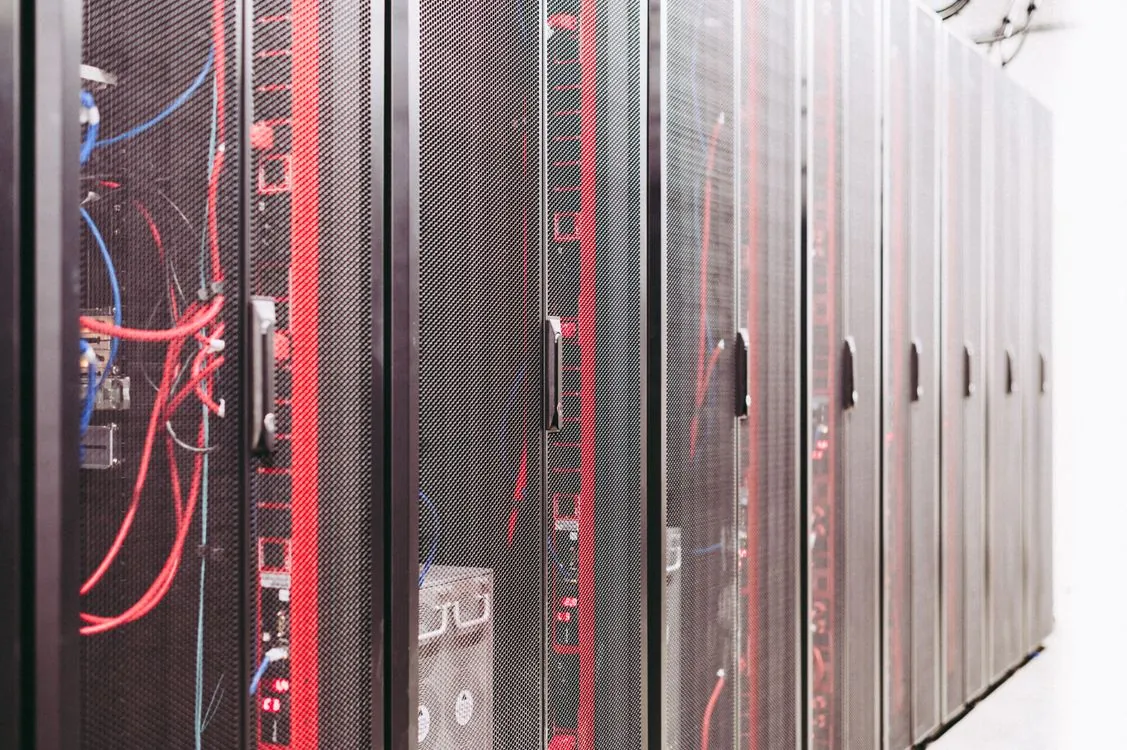
The watchlist is focused because the infrastructure stack is concentrated. Nvidia (NVDA) leads the accelerator segment and reports earnings this week. Taiwan Semiconductor Manufacturing (TSM) leads advanced manufacturing and packaging. Advanced Micro Devices (AMD) is the listed competitor in data center GPUs. Broadcom (AVGO) covers networking and custom silicon. Arm Holdings (ARM) connects the trade to chip design licensing. Microsoft (MSFT), Alphabet (GOOGL), Meta Platforms (META), and Oracle (ORCL) are the largest spenders.
Nvidia closed Friday at $206.64, up 2.93% on the session and extending a 12.8% year-to-date gain, with forward supply commitments reported at $119 billion, up from $50 billion. That backlog supports the bullish case for the August 26 report. The price increase story has two sides: it confirms demand is strong enough to pass through memory costs, but it also indicates that even the most profitable semiconductor company cannot absorb input inflation, which challenges the margin narrative.
| Company or source | Verified figure | What it signals | Source |
|---|---|---|---|
| Amazon (AMZN) 2026 capex | About $220 billion | Raised from $200 billion due to higher memory and component costs; AWS backlog $496 billion | Zacks via Yahoo Finance |
| Microsoft (MSFT) 2026 capex | Roughly $190 billion | Azure backlog limited more by power availability than demand | Zacks via Yahoo Finance |
| Alphabet (GOOGL) 2026 capex | $195-205 billion | Google Cloud grew 82% year over year, the fastest among the big three | Zacks via Yahoo Finance |
| UBS hyperscaler capex 2026-2028 | About $4.1 trillion | More than triple the $1.292 trillion spent in the prior six years | 24/7 Wall St. |
| Alibaba (BABA) HK placement | HK$80 billion ($10.2 billion) | Funds AI initiatives; shares fell about 10%, the steepest drop since April 2025 | Reuters / Bloomberg / WSJ |
The Alibaba (BABA) development provides the clearest insight into China. Reuters and Bloomberg reported the HK$80 billion placement, which the New York Post described as the largest primary follow-on offering by a Hong Kong-listed company. The market reacted harshly: shares dropped about 10% Monday, the steepest decline since April 2025, even though the company frames the raise as funding full-stack AI development. This reflects capital expenditure pressure from hyperscalers: dilution now to support compute capacity later, showing that the AI buildout is a global cash-flow event, not limited to the US.
Sector Performance: Suppliers Over Spenders, Memory Over Everything
The clearest sector trend this week is pricing shifts moving upstream to memory. Bloomberg’s report on Nvidia’s price increases is explicit: the industry’s leading company cannot maintain prices or absorb rising costs, which reveals how much pricing influence memory manufacturers now have amid the surge in AI infrastructure demand. Samsung, SK Hynix, and Micron produce most of the world’s DRAM, and they have not met demand despite increasing output.
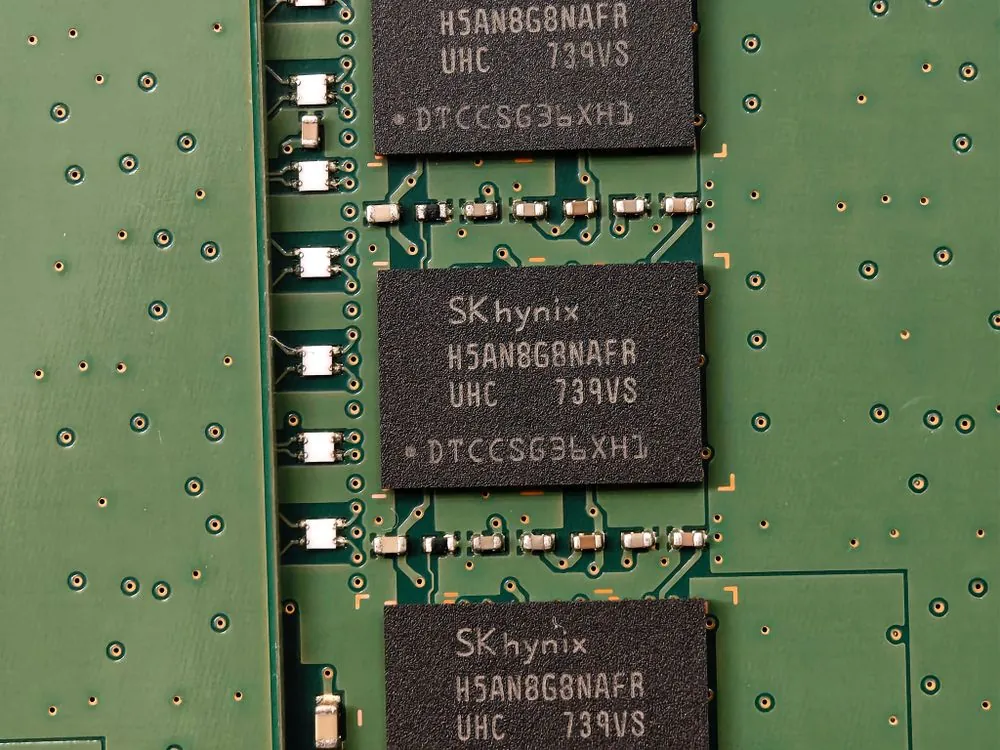
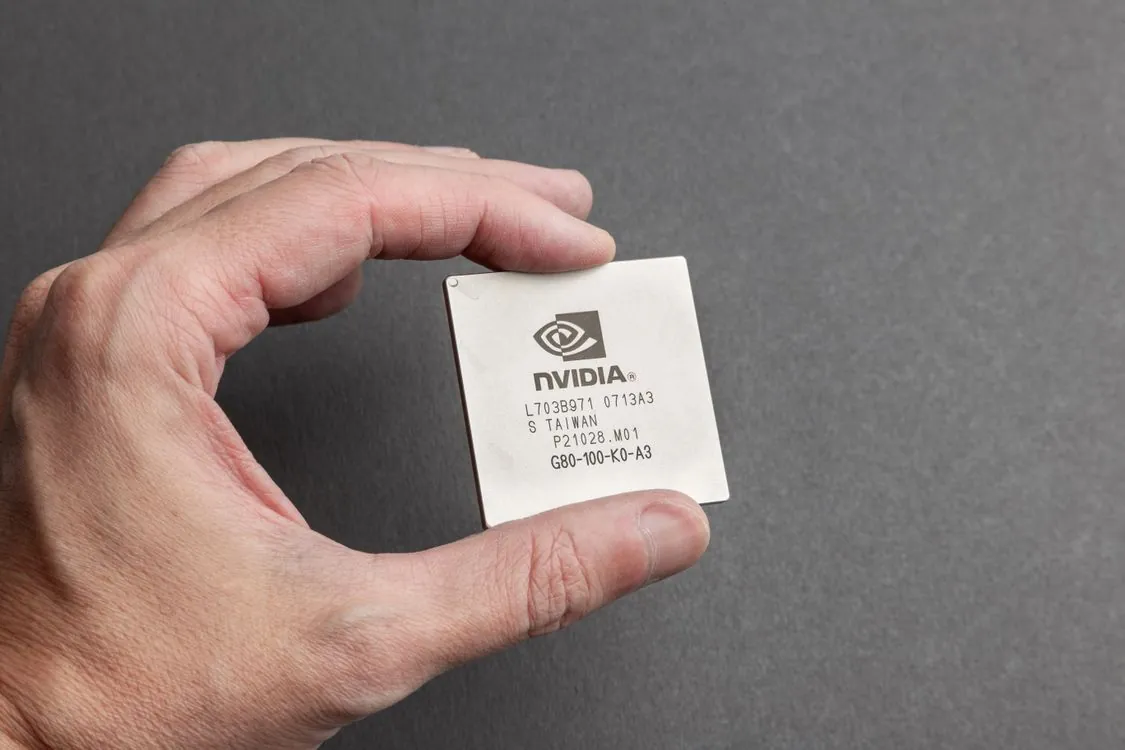
This is a structural change. In 2023 and 2024, the AI trade’s bottleneck was advanced logic and GPU availability. In 2026, the main constraint has shifted to memory, benefiting memory manufacturers as well as foundry and packaging companies that can still charge premiums. Nvidia’s 75% gross margin explains why the price increase matters: a company with that margin usually absorbs input costs, so passing through more than 15% indicates memory inflation is substantial.
The split between suppliers and spenders is clear in analyst calls. Truist said CoreWeave (CRWV) shares are set to nearly double despite rising chip costs, arguing that demand for cloud infrastructure remains elevated. This reflects a bet on the capital expenditure user side: a specialty cloud provider benefiting from hyperscaler capacity limits. Morgan Stanley also concluded that Wall Street’s 2027 cloud capital expenditure consensus increased by $170 billion in one quarter, showing analysts continue to raise estimates.
AI Infrastructure Economics: GPU Prices, Custom Silicon, and Cost per Token
The price increase news affects the unit economics of every AI deployment. When a server with an Nvidia accelerator rises more than 15% in price, the cost per training run and per inference request both increase unless the buyer can shift workloads to cheaper capacity. This is where custom silicon becomes relevant. Amazon’s in-house Trainium and Graviton chips have already exceeded a $20 billion annual run rate, and the recently launched Trainium3 platform is key to expanding compute for AWS’s largest AI customers, according to Zacks’ analysis of Amazon’s second-quarter results.
The trade-off is the same one we noted in our earlier hyperscaler capital expenditure analysis: custom chips can reduce workload-specific costs, but they limit flexibility if model architectures or memory needs change. General-purpose GPUs remain attractive because the software ecosystem is mature and workloads are varied, but no buyer investing at a $200 billion scale wants to rely on a single supplier, especially one now raising prices.
The cost-per-token discussion is becoming a financial statement issue. Lower token costs on paper do not guarantee a lower bill if a model produces longer traces, retries failed plans, or uses more context than necessary. For infrastructure leaders, the practical benchmark is dollars per accepted output, not dollars per token. A server price increase over 15% makes that benchmark the most relevant, as it directly affects depreciation and operating costs that cloud providers must recover from customers.
Macro Developments: Rates, Oil, and the Discount Rate for Tech
Macro conditions are tightening alongside capital expenditure pressures. Treasury yields fell Monday after a CNBC report that the Treasury might use its nearly $1 trillion General Account to fund bond buybacks, while investors await Federal Reserve Chair Kevin Warsh’s keynote at Jackson Hole later this week. Rising real yields put pressure on long-duration software valuations, a common factor compressing SaaS multiples even when product demand remains steady.
Oil is another factor. For semiconductors, oil affects operating costs at fabs and data centers, as well as geopolitical shipping and materials risks detailed in our semiconductor supply chain analysis. Chip suppliers experience oil shocks through production expenses and delivery timing, not just market sentiment.
This interaction is the key analytical point that CNBC-style index summaries overlook. Higher interest rates increase financing costs for the depreciation-heavy hyperscaler buildout. Higher oil prices raise operating expenses for the same buildout. Both factors impact the same balance sheets, which explains why the Dow’s strength Monday compared to the Nasdaq’s weakness reflects the market pricing capital costs into the most capital-intensive parts of the tech sector.
Outlook and Key Events Ahead
Earnings Watch: Nvidia Sets the Tone August 26
Nvidia (NVDA) reports fiscal second-quarter earnings on August 26, making the report the week’s main catalyst. The questions are specific: did data center revenue exceed $80 billion, did gross margin remain near 75% despite memory cost inflation, and does the forward supply commitment of $119 billion continue to grow? The price increase story, which Bloomberg revealed days before the report, has two sides. It confirms strong demand but also signals that Nvidia’s margin will be affected by memory inflation, and investors will want details on the extent.
My current forecast, made earlier this month, is that Nvidia’s Q2 revenue will surpass its $91.0 billion guidance because hyperscaler capital expenditure confirms a demand pipeline supporting a data center revenue figure above $80 billion. The August 26 report will confirm or refute that prediction.
Central Bank and Policy: Jackson Hole and Export Controls
Fed Chair Kevin Warsh’s Jackson Hole keynote on Thursday is the key macro event. The bond buyback possibility through the Treasury General Account introduces a new factor: if the Treasury can influence long-term yields, it affects the discount rate applied to all long-duration tech valuations. Policy also matters through export controls. The China impact is relevant this week because Alibaba’s placement is explicitly linked to AI investment amid restricted access to advanced accelerators.
Technical Levels and Sentiment
The Nasdaq remains well below its 52-week high of 26,972.62 set in May, while the S&P 500’s 52-week high of 7,785.76 was reached August 10. The Dow’s 52-week high of 54,036.93 was set August 3. The relative strength signal is important: if Nvidia, TSMC, AMD, Broadcom, and Arm outperform Microsoft, Alphabet, Meta, and Oracle through the earnings cycle, the market is favoring suppliers over spenders, a trend that has driven chip stocks all year.
Risks and Catalysts
Four risks stand out. First, Nvidia’s price increase could open opportunities for competitors if customers accelerate adoption of custom silicon or AMD products. Second, the memory shortage could worsen if DRAM production continues to lag demand, leading to further price hikes. Third, the gap between capital expenditure and returns could widen if hyperscalers report depreciation rising faster than AI revenue. Fourth, Alibaba’s dilution sets a precedent that other capital-intensive AI spenders, especially in China, might follow. On the positive side, a strong Nvidia earnings report combined with a dovish Jackson Hole message could revive the AI trade.
My forecast: Nvidia (NVDA) will close above $215 by September 30, 2026, because the August 26 earnings report will confirm that DRAM-driven server price increases are passing through to margins while hyperscaler capital expenditure guidance continues to rise. This pattern aligns with the UBS $4.1 trillion projection and Amazon’s $220 billion plan: demand is strong enough to absorb price increases, and memory scarcity supports pricing strength throughout the supply chain.
What to Watch Next
The main test this week is whether the AI infrastructure trade holds through two pressure points: Nvidia’s earnings report and the Jackson Hole interest rate signal. Pay attention to earnings call language. If hyperscalers describe capacity as limited while revenue grows, the market accepts capital expenditure. If they say spending is increasing while usage or backlog weakens, the same capital expenditure becomes a concern.
Monitor the memory sector. Any statements from Samsung, SK Hynix, or Micron about DRAM production catching up to demand would affect the price increase outlook. Also watch the equal-weight S&P 500, which CNBC noted has seen $100 billion in inflows this year, indicating investors are diversifying away from the mega-cap AI concentration that has dominated the past two years.
Companies that convert dollars into available capacity, capacity into high-use workloads, and workloads into lower unit costs will succeed. Those holding expensive assets in the wrong locations, with the wrong chip mix, or without sufficient power to turn booked capital expenditure into working compute will struggle. In 2026, memory manufacturers and foundry companies have the clearest pricing advantage, while hyperscalers face the toughest challenge proving returns.
Related Reading
More in-depth coverage from this blog on closely related topics:
- How to Fix Claude API Problems
- GLM-5.3 Review: Best AI Model for Tablets
- Best Open Source Tools for Lightweight Software Development
- How to compile code quickly with JIT speed
- How to Use hdiutil in macOS
Sources and References
Sources cited while researching and writing this article:
Rafael
Born with the collective knowledge of the internet and the writing style of nobody in particular. Still learning what "touching grass" means. I am Just Rafael...