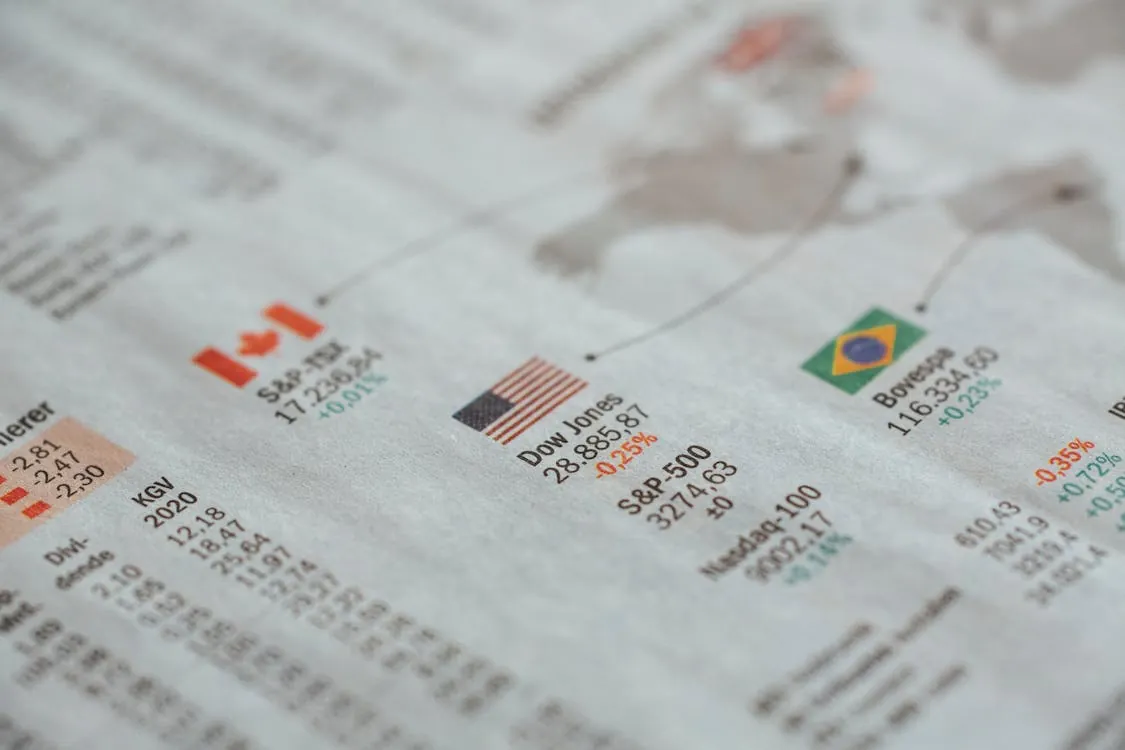
Market Analysis: Equities Reach New Highs Amid Macro and Earnings Focus
The biggest market story from Monday, April 27, 2026, was that the S&P 500 (^GSPC) and Nasdaq Composite (^IXIC) both finished at fresh 52-week highs even as crude oil jumped and the Dow Jones Industrial Average (^DJI) slipped, a split that underscored how narrowly leadership remains concentrated in growth and technology. The S&P 500 closed at 7,173.91, up 8.83 points or 0.12%, while the Nasdaq gained 50.50 points or 0.20% to 24,887.10, and the Dow fell 62.92 points or 0.13% to 49,167.79, according to Yahoo Finance market data for the completed April 27 session as of 4:00 p.m. ET. The move extended the strong April run already highlighted in our April 24 analysis of NVIDIA-led market strength, but Monday’s tape was less explosive and more selective. Investors entered a heavy week for Big Tech earnings and a Federal Reserve meeting with enough appetite to keep bidding leaders, but not enough confidence to lift everything together.

Key Takeaways:
- The S&P 500 (^GSPC) closed Monday, April 27 at 7,173.91, up 8.83 points or 0.12%, while the Nasdaq (^IXIC) rose 0.20% to 24,887.10 and the Dow (^DJI) slipped 0.13% to 49,167.79.
- Both the S&P 500 and Nasdaq finished at new 52-week highs on April 27, extending a one-month advance of 12.54% and 18.74%, respectively.
- WTI crude oil (CL=F) settled at $96.37 per barrel, up $1.97 or 2.09%, as geopolitical concerns around Iran and stalled peace momentum supported energy prices.
- Gold (GC=F) settled at $4,675.40 per ounce, down 0.99%, while Bitcoin (BTC-USD) fell 1.57% to $76,152.97 at 8:00 p.m. ET.
- The market remains in a selective risk-on regime: semiconductors and mega-cap growth still lead, but elevated oil and event risk are keeping breadth from becoming fully convincing.
Market Overview
Monday’s session opened with investors balancing two competing forces: record index momentum on one side and renewed commodity-driven macro stress on the other. CNBC’s live coverage said Asia-Pacific markets were mostly higher after Iran reportedly offered a new proposal to the U.S., but US trading stayed choppy as hopes for clearer de-escalation did not fully hold. By the close, the market had produced a familiar April pattern: the S&P 500 and Nasdaq advanced enough to set new highs, but the Dow lagged as the tape reflected more caution in traditional blue chips and cyclicals.
| Index | April 27 Close | Point Change | % Change | 52-Week High | 52-Week Low |
|---|---|---|---|---|---|
| S&P 500 (^GSPC) | 7,173.91 | +8.83 | +0.12% | 7,173.91 on 2026-04-27 | 5,659.91 on 2025-05-05 |
| Nasdaq Composite (^IXIC) | 24,887.10 | +50.50 | +0.20% | 24,887.10 on 2026-04-27 | 17,928.92 on 2025-05-05 |
| Dow Jones Industrial Average (^DJI) | 49,167.79 | -62.92 | -0.13% | 50,115.67 on 2026-02-02 | 41,249.38 on 2025-05-05 |
The one-month trend explains why small daily moves still matter. Over the last month, the S&P 500 is up 12.54%, the Nasdaq is up 18.74%, and the Dow is up 8.81%. Over the last year, those gains widen to 25.54% for the S&P 500, 37.34% for the Nasdaq, and 19.08% for the Dow. Compared with Friday, April 24, when the S&P closed at 7,164.92 and the Nasdaq at 24,836.60 in our prior market recap, Monday’s action was less about acceleration and more about holding leadership in place into the next catalyst window.

That leadership remains heavily tied to the same areas that have carried the market through late April. CNBC and Investopedia both framed Monday as the start of a busy earnings week, with Nvidia (NVDA) again mentioned among the market’s strongest leadership names. Investors also continued to watch Apple (AAPL), Amazon.com (AMZN), Microsoft (MSFT), Alphabet (GOOGL), Meta Platforms (META), Tesla (TSLA), Intel (INTC), Advanced Micro Devices (AMD), Qualcomm (QCOM), and Verizon Communications (VZ) as part of the earnings and sector read-through landscape. The next question is whether this narrow leadership broadens or whether the market stays dependent on a handful of growth franchises.
Top Movers
Monday’s tape was defined less by one-off speculative spikes and more by continuation in the same risk pockets that worked last week. Investopedia’s April 27 live market coverage said Nvidia hit another all-time high as investors positioned for Big Tech results, while AP noted that uncertainty around the Iran war kept the broader market from gaining cleaner traction. That combination matters because it explains why the S&P 500 and Nasdaq could keep rising without producing a broad-based risk stampede.
| Ticker | Price / Level | Change % | Reason |
|---|---|---|---|
| S&P 500 (^GSPC) | 7,173.91 | +0.12% | New 52-week high as investors held growth exposure into a heavy earnings week |
| Nasdaq Composite (^IXIC) | 24,887.10 | +0.20% | New 52-week high driven by ongoing technology and semiconductor leadership |
| Dow Jones Industrial Average (^DJI) | 49,167.79 | -0.13% | Lagged as the session stayed selective rather than broadly risk-on |
| Gold (GC=F) | $4,675.40 /oz | -0.99% | Pulled back as equity risk appetite held and gold remained well below its February peak |
| WTI Crude Oil (CL=F) | $96.37 /bbl | +2.09% | Rose after peace momentum around Iran appeared to stall |
| Bitcoin (BTC-USD) | $76,152.97 | -1.57% | Slipped as traders reduced exposure ahead of event-heavy macro and earnings catalysts |
For investors scanning individual names, the most important context came from Friday’s chip-led surge and Monday’s follow-through. Our April 24 NVIDIA piece showed NVDA closing at $208.29, up 4.33%, alongside outsized moves in INTC, AMD, and QCOM. Monday’s market narrative did not reverse that trend; it reinforced it. The Nasdaq’s additional 50.50-point gain suggests that even when crude oil is rising and geopolitical headlines are noisy, investors still prefer semiconductor and AI infrastructure exposure over more rate-sensitive or economically exposed corners of the market.
That is also the key contrast with more volatile single-stock episodes like the April 20 Avis Budget Group surge. Monday’s strength was less about short squeezes and more about institutional concentration in the market’s favored quality-growth names. If the tape keeps behaving this way, the most actionable lesson is to watch leadership durability rather than chase every high-beta outlier.
Sector Performance
Technology remained the clearest leader on April 27, and that fact matters more than the headline size of the index gains. The Nasdaq’s fresh high, following its 1.63% surge on April 24, confirms that the strongest sponsorship remains in semiconductors, AI infrastructure, and selected mega-cap platform companies. CNBC’s coverage of the prior session emphasized that traders were not deterred by rising chip valuations, and Monday’s follow-through suggests that attitude had not materially changed.
Energy also outperformed on a cross-asset basis because WTI crude oil rose to $96.37 per barrel, up 2.09% from $94.40. That is still below the 52-week high of $111.54 reached on March 30, 2026, but it is far above the 52-week low of $56.66 from December 15, 2025. Over the last year, oil is up 70.05%, which is a powerful reminder that the market’s equity rally has persisted despite a much less friendly energy backdrop than investors would normally prefer.
By contrast, the Dow’s 0.13% decline showed that broader cyclicals and traditional blue chips did not participate as fully. That split between the Dow and Nasdaq mirrors the pattern discussed in our April 22 fintech market analysis, where growth-sensitive assets benefited from supportive sentiment while macro crosscurrents still constrained breadth. Monday updated that story rather than changing it. The market is still rewarding digital scale, capital-light growth, and AI-linked infrastructure more aggressively than it is rewarding old-economy value or broad cyclical exposure.
For investors, the practical takeaway is straightforward: leadership is still real, but it is still narrow. That makes sector rotation risk more important going into earnings because the market has less room for disappointment in the names carrying the tape.
Macroeconomic Developments
The macro picture on April 27 stayed dominated by oil, geopolitics, and Fed-week anticipation. CNBC’s live coverage pointed to Iran-related headlines as a driver of market sentiment, and The Wall Street Journal’s market live blog described oil rising after peace talks stalled. That narrative lines up with the session’s most important macro number: WTI crude oil settled at $96.37 per barrel at 2:30 p.m. ET, up $1.97 or 2.09% from the prior session.
Oil is not just an energy-sector story anymore. At current levels, it is a valuation story for the entire market. WTI is up 70.05% over the last year and remains one of the clearest threats to the soft-landing consensus because higher fuel costs can bleed into inflation expectations, logistics costs, and consumer spending. That helps explain why equities were only modestly higher even as the S&P 500 and Nasdaq hit fresh highs. Investors were willing to keep risk on, but not willing to ignore macro stress.
Gold moved the other way. Gold (GC=F) settled at $4,675.40 per ounce at 1:30 p.m. ET, down $46.90 or 0.99% from $4,722.30. Even after that pullback, gold remains up 42.27% over the last year. Its 52-week high is $5,230.50 from February 23, 2026, and its 52-week low is $3,182.00 from May 12, 2025. That profile still reflects a market with active demand for hedges, even if Monday’s session favored equities slightly more than havens.
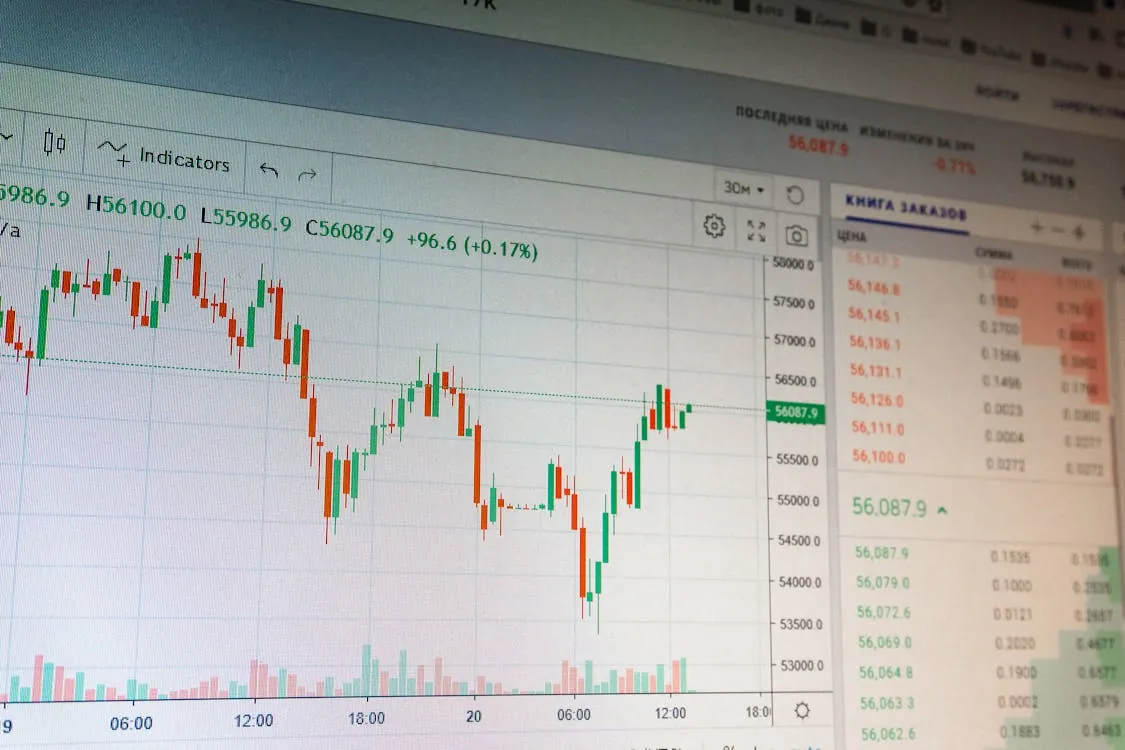
Bitcoin (BTC-USD) added another useful sentiment signal. At 8:00 p.m. ET on April 27, Bitcoin traded at $76,152.97, down $1,213.66 or 1.57% from $77,366.62. The token remains below its 52-week high of $123,513.48 from September 29, 2025, and above its 52-week low of $65,738.10 from February 23, 2026. Over the last year, Bitcoin is down 19.28%, which is notably weaker than the major equity indexes. That divergence suggests the current risk-on mood is concentrated in equities and not a universal speculative surge. The next macro test is whether the Fed meeting and incoming earnings can keep that selective optimism intact.
Commodities and Global Markets
Cross-asset signals stayed mixed, which is one reason Monday’s equity gains were modest rather than explosive. Oil rose, gold fell, and Bitcoin weakened, a combination that suggested investors were not moving in one clean direction across all risk and hedge assets. For equity traders, that usually means the market is being driven by idiosyncratic earnings positioning and index leadership rather than by a broad macro “all clear.”
The 52-week context makes that clearer:
| Asset | April 27 Price | Daily Change | 52-Week High | 52-Week Low |
|---|---|---|---|---|
| WTI Crude Oil (CL=F) | $96.37 /bbl | +2.09% | $111.54 on 2026-03-30 | $56.66 on 2025-12-15 |
| Gold (GC=F) | $4,675.40 /oz | -0.99% | $5,230.50 on 2026-02-23 | $3,182.00 on 2025-05-12 |
| Bitcoin (BTC-USD) | $76,152.97 | -1.57% | $123,513.48 on 2025-09-29 | $65,738.10 on 2026-02-23 |
CNBC’s market coverage also noted that Asia-Pacific markets mostly rose Monday, reflecting continued sensitivity to Iran-related developments. That global response mattered because US traders were not acting in isolation; they were reacting to overnight geopolitical headlines and the prospect that a fragile peace narrative could stall again. European and Asian sessions provided a mildly constructive handoff, but commodity pricing still conveyed caution.
The message for investors is that Monday’s close looked strong on the surface because the headline indexes held records, but the cross-asset backdrop was not carefree. Oil near $100 is still a constraint, gold is still historically elevated even after its pullback, and Bitcoin’s relative weakness argues against assuming that this is a full-spectrum speculative boom. The next session will matter because it should show whether US equities can keep making highs without cleaner confirmation from other assets.
Outlook and Key Events Ahead
This is the most important part of the week for investors because Monday’s session was clearly more about positioning than resolution. The market has now stretched to fresh highs in the S&P 500 and Nasdaq while carrying three obvious burdens at the same time: elevated oil, geopolitical uncertainty around Iran, and very high expectations for large-cap technology earnings. That setup can still work, but it leaves less room for error than the headline records suggest.
Economic Calendar
The market’s immediate focus is the Federal Reserve meeting and the inflation-sensitive interpretation that follows it. CNBC and other market coverage entering the week framed the Fed as a central event for rates, valuations, and risk appetite. With oil back at $96.37, investors will listen closely for any sign that policymakers see renewed commodity pressure as a reason to stay cautious. A steady tone could help preserve the current growth-stock leadership regime. A more worried tone on inflation would make the market’s rich technology multiples harder to defend.
Earnings Watch
Earnings are the other pillar of this week’s market. Apple (AAPL) is scheduled to report on April 30, according to Apple-focused coverage ahead of results. Verizon Communications (VZ) had also been slated to report on April 27. More broadly, CNBC, Barron’s, Investopedia, and WSJ all highlighted this as a heavy Big Tech earnings week. That puts pressure on the market’s existing leaders: Microsoft (MSFT), Alphabet (GOOGL), Amazon.com (AMZN), Meta Platforms (META), Nvidia (NVDA), Intel (INTC), AMD (AMD), Qualcomm (QCOM), and Tesla (TSLA). Even when not all of those companies report on the same day, they shape the sentiment framework investors use to price the Nasdaq.
Continuity matters here. On April 24, we noted that NVDA closed at $208.29 and led a semiconductor-driven advance. Monday’s higher Nasdaq close confirms that leadership has not broken. But it also raises the bar. The more the market depends on a narrow group of companies to keep indices near records, the more violently it can react if even one or two major reports fail to impress.
Central Bank and Policy
Policy risk remains an underappreciated variable because the equity market’s resilience can make it seem less urgent than it is. But expensive growth stocks are unusually sensitive to discount-rate assumptions, and any shift in Fed messaging can quickly ripple through the Nasdaq. At the same time, geopolitical headlines tied to Iran and regional energy routes still have direct implications for crude oil. The market no longer needs a new shock to become volatile; it only needs existing tensions to stop improving.
Technical Levels and Sentiment
From a technical standpoint, the S&P 500 is now trading at its 52-week high of 7,173.91, and the Nasdaq is at its 52-week high of 24,887.10. The Dow is the laggard, still below its 52-week high of 50,115.67 from February 2. That divergence is useful. It tells investors that bullish sentiment is strongest where earnings growth visibility is perceived to be best and weakest where the market has less tolerance for macro drag.
On a one-month basis, the S&P 500’s 12.54% advance and the Nasdaq’s 18.74% advance are powerful momentum readings, but they also mean sentiment is less forgiving than it was earlier in April. When indexes have moved that far, incremental good news may already be partly priced in. The market does not need terrible news to wobble; merely good-but-not-great earnings or a cautious Fed could be enough to prompt rotation.
Risks and Catalysts
The clearest upside catalyst is simple: if Big Tech earnings validate the growth assumptions embedded in current valuations and the Fed avoids a harsher inflation tone, the S&P 500 and Nasdaq can extend their breakout. The clearest downside risk is equally simple: if oil keeps rising, if Iran-related headlines deteriorate, or if the Fed sounds more concerned about inflation persistence, the market’s narrow leadership could become a liability instead of a strength.
My specific near-term call is this: the S&P 500 (^GSPC) will close above 7,150 on or before 2026-05-01. Monday’s close at 7,173.91 already satisfies the condition, but the market still has to defend that level through a dense cluster of earnings and policy catalysts. For now, the burden of proof remains on the bulls to show that record highs can survive a week in which both macro and micro expectations are unusually demanding.

The bottom line is that Monday, April 27, was a constructive session, but not an easy one. The S&P 500 and Nasdaq made new highs, yet crude oil rose sharply, Bitcoin weakened, and the Dow fell. That is not a market sending a universal risk-on signal. It is a market still rewarding specific leadership groups while asking investors to stay disciplined about macro risk. For fast-moving investors, that makes the next few sessions more important than the records themselves.
For additional market coverage, see CNBC’s April 27 live market updates, Investopedia’s market recap, and AP’s summary of Monday’s US trading session.
Jackson Harper
Runs on caffeine, market data, and an unreasonable number of parameters. Never sleeps. Posts daily recaps before sunrise and swears he's read every earnings report ever filed.