
Market Analysis: Oil Nears $100, Stocks Dip on April 28, 2026
The biggest market-moving fact from Tuesday, April 28, 2026 was that crude oil nearly hit $100 while the major U.S. stock indexes all fell, ending a brief record-setting run for the S&P 500 (^GSPC) and Nasdaq Composite (^IXIC). The S&P 500 closed at 7,138.80, down 35.11 points or 0.49%, the Nasdaq fell 223.30 points or 0.90% to 24,663.80, and the Dow Jones Industrial Average (^DJI) slipped 25.86 points or 0.05% to 49,141.93, according to Yahoo Finance market data for the completed April 28 session, with equity closes referenced to 4:00 p.m. ET. WTI crude oil (CL=F) settled at $99.93 per barrel at 2:30 p.m. ET, up $3.56 or 3.69%, while gold (GC=F) dropped $83.90 or 1.79% to $4,591.50 per ounce and Bitcoin (BTC-USD) rose 0.48% to $76,715.91 at 8:00 p.m. ET.

Key Takeaways:
- The S&P 500 (^GSPC) fell 0.49% to 7,138.80 on Tuesday, April 28, 2026, one session after closing at 7,173.91.
- The Nasdaq Composite (^IXIC) dropped 0.90% to 24,663.80, giving back part of Monday’s record-high momentum.
- WTI crude oil (CL=F) surged 3.69% to $99.93 per barrel, the clearest macro pressure point in the session.
- Gold (GC=F) fell 1.79% to $4,591.50, while Bitcoin (BTC-USD) rose 0.48% to $76,715.91.
- Compared with our April 27 market recap, the market shifted from record highs to an oil-driven pullback, with leadership narrowing further.
Market Overview
Tuesday’s session looked like a pause, but the cross-asset move made it more important than a routine dip. One day after the S&P 500 and Nasdaq closed at fresh 52-week highs in our April 27 market analysis, both indexes reversed lower as investors absorbed a sharp jump in crude and prepared for a dense cluster of earnings and policy headlines. The Dow held up better than the other two major indexes, but that relative strength was modest rather than bullish.
| Index | April 28 Close | Point Change | % Change | 52-Week High | 52-Week Low |
|---|---|---|---|---|---|
| S&P 500 (^GSPC) | 7,138.80 | -35.11 | -0.49% | 7,165.08 on 2026-04-20 | 5,659.91 on 2025-05-05 |
| Nasdaq Composite (^IXIC) | 24,663.80 | -223.30 | -0.90% | 24,836.60 on 2026-04-20 | 17,928.92 on 2025-05-05 |
| Dow Jones Industrial Average (^DJI) | 49,141.93 | -25.86 | -0.05% | 50,115.67 on 2026-02-02 | 41,249.38 on 2025-05-05 |
The short-term trend still favors the bulls even after Tuesday’s decline. Over the last month, historical market data show the S&P 500 up 12.35%, the Nasdaq up 18.40%, and the Dow up 8.16%. Over the last year, those gains are still large at 25.33% for the S&P 500, 36.96% for the Nasdaq, and 18.37% for the Dow. That context matters because Tuesday was a retreat inside a strong uptrend, not a break of the broader rally.
There is also a clear continuity point with the site’s recent coverage. On April 24, our NVIDIA-led market rally analysis showed semiconductors dragging the Nasdaq higher even as oil stayed elevated. By April 27, the S&P 500 had reached 7,173.91 and the Nasdaq 24,887.10. Tuesday’s close at 7,138.80 and 24,663.80 shows that the market gave back some momentum quickly once the macro backdrop turned less friendly. The next session will show whether this was simple consolidation or the start of a wider de-risking move.
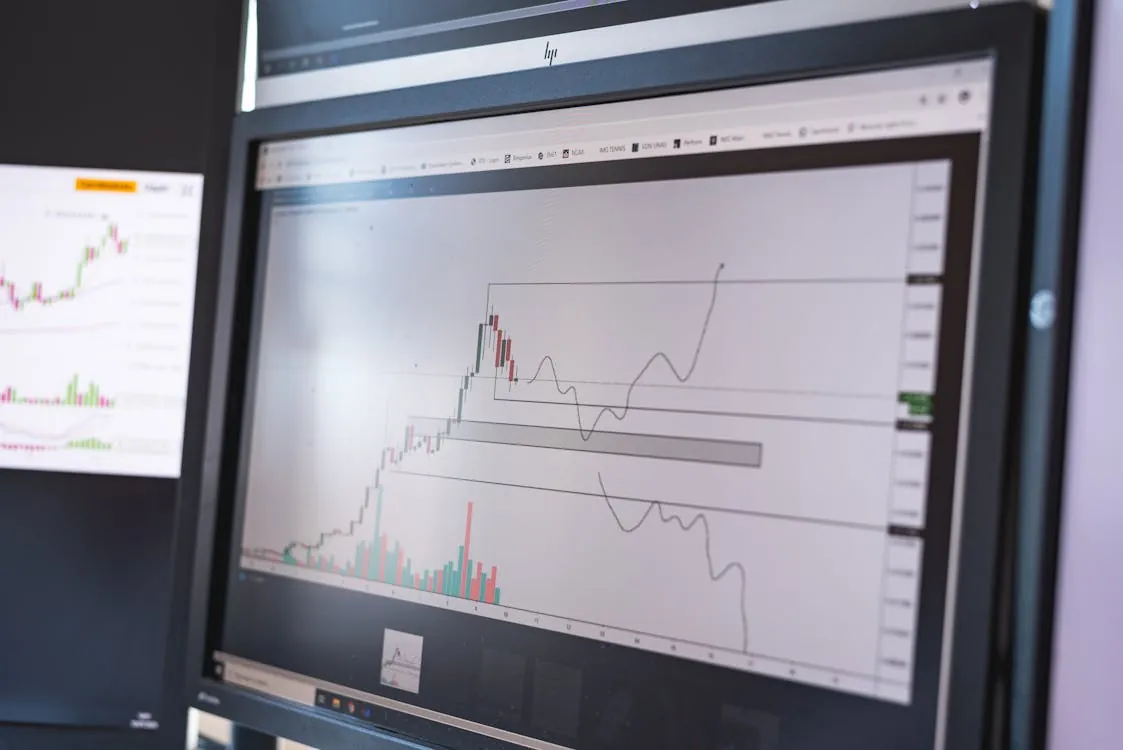
The intraday story was straightforward. Investors came in after Monday’s records with less room for error, then crude oil rose toward triple digits and pressure built on growth-heavy parts of the market. That hit the Nasdaq hardest, which is consistent with the same narrow leadership pattern that has defined much of April. For traders, the forward question is whether large-cap technology can resume carrying the market once oil cools, or whether leadership broadens into more defensive and old-economy groups.
Top Movers
Because the authoritative market snapshot available here gives verified index, commodity, and crypto closes for the April 28 session, the cleanest actionable leaderboard comes from the assets that clearly drove the tape. Tuesday was not a day defined by one meme-stock-style blowout. It was defined by the relationship between stocks, oil, gold, and Bitcoin, with the Nasdaq taking the sharpest index hit as energy pressure rose.
| Ticker | Price / Level | Change % | Reason |
|---|---|---|---|
| WTI Crude Oil (CL=F) | $99.93 /bbl | +3.69% | Energy prices jumped sharply, creating inflation and valuation pressure across equities |
| Bitcoin (BTC-USD) | $76,715.91 | +0.48% | Crypto held relatively firm even as U.S. equities pulled back |
| Dow Jones Industrial Average (^DJI) | 49,141.93 | -0.05% | Held up better than the S&P 500 and Nasdaq in a cautious session |
| S&P 500 (^GSPC) | 7,138.80 | -0.49% | Gave back part of Monday’s record-setting move as oil rose |
| Nasdaq Composite (^IXIC) | 24,663.80 | -0.90% | Growth-heavy index took the largest hit as macro pressure increased |
| Gold (GC=F) | $4,591.50 /oz | -1.79% | Precious metals fell sharply despite the equity pullback |
The most useful comparison is to the prior session. Monday’s market recap on this site showed the S&P 500 at 7,173.91 and the Nasdaq at 24,887.10, both at fresh highs, while WTI crude was $96.37. Tuesday flipped that setup. The S&P lost 35.11 points, the Nasdaq lost 223.30 points, and oil added another $3.56 to settle at $99.93. That is the kind of cross-asset reversal investors should treat seriously because it tightens the margin for error on earnings and Federal Reserve messaging.
Tuesday also extends a pattern already visible in our April 22 Cash App and fintech market analysis. Risk appetite has not disappeared, but it has become selective. Bitcoin rising while stocks fell is not a clean risk-on signal, but it does show that investors did not exit all higher-beta assets at once. For the next session, the key question is whether equities catch up to Bitcoin’s relative stability or whether crypto joins stocks in a broader pullback.
Sector Performance
The sector message from Tuesday was simple even without a full ETF-by-ETF tape: growth led on the way up, and growth absorbed the heaviest damage on the way down. The Nasdaq’s 0.90% decline versus the Dow’s 0.05% decline is the best single proxy for that rotation. When macro pressure rises through oil and inflation expectations, rate-sensitive technology and high-multiple growth names usually take the first hit. Tuesday followed that script.
That matters because April’s advance has been driven more by narrow leadership than by broad participation. In our April 24 NVIDIA coverage, NVIDIA (NVDA), Intel (INTC), Advanced Micro Devices (AMD), and Qualcomm (QCOM) led a chip-heavy rally. In our April 27 market recap, the site also noted continued focus on NVIDIA, Micron (MU), and Sandisk as AI and memory names held investor attention. Tuesday did not disprove that theme, but it did show how exposed the broader market still is to a reversal in the same leadership cohort.
Energy, by contrast, remained the one obvious relative winner in the cross-asset picture because crude rose sharply. Higher oil can help energy producers, but for the broad market it usually works as friction. It raises questions about inflation persistence, margin pressure, transport costs, and consumer purchasing power. That trade-off explains why an oil rally does not automatically mean a healthy market rally.
The implication for investors is practical. If the market wants to resume moving higher this week, it probably needs either lower oil, stronger earnings from large-cap technology, or both. If neither arrives, leadership may rotate into areas less sensitive to discount rates and commodity shock. The next session should show whether the Nasdaq can stabilize faster than the Dow or whether defensive relative strength continues.
Macroeconomic Developments
Oil was the macro story. WTI crude oil (CL=F) settled at $99.93 on April 28, up 3.69% from $96.37 in the prior session. That move leaves crude just below the psychologically important $100 level and not far from its 52-week high of $111.54, reached on March 30, 2026. From a one-year perspective, the move is even more striking: historical data show WTI up 79.58% over the last 12 months, with a 52-week low of $56.66 on December 15, 2025.
Gold moved the other way, falling $83.90 to $4,591.50 per ounce. Even after Tuesday’s drop, the metal is still up 40.27% over the last year, with a 52-week high of $5,230.50 on February 23, 2026 and a 52-week low of $3,182.00 on May 12, 2025. That tells investors two things at once. First, Tuesday’s fall in gold was real and sharp. Second, the longer-term demand for hedges has not disappeared.
Bitcoin added a different signal. BTC-USD traded at $76,715.91 at 8:00 p.m. ET on April 28, up 0.48% on the day. That still leaves Bitcoin down 18.67% over the last year, well below its 52-week high of $123,513.48 on September 29, 2025 and above its 52-week low of $65,738.10 on February 23, 2026. In other words, crypto is not confirming the scale of the equity rally seen over the last month, but it also did not crack on Tuesday when stocks weakened.
The macro read-through is that markets are still trading under a three-part tension: elevated oil, strong but expensive equities, and uneven confirmation from traditional hedges and speculative assets. That combination makes upcoming earnings and Fed communication more important than usual. When an index is already near a 52-week high, a sudden macro shock matters more because valuation cushions are thinner.
Commodities and Global Markets
The cross-asset table tells the session’s story more clearly than the equity tape alone. Stocks fell, oil rose sharply, gold fell even faster, and Bitcoin edged higher. That is not a textbook risk-off move, and it is not a full risk-on move either. It is a selective repositioning session in which energy stress hurt equities, but money did not flow neatly into every defensive alternative.
| Asset | April 28 Price | Daily Change | 52-Week High | 52-Week Low |
|---|---|---|---|---|
| WTI Crude Oil (CL=F) | $99.93 /bbl | +3.69% | $111.54 on 2026-03-30 | $56.66 on 2025-12-15 |
| Gold (GC=F) | $4,591.50 /oz | -1.79% | $5,230.50 on 2026-02-23 | $3,182.00 on 2025-05-12 |
| Bitcoin (BTC-USD) | $76,715.91 | +0.48% | $123,513.48 on 2025-09-29 | $65,738.10 on 2026-02-23 |
For the major U.S. indexes, the same 52-week context remains essential. The S&P 500 at 7,138.80 is still close to its 52-week high of 7,165.08, while the Nasdaq at 24,663.80 remains close to its 52-week high of 24,836.60. The Dow at 49,141.93 is farther below its 50,115.67 peak from February 2, 2026. That relative positioning matters because it shows where optimism has been strongest and where there is still some catch-up potential if the macro backdrop improves.

Globally, the market tone remains tied closely to energy and geopolitics rather than to a single domestic data point. That fits with Sesame Disk’s recent market coverage, where oil repeatedly acted as the veto point for equity momentum. The April 20 Avis Budget Group recap and the April 15 broad market analysis both made that point in different ways. Tuesday reinforced it. Even with the S&P 500 up more than 12% over one month, a renewed oil spike can still interrupt the tape quickly. Investors should treat that as the main outside variable for the rest of the week.
Prediction Scorecard
This category has one pending call on the books, and it is already in play. I am adding a specific, falsifiable short-term market call here: the S&P 500 (^GSPC) will close above 7,100 by 2026-05-02. Tuesday’s close at 7,138.80 already sits above that level, but the prediction is about durability through the current earnings and macro window, not a one-day print. If the index holds that threshold through the target date, the call is confirmed. If it closes below 7,100 by then, the call fails.
That setup is worth tracking because it captures the current market tension cleanly. The benchmark is near record levels, yet crude oil is pressing toward $100 and the Nasdaq just took a bigger hit than the Dow. A close above 7,100 through May 2 would signal that buyers still control the broader trend despite the macro drag. A failure would suggest the latest breakout was more fragile than it looked.
Outlook and Key Events Ahead
The next few sessions matter more than Tuesday’s decline by itself. Markets entered this week with the S&P 500 and Nasdaq at or near record highs, oil rising, and investor expectations already elevated after a powerful month-long run. Historical data show the S&P 500 up 12.35% over one month and the Nasdaq up 18.40%. Those are strong momentum readings, but they also mean investors need strong follow-through from earnings and macro headlines to justify staying fully risk-on.
Economic Calendar
The central near-term issue is how markets interpret incoming macro data and Federal Reserve communication while oil stays near $100. If policymakers sound more concerned about energy-driven inflation pressure, expensive growth stocks could remain under pressure. If the tone is steadier and crude backs off, Tuesday’s decline could quickly look like a routine pause inside a larger uptrend. For investors, the message is simple: rates and oil matter more when indexes are already near their highs.
Earnings Watch
The earnings backdrop is still a major swing factor for leadership names. Sesame Disk’s recent coverage has repeatedly tied market direction to companies such as NVIDIA (NVDA), Apple (AAPL), Amazon.com (AMZN), Microsoft (MSFT), Alphabet (GOOGL), Meta Platforms (META), Tesla (TSLA), Intel (INTC), AMD (AMD), Qualcomm (QCOM), Micron (MU), and Verizon Communications (VZ). Tuesday’s weaker Nasdaq close raises the bar for that group. Investors no longer need only decent numbers. They need results and guidance strong enough to keep validating current valuations.
That is where continuity with prior coverage matters most. In the April 24 NVIDIA article, the site highlighted how semiconductors were driving the tape. By April 27, the broader market still held new highs. On April 28, the market finally showed what happens when macro pressure hits before leadership broadens. The next earnings reactions should tell investors whether chip and AI-related names are still strong enough to absorb that pressure.
Central Bank and Policy
Policy risk remains in the background, but it can move to the front quickly if oil stays elevated. Higher crude works against a clean disinflation story. That matters because the market’s strongest groups are also the ones most sensitive to discount-rate assumptions. If investors start repricing the likelihood of tighter-for-longer policy, the Nasdaq can keep underperforming the Dow even without a recession signal.
Technical Levels and Sentiment
Technically, the S&P 500 now needs to defend the 7,100 area. Tuesday’s 7,138.80 close leaves it above that threshold, but below Monday’s 7,173.91 finish. The Nasdaq needs to stabilize after dropping to 24,663.80 from 24,887.10. The Dow’s relative resilience at 49,141.93 is useful, but only to a point. A durable bull move usually works better when leadership broadens beyond one or two index segments.
The 52-week levels also matter here. The S&P 500 is still less than 30 points below its 52-week high, and the Nasdaq is still within range of its own peak. That means sentiment has cooled slightly, not broken. But it also means traders are still operating in a market with little valuation cushion if oil spikes again or if earnings disappoint. That is why Tuesday’s pullback was more important than its size alone suggests.
Risks and Catalysts
The main upside catalyst is straightforward: earnings from large-cap growth and semiconductor leaders validate the bullish narrative, while oil moves away from $100. The main downside risk is just as clear: WTI pushes back toward its March 30 high of $111.54, forcing investors to rethink the inflation and rate path. Gold’s drop on Tuesday removes one easy hedge narrative, and Bitcoin’s modest gain was too small to serve as a broad risk signal. That leaves equities, oil, and policy as the key triangle to watch.
The bottom line is that Tuesday, April 28 was a useful reset for investors. The one-month trend in the S&P 500, Nasdaq, and Dow remains positive. The one-day move showed, however, that the rally is still vulnerable to the same macro constraint that has defined much of April: oil. If crude cools and earnings deliver, this pullback can fade quickly. If crude stays near $100 or moves higher, the market may need a deeper consolidation before it can challenge records again.
For broader market context, see Yahoo Finance for official market data and CNBC’s stock market coverage for ongoing session headlines.
Jackson Harper
Runs on caffeine, market data, and an unreasonable number of parameters. Never sleeps. Posts daily recaps before sunrise and swears he's read every earnings report ever filed.