Oil Relief and Earnings Boost Market Outlook in 2026
Key Takeaways:
- The S&P 500 (^GSPC) closed Tuesday, April 14, 2026 at 6967.38, up 81.14 points or 1.18%, while the Nasdaq Composite (^IXIC) rose 455.34 points or 1.96% to 23639.08 and the Dow Jones Industrial Average (^DJI) gained 317.74 points or 0.66% to 48535.99, according to Yahoo Finance data fetched April 15 at 10:00 AM ET.
- The biggest change since our earlier March 5 recap is the macro mix: oil is no longer surging on the day. WTI crude (CL=F) settled at 91.04, down 0.24 or 0.26%, easing from the early-April shock and removing part of the inflation pressure that had dominated prior sessions.
- Earnings, not just geopolitics, are now driving leadership. JPMorgan (JPM), Citigroup (C), BlackRock (BLK), Johnson & Johnson (JNJ), Bank of America (BAC), and Morgan Stanley (MS) all featured in the week’s earnings narrative, while CNBC reported that investors are starting to treat earnings season as the main market catalyst.
- Cross-asset signals stayed constructive but not euphoric: Bitcoin (BTC-USD) was 74013.02 at 8:00 PM ET, down 0.23% on the day, gold remained below its February peak, and the S&P 500 finished less than 1% from its all-time high, according to CNBC’s April 15 live market coverage.
- The near-term setup is straightforward: if oil remains near or below the low-90s and earnings keep beating expectations, the S&P 500 has a credible path to hold above 6900 and challenge 7000 in the next two sessions.
The most important market fact from the latest completed U.S. session is that the S&P 500 (^GSPC) closed Tuesday, April 14 at 6967.38, up 81.14 points or 1.18%, putting the benchmark within 8.57 points of its 52-week high of 6975.95 set on April 15, 2026. The Nasdaq Composite (^IXIC) outperformed again, rising 455.34 points or 1.96% to 23639.08, while the Dow Jones Industrial Average (^DJI) added 317.74 points or 0.66% to 48535.99. For investors scanning quickly, that combination matters because it shows the market’s leadership has shifted from pure oil-headline survival to a more durable earnings-and-tech-led rebound.
That is a different market than the one in our March 5 daily market recap, when WTI crude was jumping 3.08% in the session and the tape still looked hostage to geopolitical escalation. On April 14, the key cross-asset change was oil relief: WTI crude (CL=F) settled at 91.04 at the 2:30 PM ET NYMEX settlement, down 0.24 or 0.26%. That is still elevated versus its 52-week low of 56.66 on December 15, 2025, but far below the 52-week high of 111.54 on March 30, 2026. The market is no longer trading as if every move in equities must be immediately vetoed by a fresh spike in crude.

The other major shift is narrative control. CNBC reported on April 15 that “earnings are taking over from Iran,” and Tuesday’s price action supports that framing. The market did not ignore geopolitics, but it increasingly rewarded companies and sectors with visible earnings power, AI capital-spending exposure, and balance-sheet resilience. That is a healthier backdrop than the March 5 setup, where investors were still treating oil as the dominant variable into the next open.
Market Overview
Tuesday’s session was broadly constructive from the opening bell through the close, and the closing levels matter because they came near the top of recent ranges rather than after a late fade. The S&P 500’s 6967.38 close extends a one-month advance of 4.13%, based on the last month of daily historical data. Over the last year, the index is up 32.05%, and over five years it is up 65.93%. This was not a random bounce in a broken trend. It was another extension of a still-powerful long-term uptrend.
| Index | April 14 Close | Point Change | % Change | 52-Week High | 52-Week Low |
|---|---|---|---|---|---|
| S&P 500 (^GSPC) | 6967.38 | +81.14 | +1.18% | 6975.95 on 2026-04-15 | 5282.70 on 2025-04-14 |
| Nasdaq Composite (^IXIC) | 23639.08 | +455.34 | +1.96% | 23755.43 on 2026-04-15 | 16286.45 on 2025-04-14 |
| Dow Jones Industrial Average (^DJI) | 48535.99 | +317.74 | +0.66% | 50115.67 on 2026-02-02 | 39142.23 on 2025-04-14 |
The Nasdaq remains the key leadership signal. It is up 6.18% over the last month, versus 4.13% for the S&P 500 and 3.09% for the Dow. Over the last year, the Nasdaq has gained 45.86%, far ahead of the Dow’s 23.65%. That spread confirms that investors are still paying for growth, AI infrastructure, and platform-scale capex rather than rotating aggressively into defensives.
The Dow’s role is also important. At 48535.99, it remains below its February 2 high of 50115.67, but its 0.66% gain still signaled broader participation beyond megacap tech. That matters for market durability. A Nasdaq-only rally can be powerful, but a rally that also includes banks, healthcare, and selected industrials has a better chance of holding into the next earnings wave.
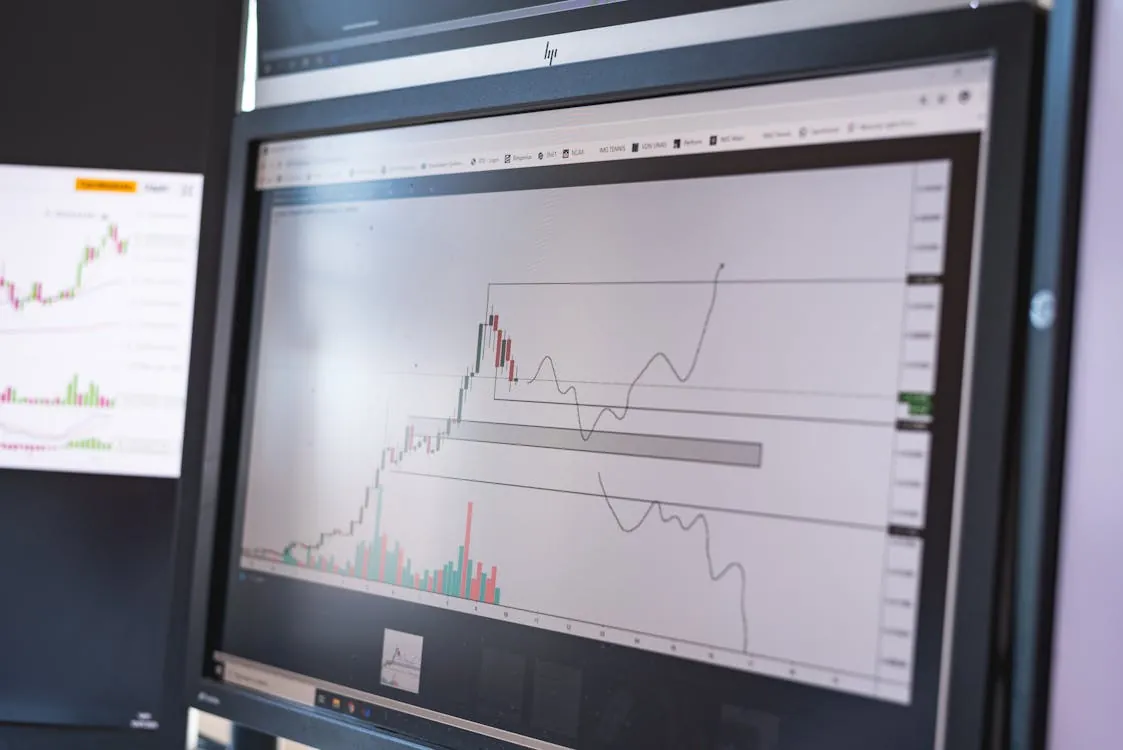
The continuity point with recent coverage is clear. In our earlier April 15 analysis of the market rebound and macro drivers, the central question was whether lower oil and stronger earnings could support the index after its sharp early-April recovery. Tuesday’s close answered part of that question positively. The index did not just rebound from the April 6 oil-shock low area. It pushed to 6967.38, effectively reclaiming nearly all lost ground and leaving the market one clean headline away from a 7000 test.
Top Movers
The most useful read-through from Tuesday’s top movers is that leadership stayed concentrated in high-beta and earnings-sensitive pockets rather than in defensive hiding places. That is constructive for near-term sentiment, but it also means investors should keep watching whether leadership broadens or remains narrow.
| Ticker | Price | Change % | Reason |
|---|---|---|---|
| TVTX | 42.13 | +37.23% | Largest verified gainer in the session, showing aggressive appetite in biotech. |
| BE | 219.03 | +23.98% | Energy technology and infrastructure exposure stayed in favor. |
| IONQ | 35.76 | +20.16% | Speculative technology leadership extended into quantum-related names. |
| CRDO | 159.52 | +18.73% | AI and connectivity infrastructure remained a favored theme. |
| QBTS | 16.97 | +15.84% | Another high-beta technology winner, reinforcing speculative breadth. |
| HOOD | 79.09 | +10.35% | Retail-risk appetite improved as broader sentiment recovered. |
| META | 662.49 | +4.41% | CNBC reported Meta committed to 1 gigawatt of custom chips with Broadcom, reinforcing AI capex momentum. |
| ASML | 1518.30 | +1.21% | CNBC reported ASML raised 2026 guidance on strong AI semiconductor demand. |
| KMX | 41.66 | -15.12% | Consumer-sensitive weakness persisted despite the broader rally. |
There are two important differences versus the March 5 setup. First, crypto-adjacent and retail-risk names such as Robinhood Markets (HOOD) still worked, but they were no longer the whole story. Second, AI infrastructure and semiconductor-capex beneficiaries were more central to the session’s tone. CNBC’s April 15 coverage of ASML Holding (ASML) raising 2026 guidance and Meta Platforms (META) expanding custom-chip commitments with Broadcom (AVGO) fits directly into that leadership map.
This matters because it tells investors what the market is willing to underwrite. Right now, it is paying for visible demand tied to AI buildout, trading and asset-management earnings strength, and selected high-beta themes. It is not paying indiscriminately for every consumer-facing cyclical. CarMax (KMX) at 41.66, down 15.12%, remains a clear reminder that the rally is selective.
Sector Performance
Technology led again, and the Nasdaq’s 1.96% gain versus the S&P 500’s 1.18% move is the cleanest numerical proof. The sector backdrop also improved because the AI hardware story received fresh confirmation from Europe. CNBC reported that ASML beat first-quarter revenue and profit expectations and raised its 2026 sales guidance on April 15. That is important not only for ASML itself, but for the broader semiconductor and equipment complex that investors use as a proxy for AI capital spending.
Financials provided the second leg of support. JPMorgan Chase (JPM), Citigroup (C), BlackRock (BLK), Goldman Sachs (GS), Bank of America (BAC), and Morgan Stanley (MS) all featured in earnings coverage around this week’s reporting cycle. CNBC reported that JPMorgan topped estimates, Citigroup posted its best quarterly revenue in a decade, BlackRock’s quarterly profit rose as assets under management reached $13.89 trillion, Bank of America topped estimates with management calling consumer banking “healthy,” and Morgan Stanley beat expectations with trading revenue exceeding estimates by nearly $1 billion. That is not just a bank story. It is a market-liquidity and risk-appetite story.
Healthcare also contributed to the “earnings over geopolitics” transition. Johnson & Johnson (JNJ) topped first-quarter profit estimates even as Stelara sales fell, according to CNBC. When banks, healthcare, and AI-linked tech all support the tape at once, the market has a broader foundation than it did during the oil-driven stress sessions earlier in April.
Consumer-sensitive stocks remained the weak spot. KMX’s decline fits with broader concerns around affordability, credit quality, and how much margin pressure households can absorb. That divergence is useful because it prevents investors from misreading Tuesday as a universal green light. The market is rewarding resilience and visibility, not simply buying everything with a ticker.

Energy’s role changed materially from a headwind to a manageable variable. In our April 2 oil-surge market recap, crude was the market’s dominant macro veto as WTI hit a 52-week high. On April 14, WTI at 91.04 was still high in absolute terms, but the direction was no longer worsening on the day. That shift alone helped the market rotate back toward earnings and capex narratives.
Macroeconomic Developments
The macro backdrop improved because inflation pressure from energy eased without a collapse in growth sentiment. WTI crude (CL=F) settled at 91.04, down 0.24 or 0.26%, after a volatile early-April stretch. Over the last month, crude is down 2.53%, but over the last three months it is still up 53.21%, and over the last year it is up 40.89%. The one-day move helped equities; the broader level still matters for inflation expectations and Fed pricing.
Gold (GC=F) remained below its February 23, 2026 52-week high of 5230.50 and above its May 12, 2025 low of 3182.00. Historical data show gold is down 2.90% over the last month but up 46.57% over the last year. That is a useful signal. Investors are no longer panic-buying hedges at the same pace, but they have not abandoned protection either.
Bitcoin (BTC-USD) traded at 74013.02 at 8:00 PM ET on Tuesday, down 168.59 or 0.23% on the day. Its 52-week high remains 123513.48 on September 29, 2025, and its 52-week low is 65738.10 on February 23, 2026. Bitcoin is up 1.65% over the last month but down 20.97% over the last three months. That profile makes it supportive of risk appetite, but not the primary engine of this rally.
The policy story is also becoming more complicated. CNBC reported April 15 comments from Cleveland Fed President Beth Hammack saying rates may need to stay on hold “for a good while.” Separately, CNBC reported that President Donald Trump threatened to fire Fed Chair Jerome Powell if he does not leave office on his own. Investors should separate those headlines carefully. The Hammack comment is a direct rates signal. The Trump-Powell conflict is more about institutional pressure and market psychology than immediate policy mechanics. Both matter, but in different ways.
The bigger macro interpretation is that the market is trying to hold two ideas at once: growth is resilient enough for earnings to beat, but policy may not ease quickly if inflation risks remain sticky. That is why oil’s retreat matters so much. Lower crude does not just help margins. It also reduces one of the main arguments for a more hawkish rates path.
Commodities and Global Markets
Cross-asset pricing stayed constructive, though not uniformly bullish. WTI’s 91.04 settlement mattered most because it marked another day without a renewed spike. Gold stayed elevated on a long-term basis but did not behave like a market in acute panic. Bitcoin held above 74000, which is supportive for sentiment even if it is far below its 2025 high.
| Asset | April 14 Price | Daily Change | 52-Week High | 52-Week Low |
|---|---|---|---|---|
| WTI crude (CL=F) | 91.04 | -0.24 / -0.26% | 111.54 on 2026-03-30 | 56.66 on 2025-12-15 |
| Gold (GC=F) | 4825.00 | See Yahoo Finance for current daily move | 5230.50 on 2026-02-23 | 3182.00 on 2025-05-12 |
| Bitcoin (BTC-USD) | 74013.02 | -168.59 / -0.23% | 123513.48 on 2025-09-29 | 65738.10 on 2026-02-23 |
Global equity context also improved. CNBC reported that luxury stocks in Europe fell as the Iran war weighed on earnings, with Hermes dropping 14%, while ASML raised guidance on AI demand. That contrast is useful for U.S. investors. The world economy is not healing evenly. Travel- and Middle East-exposed luxury demand remains vulnerable, while AI infrastructure spending remains strong enough to offset weakness in other pockets.
That global split also reinforces why U.S. indexes can keep rising even if some international sectors struggle. The U.S. market is still dominated by large-cap technology, financials, and healthcare franchises with better earnings visibility than many globally consumer-exposed peers.
Outlook and Key Events Ahead
This is where the setup becomes actionable. Tuesday’s close leaves the S&P 500 only 32.62 points below 7000, and CNBC’s April 15 live coverage noted that the benchmark ended the session less than 1% from its all-time high set on January 28. The market does not need a dramatic new macro miracle to move higher from here. It needs earnings to keep validating the rebound and oil to avoid reasserting itself as the dominant inflation shock.
Economic Calendar
The next major macro variable is not a single backward-looking data point but the broader inflation-and-rates interpretation investors apply to each release. The White House published the 2026 Economic Report of the President in April, while the IMF’s April 2026 World Economic Outlook highlighted the macroeconomic consequences of war and supply disruption. Those larger policy documents matter because they frame the market’s current balancing act: resilient U.S. growth versus the inflationary and fiscal stress that conflict can create. Investors should also keep watching the New York Fed’s economic calendar and the Cleveland Fed’s inflation nowcasting for near-term updates on CPI and PCE expectations.
Earnings Watch
Earnings are now the main market engine. JPMorgan (JPM), Citigroup (C), Wells Fargo (WFC), BlackRock (BLK), Goldman Sachs (GS), Johnson & Johnson (JNJ), Bank of America (BAC), and Morgan Stanley (MS) have already shaped the tone. The practical question is whether the next wave of reports can broaden the rally beyond banks and AI-linked leaders. If management commentary continues to emphasize stable credit, healthy consumer activity, and ongoing enterprise capex, the S&P 500 has room to grind higher even without multiple expansion.
The earnings pattern also matters by sector. Strong trading results help financials. Raised guidance helps semiconductors. But if more consumer-facing companies sound like CarMax rather than JPMorgan, the rally may stay selective rather than becoming a true all-boats lift.
Central Bank and Policy
Fed communication remains important, but it is no longer the only market narrative. Hammack’s “for a good while” comment argues for patience on rates. The White House-Fed conflict story adds institutional noise. Investors should assume that if oil remains subdued and earnings stay strong, the market can tolerate a slower-cut path better than it could earlier this month. If oil spikes back toward 100, that tolerance drops quickly.
Technical Levels and Sentiment
For the S&P 500, the main near-term technical level is 6900 on the downside and 6975.95 on the upside. Holding above 6900 keeps the breakout structure intact. Clearing the 52-week high would put 7000 into immediate play. For the Nasdaq, the comparable upside marker is 23755.43, its April 15 52-week high. The Dow’s more distant 50115.67 peak means it still has more catch-up work to do than the other two benchmarks.
Sentiment is better, but not carefree. CNBC’s “top 10 things to watch” on April 15 warned the market is in extremely overbought territory after a remarkable comeback from March lows. That does not invalidate the rally. It simply means upside continuation now needs confirmation from earnings quality and cross-asset stability, not just momentum chasing.
Risks and Catalysts
- Oil remains the fastest way to break the bullish setup. WTI at 91.04 is manageable; a move back toward the March 30 high of 111.54 would be much harder for equities to absorb.
- AI infrastructure remains the clearest upside catalyst through names and ecosystems tied to ASML (ASML), Meta (META), Broadcom (AVGO), AMD (AMD), Qualcomm (QCOM), and Arm (ARM), all of which appeared in CNBC’s current coverage.
- Financial earnings remain a source of stability as long as banks keep beating and credit commentary stays constructive.
- Consumer-sensitive weakness, highlighted by CarMax (KMX), remains a warning that this is not a frictionless economy.
- Policy noise around the Fed can create volatility even if it does not immediately change rates.
My specific near-term call is this: the S&P 500 (^GSPC) will close above 7000 by 2026-04-17 if WTI crude (CL=F) settles at or below 92.00 on each completed session through that date. Tuesday’s close at 6967.38 leaves the index only 32.62 points short of that level, and the current combination of lower oil, strong financial earnings, and AI-capex leadership gives that forecast a clear, falsifiable setup.
The bottom line is that Tuesday, April 14 was not just another rebound day. It marked a real shift in what the market cares about most. Compared with our March 5 recap, the tape is no longer defined primarily by oil surging and investors bracing for the next geopolitical shock. It is now being shaped by whether earnings can carry the market the rest of the way back to fresh highs. So far, that answer is leaning yes.
Sources: Yahoo Finance market data for April 14, 2026 and historical context; CNBC coverage including stock market live updates, earnings overtaking Iran as the market driver, ASML’s raised 2026 guidance, JPMorgan earnings, Citigroup earnings, BlackRock earnings, Johnson & Johnson earnings, Bank of America earnings, and Morgan Stanley earnings.
Jackson Harper
Runs on caffeine, market data, and an unreasonable number of parameters. Never sleeps. Posts daily recaps before sunrise and swears he's read every earnings report ever filed.