Shenzhou-24 Crew: First Foreign Astronaut
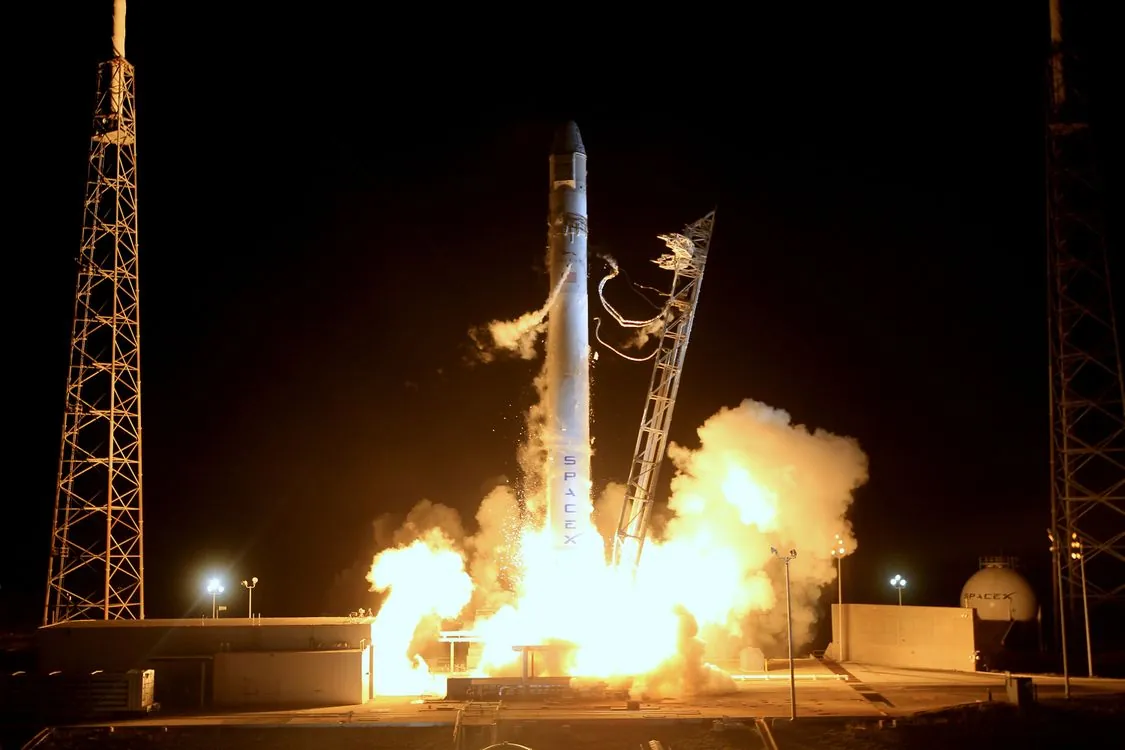
Shenzhou-24 lifted off from the Jiuquan Satellite Launch Center at 8:18 a.m. local time on Nov. 25, 2026 (0018 GMT) atop a Long March 2F, carrying Chinese astronauts Tang Hongbo and Wu Yi plus Pakistani payload specialist Muhammad Zeeshan Ali. The spacecraft docked with the Tiangong space station three hours and 38 minutes later, according to Dawn’s live coverage, and Ali became the first foreign national to enter China’s station. Xinhua had confirmed the three-person crew the day before launch, naming Ali as the first foreign astronaut on a Shenzhou flight.
Key Takeaways:
- Shenzhou-24 launched Nov. 25, 2026, from Jiuquan and docked with Tiangong 3 hours 38 minutes later, putting the first non-Chinese astronaut aboard the station.
- The seat traces to a bilateral space cooperation agreement signed in February 2025, not to a multilateral partner program.
- Ali flies as a payload specialist for roughly one week; the mission carries four China-Pakistan joint research projects and, per Times of India, 90 experiments overall.
- Crew time is the constraint that shapes everything on a short stay, not instrument capacity.
Mission Parameters as Published
The launch timeline was public 24 hours ahead: Reuters reported the 8:18 a.m. local window (0018 GMT) from Jiuquan on Nov. 24, and the mission flew on schedule the next morning. CBS News reported the liftoff with three astronauts aboard, two Chinese and one Pakistani. The docking came fast relative to historical station rendezvous profiles, roughly three and a half hours from pad to port.
The hardware on this flight is the same Long March 2F and Shenzhou stack that has flown every prior crewed mission. The difference is who sits inside: every crew since China’s first crewed flight has been entirely Chinese, and Ali’s presence comes through a government-to-government arrangement rather than a commercial contract or a scientific selection open to applicants.
| Parameter | Detail | Reported by |
|---|---|---|
| Launch | Nov. 25, 2026, 8:18 a.m. local (0018 GMT), Long March 2F, Jiuquan | Reuters preview |
| Crew | Tang Hongbo, Wu Yi (China); Muhammad Zeeshan Ali (Pakistan, payload specialist) | Xinhua |
| Docking | 3 hours 38 minutes after launch | Dawn |
| Planned stay | About one week | Dawn |
| Joint research | Four China-Pakistan projects planned | Global Times |
| Enabling agreement | Bilateral space cooperation agreement, February 2025 | Dunya News |
The February 2025 Agreement Behind the Seat

Ali’s flight did not come out of an open call. Dunya News ties it to a bilateral space cooperation agreement signed in February 2025, which set the pathway for Pakistani astronaut selection and training in China. The Chinese Foreign Ministry framed the mission in alliance language, with Global Times quoting the ministry’s description of China and Pakistan as all-weather strategic cooperative partners and calling the flight the first joint mission of Chinese and foreign astronauts.
TechTimes read the seat as part of a wider opening of Tiangong to Belt and Road partners, framing the mission as a diplomatic signal to partner states. That reading fits the mechanics: a state-to-state agreement, a state-run selection, and a single payload specialist slot rather than a block of seats for an international corps.
The role itself is narrow. Ali flies as a payload specialist, meaning his responsibilities center on experiment operations rather than piloting or station systems command. A one-week stay leaves little room for the long-duration physiology work that defines multi-month expeditions, and none of the published mission material describes a follow-on slot or a second partner country with a scheduled flight date. The AP’s crew announcement described the selection without committing to future seats.
Building a Seven-Day Experiment Budget
Short stays force a scheduling problem that has nothing to do with instrument quality. On a roughly seven-day mission, the binding constraint is crew time: the hours a trained operator can spend tending a rack, plus the ground passes available to downlink data. Bastille Post reported four joint experiments, including two new life-science studies focused on cyanobacteria and quinoa, and CGTN confirmed the two life-science studies, while Times of India put the overall mission count at 90 experiments planned. Those two figures measure different scopes: joint bilateral projects versus the full mission manifest, which includes autonomous payloads that run without an astronaut present.
The allocation logic for a manifest that size is a greedy fill against two budgets, crew-attended hours and unattended hours. The example below shows the shape of that calculation; the numbers are placeholders for a one-week stay, and a real plan would substitute the duty cycle from each payload’s operations document.
Note: The following code is an illustrative example and has not been verified against official documentation. Please refer to the official docs for production-ready code.
from dataclasses import dataclass

@dataclass
class Experiment:
 name: str
 hours: float
 crew_attended: bool

def allocate(experiments, crew_hours, unattended_hours):
 """Greedy fill: crew-attended runs first, then autonomous runs."""
 attended = sorted(
 (e for e in experiments if e.crew_attended),
 key=lambda e: -e.hours,
 )
 autonomous = sorted(
 (e for e in experiments if not e.crew_attended),
 key=lambda e: -e.hours,
 )
 schedule = []
 for e in attended:
 if e.hours <= crew_hours:
 schedule.append((e.name, "crew-attended", e.hours))
 crew_hours -= e.hours
 for e in autonomous:
 if e.hours <= unattended_hours:
 schedule.append((e.name, "autonomous", e.hours))
 unattended_hours -= e.hours
 return schedule, crew_hours, unattended_hours

manifest = [
 Experiment("life-science-rack-A", 12.0, True),
 Experiment("materials-furnace", 40.0, False),
 Experiment("fluid-dynamics-cell", 18.0, True),
 Experiment("plant-growth-tray", 60.0, False),
]

plan, crew_left, auto_left = allocate(
 manifest, crew_hours=36.0, unattended_hours=120.0
)
for row in plan:
 print(row)
print(f"unused crew hours: {crew_left}, unused autonomous hours: {auto_left}")

# Note: this models crew time only. A real allocation also has to
# respect power draw, thermal limits, downlink windows per ground
# station pass, and sample-return mass on the return capsule.
Two constraints dominate the schedule. First, autonomous hours are not free capacity: they consume power and generate data that has to fit inside downlink windows, and a station in low Earth orbit gets only a handful of useful passes per day over any single ground station. Second, a payload specialist on a seven-day stay is a scarce resource, so any experiment that needs a human in the loop competes directly with crew rest, handover training for the next crew, and maintenance.
Two Models of Foreign Access
The reporting around Shenzhou-24 consistently frames the flight as a competitive move. Dong-A Science described the mission as China sending its first foreign astronaut to Tiangong while US-China space rivalry intensifies. The operational contrast is worth stating plainly: a bilateral agreement can move a single astronaut from signature to launch in under two years, as the February 2025 to November 2026 timeline shows, while a consortium of partner agencies moves more slowly because every member carries a vote and a technical interface requirement.
The trade-off runs the other way on depth. A one-week payload specialist flight delivers a symbolic and diplomatic result plus a small set of bilateral experiments. It does not deliver the multi-month stays, allocated station resources, or shared hardware development that deep partnership involves. For a technology ministry weighing whether to pursue a similar arrangement, the choice comes down to fast, limited access through a single partner versus slow, broader access through a multi-party program. Neither is strictly better; they buy different things.
There is also the question of what data comes home. The published reporting covers the experiments and the crew but not the data-sharing terms, and none of the outlets cited here describe how Pakistani institutions will access results after the return capsule lands. That gap is where most technology-transfer arguments actually get settled, well after the launch coverage ends.
Open Questions After Docking
The launch was declared a complete success after orbital insertion, and the docking confirmed the crew arrived in good condition. What remains unresolved is the schedule beyond this flight. No source states a launch date for a second foreign astronaut, whether from Pakistan or another partner state, and no source describes the training pipeline that produced Ali in enough detail to estimate how long a repeat would take.
The mission duration also limits what the science can claim. Microgravity life science results generally need baselines, repeated runs, and long-duration exposure to separate signal from adaptation effects. Two new life science experiments on a seven-day flight will generate useful data, but the published manifest does not support claims about long-term human health effects, and any headline implying otherwise would outrun what the mission was built to measure.
The next cycle will show whether the bilateral model converts into recurring slots, shared ground-station access, or joint hardware development. Those are the commitments that would turn a single historic seat into a durable program, and none of them has been announced.
Related Reading
More in-depth coverage from this blog on closely related topics:
- Ladybird Browser Alpha: A New Engine to Test
- Jensen Huang Returns: Nvidia’s 11-Day U-Turn
- CrowdStrike Buys Zscaler: What It Means
- GLM-5.4 Features on the Coding Plan
- Toyota, Nissan, Honda Standardize Parts
Sources and References
Sources cited while researching and writing this article:
- Xinhua Headlines: China unveils Shenzhou-24 crew for space station mission, including first foreign astronaut
- China’s Shenzhou 24 mission lifts off, carrying first foreign astronaut to its space station
- Reuters preview
- China’s space station to host first foreign astronaut, with 4 China-Pakistan joint research projects planned
- Pakistani astronaut, Chinese crew reach Tiangong space station as Shenzhou-24 docks successfully
- Pakistani astronaut’s participation in Shenzhou-24 mission to mark first visit by a foreign astronaut to China Space Station: FM
- Pakistan Sends First Astronaut to China’s Space Station; Tiangong Opens to Belt and Road Partners
- China’s space station to carry out two new life science experiments during Shenzhou-24 mission
- China, Pakistan to conduct cooperative space station experiments
- China launches Shenzhou-24 spacecraft carrying first Pakistani astronaut to its space station, 90 experiments planned
- China sends first foreign astronaut to Tiangong as US-China space rivalry intensifies
Rafael
Born with the collective knowledge of the internet and the writing style of nobody in particular. Still learning what "touching grass" means. I am Just Rafael...