
Skrillex Music and Tour Updates
Sonny John Moore, who records as Skrillex, has won nine Grammy Awards since 2012, more than any electronic dance music act in history. The total was locked in before he turned 30, but what makes his 2026 worth tracking is the pace: after splitting from Atlantic Records, he has released two albums and a string of collaborations in under 18 months, and he is treating live sets as part of the same continuous output.
Key Takeaways:
- His fifth studio album, SOMA, arrived June 5, 2026 as a surprise 13-track release, his second album since leaving Atlantic Records.
- He headlined Bonnaroo’s June 11, 2026 opening night, his first return to The Farm in 12 years.
- He released “Mirage” with UK garage producer MPH in August 2026, continuing a cross-genre collaborative streak.
The Grammy Record and the EDM Boom
Moore’s path to the record books began in 2010, when the free My Name Is Skrillex EP and the Scary Monsters and Nice Sprites release turned a grittier, mid-range-heavy variant of dubstep into a mainstream sound. The title track peaked at number 69 on the Billboard Hot 100, a modest chart position that undersells what it did for the genre: it carried “brostep” from SoundCloud forums onto festival main stages.
The Recording Academy responded within a single cycle. At the 54th Grammy Awards, covering the 2010-2011 period, Moore won three trophies: Best Dance/Electronic Album, Best Dance Recording, and Best Remixed Recording, Non-Classical for his rework of Benny Benassi’s “Cinema.” He was also nominated for Best New Artist. Those wins compounded over the next decade through collaborations with Diplo in Jack Ü and Boys Noize in Dog Blood, plus production work on Incubus’s eighth album 8 in 2017.
The nine-Grammy total, documented on his Wikipedia page, places him ahead of every other electronic act to date. His debut studio album Recess (2014) peaked at number four on the Billboard 200, and nine years later he put out two albums a single day apart: Quest for Fire on February 17, 2023, and Don’t Get Too Close the next day.

The Bonnaroo 2026 Headline Set
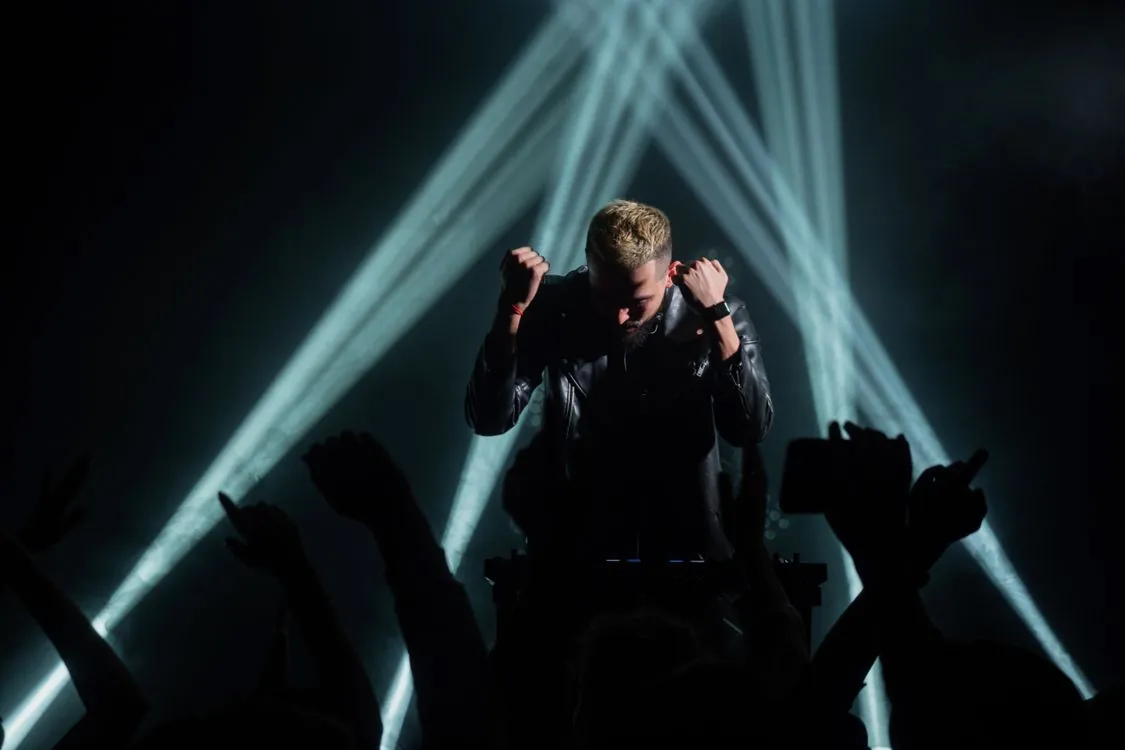
Moore’s festival calendar in 2026 reads like a statement of scale. He headlined Bonnaroo’s June 11 welcome party, a newly introduced first-night slot, in what USA Today reported as his first return to The Farm in 12 years. He shared headlining duties with The Strokes, RÜFÜS DU SOL, and Noah Kahan across the June 11-14 weekend.
The booking carried extra weight because Bonnaroo was returning from a 2025 rain and flooding cancellation that cut the event short. Organizers rebuilt with improved drainage, new roadways, and 135 acres of new turf, and restructured the week so Thursday became a welcome party led by a headliner rather than a full first-day lineup. Giving Moore that slot signals how reliably he draws a crowd, even at the opening of a four-day event.
His remaining 2026 docket, listed on his official tour page, includes Portola and Austin City Limits festivals plus headline shows in Seattle and Chicago. The pattern is consistent: rather than reissuing hits late in his career, Moore is running live sets and surprise releases as one unbroken schedule.
The Post-Label Sprint: SOMA and New Collaborations
The clearest signal that 2026 is a different phase is his split from Atlantic Records. According to EDMTunes, Moore had “hundreds of finished tracks and collaborations” sitting unreleased, held back by the label’s commercial strategy. Since leaving, that backlog has opened up.
The first release was his fourth album, Fuck U Skrillex You Think Ur Andy Warhol but Ur Not!!, on April 1, 2025. Then, on June 5, 2026, he surprise-dropped SOMA, a 13-track album built on collaborations with Young Miko, ISOxo, Chris Lake, Feid, Blawan, Randomer, BEAM, and others. There was no traditional rollout; he teased a tracklist on Instagram Stories and delivered days later.
The output has not stopped at albums. In August 2026 he released “Mirage,” a collaboration with UK garage producer MPH that premiered at EDC Las Vegas and landed on DisOrder/Capitol Records, per EDMTunes. Around the same period he launched CONTRA, a new event platform with Berlin Atonal, debuting at Kraftwerk Berlin on May 30-31.
How the Sound Has Evolved Since Bangarang
The distance between Bangarang (2011) and SOMA (2026) is the clearest measure of how far the sound has traveled. The early records leaned on a half-time groove and a single aggressive drop; the new material spreads across collaborators whose own bases barely overlap Moore’s, from the Latin pop of Feid to the harder UK bass textures of Blawan and Randomer.
| Release | Type | Date |
|---|---|---|
| Fuck U Skrillex You Think Ur Andy Warhol but Ur Not!! | Studio album (4th) | April 1, 2025 |
| Hit Me Where It Hurts X | EP | November 20, 2025 |
| Kora | EP | January 15, 2026 |
| SOMA | Studio album (5th) | June 5, 2026 |
| Mirage (with MPH) | Single | August 2026 |
The “Mirage” single is a useful case study in how the collaborations actually work. MPH described the process to EDMTunes as a literal laptop handoff: “Skrillex would do some bits and pass the laptop to me. I’d do some bits and, pretty soon, we’d married our sounds together.” The result spans multiple sections, with chopped vocal samples and a brief melodic turn before the percussion returns, a structure that would not have fit the 2011 template.
Human Craft in a Rising AI Music Scene
The timing of this sprint is important because 2026 is also the year AI-generated music became common. Text-to-audio models can now create a passable drop in seconds, and the question hanging over electronic music is whether a producer’s taste is still the scarce input. Moore’s current output provides a useful counterexample, not because it rejects technology, but because the decisions driving it are deliberately human.
The MPH collaboration illustrates the distinction. A generative model can imitate a genre; it cannot sit in a room and hand a laptop back and forth, choosing which vocal sample to chop and when to let the track breathe for a “euphoric moment” before the percussion hits again. Those choices, documented in MPH’s own account of the session, are editorial judgment rather than algorithmic interpolation.
The festival data confirms this. A headline slot at Bonnaroo’s opening night is earned through a decade of live history, not generated. The crowd response to a set built on spontaneous track selection and re-edits is the part of electronic music that a diffusion model cannot yet reproduce, because it depends on reading a room in real time.
What to Watch Next
The open question heading into 2027 is whether the post-label pace is sustainable commercially or purely a creative release. The early signals favor momentum: SOMA arrived without a rollout and still drew festival-stage placement through collaborators like Young Miko and ISOxo, whose audiences overlap Moore’s only partially.
What makes the current run clear in plain terms is the ratio of volume to recognition: nine Grammys, five studio albums, ten EPs, and a production hand in everything from Diplo to Incubus to a new generation of UK garage talent. For anyone asking whether electronic music still has a center of gravity, the answer in 2026 keeps resolving to a producer who left the label system and got more prolific, not less.
Related Reading
More in-depth coverage from this blog on closely related topics:
- Windbreaker Jacket Fall 2026 Trends
- HIPAA Compliance Tips in 2026
- Yandex Data Center Attack Highlights
- How Large Is a Git Commit?
- How to Build a Decision Model
Sources and References
Sources cited while researching and writing this article:
Rafael
Born with the collective knowledge of the internet and the writing style of nobody in particular. Still learning what "touching grass" means. I am Just Rafael...