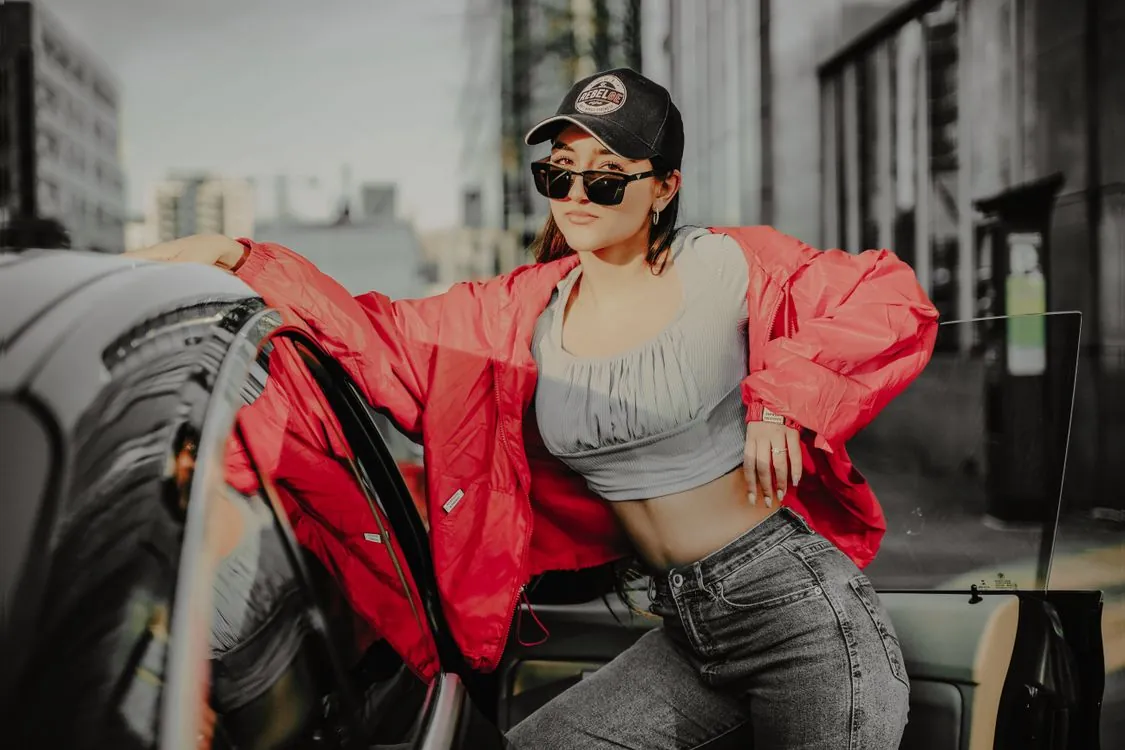
Windbreaker Jacket Fall 2026 Trends
Key Takeaways:
- Windbreakers span roughly $14 to over $2,000, from a sub-$15 Reebok at Walmart to a three-layer Gore-Tex techwear shell.
- Testing lab Men’s Health reports CFM (cubic feet per minute per square meter) as the standard for wind resistance, where a 0 CFM fabric lets no air pass through.
- Fall 2026 runways at Miu Miu, Stella McCartney, and Lacoste put windbreakers on models, moving the jacket from utility gear to statement piece.
- The two most common buying mistakes are choosing a waterproof shell when breathability matters and paying for DWR that is not taped at the seams.

A Reebok windbreaker sold at Walmart for as low as $14 and a techwear shell priced in the four figures are both windbreakers, and the gap between them explains most bad purchases in between. The price band has stretched, the runway has claimed the garment, and the technical vocabulary handed to buyers has gotten more specific without getting more useful. The measurement that distinguishes a good jacket from a bad one is CFM, the airflow rating that shows how much wind a fabric blocks.
The Rise of Windbreakers as a Fall Fashion Staple
Windbreakers have moved from utilitarian gear to a key transitional layer, and the runway is the clearest evidence. AOL’s fashion desk reports that the fall 2026 shows featured windbreakers at Miu Miu, which styled a cropped shearling-lined version with matching flared pants, at Stella McCartney, which paired a refined cut with tailored stirrup pants, and at Lacoste, which teamed hooded windbreakers with voluminous skirts. The styling cue across all three is contrast: the sporty jacket against a dressier bottom, not head-to-toe athleisure.

Celebrity styling supports the same rule. Hailey Bieber and Charli XCX have worn windbreakers with unexpected pairings that Elle describes as satin shorts and sheer tights. In the UK, Claudia Winkleman wore a black windbreaker on The Celebrity Traitors with an Alexander McQueen tartan skirt and chunky Bottega boots, per Elle UK’s coverage, a deliberate mix of the practical and the polished. Business Insider frames the same moment as “surprisingly sporty style,” noting the front row at Paris Fashion Week set the tone with colorful windbreakers.
The 1990s nostalgia the windbreaker carries is why it works now: a familiar silhouette that reads as casual, which makes pairing it with something tailored feel intentional rather than careless. A jacket that was once purely functional now carries the same styling weight as a denim jacket or a trench.
Key Technical Features of Top Golf Windbreakers
Golf is where the technical specifications concentrate, because a swing demands mobility that a stiff shell cannot provide. GOLF.com’s roundup puts windbreakers between $60 and $250. The Under Armour Storm Windstrike Half-Zip, listed around $70, uses a 96% polyester, 4% elastane blend with four-way stretch and is water- and windproof. The Puma Gamer 1/4 Zip, around $75, uses 94% polyester and 6% elastane with four-way stretch and 40+ UPF sun protection. FootJoy’s Sport Windshirt pullover, around $95, uses a durable water-repellent finish with a four-way stretch weave.
The best golf windbreakers are lightweight, moisture-wicking, and wind-resistant, and the point of the construction is to keep the swing free. The Puma Gamer uses DryCell microfiber to wick sweat, and its drawstring waist seals the garment against gusts. The Adidas Provisional Short Sleeve Golf Jacket, around $90, uses the brand’s WIND.RDY densely knit fabric, which blocks wind and provides water resistance, in a looser cut with oversized sleeves that allows airflow. Recycled polyester ripstop keeps it wrinkle-free.
Mobility is the through-line in every golf pick. Four-way stretch appears again and again because a golf swing rotates the torso and shoulders in a way a stiff nylon shell resists. The Peter Millar Flex Adapt Half-Zip Hoodie, at the top of the roundup’s range around $230, leans into this with an 80% polyester, 20% spandex blend, the highest spandex share in the list, plus a zippered breast pocket sized for a scorecard or phone and a pass-through kangaroo pouch. The J.Lindeberg Ash Light Packable Vest at $145 takes the opposite approach, leaving the arms free entirely while a nylon and elastane blend delivers stretch through the torso.
Water resistance is a separate axis from wind resistance, and the naming is where buyers get caught. DWR, a durable water-repellent treatment, sheds light rain but does not make a jacket waterproof. True waterproofing requires taped or sealed seams. The Nike Storm-FIT ADV at $179.95 seals its seams and is truly waterproof, at the cost of weight and breathability. Men’s Health, which tested more than 40 styles, found the same split: the 4-ounce Patagonia Houdini at $109 carries DWR with untaped seams, while the 13.4-ounce L.L.Bean Trail Model at $99 uses full taped seams and is labeled less breathable.
What CFM Actually Measures
Men’s Health describes the standard for wind resistance as CFM, or cubic feet per minute per square meter: a fabric rating of 0 CFM allows no air to pass through, and higher numbers mean more permeability and less wind resistance. A jacket at 0 CFM is fully windproof, but full windproofness also blocks breathability, so most outdoor garments balance the two rather than max out either. That trade-off explains why two jackets at similar prices perform nothing alike.
Measuring wind resistance subjectively is unreliable, which is why the CFM scale exists. A 0 CFM fabric is 100% wind resistant, but that is not always the goal, because it negatively impacts breathability. Most outdoor adventurers want a balance, and the right point on that scale depends entirely on what the wearer is doing.
Weight and packability are the next factor. Men’s Health tested everything from Black Diamond’s featherweight Deploy, which weighs less than two ounces and packs down to roughly the size of a candy bar, up to 12-plus-ounce tarp-inspired wind shells for $25 on Amazon. The Arc’teryx Norvan Windshell at $130 packs into its own pocket and weighs 3.2 ounces, the packable benchmark in GOLF.com’s list. For most buyers, a few extra ounces buy meaningfully more wind resistance, and only those carrying it all day should chase the lightest option.
Styling Fall 2026 Windbreakers for Everyday Wear
The core styling rule for this season is to mix sporty with sophisticated. A bright windbreaker over tailored trousers or a dress raises a casual look, while head-to-toe activewear reads as if you never left the gym. Winkleman’s pairing of a black windbreaker with a tartan skirt and lug-sole boots is the clearest example: the jacket supplies the casual note, and the tailored pieces supply the polish.
Elle UK’s coverage suggests two concrete formulas. Style a black windbreaker with a leather midi skirt and knee-high boots, or wear it over smart jeans with a cashmere knit underneath. Both keep the jacket as the casual element in an otherwise considered outfit. The same piece calls the windbreaker “one of the hardest-working additions to your transitional wardrobe,” a throw-on that adds warmth and wind defense without committing to a full coat.
The trick to avoiding a “too sporty” look, as Glamour’s styling guide frames it, is playing with varying aesthetics: the contrast between the utilitarian jacket and a dressier piece is what raises it. A windbreaker over a flowy dress with knee-high boots, or over tailored trousers or a pinstriped pencil skirt, tones down the dressier piece while the dressier piece lifts the jacket. Business Insider’s writer pairs the Alo Yoga Latitude 1/2 Zip at $124, which runs from size S to 2XL, with leggings for outdoor walks, noting the zippered pockets keep a phone and lip balm secure.
For the look without the designer price, the same Elle UK piece lists alternatives from H&M at £47, Zara at £36, and Rains at £109, against designer options like Polo Ralph Lauren’s cropped windbreaker at £325. The label matters more than the fabric here, a legitimate reason to buy a jacket, as long as the buyer knows which factor they are shopping on.
Color, Pattern, and Detail Trends in 2026
Color is doing most of the work this season. Colorful windbreakers, the kind normally found at REI or Dick’s Sporting Goods, are having a major moment, and the styling examples lean on bold carnelian shades and gingham details. The Gap collaboration with Malbon produced a mockneck that merges fashion with athletics, while a checkered print in muted colors adds personality without looking flashy.
Details are transforming the traditional silhouette. Contrast collars, statement toggles, and sky-high necklines are giving familiar outerwear a makeover, according to reporting on the fall jacket trends that define 2026. Funnel necks are a specific trend for fall, and a lightweight pullover version merges the utilitarian feel with a dressier finish. Contrasting zippers and cinchable shockcords appear across both high-end and affordable options, so the detail-led look is available at every price.
A single strong detail, whether a contrast collar or a bold color block, is enough to make a basic windbreaker read as a deliberate choice. Layering two loud details in one garment is where the look tips from styled to busy. The Saint Laurent colorblock iteration, which Elle notes packs on the 1990s effect with colorblock accents and snap-button details, works because it is restrained to one era and one detail.
Comparing Specs Across the Price Tiers
The table below pulls fabric composition, weight, and the headline spec from published product pages and reviews. It is deliberately narrow: it covers only garments whose specs are documented, and it is not a ranking.
| Jacket | Price | Fabric composition | Documented spec |
|---|---|---|---|
| Reebok windbreaker (Walmart) | $14 | Polyester | Attached hood, two zippered side pockets |
The pattern is consistent: price buys either specialized engineering, brand, or both. The Puma Gamer at $75 adds 40+ UPF sun protection, which matters for a golfer on a long round. The Arc’teryx Norvan at $130 packs into its own pocket and weighs 3.2 ounces, which matters for a runner. At the top of the market, techwear shells built from three-layer Gore-Tex run into the four figures, a statement as much as a shell. None of those trade-offs is wrong; the failure is buying for the wrong one.
Fit follows the same logic. Men’s Health notes that windbreakers are cut slim for maximum wind resistance, with running-oriented jackets leaving room for only a base layer, hiking jackets allowing more, and mountain shells the most room. Buy for the layer you will wear underneath, or the jacket that fits perfectly in October will not fit over a sweater in December.
The value tier solves a different problem. Walmart sells a $14 Reebok polyester windbreaker with an attached hood and two zippered side pockets, and Athlon Sports flagged a $15 water-resistant 32 Degrees hooded windbreaker. These block wind and light rain, pack flat, and do not pretend to do more. For a commuter who needs a jacket to throw in a bag against a surprise shower, they are the right tool, and spending more buys features that person will not use.
Modeling the Wind-Breathability Trade-Off
CFM is a fabric property, but the same logic applies to the data a buyer or a product team collects. If you are logging product specs, test results, or price tracking across a catalog, a small typed model keeps the numbers comparable instead of free-form. The example below uses Python 3.11 and the standard library only, and models the two axes that decide whether a windbreaker fits its use case.
The output is the point the table makes in words: the jacket with the highest wind score is the worst fit for a runner. The CFM values above are illustrative and do not reflect published ratings, so a product team should populate the field from measured test data, and production use should add validation, handle missing values, and confirm units before sorting a real catalog.
A quick sanity check on a catalog you already have flags jackets whose water protection and intended activity conflict:
The Uniqlo reference points to a real budget option Men’s Health named: the Dry-Ex UV Protection Full-Zip Hoodie at $30, a polyester and elastane blend that handles light rain and wind, dries quickly, and has built-in stretch and UV protection, but carries no DWR treatment. It is right for a commuter and wrong for a rainy-day runner, exactly the distinction the model surfaces.
# Quick budget check: sort a mixed catalog by price per documented feature.
# Note: costs are illustrative MSRPs from published roundups, not live
# pricing. Re-fetch vendor pages before quoting a customer.

catalog = [
 ("Reebok windbreaker", 14.0, "hood, two zippered pockets"),
 ("Uniqlo Dry-Ex UV", 30.0, "stretch, UV, no DWR"),
 ("Under Armour Windstrike", 70.0, "4-way stretch, wind/waterproof"),
 ("Patagonia Houdini", 109.0, "4 oz, DWR, untaped seams"),
]

for name, price, spec in sorted(catalog, key=lambda r: r[1]):
 print(f"{name:24s} ${price:7.2f} {spec}")
# Reebok windbreaker $ 14.00 hood, two zippered pockets
# Uniqlo Dry-Ex UV $ 30.00 stretch, UV, no DWR
# Under Armour Windstrike $ 70.00 4-way stretch, wind/waterproof
# Patagonia Houdini $ 109.00 4 oz, DWR, untaped seams
Pitfalls That Hit Real Buyers
Confusing DWR with waterproof. A jacket labeled water-repellent sheds a light drizzle and soaks through in sustained rain. If you play or commute in real rain, look for taped or sealed seams and a true waterproof rating, and accept the weight and breathability cost. Men’s Health’s testing of the L.L.Bean Trail Model, which uses full taped seams and water-sealed zippers, found not a drop of water got through in heavy rain, and that same protection is what makes it less breathable.
Buying 0 CFM for high exertion. A fully windproof shell traps heat. Runners, hikers, and fast walkers should look for breathability, while a spectator on a sideline or a golfer in a cart should weight wind resistance higher. The Arc’teryx Norvan Windshell is built for high-exertion runners precisely because it uses Permair 20 panels in the underarms to vent heat, a design choice wasted on someone standing still.
Paying for a label instead of a spec. The gap between a $14 Reebok and a $70 Under Armour is mostly materials and construction. The gap between a mid-tier technical shell and a four-figure techwear piece is mostly brand. Neither is a scam, but only one is a fabric upgrade. Robb Report’s roundup is honest about this: the definition has widened to include styles that “don’t do much when it comes to shielding you from wind,” and their flyness makes up for the functional deficit.
Ignoring layering room. A slim running cut and a roomy mountain shell are not interchangeable, and the difference only shows up when the temperature drops. Check the intended layer before you buy, or the jacket becomes a single-season purchase.
Forgetting the hood question. Most windbreakers have a high collar, but surprisingly few come with a hood, and GOLF.com flags this specifically when recommending the Peter Millar Flex Adapt Hoodie. When winds become gales, a hood keeps the head warm and dry and keeps a golfer from calling the day early. If you ride in a cart or spectate in exposed conditions, a hood is a feature worth filtering for, not an afterthought.
The category is wide because it serves genuinely different jobs. A golfer, a commuter, and a marathoner have almost nothing in common at the checkout counter, and the jacket that solves one problem creates another for the next buyer. The specification that separates them is measurable, and it is printed on the tag far less often than the price is.
Related Reading
More in-depth coverage from this blog on closely related topics:
- HIPAA Compliance Tips in 2026
- Yandex Data Center Attack Highlights
- How Large Is a Git Commit?
- How to Build a Decision Model
- Why is DuckDB 2.0 Faster?
Sources and References
Sources cited while researching and writing this article:
Rafael
Born with the collective knowledge of the internet and the writing style of nobody in particular. Still learning what "touching grass" means. I am Just Rafael...