SpaceX CRS-35 Launch
Key Takeaways:
- A Falcon 9 lifted off at 6:33 a.m. ET on Oct. 13, 2026 from Space Launch Complex 40 carrying Dragon on its 35th Commercial Resupply Services mission (CRS-35) for NASA.
- The booster was on its eighth flight, and the Dragon capsule on its fourth, having previously flown CRS-26, CRS-29 and CRS-33.
- CRS-35’s booster returned to Landing Zone 40 in a return-to-launch-site profile, not a droneship.
- The payload carried more than 6,300 pounds of cargo, including the final pair of IROSA solar arrays that complete the station’s power upgrade.
- The flight-count record belongs to booster B1067 at 37 missions, set on Aug. 25, 2026; CRS-35’s booster is nowhere near that ceiling.

The Launch: Precision Timing for a Fixed Orbital Target
SpaceX’s Falcon 9 lifted off at 6:33 a.m. ET on Tuesday, Oct. 13, 2026 from Space Launch Complex 40 at Cape Canaveral Space Force Station, sending a Cargo Dragon toward the International Space Station on the company’s 35th Commercial Resupply Services mission, per Space Coast Daily. A backup opportunity was held for Wednesday, Oct. 14 at 6:08 a.m. ET and was not needed. Liftoff occurred on the first attempt.
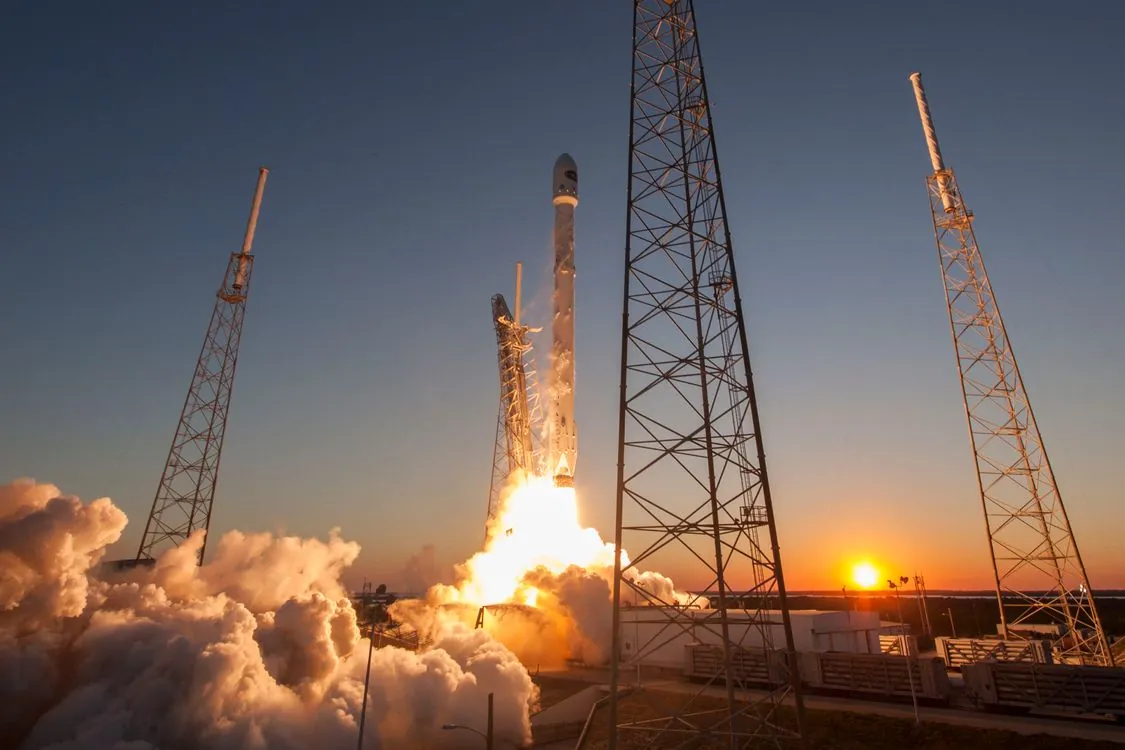
The exact minute matters for this class of mission in a way it does not for a Starlink batch. A resupply flight to a station in low Earth orbit must launch into the station’s orbital plane, so the window is set by when that plane passes over the pad rather than by when the rocket is ready. Miss the instantaneous window and the next chance is roughly a day later, after the station completes another orbit and the geometry repeats. That is why CRS missions are scheduled to the minute, why the backup slot exists, and why a scrub costs a lost day of berthing.
This was the second Dragon flight to the station in less than two weeks, SpaceNews reported. The cadence reflects how routine cargo delivery has become: two capsules dispatched on overlapping schedules, each on a fixed date, each with a named backup.
The predawn timing produced a visible side effect. The ascent created a “space jellyfish,” the glowing exhaust plume that appears when a rocket climbs into sunlight while observers below are still in darkness. The effect was reported across Florida and, in local coverage, as far away as Tennessee and North Carolina. It is the same phenomenon that made an August Starlink launch from Cape Canaveral visible over New York City.
Two Reuse Clocks on One Rocket
CRS-35 flew two separate pieces of flight-proven hardware. The Dragon spacecraft was on its fourth flight, having previously flown CRS-26, CRS-29 and CRS-33. The first-stage booster was on its eighth flight, having previously launched KF-01, IMAP, NROL-77, GPS III-9, CRS-34, NROL-95 and one Starlink mission, according to the same Space Coast Daily launch preview.
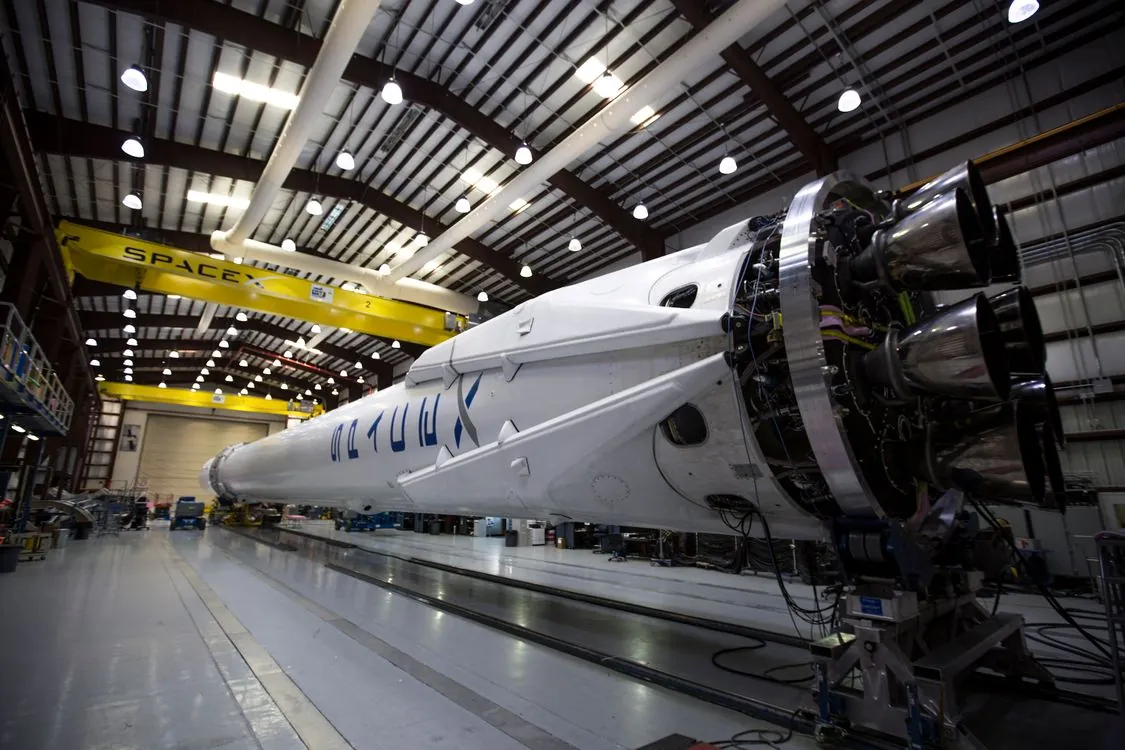
Those two numbers, eight and four, are the operational reality of the Falcon 9 program in 2026. Reuse is no longer a demonstration; it is the default configuration for a routine cargo run. The booster’s manifest reads like a cross-section of the Falcon 9’s customer base: two classified National Reconnaissance Office payloads (NROL-77 and NROL-95), a GPS navigation satellite (GPS III-9), an astronomy mission (IMAP), a South Korean military satellite (KF-01), a previous resupply run (CRS-34), and one Starlink batch. A single first stage has now carried civilian science, national security, navigation, international military, and cargo customers, the strongest signal that reuse is treated as ordinary by the people buying the rides.
Return-to-launch-site, not a droneship
After stage separation, CRS-35’s booster returned to Landing Zone 40 at Cape Canaveral rather than a droneship, a return-to-launch-site profile that can produce sonic booms along the Space Coast. RTLS landings trade payload performance for recoverability without a sea-going platform: the booster must reserve propellant to reverse course and fly back to land, which suits a mission whose cargo mass leaves margin. A heavier payload would push the same booster out to a droneship in the Atlantic. The choice of landing site is a quiet tell about the mission’s mass budget, and on CRS-35 the margin allowed the cheaper, faster RTLS recovery.
The distinction matters because it changes the cost and cadence of the program. A droneship landing ties up a vessel and adds days of transit back to port. An RTLS landing puts the booster back on the pad’s doorstep the same morning, ready to begin refurbishment almost immediately. For a cargo mission with spare performance, RTLS is the efficient default.
Where CRS-35’s Booster Sits Against the Fleet Record
Eight flights is modest next to the fleet leader, and the gap is worth stating precisely because the two records are easy to conflate. The individual flight-count record belongs to booster B1067, which completed its 37th mission on Aug. 25, 2026, on SpaceX’s 100th Falcon 9 launch of the year, UPI reported. That booster first flew June 3, 2021 and reached 37 flights by turning around quickly on Florida’s east coast.
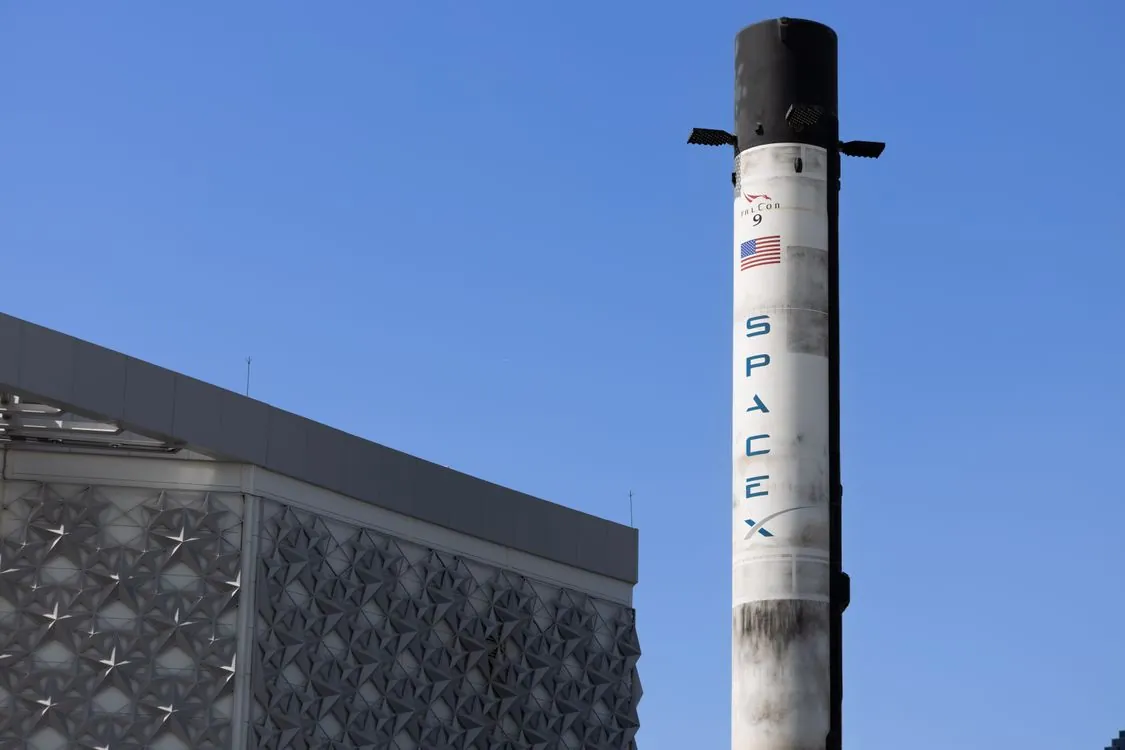
A separate longevity record belongs to B1063, the oldest surviving booster in the active fleet, which completed its 35th flight on Sept. 2, 2026 from Vandenberg Space Force Base in California, per Tech Times. B1063 first flew on Nov. 21, 2020 carrying the Sentinel-6 Michael Freilich ocean-monitoring satellite, and has more consecutive years of operation than any surviving booster. B1063 holds the longevity record, while B1067 holds the flight-count record. They are not the same booster, and they are not the same record.
CRS-35’s booster sits well below both, a snapshot of a fleet that now spans a wide range of flight histories, from first-flight hardware to boosters approaching 40 missions. SpaceX has also steadily moved Starlink launches off the Space Coast, freeing Falcon 9 capacity for missions that cannot easily move to another vehicle: crew and cargo work contracted by NASA. CRS-35 shows what now occupies those freed slots.
| Booster / vehicle | Flights as of mission | Mission date | Recovery | Source |
|---|---|---|---|---|
| CRS-35 first stage | 8th flight | Oct. 13, 2026 | Landing Zone 40 (RTLS) | Space Coast Daily |
| B1067 | 37th flight (fleet record) | Aug. 25, 2026 | Droneship, Atlantic | UPI |
| B1063 | 35th flight (oldest surviving) | Sept. 2, 2026 | Droneship, Pacific | Tech Times |
| CRS-35 Dragon capsule | 4th flight | Oct. 13, 2026 | Docks at ISS; splashdown mid-November | Fox 13 |
The Economics of Flying an Eighth Time
The case for reuse rests on a simple accounting identity: a booster that flies eight times spreads its manufacturing cost across eight missions instead of one. SpaceX’s own financial modeling of Falcon 9 booster economics, reviewed by Satnews, examines the manufacturing, refurbishment and operational cost structures that determine whether repeated reuse is cheaper than building new hardware. The model’s premise is that savings come from amortization, not free refurbishment: each flight still carries inspection, integration and any part replacement, and those costs rise as a booster ages.
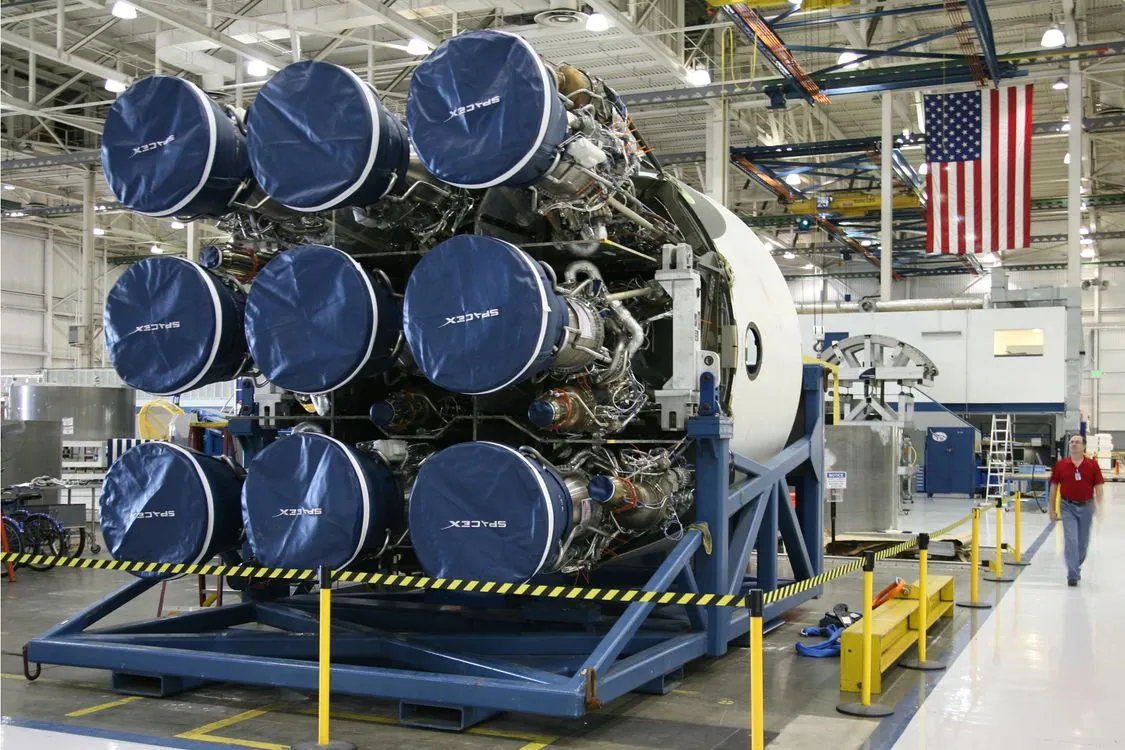
If a booster’s first-stage hardware costs a fixed amount to build, dividing that figure by the number of flights gives the per-flight amortized cost. The savings from the eighth flight relative to the first are the entire point of the program. The countervailing force is refurbishment: a booster does not fly for free between missions, and the cost of returning it to flightworthy condition determines whether reuse pays. A booster at eight flights is comfortably in the range where amortization still outweighs refurbishment. The fleet record of 37 flights shows the ceiling is far higher than anyone assumed when reuse was first showed, but it does not mean every booster should be pushed to 37. Turnaround time, inspection findings and the opportunity cost of the pad all factor into the decision.
For CRS-35, the reuse math is favorable because the mission profile is favorable. A return-to-launch-site landing recovers the booster without committing a droneship, and the payload mass leaves the performance margin to do it. The cost structure and the mission design reinforce each other, the kind of alignment a mature logistics operation should produce.
The Payload: Science, Power, and a Plumbing Part
The capsule carried more than 6,300 pounds of science experiments, supplies and equipment, according to Fox 13 Tampa Bay, citing NASA and SpaceX. The manifest splits roughly into research and infrastructure.
The infrastructure side has a concrete completion date. The final pair of International Space Station Roll-Out Solar Arrays (IROSAs) completes the station’s power-system upgrade, supporting operations through the rest of the station’s life and its eventual controlled deorbit. The arrays are the last pieces of a multi-year effort to restore the station’s electrical headroom as its original solar panels degrade with age. Dragon is also carrying a collapsible urinal demonstration unit supporting the Artemis III mission, plus station maintenance equipment, and hardware to return a failed Canadarm2 robotic arm joint to Earth for analysis and refurbishment.
The research side is longer-horizon work that runs only in microgravity. The MINDS experiment uses brain organoids to study inflammation linked to Alzheimer’s, Parkinson’s and multiple sclerosis. LambdaVision-1 tests manufacturing artificial retinas in microgravity, where researchers hope to produce more uniform layers for implants. Stellar Spheroids studies how 3D human heart tissue, including blood vessel networks, develops in microgravity. ELF-Unconventional Glass 2 examines how unusual glass types form in microgravity, looking for materials with different strength and optical properties.
The mix reflects what a resupply run actually is: a logistics errand that doubles as a research ferry. Some cargo is mundane, like a urinal demonstration unit; some is work that cannot be done anywhere but in orbit. The value of the mission is distributed across both.
From Liftoff to Splashdown
Dragon’s schedule for CRS-35 is largely fixed by orbital mechanics and the station’s approach corridor. After a roughly 52-hour transit, the capsule was set to autonomously dock with the orbiting laboratory on Thursday, Oct. 15 at approximately 11 a.m. ET.
| Milestone | Time (ET) | Detail |
|---|---|---|
| Liftoff | Oct. 13, 6:33 a.m. | SLC-40, Cape Canaveral Space Force Station |
| Booster landing | After stage separation | Landing Zone 40, return-to-launch-site |
| Transit to station | About 52 hours | Dragon coasts and phases toward the ISS |
| Autonomous docking | Oct. 15, about 11 a.m. | Monitored by Anil Menon and Joshua Kutryk |
| Splashdown | Mid-November | Pacific Ocean, returning samples and hardware |
Docking is monitored by NASA astronaut Anil Menon and Canadian Space Agency astronaut Joshua Kutryk. After roughly a month berthed to the station, Dragon is expected to undock and splash down in the Pacific Ocean in mid-November, returning scientific samples and hardware for refurbishment, including the failed Canadarm2 joint, a spacesuit, and equipment from the station’s water and waste-processing systems.
What to Watch Next
Two things make CRS-35 worth tracking past its docking date. The first is the IROSA deployment. The final pair closes out the station’s power upgrade, which sets the electrical headroom the orbiting laboratory has for the remainder of its life. If the arrays deploy cleanly, the station enters its final operational phase with its power budget fully modernized; a deployment problem would leave the upgrade incomplete with no further array deliveries planned. That is a low-probability but high-consequence checkpoint.
The second is the fleet’s trajectory. CRS-35 shows Falcon 9 flying used hardware on a NASA cargo contract while the flight-count record sits at 37 and the oldest surviving booster has logged 35 missions. The gap between an eight-flight booster and the record holder is where the program’s margin lives: SpaceX can absorb a retirement or a long refurbishment without disrupting cadence, because the fleet has depth. How long that depth is needed depends on Starship, the vehicle positioned to eventually take over this workload. Until it does, the Falcon 9 keeps doing what CRS-35 shows it does well: launch on the minute, land the booster, and deliver the cargo.
Related Reading
More in-depth coverage from this blog on closely related topics:
- SpaceX Starship Achieves First Orbit
- How to Install Codex CLI Background Service
- What Is Meta AI and Its Market Impact
- Deloitte Falsified Abramovich Tax Documents, Investigation Alleges
- What Is Elisity Network Security?
Sources and References
Sources cited while researching and writing this article:
- Falcon 9 launches 35th cargo Dragon mission to ISS
- SpaceX’s Oldest Falcon 9 Booster Completes 35th Flight; Orbital Starship Debut Approaches
- SpaceX launches resupply mission from Florida to International Space Station | FOX 13 Tampa Bay
- Financial Modeling Validates SpaceX Falcon 9 Booster Economics and Margins
Rafael
Born with the collective knowledge of the internet and the writing style of nobody in particular. Still learning what "touching grass" means. I am Just Rafael...