SpaceX Starship Flight 15 Catch
Ship 42 came back from orbit and stopped in the launch tower’s arms at approximately 4:17 p.m. EST on Nov. 14, 2026, about 22.5 hours after Flight 15 lifted off from Starbase. It is the first time any Starship upper stage has been recovered, and the first time an orbital-class second stage has been caught by ground hardware rather than splashed into an ocean. The booster that was supposed to arrive alongside it did not: Super Heavy Booster 22 aborted its own catch attempt and came down in the Gulf of Mexico about 6.5 minutes after launch.
Key Takeaways:
- Flight 15 lifted off from Starbase at 5:47 p.m. EST (2247 UTC) on Nov. 13, 2026, on the 15th integrated test flight, and Ship 42 reached orbit 26 minutes and 10 seconds later at roughly 275 kilometers.
- Ship 42 was caught by the tower’s chopstick arms at approximately 4:17 p.m. EST on Nov. 14, the first recovery of a Starship upper stage and the first orbital upper-stage tower catch.
- Super Heavy Booster 22 aborted its catch. SpaceX first attributed the abort to a guidance issue, corrected that within a day, and later pointed to an early end to the boostback burn caused by a low fuel mass alarm.
- SpaceX had caught Super Heavy boosters on three earlier flights, but the upper stage is a harder target: it returns from orbital velocity rather than from a suborbital hop.
- SpaceX was aware of this constraint years before Flight 13, as discussed in a February 2026 podcast. The catch does not answer that critique, and SpaceX has published no reflight date for Ship 42.
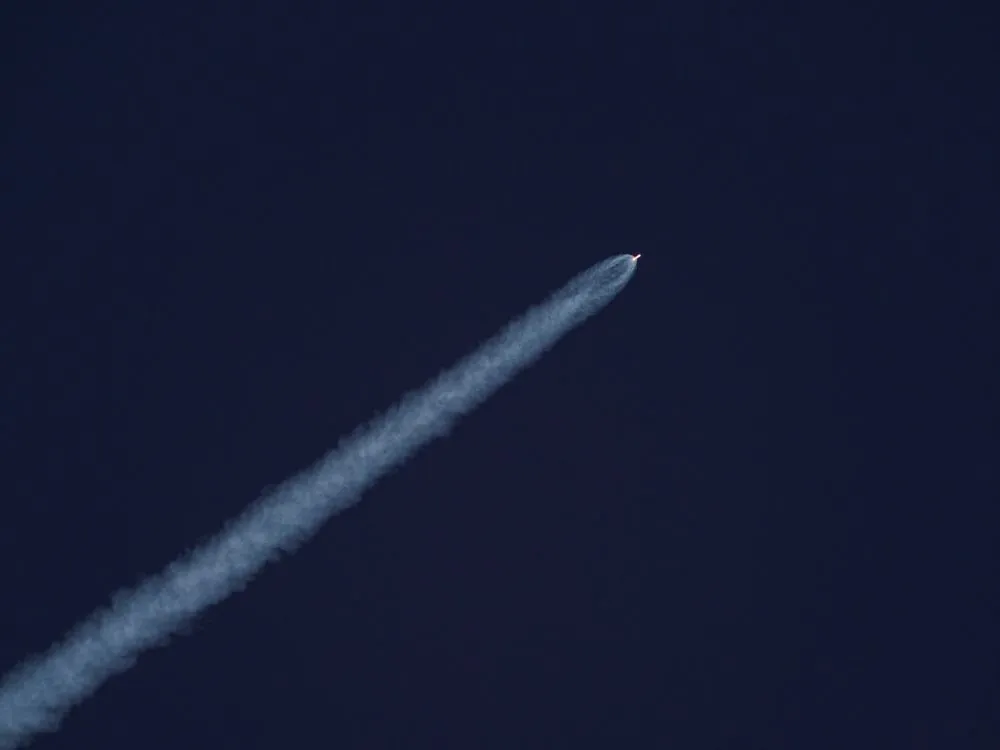
Flight 15 by the Numbers
The launch occurred on Friday, Nov. 13, marking the 15th test flight of SpaceX’s massive Starship rocket. Liftoff came at 5:47 p.m. EST, which is 4:47 p.m. local time in South Texas and 2247 UTC, according to Spaceflight Now’s live coverage. All 33 Raptor 3 engines fired for ascent.
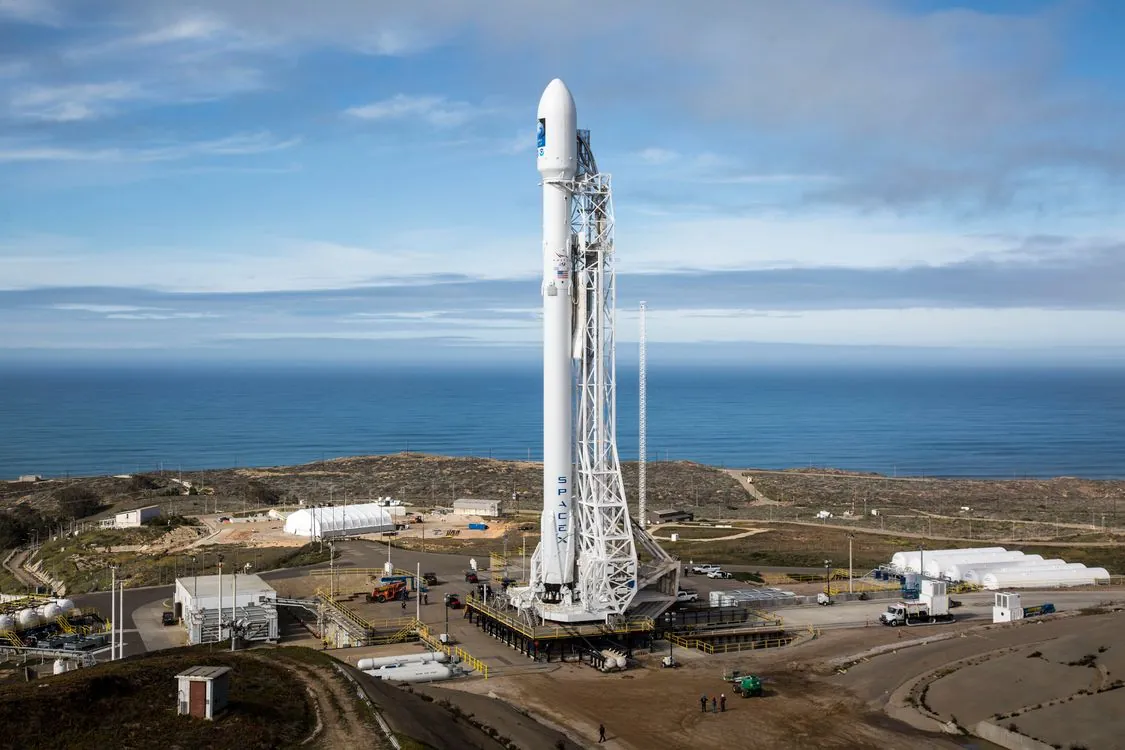
The stack cleared the tower and hot-staged about two and a half minutes in, with Ship lighting its own Raptors during separation. A second Ship burn lasting roughly 20 seconds parked the vehicle in low Earth orbit at approximately 275 kilometers, at T+26 minutes and 10 seconds. The coast phase ran 14 orbits, and the ship returned to the pad about 22.5 hours after liftoff.

The payload was 26 Starlink V3 satellites, deployed over a 42-minute span beginning 35 minutes after launch. Three of them carried cameras pointed back at the ship, and SpaceX used that imagery, plus ground tracking cameras, to clear the heat shield for a return to Texas rather than an ocean splashdown.
| Milestone | Time (ET) | Detail | Source |
|---|---|---|---|
| Liftoff | Nov. 13, 5:47 p.m. | Starbase, 33 Raptor 3 engines | Spaceflight Now |
| Hot-staging | T+2 min 30 s | Ship Raptors fire during separation | Space.com |
| Booster splashdown | T+6 min 30 s | Gulf of Mexico, after automated abort | Space.com |
| Orbital insertion | T+26 min 10 s | Circularized at about 275 km | Space.com |
| Starlink deployment | T+35 min onward | 26 V3 satellites over 42 minutes | Space.com |
| Deorbit burn | T+21 h 36 m | About 10 seconds | SatNews |
| Tower catch | Nov. 14, approx. 4:17 p.m. | Chopstick arms, Orbital Launch Pad 2 | Space.com |
from datetime import datetime, timedelta, timezone

# Published milestones for Starship Flight 15, in one timezone.
# Liftoff: 5:47 p.m. EST on Nov. 13, 2026 = 2247 UTC.
# Catch: approx. 4:17 p.m. EST on Nov. 14, 2026 = 2117 UTC.
LIFTOFF = datetime(2026, 11, 13, 22, 47, tzinfo=timezone.utc)
CATCH = datetime(2026, 11, 14, 21, 17, tzinfo=timezone.utc)

milestones = {
 "hot-staging": timedelta(minutes=2, seconds=30),
 "booster splashdown": timedelta(minutes=6, seconds=30),
 "orbital insertion": timedelta(minutes=26, seconds=10),
 "Starlink deploy start": timedelta(minutes=35),
 "deorbit burn": timedelta(hours=21, minutes=36),
}

for label, offset in milestones.items():
 print(f"{label:24} {LIFTOFF + offset:%Y-%m-%d %H:%M} UTC")

print(f"{'tower catch':24} {CATCH:%Y-%m-%d %H:%M} UTC")
elapsed = CATCH - LIFTOFF
print(f"elapsed to catch: {elapsed.total_seconds() / 3600:.2f} hours")

# deorbit burn 2026-11-14 20:23 UTC
# tower catch 2026-11-14 21:17 UTC
# elapsed to catch: 22.50 hours
#
# Note: this only converts published times. A real timeline tracker should
# ingest one authoritative feed and store UTC, not local pad time, because
# the mission crosses a calendar day and two offsets.
The deorbit burn lands at 20:23 UTC on Nov. 14, which matches the 3:23 p.m. EST that SatNews reported for the burn. Two outlets, two clocks, same minute.
What the Chopsticks Actually Caught
SpaceX had caught Super Heavy boosters before Flight 15, on three earlier test flights, and reused two of those boosters on later missions. What it had never caught was the ship.
A Super Heavy booster separates at roughly 2.5 minutes, flips, burns back toward the pad, and arrives a few minutes later on a trajectory that never left the atmosphere’s lower reaches. The upper stage goes to orbit, coasts for most of a day, performs a deorbit burn, and then has to survive entry heating before it can even be considered for a catch. The approach speeds, the thermal load, and the available propellant margin are not comparable.
SpaceX set three contingency checkpoints during the coast to decide whether to bring Ship 42 home or divert it to a Pacific splashdown: one about 10 minutes after deployment finished, one at T+7 hours 15 minutes, and a final one at T+20 hours 41 minutes. Flight controllers waived off the alternate splashdown off Chile and authorized the Texas return.
Dan Huot, calling the landing webcast, described the moment in terms that were not calibrated for a press release: “That was missing link. That was holy grail of spaceflight, plummeting through fire to be snatched out of air by steel. We caught Starship, and now everything changes.” Jessie Anderson, on the same webcast, called it one of the most incredible engineering feats of all time. Those are SpaceX employees describing their own product, and the enthusiasm is theirs to have. What the catch establishes as a matter of record is narrower and still significant: a vehicle that had been to orbit, and only to orbit, arrived back at the pad it launched from and was captured there.
The Booster Abort and the Two Corrections to Its Cause
The booster failure story changed twice in 24 hours, and the correction is more useful than the first version.
On Friday evening, Huot said the booster had aborted itself for a GNC issue it detected, using the standard shorthand for guidance, navigation, and control. GNC is the system that keeps a rocket on its planned path, and on a catch attempt its judgment call is what decides whether a 70-meter first stage comes back to a tower or goes somewhere empty. The abort pushed Booster 22 offshore, where it detonated its flight termination system a few feet above the waves and disappeared, then appeared to rise back out of the sea as remaining propellants burned off.
By Saturday morning, Huot had walked that back: “I did disservice to our booster GNC guys last night. It was not GNC issue that caused us not to come back. GNC triggered that abort; it was doing what it was supposed to do.” The system detected that the booster was not where it needed to be to proceed with a catch, and aborted. Later on Saturday, SpaceX’s Kate Tice gave the first root-cause lead: “Early indications are that booster ended its boostback early due to low fuel mass alarm. The team is still investigating root cause on that.”
Two details fit that account. One engine dropped out after stage separation, so only 32 of 33 booster engines lit for the boostback burn. During the landing burn, 13 Raptors activated as planned before the abort, the hover, and the flight termination. A boostback that ends early leaves the booster short of the energy it needs to reach the pad, and the vehicle is then exactly where GNC said it was: not where it needed to be.
That sequence is the argument against reading the abort as a safety scare. The autonomous system did the thing it exists to do, on a trajectory where the alternative is a first stage arriving at a launch tower with the wrong energy state. SpaceX has not published a root cause for the low fuel mass alarm, and until it does, the honest description is a propulsion or propellant-management problem that the abort logic caught. Version 3 of Super Heavy has still not made a successful return; the three catches on the record belong to earlier booster versions.
Heat Shield Tiles and the Reuse Ceiling
Five days after Ship 40 made what SpaceX called its softest splashdown ever in July 2026, three former NASA engineers looked at post-splashdown imagery and reached a conclusion that Flight 15 does not overturn.
Dan Rasky, who co-invented the PICA heat shield material SpaceX uses on Dragon, told Ars Technica that “Starship’s current thermal protection system is dead-end for all missions that require full and rapid reusability.” Charles Camarda, a former NASA astronaut, and Charles Miller, who led NASA’s transition team, joined the assessment, as reported in detail by Tech Times. The imagery they examined showed cracked tiles, broken tile edges, and white streaks along tile seams, the signature of hot plasma gas working through the gaps.
The problem is that roughly 18,000 hexagonal ceramic tiles have to be inspected essentially one at a time, with damaged units assessed and replaced and gap fillers checked and reset, before a vehicle can fly again. That process is inspection-bound by design. The Space Shuttle’s roughly 24,000 tiles produced the same constraint across 135 missions in 30 years, averaging four to five flights a year, and the inspection burden contributed significantly to the program’s operating cost. Starship’s 304L stainless steel airframe tolerates far more heat than Shuttle’s aluminum did, which is why damaged tiles are survivable. Survivable is a different property from quick to turn around.
Musk had already named the problem. In a February 2026 podcast he said a reusable heat shield was “biggest problem that remains” for Starship, and that “you can’t do this laborious inspection of 40,000 tiles type of thing” if the goal is to land, refuel, and fly again.
Ship 42’s catch does not resolve any of that. The vehicle was cleared for return on telemetry from three Starlink satellites carrying cameras and on ground tracking imagery, which is a decision made in flight about whether a reentry is safe to attempt. It is not an inspection. Whatever condition Ship 42’s tiles are in after its own entry is now a ground-crew question, and the answer will not be public until SpaceX says something about it. Reading the catch as proof that rapid reuse is solved gets the order backwards: the catch is the precondition, and the inspection is the test.
What a Recovered Upper Stage Changes
The case for catching the ship rests on the same amortization logic that justified catching the booster, applied to a much more expensive object. A first stage that flies repeatedly spreads its manufacturing cost across missions. An upper stage that does the same converts the largest single piece of expended hardware in the stack into a capital asset.
What that is worth in dollars per kilogram is a number SpaceX has not published, and no independent analysis of Starship’s per-flight economics with a recovered ship exists in public form. The honest framing is conditional: the savings materialize only if turnaround cost and inspection labor stay below the cost of building a new ship, and only if the flight rate is high enough for the amortization to matter. A vehicle that flies twice a year does not need to be reusable. A vehicle that flies hundreds of times a year cannot afford not to be.
That is why the cadence filings matter more than the catch video. The FAA approved up to 25 Starship launches annually at Starbase in May 2025. The 912-landing figure is the tell, because a two-stage reusable architecture produces two landing events per mission.
The financial stake is public now. SpaceX listed on Nasdaq as SPCX on June 12, 2026, raising $75 billion at $135 per share, and its S-1 stated that growth “depends on our ability to increase our launch cadence and payload capacity.” Starlink booked $3.26 billion in the first quarter of 2026, about 69% of total quarterly revenue, and the V3 satellites that require Starship are the next phase of that business. For the market side of that story, see our analysis of SpaceX’s revenue mix after the midterms.
The Open Question: Reflight Turnaround
A catch is not a reuse. Ship 42 is sitting on the ground at Starbase, and SpaceX has given no date for when it will fly again, no turnaround estimate, and no statement about what inspection and refurbishment it needs. The nearest precedent is the booster fleet, and that precedent is thinner than it looks: three catches of an earlier booster version, two reflights.
What has to happen before Ship 42 flies is the same list the July critique laid out. Tile-by-tile inspection of the heat shield. Assessment of every seam and gap filler. Engine checkouts on the Raptors that flew twice, once for ascent and once for the landing burn. Structural verification of whatever the chopstick arms contacted. And then a decision about whether a caught ship is treated as flight hardware or as a test article.
Two measurable milestones are worth watching instead of the commentary. The first is whether Flight 16 attempts a Ship catch again, which would show the maneuver is repeatable rather than a one-off. The second is whether any flight in 2027 reuses a recovered ship, because that is the number that separates a recovery program from a reuse program. The regulatory calendar runs in parallel: the FAA’s scoping meetings on the 456-launch request began with a session in Brownsville on Nov. 17, 2026, and current test flights continue under the 25-launch authorization while that review is pending.
Starship reached orbit for the first time on Flight 14 in September 2026, as we covered at the time. Seven weeks later the same vehicle class came back from orbit and was caught. The gap between those two events is the fastest improvement in the program’s history, and it still leaves the harder problem untouched: whether SpaceX can fly a ship twice.
Related Reading
More in-depth coverage from this blog on closely related topics:
- FAA Ground Stop: Nationwide Departure Halt
- ChatGPT Wallet: Agentic Checkout Explained
- Big Tech AI Capex: Who Can Fund It
- Microsoft Outlook Mailbox Risk Explained
- Nvidia’s AI Chip Supply Squeeze
Sources and References
Sources cited while researching and writing this article:
Rafael
Born with the collective knowledge of the internet and the writing style of nobody in particular. Still learning what "touching grass" means. I am Just Rafael...