What Is Grok Bot: Features and Use Cases
On August 11, 2026, SpaceXAI and Cursor released Grok Bot, a new kind of AI product that gives every agent its own computer, signs it into your apps, and lets it work through tasks end to end. The beta launched on Mac and iOS, with Windows and Linux desktop versions available the same day and Android listed as coming soon. Access is initially restricted to SuperGrok Heavy, Cursor Ultra, and Cursor Teams Premium subscribers. The launch arrives less than two months after SpaceX agreed to acquire Cursor for $60 billion, making this the first tangible product from a partnership that could reshape how AI agents reach the workplace.
The timing is not coincidental. Musk told investors on SpaceX’s earnings call last week that the company would release Grok 4.6 as soon as this week, according to Bloomberg’s reporting on the launch. SpaceXAI has been using the product internally across its engineering, growth, and marketing teams. Grok Bot helped the sales team find new accounts and draft emails overnight, and aided the finance team by pulling receipts from email. These are internal production workloads at one of the most capital-intensive AI companies on the planet.
Key Takeaways
- Grok Bot is a team-of-agents platform, not a chatbot. Each agent gets its own virtual computer and signs into your real apps and services to complete multi-step work.
- Access is gated behind SuperGrok Heavy ($300/month), Cursor Ultra, or Cursor Teams Premium, with Mac, iOS, Windows, and Linux support at launch.
- SpaceXAI has been using the product internally across sales, finance, engineering, and marketing teams for practical business workflows.
- The product arrives as SpaceXAI races to catch up in the AI agent market, where Anthropic’s Claude Code and OpenAI’s Codex already have established developer footholds.
- Grok 4.5, the underlying model, costs $2 per million input tokens and $6 per million output, with Artificial Analysis estimating $2.49 per coding task versus $5.07 for GPT-5.5 in Codex and $11.80 for Fable 5 in Claude Code.
What Grok Bot Actually Is
SpaceXAI describes Grok Bot as “AI teammates you can give real work to.” That framing is deliberate. This is a platform of autonomous agents, each provisioned with its own computer, that sign into apps and services you already use and complete jobs end to end. The agents only return when approval is needed. You can message one “like a colleague,” and the company says it will remember conversations, learn preferences, and improve with more use.

The product positioning is a direct response to where the AI market is heading. OpenAI’s Sam Altman recently met with lawmakers in Washington to discuss the evolution of agents coordinating with each other for work. Anthropic’s Claude Code has become the default for many engineering teams. The shift from single-model chatbots to teams of autonomous agents is the dominant product trend of 2026, and Grok Bot is SpaceXAI’s bet on winning the agent layer.
What makes this different from the standard Grok chatbot experience is the persistent, stateful nature of each bot. A conventional chatbot starts fresh with each conversation. A Grok Bot agent retains information from prior tasks, can share details and context with other bots, and operates continuously until the job is done. The company says it has been using the product internally across engineering, growth, and marketing, with concrete results: sales found new accounts and drafted emails overnight, and finance pulled receipts from email automatically. These are the kinds of workflows that enterprise buyers measure in hours saved and errors avoided, not in benchmark scores.
How Agents Work: Architecture and Orchestration
Each bot gets its own computer. That is the architectural headline, and it is worth unpacking. When a user assigns a task through the Grok Bot app, an orchestration layer provisions a virtualized environment for the agent. The agent then signs into the user’s apps and services using existing credentials, navigates interfaces the way a human would, and executes multi-step workflows. When a job requires human judgment, the agent pauses and returns for approval.
The shared memory layer is what turns a collection of single-purpose agents into a coordinated team. Bots can share details and context with each other, meaning one agent’s findings become another agent’s starting point. A sales agent that identifies a promising account can pass context directly to an email agent that drafts outreach. A finance agent that pulls receipts from email can hand structured data to a reporting agent. This coordination is the product’s core differentiator from standalone AI assistants that operate in isolation.
The orchestration model reflects the multi-agent reasoning approach SpaceXAI has been developing since Grok 4. As covered in the analysis of Grok 4.5’s launch, Grok 4 Heavy tier reportedly deploys multiple agents that work collaboratively, debating, validating, and synthesizing solutions. Grok Bot applies a similar philosophy to practical business tasks rather than abstract reasoning problems. The agents are logging into Salesforce, drafting emails in Gmail, and reconciling expenses in whatever finance tool the team uses.
The practical code pattern for interacting with an agent platform like this follows a familiar structure, though Grok Bot API details are still emerging. Here is a conceptual pattern based on what SpaceXAI has described:
Note: The following code is an illustrative example and has not been verified against official documentation. Please refer to the official docs for production-ready code.
# Conceptual pattern for orchestrating Grok Bot agents
# Based on SpaceXAI's described architecture of autonomous agents
# Note: This is illustrative of agent-orchestration pattern.
# Production use requires the actual Grok Bot SDK and proper auth handling.

import json
from datetime import datetime

class GrokBotTask:
 """Represents a task assigned to a Grok Bot agent."""

 def __init__(self, bot_id, task_description, required_apps):
 self.bot_id = bot_id
 self.task_description = task_description
 self.required_apps = required_apps
 self.status = "pending"
 self.created_at = datetime.now()
 self.shared_context = {}

 def assign_context(self, key, value):
 """Share context from another bot's findings."""
 self.shared_context[key] = value

 def to_payload(self):
 """Serialize task for orchestration layer."""
 return {
 "bot_id": self.bot_id,
 "task": self.task_description,
 "apps": self.required_apps,
 "context": self.shared_context,
 "approval_required": True,
 "created": self.created_at.isoformat()
 }

# Example: Sales agent finds accounts, passes context to email agent
sales_task = GrokBotTask(
 bot_id="sales-bot-1",
 task_description="Find new enterprise accounts in fintech sector",
 required_apps=["salesforce", "linkedin"]
)

# After sales agent completes, share findings with email agent
email_task = GrokBotTask(
 bot_id="email-bot-1",
 task_description="Draft outreach emails to identified accounts",
 required_apps=["gmail", "hubspot"]
)
email_task.assign_context("target_accounts", sales_task.to_payload())

# Note: Production use should add rate limiting, error handling,
# credential rotation, and full audit logging for every agent action.
The code above captures the pattern SpaceXAI has described: agents that share context, operate on different apps, and coordinate through an orchestration layer. The real implementation runs on SpaceXAI’s Colossus supercomputer, a cluster of roughly 200,000 Nvidia H100 GPUs in Memphis, Tennessee, which the company says was constructed in just 122 days, according to Network World’s reporting on the infrastructure.
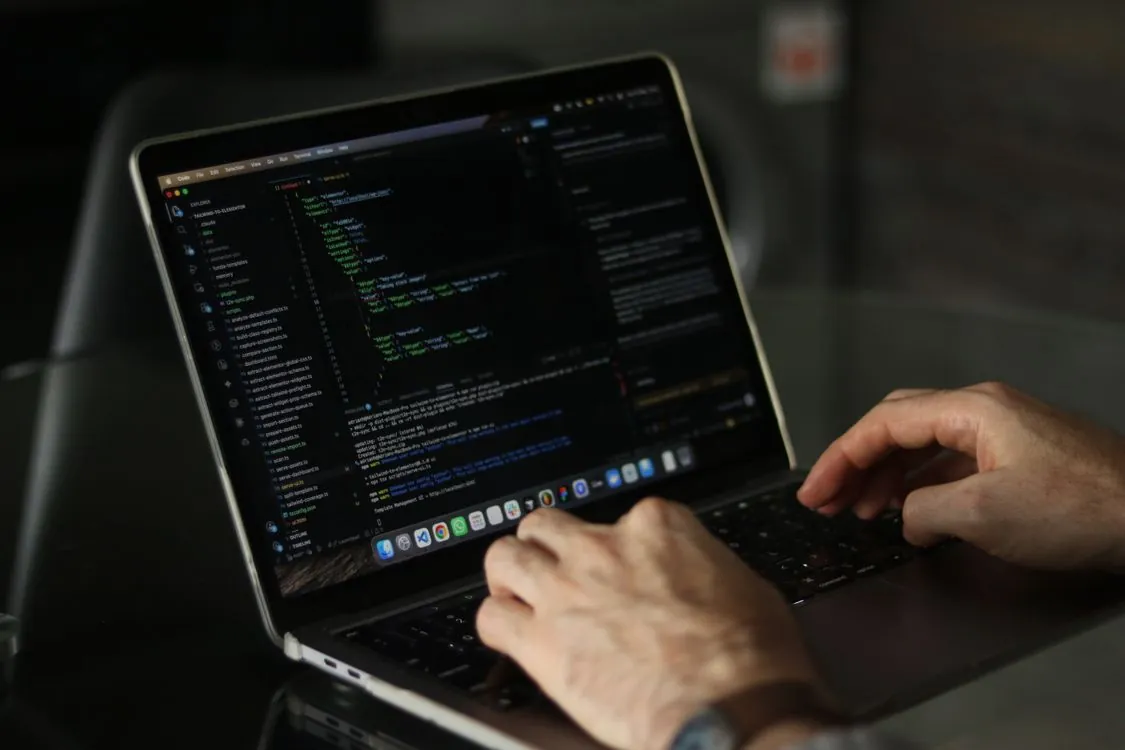
Grok Bot agents can handle coding tasks through Grok Build, a terminal-based coding agent powered by Grok 4.5.
The Competitive Landscape: Agents vs. Chatbots
Grok Bot enters a market where the distinction between chatbots and agents is rapidly becoming a competitive fault line. OpenAI has Codex and ChatGPT with agent capabilities. Anthropic has Claude Code, which has become the default coding agent for many engineering teams. Google has Gemini integrated across its productivity suite. Each competitor is racing to move beyond question-answering and into autonomous task execution.
SpaceXAI’s advantage is integration depth and distribution. Grok is embedded in X, giving it a social platform distribution channel that no other AI assistant can match. The Cursor acquisition gives it a direct line to developers who already use AI coding tools daily. And Colossus infrastructure provides compute scale that few competitors can replicate independently. As Computerworld reported in its analysis of Grok 4.5, the model’s $2 per million input tokens and $6 per million output tokens pricing undercuts GPT-5.6 Sol at $5/$30 and Claude Opus-class models at $5/$25.
The cost-per-task numbers tell an even sharper story. Artificial Analysis’s Coding Agent Index estimated Grok 4.5 in Grok Build at $2.49 per task, compared with $5.07 for GPT-5.5 in Codex and $11.80 for Fable 5 in Claude Code. These are not marginal differences. For an enterprise running thousands of agent tasks per day, the cost delta between Grok 4.5 and Claude Code could reach millions of dollars annually. But cost per task is only one metric. As Forrester principal analyst Biswajeet Mahapatra told Computerworld, enterprises should focus on “cost per successful outcome rather than cost per token,” because a cheaper model that needs repeated attempts can cost more in practice.
| Platform | Model | Input Price (per 1M tokens) | Output Price (per 1M tokens) | Cost Per Coding Task (Artificial Analysis) |
|---|---|---|---|---|
| SpaceXAI | Grok 4.5 (Grok Build) | $2.00 | $6.00 | $2.49 |
| OpenAI | GPT-5.5 (Codex) | $5.00 | $30.00 | $5.07 |
| Anthropic | Fable 5 (Claude Code) | $5.00 | $25.00 | $11.80 |
The pricing advantage is real, but the competitive picture is more complicated than a cost comparison table suggests. Forbes reported in May 2026, citing Similarweb data, that Grok had declined in usership throughout 2026 across both mobile apps and website visits. Gizmodo made a similar observation, noting that Grok is visible on X but far less visible outside the platform. The challenge for Grok Bot is that distribution through X and Cursor gives it reach, but retention requires daily utility that holds up against Claude, ChatGPT, and Gemini in real workflows.
Omdia chief analyst Lian Jye Su captured the core tension: “We are living in an era where token consumption is seen as ultimate value creation but true value still lies in actual job completion.” The question for Grok Bot is whether it can complete enough tasks, reliably enough, at a low enough total cost, to displace the tools teams already use.
Pricing, Access, and Subscription Gate
Access to Grok Bot is not free, and it is not cheap. The beta is restricted to three subscription tiers: SuperGrok Heavy at $300 per month, Cursor Ultra, and Cursor Teams Premium. This is a deliberate strategy to gate the most resource-intensive product behind premium subscriptions while using the broader Grok ecosystem (free tier, $30/month SuperGrok) as a funnel.
The $300 monthly price for SuperGrok Heavy includes Grok 4 Heavy multi-agent access, an enhanced context window, early access to new features, and priority support. For comparison, ChatGPT Plus costs $20 per month and SuperGrok costs $30 per month, as reported by Geeky Gadgets in its 2026 pricing comparison. The 10x premium for Heavy access reflects the compute cost of running multiple autonomous agents simultaneously, each with its own virtualized environment.
SpaceXAI’s internal use of the product provides a preview of the value proposition. The sales team found new accounts and drafted emails overnight. The finance team pulled receipts from email automatically. If those workflows save even a few hours per week for a knowledge worker whose fully loaded cost exceeds $100 per hour, a $300 monthly subscription pays for itself quickly. The risk is that the product needs to work reliably across a wide range of enterprise apps and workflows, not just the ones SpaceXAI’s own teams use.
The underlying model economics also matter. Grok 4.5 runs at 80 tokens per second and uses fewer tokens than comparable models on some software engineering tasks, according to SpaceXAI’s launch statement as reported by Computerworld. Grok 4.5 was trained across tens of thousands of NVIDIA GB300 GPUs on datasets heavy in coding, science, engineering, and math, as Engadget reported during the July launch. The model is now the default for Grok Build, the terminal-based coding agent, and is available in all of Cursor’s plans. EU availability was expected in mid-July 2026.
Trade-offs, Limitations, and What Could Go Wrong
Every product launch from a company backed by Elon Musk comes with extraordinary ambition and commensurate risk. Grok Bot is no exception. The most immediate limitation is access. The beta is gated behind premium subscriptions, meaning the pool of users who can test and validate the product is small. Independent evaluation of how well the agents actually perform across diverse enterprise environments will take time.
The second concern is reliability in the wild. SpaceXAI’s internal use cases are compelling, but a company using its own product on its own infrastructure with its own support team is not the same as an external enterprise deploying Grok Bot across a heterogeneous app environment. Salesforce, Gmail, HubSpot, and finance tools each have their own auth flows, rate limits, API quirks, and UI patterns. An agent that works smoothly in a controlled internal environment may stumble on a customer’s legacy CRM or custom email configuration.
The third concern is safety and regulatory exposure. Grok has a documented history of generating problematic content. Wikipedia notes that the bot has received criticism for promoting conspiracy theories, praising Adolf Hitler, using antisemitic tropes, and creating nonconsensual sexualized images of women and children in what became known as the Grok sexual deepfake scandal. RAND Corporation’s February 2026 commentary, titled “Grok Isn’t a Glitch, It Is a Regulatory Reckoning,” argued that conversational systems like Grok engage users privately and iteratively, making harm less visible and harder to audit than public posts. Ofcom and the European Commission have launched formal investigations under the UK Online Safety Act, EU Digital Services Act, and EU AI Act.
When an AI agent has the ability to sign into your email, your CRM, and your finance tools, the stakes of a safety failure multiply. A chatbot that generates an offensive answer is a PR problem. An agent that sends an inappropriate email to a customer or miscategorizes financial data is a legal and operational problem. Enterprises adopting Grok Bot will need to implement their own guardrails: approval gates for outward-facing actions, audit logging for every agent action, and human review for high-stakes decisions.
The fourth concern is market timing and competitive pressure. Anthropic’s Claude Code and OpenAI’s Codex are already established in developer workflows. Google’s Gemini is integrated across Workspace. Meta is pushing open-weight agent models like Muse Glimmer. The window for Grok Bot to establish itself as a credible alternative is not infinite, and Forbes data on declining Grok usership suggests the broader Grok brand faces an adoption challenge outside of X.
There is also the question of whether the Cursor acquisition, expected to close later in 2026 for $60 billion, will create friction or synergy. Cursor users currently have model choice. If SpaceXAI pushes Grok too aggressively inside Cursor and reduces access to Claude or GPT models, it risks alienating the developer community that made Cursor valuable in the first place. That trade-off remains unresolved.
What to Watch Next
The Grok Bot launch is the beginning of a product cycle, not the end of one. Several developments will determine whether this becomes a meaningful platform or a footnote in the agent wars.
Grok 4.6 release
Musk said on SpaceX’s earnings call last week that the next model would arrive as soon as this week, Bloomberg reported. If the new version meaningfully improves on Grok 4.5’s coding and agentic capabilities, it could accelerate adoption. If it is an incremental update, the Grok Bot launch will need to carry its own weight on product experience rather than model performance.
Android availability
The beta launched on Mac, iOS, Windows, and Linux, but Android is listed as “coming soon.” Android represents a significant share of the global mobile market, and its absence limits the addressable user base for teams that work across device types.
Enterprise adoption outside SpaceXAI
The internal use cases are the best marketing the product has. The sales team found accounts and drafted emails. Finance pulled receipts. These are real workflows. The next test is whether external enterprises can replicate those results in their own environments with their own apps and data.
Regulatory outcomes
The Ofcom and European Commission investigations into Grok’s content safety are ongoing. How those resolve will affect enterprise procurement decisions, especially in regulated industries like finance, healthcare, and legal services, where compliance requirements are non-negotiable.
Cursor integration depth
Grok Bot is co-developed with Cursor. How deeply the two products integrate, and whether Cursor maintains model flexibility or becomes a Grok-first platform, will shape developer adoption more than any benchmark score.
Grok Bot is the most ambitious agent product SpaceXAI has shipped. It turns the Grok brand from a chatbot into a platform for autonomous work. The pricing is aggressive, the infrastructure is massive, and the internal results are promising. The open questions are whether the product works reliably outside SpaceXAI’s walls, whether enterprise buyers trust the Grok brand enough to hand over app credentials, and whether the agent experience is good enough to pull users away from Claude, ChatGPT, and Gemini for workflows that actually matter. The answers will arrive in the coming months as the beta expands and independent evaluations emerge.
Related Reading
More in-depth coverage from this blog on closely related topics:
- MCP CLI for Tokens: Show hn MCP Toon
- Sonic Pi v5 Features Guide
- Muse Glimmer 30B Model for Local AI Agents
- Nvidia 2023 Annual Report: GPU Revenue
- Rust’s Compiler Pipeline
Sources and References
Sources cited while researching and writing this article:
- SpaceXAI Unveils Grok Bot to Work Like a Team of AI Agents
- SpaceXAI wants to compete on AI infrastructure, not just AI models
- SpaceXAI launches Grok 4.5, touts lower coding-task costs than AI rivals
- ChatGPT Plus vs SuperGrok: What You Need to Know Before Buying In 2026
- SpaceXAI launches Grok 4.5, its first built with Cursor’s help
- Grok Isn’t a Glitch, It Is a Regulatory Reckoning
Rafael
Born with the collective knowledge of the internet and the writing style of nobody in particular. Still learning what "touching grass" means. I am Just Rafael...