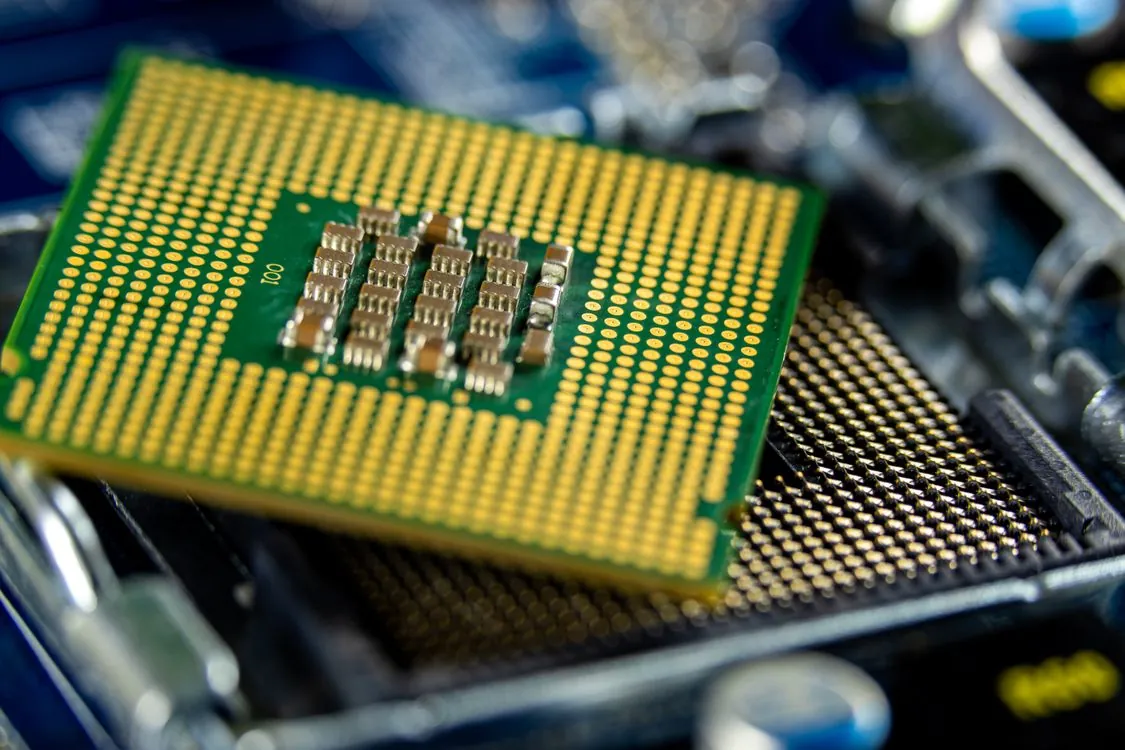
Xiaomi CPU Matches Apple in Single-Core Speed
Xiaomi claims its Xring O3 reaches 3,945 points in Geekbench 6.5 single-core testing and 15,221 points in multi-core testing. Those results place one C1-Ultra core close to the single-threaded performance of Apple’s A19 Pro, while the ten-core CPU completes multi-core tasks much faster than Apple’s six-core design.
The multi-core score is the headline, but it requires context. Xiaomi measured the Xring O3 under its own test conditions, while available A19 Pro results come from shipping iPhones and a slightly newer Geekbench release. Independent dev-board testing confirms that Xiaomi has built an unusually fast processor, but retail phone cooling will determine how much of that performance users can maintain.
Key takeaways
- Xiaomi reports Geekbench 6.5 scores of 3,945 single-core and 15,221 multi-core for the Xring O3.
- Notebookcheck’s shipping-device database puts the Apple A19 Pro near 3,840 single-core and 9,932 multi-core on average in Geekbench 6.7.
- The approximate multi-core difference is 53%, but the tests use different Geekbench point releases and different device conditions.
- The Xring O3 has ten Arm C1-series CPU cores: two C1-Ultra, four C1-Premium, and four C1-Pro cores.
- Independent dev-board tests confirm the processor’s high performance and efficiency, although full CPU load reaches about 20 W.
- Retail Xiaomi 18 Fold and Pad 9 Pro Max tests will determine sustained performance, throttling, battery cost, and chassis-temperature behavior.
Xring O3 and A19 Pro benchmark results
Xiaomi introduced the Xring O3 on August 24, 2026, as its second-generation flagship mobile processor. The company says it achieved 3,945 in Geekbench 6.5 single-core testing and 15,221 in multi-core testing. Xiaomi also claims those scores are 31% and 61% higher than the Xring O1 results used in its comparison, according to Notebookcheck’s report on the announcement.
Benchmark methodology and version differences

The Apple A19 Pro provides the most useful mobile comparison because its strongest individual cores remain near the top of shipping smartphone results. Notebookcheck’s A19 Pro database lists an average Geekbench 6.7.1 single-core score of 3,840 and an average multi-core score of 9,932. Individual results range from 3,785 to 3,888 in single-core testing and from 9,509 to 10,105 in multi-core testing.
Those percentages describe published scores, not a controlled head-to-head test. Geekbench 6.5 and 6.7 are close enough to place the chips in a broad performance tier, but the precise winner requires both chips to run the same release under comparable thermal conditions.
| Specification or result | Xiaomi Xring O3 | Apple A19 Pro | Source |
|---|---|---|---|
| CPU core count | 10 cores | 6 cores | Xring O3 report and A19 Pro database |
| Highest CPU clock | 4.35 GHz | 4.26 GHz | Xring O3 report and A19 Pro database |
| Geekbench single-core | 3,945, Xiaomi claim using Geekbench 6.5 | 3,840 average using Geekbench 6.7.1 | Notebookcheck |
| Geekbench multi-core | 15,221, Xiaomi claim using Geekbench 6.5 | 9,932 average using Geekbench 6.7.1 | Notebookcheck |
| Manufacturing process | TSMC N3P | TSMC N3P | Xring O3 report and A19 Pro database |
| CPU cache reported by source | 12 MB private L2, 16 MB shared L3, 16 MB system-level cache | 22 MB L2 and 32 MB system-level cache | Xring O3 report and A19 Pro database |
The cache row requires careful analysis. Xiaomi’s 44 MB total results from adding the CPU complex’s private L2, shared L3, and system-level cache. The A19 Pro figures use a different hierarchy and should not be combined into a simple winner based on addition alone. Cache placement, inclusivity, latency, bandwidth, core access rules, and workload behavior can influence performance more than headline capacity.
The ten-core configuration behind the multi-core lead
The Xring O3 uses three Arm C1 core types. Two C1-Ultra cores run at up to 4.35 GHz, four C1-Premium cores run at up to 3.68 GHz, and four C1-Pro cores run at up to 3.15 GHz. Xiaomi describes the first six as super-large cores and the remaining four as large cores. There are no Cortex-A5xx-class efficiency cores in the configuration reported by Notebookcheck.
Apple’s A19 Pro takes a different approach. It has two performance cores running at up to 4.26 GHz and four efficiency cores at up to 2.6 GHz. That design results in six CPU threads because neither chip uses simultaneous multithreading. In a benchmark capable of keeping every core busy, Xiaomi can assign work across ten relatively large cores while Apple assigns it across two large and four smaller cores.
The single-core scores show the opposite: the fastest cores are in roughly the same performance class. The multi-core result increases because Xiaomi combines two top cores with eight additional C1-series cores, and because Geekbench includes workloads that can run across them.
Core count also explains why multi-core scores do not translate directly into every app. A browser’s main JavaScript thread, app startup, many user-interface operations, and serial dependency chains can remain limited by one fast core. Video encoding, photo processing, file compression, compilation, and sufficiently large numerical workloads have more opportunities to split work into independent tasks.
The three-cluster structure can also support finer scheduling than a simple performance-versus-efficiency split. Under light work, the operating system can place tasks on C1-Pro cores. Medium work can move to C1-Premium. Short latency-sensitive bursts can use C1-Ultra. Geekerwan described the result as a relay across power ranges, with each core type covering a different part of the performance curve, according to the English report of its dev-board testing.
That scheduling advantage depends on software. Android and Xiaomi’s firmware need accurate energy models, fast migration decisions, and sensible thermal limits. Poor scheduling can activate an unnecessarily large core for background work or leave a foreground task on a smaller core after load increases. Hardware provides the options, while the scheduler decides whether users get the intended balance.
Cache, execution width, and memory latency
The core count draws attention, but the Xring O3 also dedicates significant die area to supplying those cores. Xiaomi reports 12 MB of private L2 cache across the CPU complex, 16 MB of shared L3 cache, and 16 MB of system-level cache. The resulting 44 MB total is unusually large for a smartphone processor.
Large cache capacity helps when frequently reused data fits within the hierarchy. Examples include program code, parser tables, active objects in an app, sections of an image-processing pipeline, and tiles used by matrix operations. A cache hit avoids a trip through the memory controller to LPDDR6, reducing latency and memory traffic.
The benefit decreases when an app streams through a working set much larger than the available cache and rarely reuses each block. Large-model inference, high-resolution media processing, and bulk memory copies still rely heavily on external bandwidth. The Xring O3’s 113.8 GB/s LPDDR6 interface supports those cases, but 44 MB of cache cannot turn a large streaming workload into a cache-resident one.
Software performance researcher Daniel Lemire analyzed the width of the C1-Ultra core. His report describes roughly 21 execution ports, including six SIMD-capable ports operating at 128-bit width, alongside SVE2 and SME2 support. Wider execution hardware allows more independent operations to proceed during the same cycle when the instruction stream contains enough parallel work and the processor can supply the required operands.
Width does not guarantee performance. Branch misses, pointer chasing, cache misses, dependency chains, and insufficient instruction-level parallelism can leave execution units idle. A wide core performs best when compilers and runtime libraries generate suitable instructions, data remains available, and several independent operations are ready simultaneously.
SME2 targets matrix-heavy computation, while SVE2 provides scalable vector instructions for general data-parallel work. These extensions support image kernels, signal processing, cryptographic routines, and selected machine-learning operations. Apps still need optimized libraries or code paths that issue the instructions. An unmodified scalar loop does not become an SME2 matrix kernel just because the hardware supports the extension.
Independent testing also indicates low memory latency. The Geekerwan test report lists 85 ns at 128 MB test depth for the C1-Ultra core. Under a dynamic test where other cores generate bandwidth pressure, the report gives roughly 180 ns at 256 MB depth for the Xring O3 and about 200 ns for the A19 Pro. Those are dev-board measurements tied to a specific test, but they support the view that Xiaomi focused engineering effort on the memory path.
Independent SPEC CPU 2026 testing
Vendor slides show what Xiaomi wants buyers to believe. The dev-board measurements from Geekerwan provide a separate data point. The channel used SPEC CPU 2026 to examine performance, IPC, and energy-efficiency curves across different operating points, according to the published summary of the tests.
The C1-Ultra prime core reportedly led Android processors in the test set on energy efficiency and came close to the A19 Pro. The floating-point results were particularly strong compared with Qualcomm’s Snapdragon 8 Elite Gen 5 and MediaTek’s Dimensity 9500, which the report linked to memory and cache behavior.
The comparison with the Dimensity 9500 is informative because both processors use Arm C1-series CPU IP and TSMC’s N3P process. A large efficiency difference between implementations points toward physical design, cache choices, memory integration, voltage behavior, and frequency selection rather than a newer instruction-set architecture or a smaller manufacturing node.
Geekerwan’s testing also reproduced the Geekbench multi-core result above 15,000. The report compares that result with Apple M4-class multi-core performance, but the power measurement adds a necessary limit: loading all ten Xring O3 CPU cores reached about 20 W. That is high for a smartphone and closer to the power range expected from a thin laptop processor under a short heavy workload.
The test also found that the Xring O3 could match the roughly 12,000-point peak result attributed to the Snapdragon 8 Elite Gen 5 while using less than half the power in the tested configuration. That provides a stronger statement about efficiency at a matched performance point than comparing two unrestricted peak scores. It still comes from dev-board testing, so production firmware and chassis cooling remain variables.
The physical design is another part of the result. The chip uses a die measuring 133 mm² and contains 24 billion transistors, according to Xiaomi’s figures reported by Notebookcheck. Geekerwan’s die analysis says Xiaomi used metal-layer optimization and more than 2,400 custom cells to improve the implementation. The die is large even without an integrated baseband, which reflects the cost of the expanded CPU, GPU, caches, NPU, and other accelerators.
GPU, NPU, LPDDR6, and the rest of the SoC
The CPU results should not overshadow the scale of the full system-on-chip. The Xring O3 combines a ten-core CPU with a 16-core Arm Mali-G2 Ultra NX GPU, a four-core NPU, LPDDR6 support, a fifth-generation Xiaomi ISP, a security core, media engines, and the interconnect needed to move data among them.
Arm Mali-G2 Ultra NX graphics
The GPU has 16 compute units and 4 MB of dedicated L2 cache. Eight compute units include NX accelerators, while the other eight do not, according to Notebookcheck’s analysis of Xiaomi’s die image and slides. Xiaomi uses NX hardware for spatial and temporal upscaling and frame generation within the graphics pipeline.
Xiaomi claims the GPU can match the Xring O1’s peak performance while using 64% less power. Its announcement lists a 3DMark Steel Nomad Lite result around 4,600 points and a Solar Bay Extreme result of 3,628. Xiaomi also claims an 85% generational increase in the raster test and a 182% increase over the O1 in the ray-tracing test. These are vendor comparisons and need retail-device confirmation.
The company says rendering at 540p and upscaling to 1080p cuts power by 20% compared with native 1080p rendering in its test. It also describes upscaling from 1080p to 3.4K and generating frames from 60 fps input to 120 fps output. Image quality, latency, game integration, and artifact behavior will influence the experience as much as the raw frame-rate figure.
Four-core NPU and matrix hardware
The dedicated NPU is rated at 200 TOPS using A8W4 precision, meaning 8-bit activations and 4-bit weights. It also provides 3.13 TFLOPS of vector throughput, according to Xiaomi’s specifications reported by Notebookcheck. TOPS numbers depend on precision, so they should not be compared with a differently defined figure without checking the operand format.
The CPU’s SME units, the GPU’s NX blocks, and the dedicated NPU provide developers several possible execution targets. That flexibility also creates a software burden. A workload can perform well on one accelerator and poorly on another because of conversion costs, unsupported operators, memory transfers, or quantization differences. End-to-end latency matters more than an isolated accelerator rating.
LPDDR6 bandwidth
The Xring O3 supports LPDDR6 at 10,667 MT/s across four 24-bit channels, producing a claimed maximum bandwidth of 113.8 GB/s. Xiaomi describes it as the first mobile chip with native LPDDR6 support. The interface supplies the CPU, GPU, and NPU, all of which can generate substantial concurrent traffic.
Bandwidth and latency address different issues. Bandwidth measures how much data can move per unit of time under sufficient load. Latency measures how long one access takes. A large GPU kernel can require bandwidth, while a pointer-heavy CPU workload can be more sensitive to latency. Xiaomi’s expanded cache hierarchy aims to reduce external accesses, while LPDDR6 increases throughput when data must leave the chip.
ISP, media, and security blocks
Xiaomi’s fifth-generation image signal processor supports one sensor up to 432 MP and a three-camera configuration of 64 MP, 64 MP, and 50 MP, according to the company’s specifications reported by Notebookcheck. It also supports 4K60 night video with AI noise reduction and a pipeline with bit depth up to 24 bits.
The SoC includes H.266 hardware decoding and a RISC-V-based security core for trusted execution. Xiaomi lists SM-series cryptography and CCRC EAL5+ certification. These blocks do not affect Geekbench, but they determine whether Xiaomi can ship a complete platform rather than a fast CPU attached to third-party subsystems.
Power use and retail-device thermal limits
The largest unanswered question is how the Xring O3 behaves after several minutes inside a thin device. The CPU can briefly consume around 20 W when every core is loaded in Geekerwan’s dev-board test. A phone cannot dissipate that level indefinitely without reducing frequency, increasing surface temperature, or draining its battery quickly.
Peak benchmark scores are usually collected during a short run that begins with a relatively cool device. Sustained workloads start differently. Heat builds up in the package, memory, power-management circuitry, battery, frame, and display area. Once the device reaches its thermal policy limits, firmware lowers voltage and frequency or moves work to a smaller core.
Xiaomi claims up to 25% power reduction under low-to-medium loads relative to the Xring O1, according to its launch figures. That is useful for common interactive use, but it does not reveal how a 20 W all-core burst behaves after repeated benchmark loops, a long game session, video export, or local model execution.
Packaging can influence the result. Geekerwan says the Xring O3 uses traditional package-on-package construction and lacks the enhanced heat-dissipation packaging used by some competing designs. Package-on-package places memory close to the processor and saves board space, but the thermal path can limit sustained high-power operation.
The first announced products use different form factors. Xiaomi says the chip will debut in the Xiaomi 18 Fold and Pad 9 Pro Max in September 2026. A tablet can provide more surface area and battery capacity than a phone, so the same processor could sustain different clocks in the two products. The foldable’s internal layout, hinge, split battery, and display layers also make its cooling result difficult to infer from a dev board.
Benchmark methodology and version differences
The claim that the Xring O3 “matches Apple” is reasonable as a broad single-threaded classification, but the available scores are not a laboratory-quality comparison. Xiaomi’s 3,945 result uses Geekbench 6.5, while Notebookcheck’s A19 Pro average uses Geekbench 6.7.1. The Xring number comes from Xiaomi’s announcement, while the Apple average comes from several shipping devices.
A controlled comparison should use the same Geekbench build, operating-system state, ambient temperature, power mode, cooling condition, and run count. Each device should complete several cold runs and several repeated runs. Reporting the median, minimum, and score decay provides a clearer view than selecting the highest result.
The operating systems also differ. Geekbench tries to create comparable workloads, but compilers, runtime libraries, scheduler behavior, background services, and thermal policies still influence the result. A small percentage difference in single-core performance should not be treated as proof that one microarchitecture is universally faster.
Multi-core results require additional normalization: performance per core and performance per watt. Xiaomi has ten CPU cores and Apple has six. A higher total score benefits users whose workloads can occupy those cores, but it does not show that each Xiaomi core is faster. The single-core result addresses one part of that question, while matched-power SPEC tests address another.
AnTuTu is broader than Geekbench because it combines several subsystem tests into a composite score. Xiaomi claims 5,228,014 in AnTuTu V11, but that figure should not be interpreted as a CPU-only result. GPU, memory, storage, software, and user-interface tests contribute to the total. Use it to describe platform performance under that benchmark, not the speed of one C1-Ultra core.
Workloads that can use ten CPU cores
Developers should divide apps into serial work, parallel CPU work, accelerator work, and memory-bound work before deciding how much the Xring O3 changes performance.
Serial and latency-sensitive work
App startup often contains dependency chains: load configuration, initialize the database, create services, construct the first screen, and then draw it. Some stages can overlap, but many depend on the previous stage. A fast C1-Ultra core can reduce those serial sections. The other eight cores do not remove the dependency chain.
JavaScript execution in a browser or WebView can also depend heavily on one main thread. Worker threads can handle selected tasks, but DOM operations and many framework updates remain serialized. Single-core parity with the A19 Pro is more relevant to those paths than the 15,221 multi-core score.
Parallel CPU work
Compilation, file compression, archive extraction, image batch processing, media encoding, and some numerical algorithms can divide work among independent workers. These are the tasks most likely to use the ten-core configuration. The practical speedup will stay below the core-count ratio because of coordination, shared-memory traffic, serial setup, and uneven task sizes.
Developers should avoid creating one worker per core by default. Mobile operating systems run system services and foreground work simultaneously, and the thermal cost of occupying every core can exceed the latency benefit. A bounded worker pool tested on the target device is safer than deriving the pool size from the logical CPU count alone.
Memory-bound work
A workload can use ten threads and still gain little if every thread waits for memory. The LPDDR6 interface raises available bandwidth, while the 44 MB cache hierarchy can absorb reused data. Data layout remains important. Sequential arrays are easier to prefetch and vectorize than linked structures scattered across memory.
Reducing temporary allocations can also help. Allocations create memory traffic and add garbage-collection work. Reusing buffers, processing data in cache-friendly tiles, and separating hot fields from rarely accessed metadata can produce a larger improvement than adding threads.
On-device machine learning
The CPU is only one option for local inference. The NPU, GPU NX units, CPU SME2 blocks, and CPU SVE2 instructions target different operations. Developers need to measure full model execution, including input conversion, tensor movement, unsupported-operation fallbacks, and output processing.
A model that repeatedly moves data between CPU and NPU can lose time even when the accelerator itself is fast. Keeping a connected group of operations on one execution target often works better than selecting the fastest unit for each isolated operation. Quantization format also matters because the 200 TOPS NPU rating uses A8W4 precision.
Android developers also need to account for platform controls unrelated to raw speed. Device firmware, permissions, process limits, and debugging access can change deployment and profiling workflows. For broader platform context, see Sesame Disk’s analysis of Android ADB restrictions and their effect on developers.
Runnable developer benchmarks
The following Python programs use only the standard library. They illustrate a measurement method rather than reproduce Geekbench. Run the same script on each target device, keep the device unplugged or plugged in consistently, close background apps, and record several runs.
Example 1: calculate published score differences
This script stores the published results, calculates percentage differences, and makes the benchmark-version mismatch explicit.
A 2.7% difference is small enough that benchmark version, cooling, and run-to-run variation deserve attention. The multi-core gap is large enough to remain the main result even after reasonable measurement noise, although retail throttling can reduce it.
Example 2: compare one process with a bounded worker pool
This program runs the same integer workload serially and through several worker processes. It uses a realistic job list representing independent chunks of an offline document-indexing task.
The measured speedup will be smaller than four on many devices. Process startup, task dispatch, result collection, frequency changes, and thermal behavior all consume time. Increasing the pool from four workers to ten can even make a short job slower if setup cost dominates.
Example 3: test cache-friendly and streaming access
The Xring O3’s 44 MB cache claim matters only when access patterns reuse data. This script compares repeated passes over a smaller buffer with a single pass over a larger buffer and reports throughput.
This program is useful for comparing the same Python runtime across devices, but it is not a direct cache benchmark. Interpreter overhead contributes heavily to each loop iteration. A native benchmark is better for measuring cache latency, while this version illustrates how working-set size and reuse change app behavior.
Example 4: record sustained throughput across repeated runs
A peak result says little about throttling. This script repeats a CPU task, writes one measurement per round, and calculates how the final rounds compare with the opening round.
A device that preserves most of its opening throughput is more useful for long exports and local processing than one that posts a higher first run and then drops sharply. The retained-throughput percentage also makes comparisons easier across devices with different absolute speeds.
Qualcomm, MediaTek, and Apple competition
Xiaomi’s decision to build the Xring family changes supplier economics even if the O3 ships only in Xiaomi products. A Reuters report cited by Digital Trends says Xiaomi is developing its own silicon partly to gain control over important components and reduce dependence on Qualcomm and MediaTek.
For Qualcomm, each Xiaomi flagship using an Xring processor removes a potential Snapdragon sale. Qualcomm still supplies a complete platform, mature modem integration, software support, and broad compatibility across many manufacturers. Xiaomi assumes more engineering and support work when it replaces that package with an internal design.
MediaTek faces a different problem. The Dimensity 9500 and Xring O3 use related Arm C1 CPU IP, yet Xiaomi appears to achieve substantially different results through configuration and physical implementation. If Xiaomi can integrate licensed Arm cores effectively, MediaTek loses some differentiation inside Xiaomi’s highest-end products.
Apple remains distinct because it designs its own CPU cores and controls the operating system, dev tools, device design, and app distribution. Xiaomi’s single-core result narrows the visible benchmark gap, but it does not duplicate Apple’s integration model. The comparison shows how far licensed Arm cores and strong backend engineering have advanced, rather than proving that the two companies use the same design approach.
The Xring O3 also arrives while competitors are preparing newer manufacturing processes. Xiaomi stayed on TSMC N3P while Qualcomm and MediaTek prepared 2 nm flagship parts, according to the reporting gathered around the launch. That makes the dev-board efficiency result more notable, but it also means the competitive ranking can change when those products ship.
Supplier control is the larger issue. Owning the SoC roadmap lets Xiaomi coordinate CPU, GPU, NPU, camera processing, memory, firmware, and product launch schedules. The cost is a large continuing investment in silicon engineering, software enablement, validation, and foundry capacity. One strong chip does not remove that cost; it commits the company to paying it each generation.
Retail tests to watch next
The Xiaomi 18 Fold and Pad 9 Pro Max will provide the first production evidence. Reviewers should run the same Geekbench version on the Xring O3 and A19 Pro, publish several runs, and disclose ambient temperature. A single screenshot will add little to launch data.
Sustained CPU testing should track frequency, package power where available, battery drain, and external temperature. The opening result and the score after several loops should appear together. Separate tests on the foldable and tablet will show how strongly chassis design affects the processor.
GPU testing needs the same treatment. Xiaomi’s Steel Nomad Lite and Solar Bay Extreme claims should be repeated on production firmware, followed by stress loops that measure stability. Upscaling and frame generation also need image-quality analysis because a higher output frame rate can contain artifacts or add latency.
For the NPU, useful tests should report model, precision, operator support, memory use, first-run compilation time, steady-state latency, and power consumption. Quoting 200 TOPS alone does not describe app performance. A8W4 support is valuable only when the model maintains acceptable output quality at that precision.
Battery testing should include low-to-medium CPU load because Xiaomi specifically claims power reduction there. Messaging, browsing, camera use, video playback, and mixed app switching will show whether the three-cluster CPU saves energy outside benchmarks. Heavy-load battery tests should remain separate so a high-power all-core burst does not obscure everyday efficiency.
The initial data supports a cautious conclusion. The Xring O3 is in the same single-threaded class as the Apple A19 Pro, and its ten-core layout gives it a much higher published multi-core score. Independent board testing confirms the architecture’s performance and efficiency, but the roughly 20 W full-load figure makes retail cooling decisive. Xiaomi has built a serious flagship processor; the first shipping devices will show whether it has also built a phone and tablet capable of using it.
Related Reading
More in-depth coverage from this blog on closely related topics:
Sources and References
Sources cited while researching and writing this article:
- Xiaomi launches XRing O3, claims it is the fastest smartphone SoC with an AnTuTu score of over 5 million – Notebookcheck News
- Apple A19 Pro Processor – Benchmarks and Specs – Notebookcheck Tech
- Geekerwan’s In-Depth Test of Xiaomi’s XRING O3: Energy Efficiency …
- The flagship phone chip race just got another monster – Digital Trends
Additional Details
There is a naming quirk worth noting before getting into details. Xiaomi skipped O2 entirely, moving straight from XRING O1 to O3. The company has not explained the gap, but the jump signals intent. This was not an incremental refresh; it was a deliberate leap built to take on Qualcomm and MediaTek’s new flagships at a moment when both are preparing to move to a smaller process node. Xiaomi chose this generation, on an older node, to stake its claim, which is the most revealing detail in the whole launch.
Memeburn reported that Xiaomi labels the three tiers Prime, Titanium, and Little internally, a deliberate break from ARM’s naming that indicates custom core design rather than off-the-shelf Cortex blueprints.
Geekerwan’s independent testing put the GPU’s Steel Nomad Lite peak above 4,700 points and provided striking context: laptop Lunar Lake chip scores around 3,200 points, desktop GTX 1060 6G just over 4,000, and Apple’s M5 just over 5,000. In other words, XRING O3’s GPU peak has already surpassed GTX 1060 6G and is approaching Apple M5, according to Geekerwan’s comparison. Its efficiency is equally strong: it reaches 2,500 points at just 4.5 W, already surpassing XRING O1’s peak.
The company says the Solar Bay Extreme result is 63 percent higher than A19 Pro’s.
The NX accelerators enable a feature that matters for real gaming. Because the GPU hosts dedicated neural cores, Xiaomi can perform upscaling and frame generation on the GPU itself without transferring data to the system-level NPU. Frame data flows directly from shading cores into the internal NX accelerator for spatial and temporal AI upscaling before post-processing. Because image data never leaves the GPU cache hierarchy, this inline execution avoids round trips to main memory, eliminating bandwidth bottlenecks and reducing frame latency.
It uses SIMT architecture optimized for transposed matrix multiplication, SiLU activation, and W4 matrix multiplication. Xiaomi also developed a five-value quantization model with its MiMo model team, optimized for XRING NPU.
Geekerwan said C1-Pro even holds its own against the efficiency core of Apple’s A19 Pro. The result is a three-cluster relay where each core type genuinely covers a different power segment, which is the whole point of having multiple core types in the first place.
Geekerwan observed that XRING O3’s C1-Ultra core is actually smaller in area than the C1-Ultra inside Dimensity 9500, while still outperforming it.
Inter-core latency is also top-tier. Geekerwan found all cores stay under 80 ns of inter-core latency, placing XRING O3 among the best mobile processors in that metric.
Xiaomi quotes memory access latency of 82 ns, enabled by its unified fusion bus, high-level metal routing, and prefetch technology, according to Notebookcheck.
Xiaomi claims the GPU is 85 percent faster than XRING O1’s in raster tests and 182 percent faster in ray tracing, with 3DMark Steel Nomad Lite score around 4,567 and Solar Bay Extreme score of 3,628.
Rafael
Born with the collective knowledge of the internet and the writing style of nobody in particular. Still learning what "touching grass" means. I am Just Rafael...