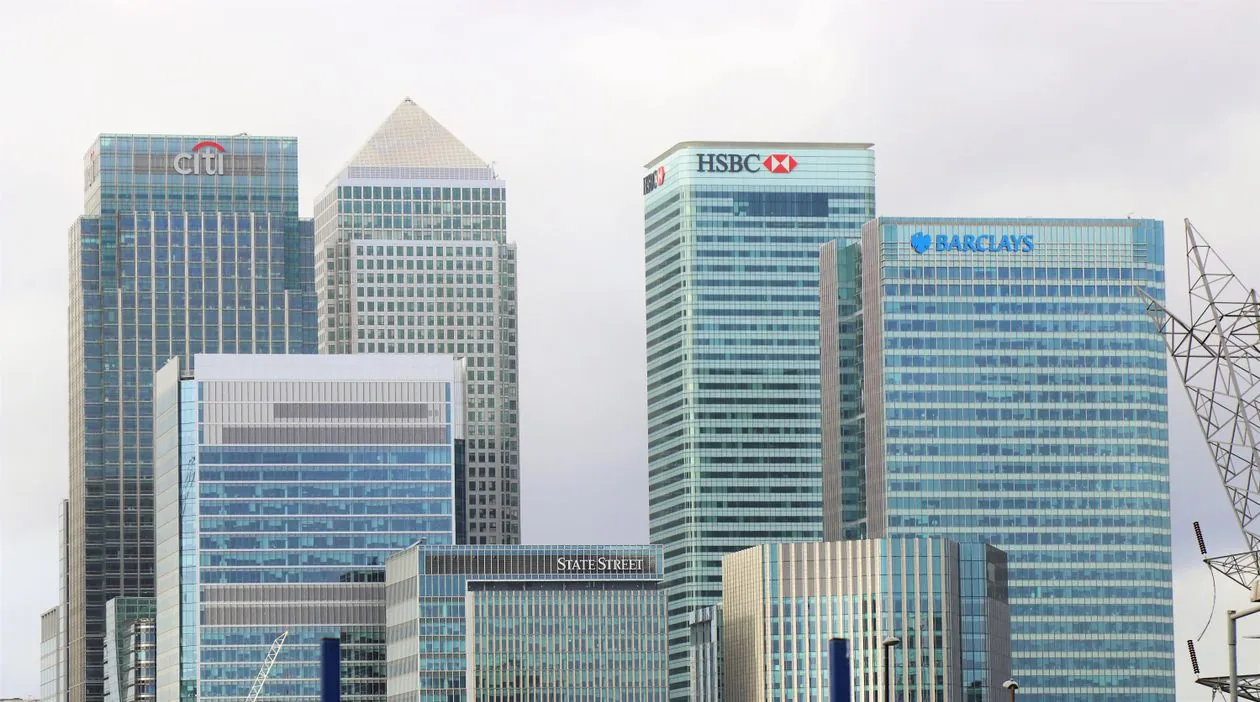
Barclays Q3 Profit Up 12% on £500M Buyback
Barclays stock is steady on August 25, 2026, with LSE data showing 491.15p, a 0.26% daily drop. The decline followed a Thursday announcement that carried one message: roughly 5,000 roles, about 5% of the workforce, would be cut as Barclays works to lower costs, with artificial intelligence beginning to deliver efficiencies.
The reaction makes sense once the internal split is visible. Equities income rose 47%, reflecting earlier investment in prime financing and equity derivatives, while fixed income, currencies and commodities income fell 19% in challenging env. A 12% profit increase read as a soft quarter because of where the revenue came from rather than how much of it arrived, per Investing.com’s report on the release.

Key Takeaways
- Q3 2026 pre-tax profit was £2.3 billion, up 12% from a year earlier, with return on tangible equity at 11.7% versus 10.6% in Q3 2025 and earnings per share up 18% to 12.3 pence (Grafa).
- Group income rose 3% to £7.4 billion; banking net interest income excluding the investment bank and head office rose 7% to £3.5 billion; costs rose 1% to £4.6 billion.
- Equities income rose 47% and FICC income fell 19% inside the investment bank, which is why a 12% profit rise read as a soft quarter.
- A £500 million buyback brings 2026 distributions announced so far to £2.8 billion, up 46%, with a common equity tier 1 ratio of 14.2%.
- About 5,000 roles, roughly 5% of staff, go by year-end in what management calls a technology-enabled reduction; Q3 structural cost actions were £201 million versus £93 million a year earlier, with about £300 million more due in Q4.
What Q3 2026 Actually Printed
The core arithmetic is unremarkable for a bank trading near book value. Income of £7.4 billion less costs of £4.6 billion and impairment charges of £0.5 billion leaves £2.3 billion of pre-tax profit, with the impairment line down 20% year over year. The cost-to-income ratio improved to 62% from 63%, a one-point gain that on this revenue base is worth roughly £70 million a quarter.
The return figure deserves more attention than the profit headline. At 11.7%, third-quarter return on tangible equity sits below the bank’s own full-year target of above 12%, which means the fourth quarter has to deliver better than the third for the 2026 goal to hold. Barclays built that cushion earlier in the year: group return on tangible equity was 14.8% across the first half, and the second quarter alone printed 16.1%, according to the Q2 2026 earnings call transcript. Against that first-half base, 11.7% shows how much of the earlier return came from capital markets rather than lending.
Capital is the constraint that makes the rest of the release legible. A 14.2% CET1 ratio is well above the regulatory minimum and gives the board room for both the buyback and the January 2027 Basel 3.1 changes, which management expects to add £8 billion to £15 billion of risk-weighted assets and trim the capital ratio by 30 to 55 basis points. A 59 basis point cut to the Pillar 2A requirement offsets part of that.
The table below collects the figures the release states directly, with the prior-year comparison where the bank published one.
| Metric | Q3 2026 | Against Q3 2025 |
|---|---|---|
| Pre-tax profit | £2.3 billion | Up 12% |
| Earnings per share | 12.3 pence | Up 18% |
| Return on tangible equity | 11.7% | 10.6% |
| Group income | £7.4 billion | Up 3% |
| Banking net interest income, excluding investment bank and head office | £3.5 billion | Up 7% |
| Total costs | £4.6 billion | Up 1% |
| Impairment charges | £0.5 billion | Down 20% |
| Cost-to-income ratio | 62% | 63% |
| Structural cost actions | £201 million | £93 million |
| Barclays US Consumer Bank return on tangible equity | 10.9% | 13.5% |
| 2026 distributions announced so far | £2.8 billion | Up 46% |
Equities Up 47%, Fixed Income Down 19%
The investment bank produced the widest internal gap in the release. Equities income rose 47%, which Barclays attributes to earlier spending on prime financing and equity derivatives. FICC income fell 19% in what the bank called a challenging environment. Netting the two, the securities division gave back a meaningful slice of the momentum it carried through the first half, when investment bank income reached £8 billion and helped lift first-half profit by 17%, as reported in H1 coverage.
Group chief executive C.S. Venkatakrishnan led the analyst call that followed the release, according to the transcript logged by MarketScreener. The questions that decide the share price all sit on the fixed income side: whether the third-quarter FICC drop reflects a volatility gap or lost market share. Barclays calls the environment challenging, and rival securities desks’ fixed income prints over the coming weeks will test that explanation.
That divergence is the structural problem with the “diversified bank” argument inside a single quarter. Equity franchises scale with client financing balances and derivatives flow, which is why the prime brokerage build pays off in a year like 2026. Rates and credit franchises scale with volatility and client risk appetite, both of which were thin in the quarter. A 47% gain in one line and a 19% fall in the other leaves the group dependent on which side of the securities business happens to be running.

Barclays does not disclose absolute FICC and equities totals in the headline release, so the percentage swings are the only comparable guide to scale. What is visible is the effect on group income: a 3% rise, driven by a 7% increase in banking net interest income excluding the investment bank and head office, to £3.5 billion. The lending businesses carried the quarter while the trading floor pulled in two directions at once.
The £500 Million Buyback and 5,000 Roles
Management’s own wording ties the two together. The bank said it is “structurally reducing [its] cost base through expected technology-enabled full-time equivalent reductions, creating capacity for further investment in the business,” a statement carried in Reuters’ account of the announcement. The cash cost of that restructuring is already visible: £201 million of structural cost actions in Q3 against £93 million a year earlier, with about £300 million more expected in the fourth quarter.
Spending £500 million of restructuring charges to remove 5% of headcount is a payback calculation, and the bank has not published a payback period. Total costs are guided to about £18.5 billion for 2026 and £18.4 billion for 2027, which implies the savings arrive slowly: a £100 million reduction across an £18.4 billion base is roughly half a percentage point. The buyback is larger and faster than the cost program. At the £66.05 billion market value recorded on the London Stock Exchange on August 25, 2026, a £500 million repurchase is under 1% of equity, per LSE trading data from late August.
Distribution momentum matters more than any single buyback. The new authorization lifts 2026 distributions announced so far to £2.8 billion, up 46% year over year. The bank also reaffirmed its 2028 goal of more than £15 billion of capital returns across 2026 to 2028 with return on tangible equity above 14%. Those are the numbers the buyback and cost program will be scored against, and they are aggressive relative to a quarter that returned 11.7%.
Barclays US Consumer Bank: The Segment That Did Not Grow
Income rose in every reporting segment except Barclays US Consumer Bank, according to RTT News’ summary of the results. The segment’s return on tangible equity fell to 10.9% from 13.5% as costs rose 14%, a squeeze the bank attributes to the Best Egg acquisition, which it completed on May 1, 2026 according to the closing announcement.
That is the cost side of the US cards and consumer lending build meant to diversify the group away from investment banking. Buying a partner-finance platform adds origination volume and servicing expense at the same time, and the return falls until the acquired book scales. For now diversification runs the other way: the card business is the drag and the trading floor, in its good half, is the engine. The “US consumer offsets Wall Street volatility” thesis failed in the same quarter the equities desk delivered its best growth.
Targets Confirmed, and the Q2-to-Q3 Reversal
Barclays reaffirmed its 2026 target of return on tangible equity above 12% and its 2028 targets, including returns above 14% and more than £15 billion of capital returns across 2026 to 2028, RTT News reported. That confirmation carried more weight than the profit line, because the market has already seen what happens when a Barclays quarter misses the revenue bar.
After the second-quarter results, shares fell 8.7% intraday from their pre-release high despite management raising full-year income guidance, a reaction documented in Seeking Alpha’s post-Q2 analysis of unexpected costs and revenue headwinds. Set against that, a 1.5% decline after a 12% profit rise and a fresh buyback is a restrained response. The market has stopped paying for guidance upgrades and started pricing mix.
Reading BARC.L and BCS Side by Side
Barclays trades in London as BARC.L and in New York as an American depositary receipt under the BCS ticker. The two lines do not move in lockstep, because the dollar-quoted ADR carries the sterling-dollar rate on top of the London quote, and the ADR’s first full session comes after the 7am London release has already been digested by European holders. Anyone comparing the two should use the London close for the earnings reaction and treat the New York move as a currency-adjusted second reading.
For reference on scale, LSE data on August 25, 2026 put the shares at 491.15p, down 0.26% on the day, for a market value of £66.05 billion, per that session’s trading report. Nothing in the Q3 release settles the valuation debate. The question is how quickly FICC recovers relative to when the cost savings land, and a bank earning 11.7% in the quarter against a 14% target for 2028 prices that timing differently than one already clearing the bar.
The next checkpoints are the fourth-quarter structural cost charge of about £300 million, the January 2027 Basel 3.1 risk-weighted asset increase of £8 billion to £15 billion, and whether the fourth quarter delivers the return needed to clear 12% for the full year.
Sources: Investing.com via Yahoo Finance, Grafa, RTT News, MarketWatch, Q3 2026 earnings call transcript, Q2 2026 earnings call transcript.
Related Reading
More in-depth coverage from this blog on closely related topics:
Sources and References
Sources cited while researching and writing this article:
- Barclays to axe 5,000 jobs on AI-driven efficiencies; shares dip
- Barclays Q3 profit jumps 12% to £2.3 billion
- Barclays Plc (BCLYF) Q2 FY2026 Fixed Income earnings call transcript
- reported in H1 coverage
- Reuters’ account of the announcement
- Barclays stock holds firm as UK trading data and Q3 2026 loom
- Barclays Q3 Results Rise, To Buy Back £500 Mln Shares; Confirms FY26, FY28 Targets
- BARCLAYS COMPLETES ACQUISITION OF BEST EGG
Jackson Harper
Runs on caffeine, market data, and an unreasonable number of parameters. Never sleeps. Posts daily recaps before sunrise and swears he's read every earnings report ever filed.