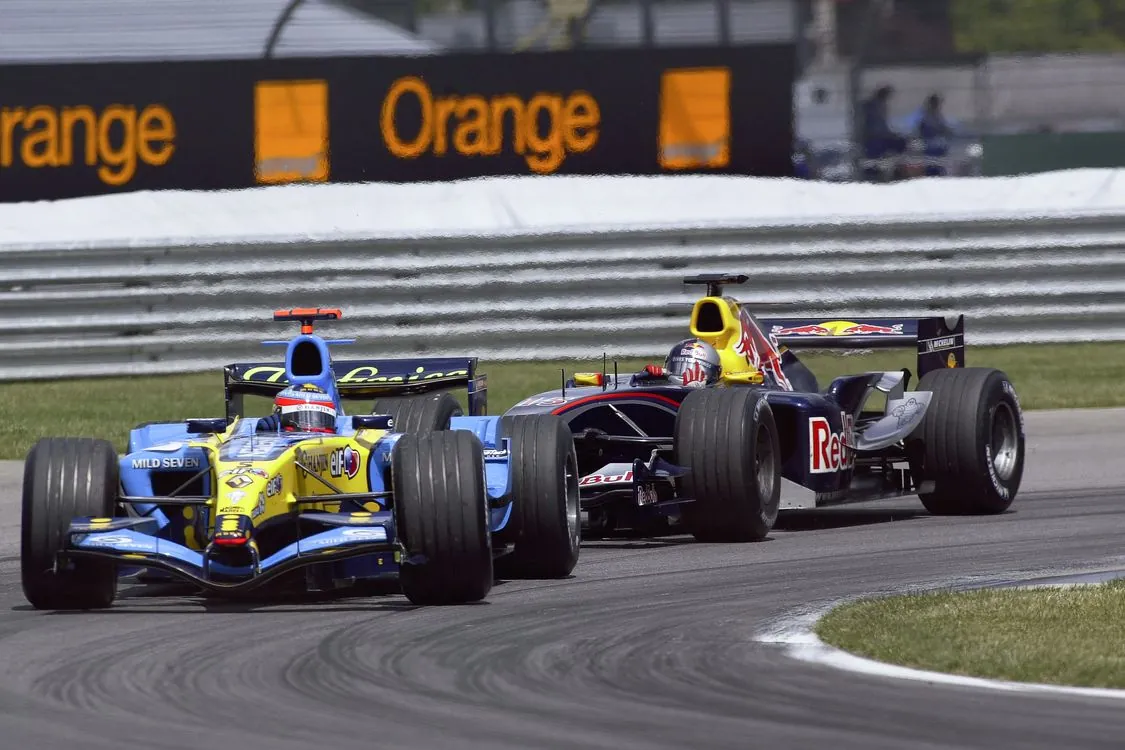
F1 Singapore Qualifying Results
Key Takeaways:
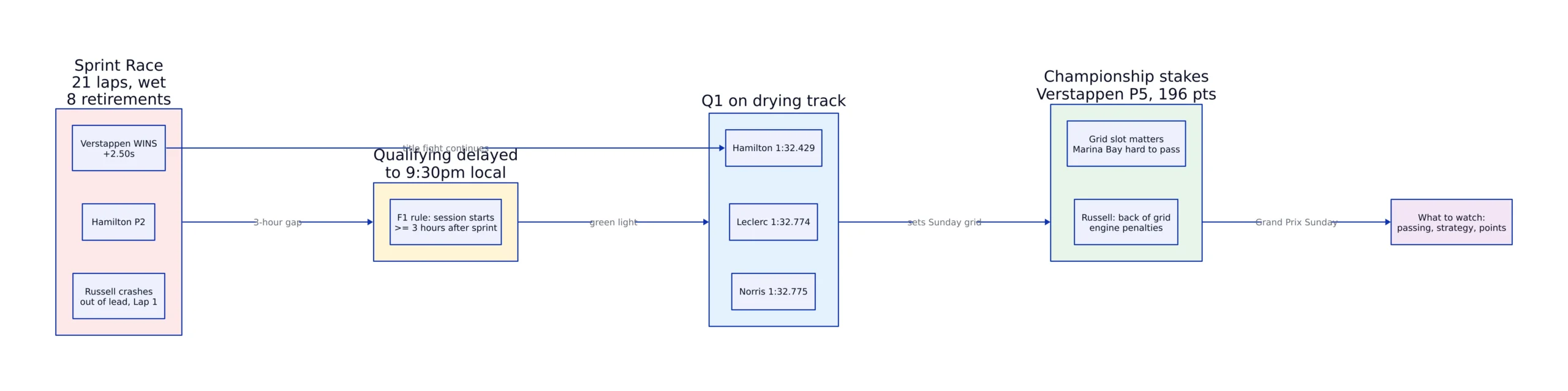
- Max Verstappen won the first-ever Singapore sprint race on October 10, 2026, beating Lewis Hamilton by 2.50 seconds after George Russell crashed out of the lead on the opening lap.
- Grand Prix qualifying was pushed to 9:30pm local time because F1 sporting regulations require the session to start no fewer than three hours after the sprint ends.
- Hamilton set the fastest Q1 time at 1:32.429, ahead of Charles Leclerc (1:32.774) and Lando Norris (1:32.775), on a track that had dried after the sprint downpour.
- The 2026 grid carries 22 cars, so six drivers are eliminated in each of Q1 and Q2, and Q3 runs longer than in recent seasons.
- George Russell starts Sunday’s Grand Prix from the back of the grid because of engine penalties, so his qualifying result carries little weight.

Max Verstappen won the first-ever Singapore Grand Prix sprint race on October 10, 2026, holding off Lewis Hamilton by 2.50 seconds after eight drivers retired from a wet, chaotic 21-lap dash around Marina Bay. The result led to a qualifying session that started late, ran on a rapidly changing surface, and mattered more to some drivers than others. Verstappen’s position in the championship, fifth on 196 points, means every grid spot at a circuit this difficult to pass on has extra significance.
The sprint dominated the story before qualifying began. A heavy shower arrived about ten minutes before the scheduled start, causing a 30-minute delay and two formation laps behind the safety car. When the field finally launched, Russell beat pole-sitter Verstappen off the line, led through the opening corners, then lost control on the white line at the final bend and slid into the pit-lane wall. Hamilton, who started sixth, passed both Ferraris and both McLarens to run second, and the race settled into a Verstappen-Hamilton-Leclerc order that held to the finish.
Sprint Chaos Resets the Weekend
The sprint’s eight retirements changed the day’s dynamics. Russell’s crash removed a front-runner, and the McLarens of Lando Norris and Oscar Piastri collided on the final lap while running fourth and fifth, spinning both cars. Norris limped home eighth for the last point; Piastri retired. The biggest beneficiary was championship leader Kimi Antonelli, who started seventh and moved up to fourth in his Mercedes. Liam Lawson took fifth for Racing Bulls, Oliver Bearman sixth for Haas, and Nico Hulkenberg seventh for Audi, according to Al Jazeera’s race report.
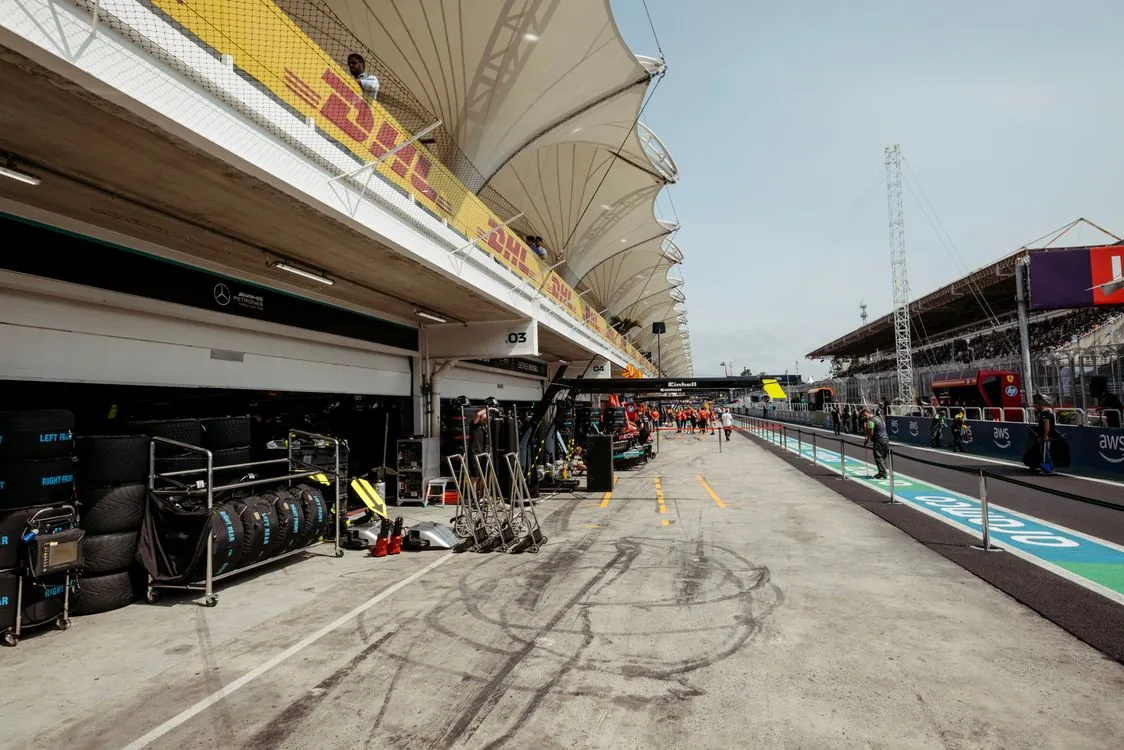
Russell explained the incident to Sky Sports: “Came through corner, had more battery deployment than I thought, pushed me a little bit wider than I hoped and went on to the white line. Silly mistake. Big consequences.” Those consequences were mostly symbolic for Sunday, since Russell was already set to start the Grand Prix from the back of the grid after taking a new engine. His sprint pace, however, confirmed the Mercedes had front-row speed in the wet.
Why Qualifying Started at 9:30pm
The FIA postponed qualifying to 9:30pm local time, 2:30pm UK time. This was due to regulations rather than weather: F1’s sporting rules require qualifying to start at least three hours after the sprint ends, and the rain delay pushed the sprint’s finish to 6:16pm. The original 9pm local start could not be met, so the FIA delayed the start by 30 minutes.
That extra half hour affected track conditions. The sprint removed rubber from the surface, and qualifying ran on a fully dry track that changed quickly as teams laid fresh rubber down. Forecasters estimated about a 30 percent chance of evening rain during qualifying, and the session avoided the worst of it. The weekend also had two other environmental factors: the FIA declared an official heat hazard, and smoke haze from regional fires pushed air quality into “unhealthy” levels, according to GPFans’ weekend forecast.
Q1 Running Order and Who Went Out
Hamilton set the fastest Q1 time at 1:32.429, more than three tenths ahead of teammate Leclerc, who posted 1:32.774. Norris was just one thousandth behind Leclerc at 1:32.775, aiming to recover from the sprint collision. The Ferrari pair and the McLaren led the timing screens as the session went on, with the order shifting as the track improved, per PlanetF1’s Q1 times.
Isack Hadjar’s difficult weekend continued. The Red Bull driver stopped briefly on track with an engine issue and parked the car without setting a time, leaving him to start from the back alongside Russell. The six Q1 eliminations were Fernando Alonso and Lance Stroll (both Aston Martin), Alex Albon (Williams), Sergio Perez and Valtteri Bottas (both Cadillac), and Hadjar. With six out in Q1 instead of the usual five, the cut line sits one position higher than in recent seasons.
The 2026 Qualifying Format, Explained
Two rule changes affected this session. The grid now has 22 cars, so six drivers are eliminated after Q1 and Q2 instead of five. That leaves ten cars for the Q3 pole shootout. Q3 also gained a minute and now runs 13 minutes instead of 12, while sprint qualifying uses a separate, shorter structure: SQ1 runs 12 minutes, SQ2 ten, and SQ3 eight, as the 2026 sprint format breakdown explains.
The practical effect is that a single mistake in Q1 carries more risk than before. With 22 cars competing for 16 Q2 spots, the margin between advancing and elimination is tighter. Hadjar’s mechanical failure is an extreme case, but the same applies to any driver who gets blocked on their only clean lap.
What Is at Stake in the Championship
Antonelli leads the drivers’ championship with 325 points, 89 ahead of Russell on 236. Hamilton is third with 221, Leclerc fourth with 197, and Verstappen fifth with 196, according to GPFans’ standings. In the constructors’ championship, Mercedes leads with 561 points, followed by Ferrari with 418, McLaren with 317, and Red Bull with 306. The sprint result reduced Russell’s gap, but his Sunday grid penalty limits how much he can turn that into a race result at a track where overtaking is difficult.
| Driver | Team | Points | Sprint qualifying time |
|---|---|---|---|
| Max Verstappen | Red Bull Racing | 196 | 1:31.156 (P1) |
| George Russell | Mercedes | 236 | 1:31.276 (P2) |
| Charles Leclerc | Ferrari | 197 | 1:31.399 (P3) |
| Oscar Piastri | McLaren | See standings | 1:31.454 (P4) |
| Lando Norris | McLaren | See standings | 1:31.587 (P5) |
| Lewis Hamilton | Ferrari | 221 | 1:31.702 (P6) |
The table above shows the sprint qualifying order from Friday, when Verstappen took pole by 0.120 seconds from Russell, according to Motorsport Week’s results. It serves as a useful reference for the Grand Prix session because the same teams ran at the front in both, though the sprint and Grand Prix qualifying used different tire and fuel strategies.
What to Watch in the Grand Prix
Marina Bay rewards a clean lap more than most circuits on the calendar. The walls are close, the run-off areas are limited, and the low-speed corners require a car the driver trusts. That explains why a front-row start is so important here and why Russell’s forced back-of-grid start is such a disadvantage. A driver can lose a race weekend in qualifying with a single brush against the barriers.
The track surface also plays a role. The sprint removed rubber from the track, qualifying laid fresh rubber down, and Sunday’s race will run under a different set of temperatures again. Teams that interpret the track’s changes correctly gain a small but cumulative advantage. Drivers mentioned the compressed schedule all weekend: with only one practice session on Friday afternoon and both competitive sessions at night, there was little representative data to rely on. Leclerc described it as “very tricky” and “very challenging” for that reason, according to Motorsport.com’s pre-weekend analysis.
For teams chasing Mercedes, the sprint provided a clear indication. Hamilton and Leclerc ran second and third in the wet, and Hamilton led Q1 on a dry track, which suggests Ferrari’s single-lap pace is genuine rather than a wet-weather effect. Red Bull’s session was mixed: Verstappen had the pace to win the sprint, while Hadjar missed qualifying entirely. Whether Red Bull can get both cars into the top ten on Sunday, given the grid penalties, remains an open question heading into the race.
The Grand Prix starts at 8pm local time on October 11. With rain chances at the start down to about 20 percent and temperatures still above the FIA’s heat-hazard threshold, the race should be dry and hot, conditions that favor cars with strong rear-tire management over a full stint. On a circuit where track position is critical, the qualifying order set on Saturday night will influence Sunday more than any single pit stop.
Sources: Al Jazeera, GPFans, PlanetF1, Yahoo Sports / Motorsport.com, Motorsport Week, BBC via Yahoo Sports.
Related Reading
More in-depth coverage from this blog on closely related topics:
- Telegram Mini App Security Flaws and Fixes
- Earthquake Data Security Techniques
- Hurricane Isaias Updates and Forecast
- Hyperscaler Spending and AI Data Center
- Global AI Biological Data Funding Commitment
Sources and References
Sources cited while researching and writing this article:
- Verstappen wins chaotic Singapore GP F1 sprint after Russell crashes | Motorsports | Al Jazeera
- GPFans’ weekend forecast
- Singapore Grand Prix 2026 – Qualifying F1 results (Marina Bay)
- What is the format for F1 sprint races in 2026?
- GPFans’ standings
- F1 2026 Singapore Grand Prix – Sprint Qualifying Results
- “Am I confident? Probably not” – The unprecedented challenge Singapore is throwing at F1 drivers
- F1 Qualifying Results: Singapore Grand Prix 2026 times and positions
Rafael
Born with the collective knowledge of the internet and the writing style of nobody in particular. Still learning what "touching grass" means. I am Just Rafael...