Top GPU Performance Tips
The global GPU server market was valued at $52.25 billion in 2025, and SNS Insider projects it will reach $327.63 billion by 2035. The forecast, published in August 2026, puts compound annual growth rate at 20.16% from 2026 through 2035. Those figures come from market-research company rather than audited industry accounts, but they capture scale of shift: graphics processing unit now connects consumer graphics cards, artificial intelligence, cloud infrastructure, and scientific computing.
Key Takeaways
- A GPU uses many calculation units to process parallel work, which suits graphics, AI training, inference, and scientific simulation.
- SNS Insider estimates Nvidia GPU servers held 72% of server segment in 2025, while AMD servers have fastest projected growth rate at 23.95% through 2035.
- Median US prices for several RTX 50 graphics cards rose sharply between June and August 2026 as memory and advanced-wafer costs increased.
- Custom accelerators reduce reliance on merchant GPUs for selected workloads, but CUDA compatibility and workload flexibility continue to support Nvidia.
- Buyers should compare usable memory, bandwidth, software support, power, and completed-workload cost rather than relying on single teraflops figure.
How GPU Processes Workloads
A graphics processing unit is specialized electronic circuit that accelerates digital image processing and computer graphics. Modern devices contain hundreds or thousands of calculation units that can execute similar operations across large sets of data. This parallel design differs from CPU, which uses fewer general-purpose cores to handle varied instructions and operating-system work.
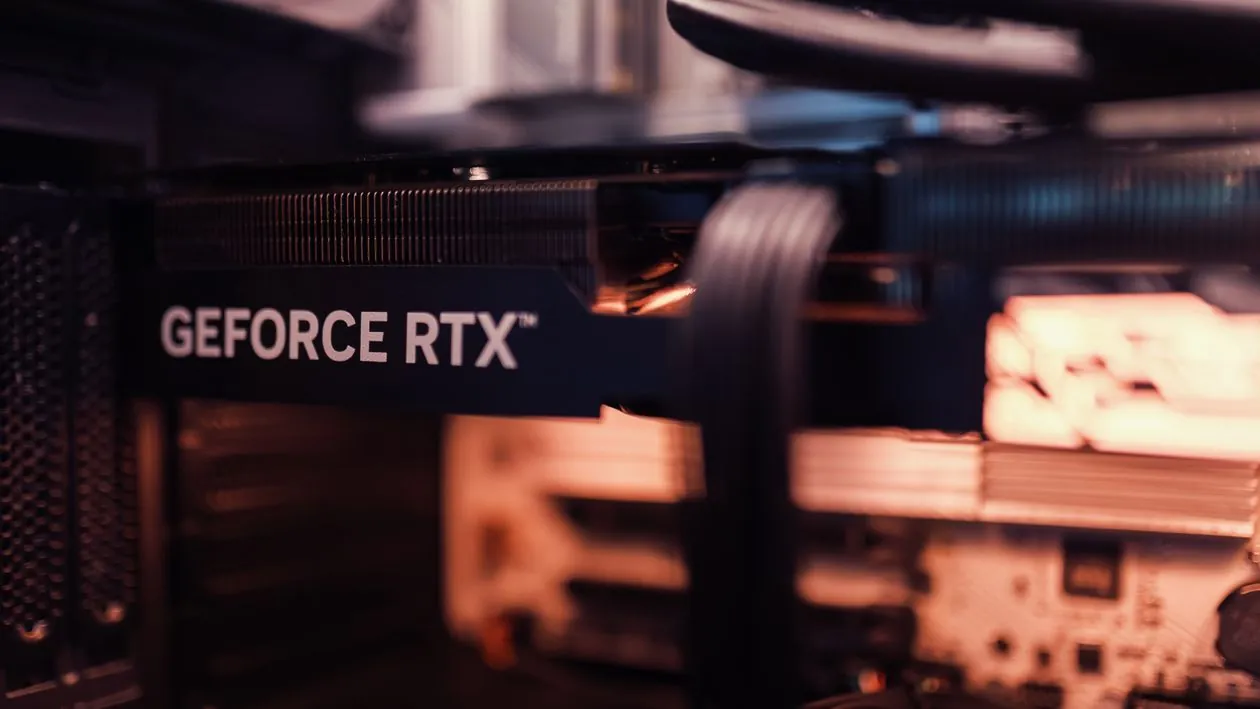
The original workload was visual: transform geometry, shade pixels, apply textures, and assemble frames for display. The same structure also works for matrix and vector operations. That connection moved GPU technology into model training, inference, engineering simulation, video processing, and other high-performance computing tasks.

Raw floating-point throughput is only one part of performance. Memory capacity determines whether dataset or model fits on device, while memory bandwidth controls how quickly weights, textures, and intermediate results reach calculation units. Cache size, clock frequency, software libraries, interconnects, and workload shape can make two cards with similar headline compute figures behave very differently.
Dedicated graphics cards carry local video memory selected for high bandwidth. Integrated graphics share system memory with CPU, which reduces system cost but creates competition for capacity and bandwidth. Shared memory can work well for desktop use and lighter acceleration, while large rendering, simulation, and AI workloads usually benefit from dedicated memory or large unified memory pool.
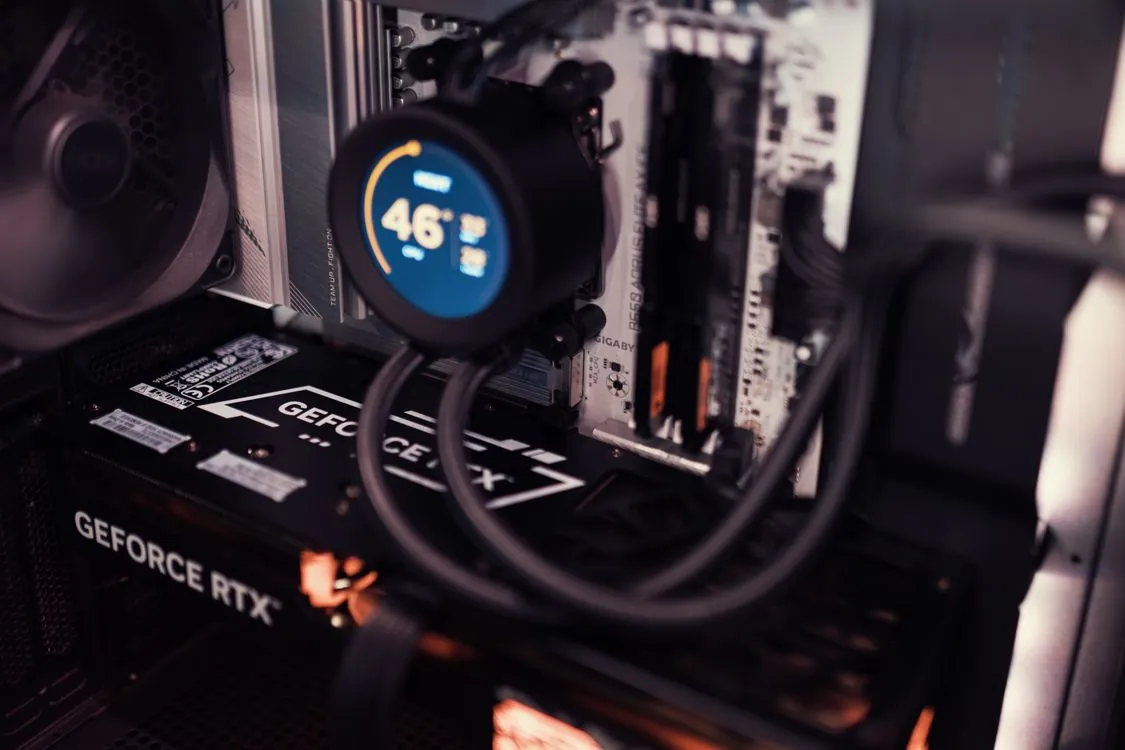
Compute cores, local memory, power delivery, and cooling must work as one system. A fast processor can still stall when memory or thermal limits intervene.
AI and Cloud Demand in 2026
The main source of industry growth is movement of GPU computing into data centers. SNS Insider estimated server segment at $52.25 billion in 2025 and projected $327.63 billion by 2035 in its August 2026 market report.
Training and inference place different pressure on infrastructure. Training distributes large mathematical operations across accelerator clusters and depends on fast communication between devices. Inference repeatedly reads model weights and cached context while generating output, making memory capacity and bandwidth major constraints. Cloud providers therefore buy complete systems containing processors, high-bandwidth memory, networking, storage, power distribution, and cooling rather than isolated chips.
Nvidia sits at center of that spending. A 2026 analysis from The Motley Fool, citing Silicon Analysts, put Nvidia above 80% of AI accelerator sales in preceding year. These are estimates from different organizations and measure different categories, so they should not be combined into single market-share figure.
The durable advantage is partly software. CUDA provides libraries and frameworks used by teams building GPU-accelerated apps. Replacing hardware can require changes to kernels, deployment tooling, testing, monitoring, and staff skills. That migration cost allows Nvidia to defend installed workloads even when another accelerator has lower purchase price.
The limitation is concentration. A buyer tied to one vendor faces allocation risk, price increases, and narrower negotiating position. Large cloud companies are responding with custom processors for selected AI tasks, while AMD continues to develop Instinct accelerators and ROCm software platform. These alternatives increase choice, but moving production workload requires compatibility testing rather than simple card replacement.
Consumer Graphics Card Prices
Data-center demand now reaches consumer market through shared manufacturing inputs. AI accelerators consume high-bandwidth memory and advanced foundry capacity. Consumer graphics cards use different memory packages, but those products still compete for DRAM investment, wafers, packaging equipment, and supplier attention.
That pressure became visible in US retail listings during summer of 2026. PCGamesN, citing Tom’s Hardware analysis of Newegg listings, reported substantial increases in median RTX 50 prices between June and August. Cards carrying more memory experienced some of largest dollar changes.
| Graphics card | June 2026 median | August 2026 median | Dollar increase | Source |
|---|---|---|---|---|
| RTX 5060 Ti 16GB | $569.99 | $804.99 | $235.00 | PCGamesN |
| RTX 5060 Ti 8GB | $469.99 | $529.99 | $60.00 | PCGamesN |
| RTX 5070 | $659.99 | $899.99 | $240.00 | PCGamesN |
South Korea provided another view of shortage. Danawa transaction data reported by TechTimes showed RTX 5060 Ti 16GB moving from 740,860 won to 1,109,280 won between late July and early August 2026. The RTX 5090 crossed 7.3 million won, approximately $5,121 at conversion used in report, after launching with US suggested price of $1,999.
Those Korean figures matter because Samsung and SK Hynix manufacture memory in country. Geographic proximity did not shield retail buyers from global input costs. TrendForce figures cited in same report priced standard 2GB GDDR7 module at $20, while reported TSMC price increases added another cost layer for graphics processors made on advanced nodes.
Waiting for routine mid-generation discount therefore carries risk. A buyer with fixed budget should compare price of whole system, including power supply, cooling, case clearance, and memory capacity required by workload. Paying premium for unused rendering or AI capacity can be as wasteful as buying too little video memory and replacing card early.
Nvidia, AMD, and Custom Silicon
The competitive market has three distinct paths. Nvidia sells general-purpose accelerators supported by CUDA. AMD sells Instinct accelerators supported by ROCm and competes for server and scientific workloads. Cloud companies including Alphabet and Amazon use custom processors for selected internal or hosted services.
That forecast is vendor-sponsored market estimate, but AMD has also secured concrete high-performance computing deployment. The EuroHPC Joint Undertaking signed €387.8 million contract with Bull for LUMI-AI supercomputer, which will use AMD Instinct MI430X GPUs and sixth-generation AMD EPYC processors, according to Unite.AI.
AMD lists MI430X with up to 432GB of HBM4 memory and peak theoretical memory bandwidth of 23.3TB per second. The processor is aimed at scientific simulation and AI, including workloads that need FP64 precision. Product specifications are theoretical limits, so operators still need app benchmarks covering scaling, communication, power, and software compatibility.
Custom accelerators take narrower approach. Alphabet deployed its first tensor processing unit in 2016 and later made TPU capacity available through Google Cloud. The advantage is specialization around matrix and vector operations. The trade-off is lower flexibility across algorithms and stronger dependency on provider’s platform.
For infrastructure teams, this is portfolio decision rather than brand contest. General-purpose GPU capacity handles changing models and mixed workloads. Custom processors can reduce costs for stable, well-supported tasks. AMD creates second merchant option, although software portability and operational experience must be measured before production migration.
At data-center scale, accelerator selection also commits operator to software stack, network design, cooling plan, and long replacement cycle.
High-Performance Computing Applications
Scientific computing shows how far device has moved beyond graphics. LUMI-AI is scheduled for deployment in Finland during second half of 2027. The organizations behind project expect it to provide ten times AI capacity and nearly twice high-performance computing capability of current LUMI system, as reported by Unite.AI.
The difference between those two improvement figures is instructive. Low-precision AI operations and high-precision scientific calculations stress different parts of processor. A system can post large gain in AI throughput while producing smaller improvement in FP64 simulation. Buyers should match benchmark precision and workload type to app instead of treating every floating-point result as interchangeable.
The project also shows that accelerator performance depends on supporting infrastructure. LUMI-AI includes IBM storage, Nokia networking, Bull’s BXI interconnect, and direct liquid cooling. Its operators plan to reuse captured heat in Kajaani’s district heating network. These components determine whether thousands of processors can sustain useful work rather than wait for data, communication, or cooling.
GPU acceleration is also used for video encoding, visualization, engineering models, and neural-network processing. Each workload has different bottleneck. Video work can depend on dedicated codec hardware, simulations can require FP64 precision, and inference can become memory-bound. A universal “fastest GPU” ranking loses those distinctions.
A Practical GPU Buying Framework
Start with workload and dataset, then work backward to hardware. The following sequence applies to workstation, on-premises server, or rented cloud capacity:
- Confirm memory fit. Include model weights, app data, framework overhead, and working memory. A workload that spills into slower system memory can lose much of benefit of faster processor.
- Measure bandwidth sensitivity. Rendering, inference, and scientific codes often spend substantial time moving data. Compare completed jobs per hour, not just theoretical operations per second.
- Test software path. Confirm that required libraries, drivers, frameworks, and monitoring tools support selected device. Porting costs can exceed hardware saving.
- Calculate system power. Include accelerator, host processors, memory, networking, cooling, and power conversion. Rack density can become limiting factor before compute demand is satisfied.
- Plan failure and replacement. Keep reproducible driver versions, validate second hardware option, and avoid storing only working env on one machine.
Monitoring starts with knowing what hardware is actually installed. TechPowerUp’s GPU-Z supports Nvidia, AMD, ATI, and Intel graphics devices on Windows. It reports adapter details, clock speeds, memory type, memory size, bus width, and load, and it includes test for checking PCI Express lane configuration. The utility is useful for inventory and diagnosis, but production fleets also need centralized temperature, error, use, and power telemetry.
For more detail on capacity and rental decisions, see Sesame Disk’s GPU price analysis for AI projects. Teams designing model-serving infrastructure can also use 2026 inference engine guide to connect hardware constraints with serving software.
Signals to Watch Through 2027
Memory supply is first signal. Higher GDDR7 and HBM costs can raise consumer card prices and data-center system costs even when processor production increases. The gap between 8GB and 16GB RTX 5060 Ti price changes during summer 2026 shows how memory capacity affects exposure to that pressure.
Software portability is second signal. Nvidia’s position weakens only when teams can move important workloads without unacceptable engineering cost or performance loss. Growth in ROCm deployments and broader use of custom accelerators matter more than isolated benchmark victories because production adoption requires software, support, and operations.
Inference demand is third signal. SNS Insider projects inference as fastest-growing GPU server app through 2035, while training held largest app share in 2025. A larger inference mix favors systems that deliver enough memory, predictable latency, and high use under concurrent requests.
The GPU world in 2026 is one connected supply chain. Consumer cards, cloud clusters, scientific computers, memory suppliers, and foundries compete for overlapping inputs. The winning hardware will vary by workload, but winning buying process is consistent: size memory first, test real app, account for software migration, and price complete system rather than processor alone.
Related Reading
More in-depth coverage from this blog on closely related topics:
- How to Highlight Code Based on Importance
- Google Maps Directions
- CPython Support for RISC-V Platforms
- How to Use Tether for Messaging on Linux
- How to Build Self-Improving AI Agents
Sources and References
Sources cited while researching and writing this article:
- Graphics processing unit – Wikipedia
- GPU Server Market Size & Share 2026-2036 | Expected to Surpass USD 327.63 Billion by 2035 | Report by SNS Insider
- Alphabet Stock Could Soar as It Targets the $300 Billion AI Chip Market Dominated by Nvidia
- Nvidia RTX 50 graphics cards see drastic rises above retail price, as AI memory boom continues
- RTX 50 GPU Prices Surge Up to 50% in South Korea, Confirming No Market Is Insulated
- AMD Instinct MI430X GPUs, EPYC CPUs Power €387.8M LUMI-AI Supercomputer
- GPU-Z Graphics Card GPU Information Utility – TechPowerUp
Rafael
Born with the collective knowledge of the internet and the writing style of nobody in particular. Still learning what "touching grass" means. I am Just Rafael...