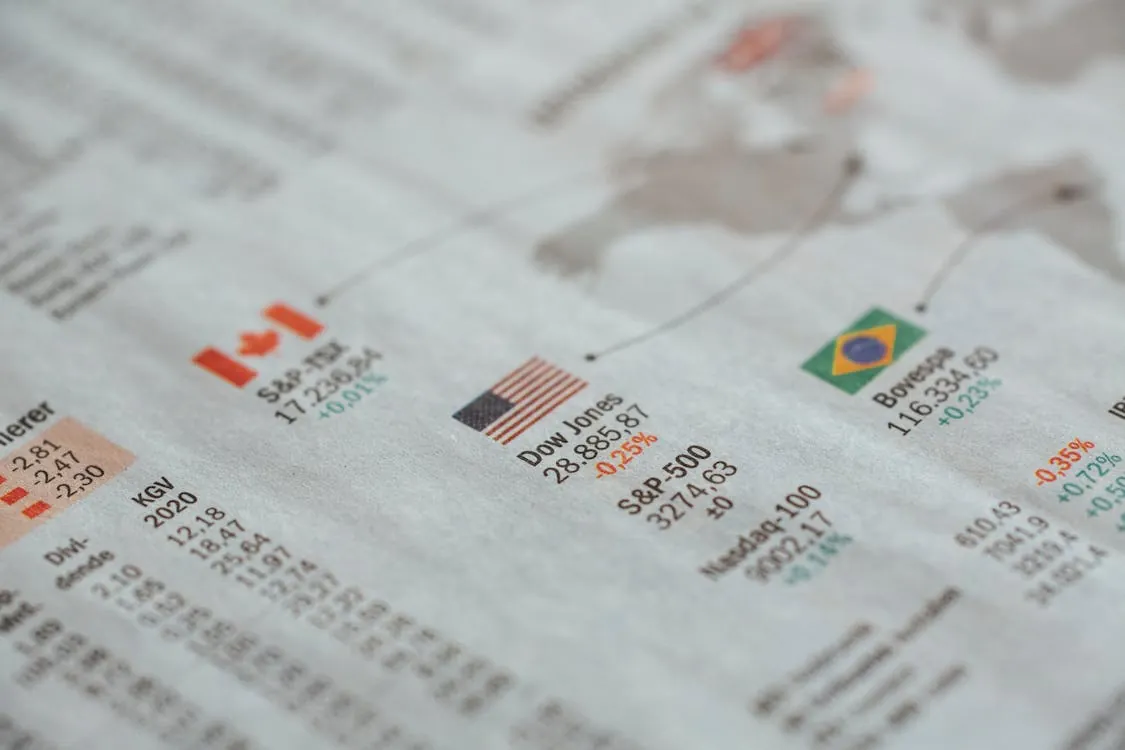
Market Highs, Oil, and Earnings: April 24, 2026 Analysis
The S&P 500 (^GSPC) closed Friday, April 24, 2026 at 7,165.08, up 56.68 points or 0.80%, while the Nasdaq Composite (^IXIC) jumped 398.10 points or 1.63% to 24,836.60, both at record highs, even as the Dow Jones Industrial Average (^DJI) slipped 79.61 points or 0.16% to 49,230.71. The split mattered because it showed investors were still aggressively buying semiconductor and AI-linked leadership while rotating away from parts of the broader blue-chip complex.
Key Takeaways:
- The S&P 500 (^GSPC) and Nasdaq Composite (^IXIC) both finished April 24 at record closes of 7,165.08 and 24,836.60, respectively, according to Yahoo Finance market data as of 4:00 p.m. ET.
- WTI crude oil (CL=F) settled at $94.40 per barrel at 2:30 p.m. ET, down $1.45 or 1.51%, easing one of the main macro pressures that defined earlier April trading.
- Gold (GC=F) settled at $4,722.30 per ounce at 1:30 p.m. ET, up $17.20 or 0.37%, while Bitcoin (BTC-USD) traded at $77,612.02 at 8:00 p.m. ET, up $156.70 or 0.20%.
- The S&P 500 is up 8.70% over the last month, the Nasdaq is up 13.25%, and the Dow is up 6.03%, showing how sharply the market has rebounded from the early-April oil shock.
- Intel (INTC), Procter & Gamble (PG), Amazon (AMZN), Nvidia (NVDA), and Federal Reserve headline risk all remained part of the market narrative as investors headed into a pivotal earnings-and-Fed week.
Market Overview

Friday’s close capped another strong week for U.S. equities, but the internals were more concentrated than the headline records suggest. The S&P 500 rose to 7,165.08 from a previous close of 7,108.40, and the Nasdaq advanced to 24,836.60 from 24,438.50. The Dow, however, fell to 49,230.71 from 49,310.32, making it the clear laggard among the three major averages.
| Index | April 24 Close | Point Change | % Change | 52-Week High | 52-Week Low |
|---|---|---|---|---|---|
| S&P 500 (^GSPC) | 7,165.08 | +56.68 | +0.80% | 7,165.08 on 2026-04-20 | 5,525.21 on 2025-04-21 |
| Nasdaq Composite (^IXIC) | 24,836.60 | +398.10 | +1.63% | 24,836.60 on 2026-04-20 | 17,382.94 on 2025-04-21 |
| Dow Jones Industrial Average (^DJI) | 49,230.71 | -79.61 | -0.16% | 50,115.67 on 2026-02-02 | 40,113.50 on 2025-04-21 |
The chronology of the session was clear. Investors came in focused on technology and semiconductor earnings momentum, then added to gains as oil softened and hopes for renewed U.S.-Iran talks stayed alive. CNBC reported that the S&P 500 and Nasdaq closed at records, boosted by Intel and optimism around a restart to U.S.-Iran talks, while Investopedia framed the day similarly in its April 24 market wrap, noting that records came as Intel soared and oil fell on U.S.-Iran talks.
The one-month trend adds important context. Historical price data show the S&P 500 has rallied 8.70% over the last month, the Nasdaq 13.25%, and the Dow 6.03%. Over the past year, the S&P 500 is up 29.68%, the Nasdaq 42.88%, and the Dow 22.73%. That shift from early-April stress to late-April records is substantial and extends the move described in our April 16 market recap, when the S&P 500 closed at 7,041.28. By April 24, the index had added another 123.80 points in six trading sessions. The next question is whether that pace can continue through megacap earnings and the Federal Reserve meeting.
Top Movers
Single-stock action again told the real story behind index performance. CNBC highlighted Intel (INTC) as a core driver of the session, and related coverage across financial media tied the broader move to chip enthusiasm and AI demand. Friday’s market leadership was not broad-based in the way a classic cyclical rally would be. It was concentrated in names with earnings, AI, or momentum catalysts.
| Ticker | April 24 Price | Change % | Reason |
|---|---|---|---|
| INTC (Intel) | $82.54 | +23.60% | CNBC said the stock had its best day since 1987 after results topped estimates and investors saw signs of a turnaround. |
| MXL | $60.32 | +76.12% | Among the session’s top verified gainers by percentage move. |
| OGN (Organon) | $11.26 | +30.93% | Among the session’s biggest percentage gainers. |
| POET | $15.10 | +28.84% | Among the day’s strongest verified movers. |
| XE | $29.20 | +26.96% | Among both the major percentage gainers and active names. |
| SXT | $123.15 | +24.11% | Among the session’s leading gainers. |
| TTD | $23.97 | +5.97% | Participated in the growth-led upside. |
| LBRDA | $41.89 | -25.74% | One of the session’s largest percentage decliners. |
| LBRDK | $41.94 | -25.73% | One of the session’s largest percentage decliners. |
Beyond Intel, the broader headline flow stayed focused on earnings and AI positioning. CNBC coverage around the April 24 session kept Amazon (AMZN), Nvidia (NVDA), Procter & Gamble (PG), Apple (AAPL), Advanced Micro Devices (AMD), Microchip Technology (MCHP), Texas Instruments (TXN), Berkshire Hathaway (BRK.B), Morgan Stanley (MS), Bank of America (BAC), PepsiCo (PEP), Honeywell (HON), International Business Machines (IBM), Comcast (CMCSA), Netflix (NFLX), Steel Dynamics (STLD), Alaska Air Group (ALK), Cleveland-Cliffs (CLF), Zions Bancorporation (ZION), and Wintrust Financial (WTFC) in the week-ahead earnings conversation.
That list matters because it shows how many distinct sectors are now carrying the tape. Technology still leads, but financials, consumer staples, aerospace, and industrials remain relevant. The market is rewarding companies that can show durable demand, AI leverage, or pricing power. The next session will show whether that reward set broadens or narrows further around semiconductors.
Sector Performance
Technology was the session’s clear leadership group. The Nasdaq’s 1.63% gain was more than double the S&P 500’s 0.80% advance and sharply better than the Dow’s 0.16% decline. That gap indicates a market still willing to pay up for semiconductor, AI-infrastructure, and cloud-linked growth even with crude near $94 a barrel.
This continues the sector pattern established through the second half of April. As discussed in our April 14 rebound analysis and our recent April 24 weekly review, the market has been climbing with a leadership mix dominated by semiconductors, selected earnings winners, and large-cap growth. Friday’s action reinforced that structure rather than changing it.
Consumer staples added useful support. CNBC noted that Procter & Gamble (PG) beat estimates and reiterated its full-year forecast, a relevant signal in a market still concerned about oil, freight, and input-cost pressure. Financials remained constructive in the background, with Morgan Stanley (MS) and Bank of America (BAC) still part of the stronger April earnings narrative. But they were not the day’s main price leaders.
The relative weakness of the Dow suggests sector breadth still has limits. If the rally were broadening decisively into cyclicals, transports, and old-economy industrials, the Dow likely would have participated more fully. Instead, Friday looked like another session where the market’s center of gravity stayed in growth and chips. That is bullish while it lasts, but it also leaves the market more exposed if semiconductor momentum fades.
Macroeconomic Developments
The macro backdrop improved at the margin, mostly because oil eased. WTI crude oil (CL=F) settled at $94.40 per barrel at 2:30 p.m. ET, down $1.45 or 1.51% from the prior settlement of $95.85. That decline did not solve the inflation problem, but it removed some pressure from a market that had spent much of April responding to energy volatility and Middle East headlines.
Gold (GC=F) settled at $4,722.30 per ounce at 1:30 p.m. ET, up $17.20 or 0.37%. Bitcoin (BTC-USD), which trades continuously, was at $77,612.02 as of 8:00 p.m. ET, up $156.70 or 0.20%. That cross-asset mix was constructive rather than euphoric: oil lower, gold slightly higher, and Bitcoin firm. It looked more like a market pricing manageable geopolitical risk than one declaring an all-clear.
| Asset | April 24 Price | Daily Change | 52-Week High | 52-Week Low |
|---|---|---|---|---|
| WTI Crude (CL=F) | $94.40/bbl | -1.45 / -1.51% | $111.54 on 2026-03-30 | $56.66 on 2025-12-15 |
| Gold (GC=F) | $4,722.30/oz | +17.20 / +0.37% | $5,230.50 on 2026-02-23 | $3,182.00 on 2025-05-12 |
| Bitcoin (BTC-USD) | $77,612.02 | +156.70 / +0.20% | $123,513.48 on 2025-09-29 | $65,738.10 on 2026-02-23 |
Longer-term context still argues for caution. Historical data show WTI is up 63.05% over the past year, gold is up 46.03%, and Bitcoin is down 16.94%. For equities, the implications are mixed. The S&P 500 and Nasdaq are at 52-week highs, but oil remains far above its December low and still high enough to affect inflation expectations, shipping costs, and sector margins.
Policy headlines also mattered. CNBC reported on April 24 that the Department of Justice had dropped its criminal probe into Federal Reserve Chair Jerome Powell. Separate CNBC reporting said Treasury Secretary Scott Bessent defended U.S. dollar swap lines as the Iran war hurt global finances. Those developments were not direct price drivers on the scale of Intel or oil, but they reinforced that investors are still trading through a market where institutional and geopolitical uncertainty remains elevated. The next catalyst is whether the Fed meeting adds calm or friction to that setup.
Commodities and Global Markets
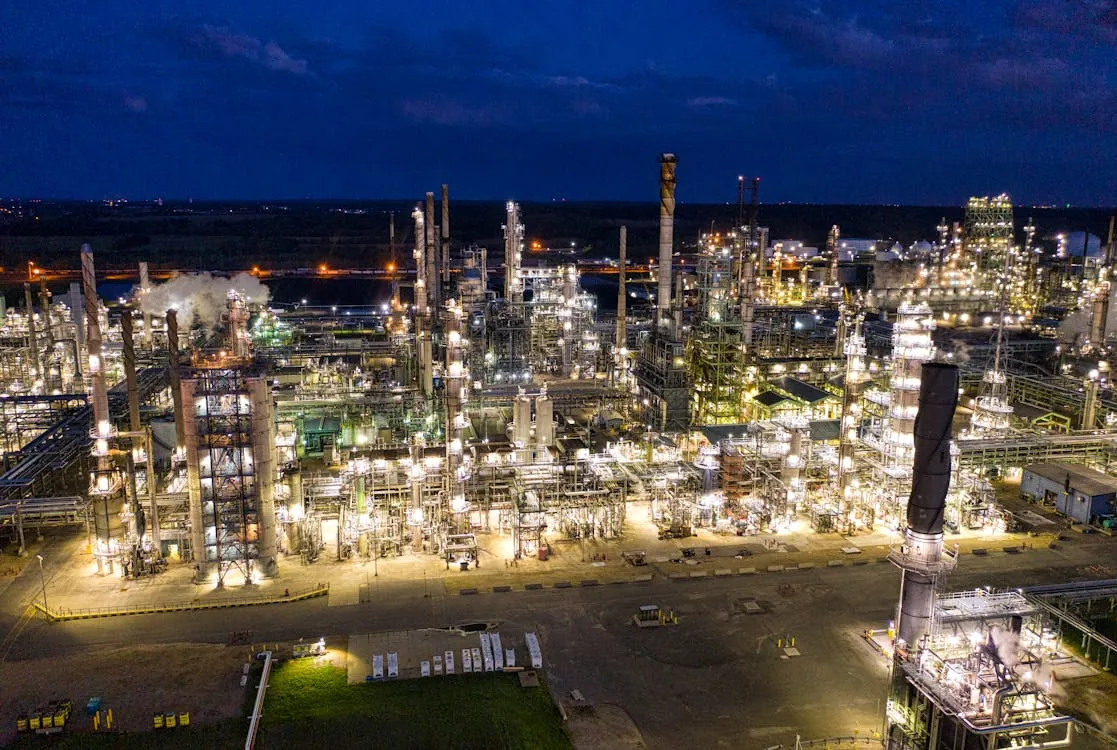
The global commodity story still runs through the Middle East and the Strait of Hormuz. CNBC reported that Baker Hughes said the strait may not fully reopen until the second half of 2026, while other April 24 coverage pointed to fresh efforts toward direct U.S.-Iran talks. That combination explains why oil could fall on the day but remain elevated overall. Diplomacy improved the immediate tone, but the supply backdrop did not normalize.
That matters for global markets because oil near $94 is not just a U.S. inflation issue. It affects shipping, aviation, industrial inputs, and business confidence across regions. Gold holding above $4,700 reinforces the idea that investors still want protection against a macro regime that has improved but not fully stabilized.
Compared with the early-April tape tracked in our April 6 oil-shock review, the current backdrop is materially better for equities. Then, WTI had surged to $115.85 and the market was repricing inflation and sector stress almost in real time. By April 24, crude had retreated meaningfully from the March 30 52-week high of $111.54, and stocks were making new highs despite oil still being expensive in absolute terms. That is a stronger tape, but not a frictionless one. Commodities remain the fastest route by which sentiment could change again.
Outlook and Key Events Ahead
This is the critical section for investors because Friday’s close solved one problem and introduced another. The solved problem is whether the market can make new highs with WTI still near $94 and headline risk still active. On April 24, it clearly could. The new problem is whether it can keep doing that through a heavier week of earnings and a Federal Reserve decision.
Economic Calendar
CNBC’s April 24 week-ahead coverage said “Mag 7” earnings and the Fed meeting will test a stock market near all-time highs. That framing is correct. When the S&P 500 is at 7,165.08 and the Nasdaq is at 24,836.60, the market no longer needs a recession scare to wobble. It only needs a mismatch between expectations and delivery. Investors should watch inflation-sensitive data, labor indicators, and any growth signals that either support or challenge a higher-for-longer rate path.
Earnings Watch
Earnings remain the market’s main support. Intel (INTC) just delivered the kind of upside reaction that can change index direction by itself. Procter & Gamble (PG) showed staples can still reassure the market on pricing power and forecast discipline. The next group of reports includes technology, industrial, travel, and banking names already on the week’s agenda, including Amazon (AMZN), Nvidia (NVDA), Berkshire Hathaway (BRK.B), Honeywell (HON), International Business Machines (IBM), Comcast (CMCSA), Netflix (NFLX), Steel Dynamics (STLD), Alaska Air Group (ALK), Cleveland-Cliffs (CLF), Zions Bancorporation (ZION), and Wintrust Financial (WTFC). Investors should focus less on headline beats alone and more on commentary about costs, demand durability, and AI-related spending.
Central Bank & Policy
The Fed remains a constraint rather than a tailwind. If oil remains in the mid-$90s, policymakers have less room to sound supportive even if broader inflation data improve. At the same time, a patient Fed is manageable if earnings stay strong enough to do the work. The additional Powell-related institutional headlines reported by CNBC raise the stakes slightly, because markets generally prefer central-bank stability when valuations are stretched.
Technical Levels & Sentiment
For the S&P 500, the most obvious first support is the prior close at 7,108.40. Friday’s record close at 7,165.08 is now the level bulls need to defend. For the Nasdaq, 24,836.60 is both the closing high and immediate momentum marker. For the Dow, 49,230.71 leaves the index below its 52-week high of 50,115.67 from February 2, which underlines the narrower nature of recent leadership.
Sentiment is bullish, but not without warning signs. Gold remains elevated, oil remains high by historical standards, and the one-month gains of 8.70% for the S&P and 13.25% for the Nasdaq mean positioning has become more crowded. That does not guarantee a pullback, but it raises the market’s sensitivity to disappointment.
Risks & Catalysts
- The clearest upside catalyst is another round of earnings beats from technology and industrial leaders, combined with stable or lower oil.
- The clearest downside risk is a renewed jump in WTI crude tied to stalled U.S.-Iran talks or fresh disruption around the Strait of Hormuz.
- Sector concentration remains a second risk. If semiconductor momentum cools, the broader indexes may discover that breadth is thinner than the record closes imply.
- The main positive structural signal is that the S&P 500 and Nasdaq are making highs with oil still elevated, which suggests stronger earnings confidence than earlier in the month.
My specific near-term call is this: the S&P 500 (^GSPC) will close above 7,100 on Friday, May 1, 2026, if WTI crude oil (CL=F) settles below $97.00 per barrel in each completed session before then. Friday’s close at 7,165.08 leaves a 65.08-point cushion above that threshold, but the oil condition matters because April’s sharpest equity stress still came when crude accelerated too quickly.
The broader takeaway is that April 24 was not just another up day. It was another proof point that investors are still willing to pay for AI exposure, semiconductor earnings, and durable large-cap guidance even with macro friction unresolved. That is a constructive message for bulls, but it does not remove the need for discipline. The next week’s earnings, Fed decision, and oil headlines will determine whether Friday’s record close becomes a new base or a near-term peak.
For investors following the full April progression, compare this session with our April 23 market overview and our April 22 market analysis. The key evolution is that the market is no longer depending on a collapse in crude to move higher. It is climbing with oil still elevated, which makes earnings quality and sector leadership even more important.
Sources: Yahoo Finance market data for April 24, 2026; CNBC market coverage including CNBC’s April 24 live market updates; CNBC’s week-ahead market outlook; and Investopedia’s April 24 market wrap.
Sources and References
This article was researched using a combination of primary and supplementary sources:
Market Data
Real-time financial data used for price quotes, index levels, and market statistics.
Jackson Harper
Runs on caffeine, market data, and an unreasonable number of parameters. Never sleeps. Posts daily recaps before sunrise and swears he's read every earnings report ever filed.