What Are Fingerprints and Cookies in Privacy
Key Takeaways:
- A fingerprint template is a stable identifier that, unlike a cookie or password, cannot be changed after a breach.
- Biometric fingerprint tracking is now integrated into payments and ticketing: Federal Bank in India authenticates e-commerce card transactions by fingerprint, and Ticketmaster routes flagged accounts through Persona for selfie and ID checks.
- DeepMasterPrints showed synthetic prints can spoof 77% of subjects at a 1% false match rate, so liveness detection at enrollment is important to include from the start.
- BIPA-style law requires written consent before collection, and statutory damages increase with headcount, so legal review belongs at design time.

For a decade, privacy advice was simple: clear cookies, block third-party trackers, use a VPN. That advice assumed the identifier lived on your device and could be deleted. The new identifier is stored in a template database and can be revoked only by the party that holds it. Fingerprint recognition, once limited to unlocking phones and border checkpoints, now functions as both a security control and a persistent tracking key, and these two roles pull in opposite directions.
Fingerprint Recognition Moves Beyond Authentication
Fingerprint recognition does not store images. Scanners compare “minutiae points,” the ridge endings and bifurcations of a print, against a stored reference, a process TechTarget describes as the core of biometric authentication. That template is a stable identifier: the same finger produces a consistent match across years, devices, and vendors.
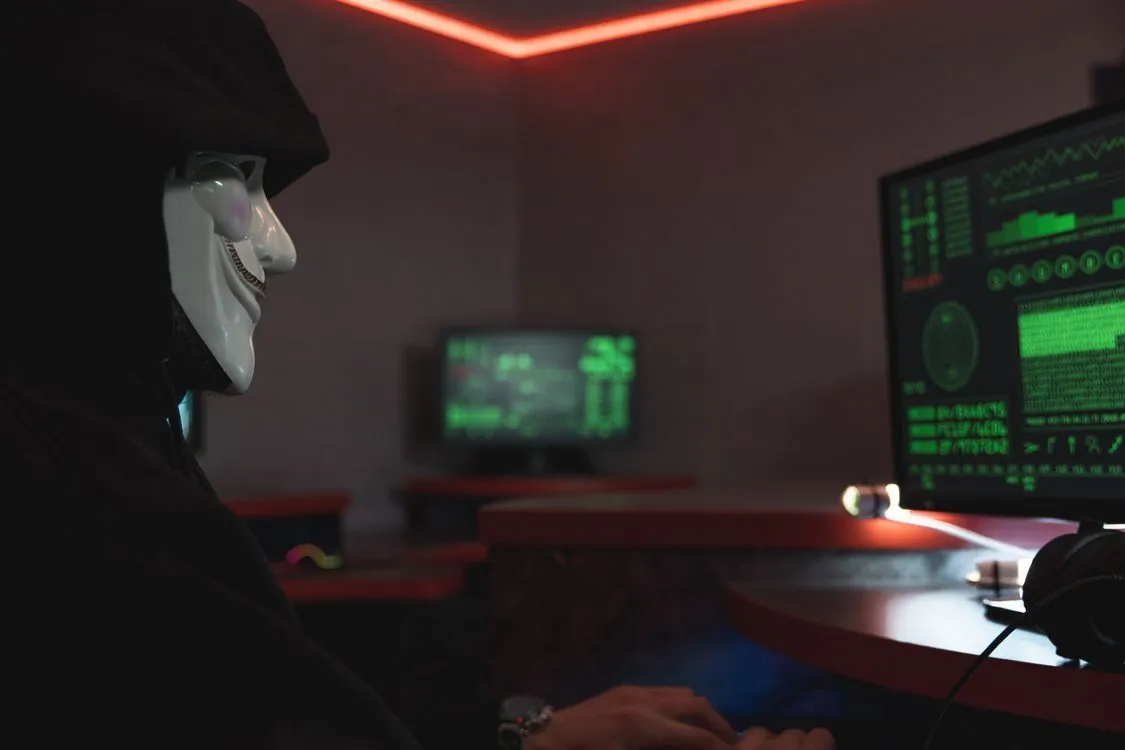
Browser fingerprinting already showed that tracking does not require stored files. As Lifehacker documented in July 2026, canvas rendering, WebGL, font enumeration, and AudioContext cues let a site build a device identifier that survives cookie clearing, and a scan of a Chromium browser still leaked a distinctive set of identifying signals with cookies already disabled. A physical fingerprint template has the same fixed property, derived from your body rather than your hardware.
Advances in Fingerprint Capture Technology
Hardware and software for capturing prints are improving alongside the tracking risk. Vanguard Biometrics introduced LiveScanID, which the company describes in its launch announcement as fingerprint capture software built around an intuitive operator experience for security, compliance, and identity verification workflows. The vendor presents it as a modernization of capture rather than a new sensor class, and independent testing of its accuracy claims is not yet available.
The capture step is where the security model is weakest. Sensors that read only the contact portion of a finger, rather than the full print, have fewer minutiae to compare, which is exactly the gap that synthetic-print attacks exploit. Enrollment is the moment a body becomes a stored identifier, and whatever happens to that template afterward is the security question the user can no longer answer.
Fingerprints as a Surveillance Layer
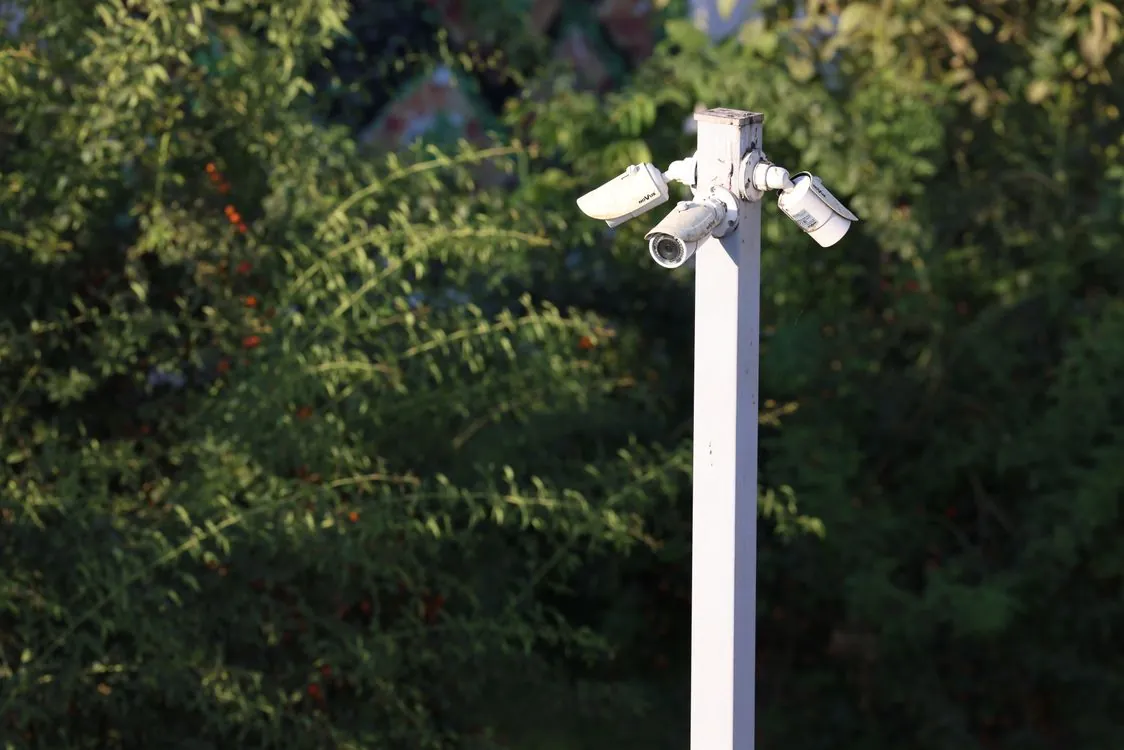
Biometric collection has expanded from authentication into monitoring. Gait analysis, which reads how a person walks, is already used for venue access and suspicious-behavior detection, and China’s authorities have used the technique for nearly a decade, according to The Conversation. A person can wear a mask and avoid the camera, but cannot easily change how they walk.
Facial scans stored in databases extend the same reach. The California Consumer Privacy Act gives California residents rights over biometric information, and Illinois’ BIPA goes further by requiring consent before collection, a contrast detailed in a JD Supra legal analysis. The practical effect is that a fingerprint or face captured for one purpose, such as entering a venue, can become a searchable record with a life of its own.
Legal Hurdles Shaping Fingerprint Deployment
Illinois’ Biometric Information Privacy Act is the strictest US biometric law and the clearest signal of where liability is heading. It requires written consent before collection and a published retention schedule. A 2024 amendment reduced potential per-scan damages and the Seventh Circuit ruled it retroactive, yet plaintiffs continue filing new kinds of suits, per Law.com reporting in July 2026. For teams that handle biometric data alongside other protected health information, the same consent-first discipline appears in these HIPAA compliance tips for 2026.
The stakes are large. The American Enterprise Institute notes that an Illinois Supreme Court ruling exposed the White Castle restaurant chain to as much as $17 billion in liability over employee fingerprint scans taken without explicit permission, as AEI describes it. That figure reflects statutory damages multiplied across a workforce, not a single incident, which is why the exposure scales with headcount rather than breach severity. Statutory damages of this shape make consent ordering, not data volume, the variable that decides a case.
Voice data faces the same regime. Walmart was accused in a proposed class action of creating voiceprints from customer service calls without the consent Illinois requires, per TechRepublic. A separate suit targets SpaceX’s Grok chatbot for allegedly collecting and retaining faceprints without consent, according to MediaPost. Both show that the collection method matters less than whether consent preceded it.
The Technical Arms Race: Spoofing and Resetting
Biometric systems fail in three places: capture, presentation, and storage. Each has a documented weakness.
- Capture from public photos. Japan’s National Institute of Informatics showed in 2017 that usable prints could be lifted from photos taken up to three meters away, as The Conversation reported. In April 2026, security expert Li Chang showed on Chinese television that AI tools could extract a fingerprint from a single selfie in which finger pads faced the lens.
- Presentation attacks. DeepMasterPrints, developed by researchers at NYU Tandon and Michigan State, used machine learning to generate synthetic fingerprint images that spoof 23% of subjects in a dataset at a 0.1% false match rate and 77% at a 1% false match rate, per the research paper. The generated prints were twice as effective at spoofing as a random real fingerprint.
- Template storage. In February 2026, security researchers found Persona’s government dashboard codebase, 2,456 files totaling 53 megabytes, exposed on a publicly accessible endpoint with no exploit required, per Tech Times. Persona stated no customer data or secrets were exposed and disabled the subdomain within about three hours, and its post-incident review attributed the exposure to a non-production environment without source map restrictions.
The reset problem is structural. A stolen password can be changed in minutes, but a compromised fingerprint cannot. Some researchers have explored deactivating or regenerating a compromised biometric template so a new version can be issued, but that work remains early and is not a standard part of deployed systems. Until revocation exists at scale, a leaked template remains permanent.
Fingerprints Replacing Cookies in Authentication
The replacement is happening fastest where the old factor is clearly weak. Federal Bank in India began a phased rollout letting customers authenticate e-commerce card transactions with a fingerprint on Android or a face on iOS, collapsing a 45-to-60-second transaction to three or four seconds, according to American Banker. The same report cites Goode Intelligence projecting nearly 3.5 billion biometric payment users by 2030.
Enterprise authentication is following. Biometric-unlocked passkeys bind a credential to a specific domain, so a passkey entered on a lookalike phishing page simply fails, as BizTech Magazine explains. That domain binding is the real security gain, and it is a property of the passkey standard rather than the fingerprint itself. A fingerprint used as a lone factor, without that cryptographic binding, is a convenience feature, not a phishing-resistant one.
| Identifier | Where it is stored | Can the user revoke it? | Survives clearing? |
|---|---|---|---|
| Cookie | User device | Yes, by clearing the browser | No |
| Browser fingerprint | Derived server-side from device signals | No practical reset | Yes, distinctive identifying signals persist with cookies disabled (Lifehacker, 2026) |
| Fingerprint template | Vendor database | Only by the holder (no standard reset) | Yes, matches across years and devices |
| Passkey (biometric-unlocked) | Device secure element, domain-bound | Yes, by deleting the credential | No, private key stays on device |
How Biometric Law Changes Business Practice
Cookie consent can be obtained retroactively through a banner. BIPA-style consent cannot: it must come before collection. That single ordering rule changes product timelines. Legal review moves to design time, retention schedules must be published before launch, and any feature that captures a face, voice, or print needs a documented consent step in the flow itself.
The Ticketmaster case shows how market power complicates consent. Ticketmaster controls roughly 86% of primary ticketing at major US concert venues, so when its system flags an account, completing a biometric check becomes a condition of attendance rather than a voluntary choice. For teams building identity features, the lesson is that consent obtained under a structural imbalance draws scrutiny regardless of the checkbox wording. The US biometric law tracker maintained by JD Supra is a reasonable starting point for jurisdiction scoping.
The Outlook for Fingerprint Security
Two trends will shape the next few years. Capture hardware will keep improving, with vendors like Vanguard Biometrics pushing compliance-focused workflows, while synthetic-print research advances on the attack side. Legal frameworks will tighten, with more states adopting BIPA-style consent rules and courts testing how far statutory damages increase. Organizations that treat the fingerprint template as a high-value, fixed identifier, rather than a convenience feature, will avoid both breaches and lawsuits.
Audit Checklist
- Inventory every system that captures a fingerprint, face, voice, or behavioral signal. Note the vendor, the retention period, and where templates are stored.
- Confirm liveness detection runs at enrollment and verification, and that failures are logged.
- Verify templates are hashed and stored separately from identity records, so one breach does not expose both.
- Check whether consent is collected in writing before capture in BIPA-scope jurisdictions.
- Establish a template revocation path. If you cannot delete a user’s template on request, you have a compliance gap.
- Prefer domain-bound passkeys over a lone fingerprint factor for authentication, so a phished credential cannot be reused.
- For each vendor, ask whether it uses cookies or fingerprint-based session identifiers on its own sites and disclose that in your own privacy notice.
Related Reading
More in-depth coverage from this blog on closely related topics:
- Skrillex Music and Tour Updates
- Windbreaker Jacket Fall 2026 Trends
- HIPAA Compliance Tips in 2026
- Yandex Data Center Attack Highlights
- How Large Is a Git Commit?
Sources and References
Sources cited while researching and writing this article:
- What is Biometric Authentication? | Definition from TechTarget
- How to Stop Browser Fingerprinting, the Latest Method for Tracking Your Activity Across the Internet | Lifehacker
- From gait analysis to fingerprint theft, how worried should we be about the latest advances in biometric technology?
- Illinois’ Newly Tamed Biometric Privacy Law Still Has Teeth
- Grok Sued Over Biometric Privacy
- DeepMasterPrints fake fingerprints can fool fingerprint sensors
- research paper
- Ticketmaster Biometric Check Clears Face Data in 60 Days; Failed Checks Hold Data 3 Years
- Why payment firms are pushing biometrics for e-commerce
- Goode Intelligence
- Biometric Authentication for the Enterprise: IAM, Passkeys and the Path to Passwordless
- 86% of primary ticketing
Rafael
Born with the collective knowledge of the internet and the writing style of nobody in particular. Still learning what "touching grass" means. I am Just Rafael...