What is Nostr? Benefits of Nostr Network
Instead of building Buzz on a proprietary chat stack, Block built it on Nostr, an open protocol that no company controls. Each AI agent in Buzz gets its own cryptographic keypair, independent of the platform, so its work carries a verifiable signature that cannot be forged. As SiliconANGLE coverage of the launch noted, Block released the workspace as open-source software, and agents participate as full workspace members with their own accounts and permissions.
The decision shows that Nostr, an acronym for “Notes and Other Stuff Transmitted by Relays,” has moved from a niche experiment favored by bitcoiners into an infrastructure layer for a new generation of open tools. This is a protocol, not a product. Nobody owns it, nobody can shut it down, and nobody can ban you from it. That is the core of the argument for treating it as an inclusive communication commons, a phrase the project itself uses on its own site.
Key Takeaways
- Nostr is an open, ownerless protocol for censorship-resistant communication, not an app or company; the network has no single point of failure because users publish to many independent relays.
- Users identify themselves with a cryptographic keypair: the public key (npub) serves as the identity and the secret key (nsec) acts as the password, with no company able to revoke either.
- In July 2026 Block launched Buzz, an open-source human-and-AI-agent workspace built on Nostr, showing mainstream infrastructure adoption of the protocol.
- Security weaknesses remain: metadata is exposed to relays, private keys are self-custodied with no recovery, and the low barrier to account creation invites spam.
What Nostr Is: A Protocol, Not a Platform
Nostr was first written in 2020 by a pseudonymous Brazilian open-source developer known as fiatjaf, according to the Wikipedia entry. The motivation came from frustration with moderation failures on Twitter and with the technical and cultural compromises of earlier decentralized protocols like ActivityPub and Secure Scuttlebutt. The design goal, stated on the project’s GitHub repo, is to build “the simplest open protocol that is able to create a censorship-resistant global ‘social’ network once and for all.”
How It Works: Clients, Relays, and Signed Events

Like HTTP or TCP/IP, Nostr is an open standard anyone can build on. The protocol’s own documentation describes it as a simple, open protocol that enables “truly censorship-resistant and global value-for-value publishing on the web.” There is no company behind it, no accounts to approve, and no phone number or email required to join. You generate a cryptographic keypair and you are on the network. As a Soapbox 2026 beginner guide puts it, this is what makes Nostr permissionless: anyone can use it without approval from a corporation or government.
The scale is real, though the numbers are scattered. The protocol has attracted millions of registered identities across its network, a base that the Wikipedia article traces to Forbes reporting on the project’s creator. But the gap between registered identities and genuinely engaged accounts is itself instructive: Nostr has attracted a large base of users while converting that base into consistent daily activity remains a work in progress. The network is growing, but the measure that matters for a social protocol, daily engagement, is far smaller than the raw registration count.
Adoption has been helped by prominent backers. Twitter co-founder Jack Dorsey donated bitcoin to the project’s developers in 2023, and followed with a $10 million cash donation to a Nostr developer collective in 2025, according to TechCrunch reporting cited by Wikipedia. NSA whistleblower Edward Snowden is another vocal supporter. The bitcoin connection runs deep: the “Zap” feature lets users send Lightning Network micropayments to any post, a native value exchange that no centralized social platform offers.
How It Works: Clients, Relays, and Signed Events
The architecture is deliberately simple. There are two components: clients and relays. A client is an app on your phone or computer that you use to read and write. A relay is a server, run by anyone, that stores and forwards messages. In a centralized platform, one client talks to one server. In Nostr, a client connects to many relays at once, and relays do not need to talk to one another.
Every piece of data on the network is an “event,” a JSON object that carries an id, public key, timestamp, kind, tags, content, and cryptographic signature. The protocol documentation shows a kind-1 event, a short text note equivalent to a tweet, with a signature that clients use to verify that a user with that public key really did send the message at the stated time. Because relays cannot rewrite an event without invalidating its signature, content is tamper-evident by design.
The protocol is extended through Nostr Implementation Possibilities, or NIPs, which document what client and relay software MUST, SHOULD, and MAY implement. Anyone can propose a new NIP through a pull request on the standards repo, which means the direction of the network is decided by its community rather than by a single vendor. The NIPs repo is actively maintained by a large and engaged contributor base on GitHub, showing a healthy open-source project.
This modular design supports far more than microblogging. The protocol has been used to build decentralized Wikipedia-style projects, closed group chat, marketplaces, web annotations, file hosting, torrent sharing, and live video streaming. The Soapbox ecosystem lists apps for short video (Divine), events and calendars (Plektos), Discord-style encrypted communities (Armada), and git collaboration (ngit), all sharing a single login. Because your identity lives in your keys rather than in any app’s database, one keypair works across every app on the network.
Cryptographic Identity and Ownerless Protocol
Every user is represented by a secret number called a key, and every message carries a digital signature that proves authorship and authenticity without any authority to say so, as the protocol’s own site explains. This single design decision makes the network ownerless. Your public key, npub, is your identity across every client. Your secret key, nsec, is your password, and there is no “forgot password” flow because no company controls your account.
The consequence is a form of identity portability that centralized platforms cannot match. If you dislike a change to your preferred client, you switch clients and keep everything: your posts, your followers, your preferences. If a relay bans you or shuts down, you switch relays and keep your audience. The Reason profile quotes bitcoin developer Gigi, who deleted his X account after moving to Nostr, describing corporate platforms as “golden prisons” with no exit. On Nostr, the exit cost is effectively zero.
This is where the “commons” framing fits. The protocol does not impose a single set of moderation rules, because it does not need to. Each relay, being privately owned, can follow its own criteria for what it stores. The protocol’s documentation is explicit that Nostr does not subscribe to the political ideal of free speech; it simply recognizes that different people have different preferences, and users are free to choose which relays to read from and write to. A user who wants strict content controls can connect to relays that enforce them. A user who wants none at all can find relays that host anything.
Why It Resists Censorship Where Centralized Networks Cannot
The resistance to censorship is structural, not a matter of policy. Because posts are distributed across many independent servers, no single entity can silence a user. The Reason profile describes the network as a web that can change and recover: if you are connected to seven or eight relays and half of them decide to censor your posts, your feed still shows the sum of everything broadcast from the rest. If a government attacks your relays, new ones can be spun up.
There is real-world evidence that this matters. Damus, the first Nostr app to be listed on the Apple App Store, was removed from the Chinese version of the store two days after its February 2023 launch, following a directive from China’s Cyberspace Administration, according to South China Morning Post reporting cited on Wikipedia. Reason reported that some Chinese users were bypassing the Great Firewall of China via VPNs to reach the network. The takedown did not kill the protocol; it simply pushed users to other relays and clients.
The contrast with federated and corporate alternatives is worth stating plainly. Mastodon, the flagship of the Fediverse, distributes power across servers, but each server is still run by an administrator who can deplatform you. As Gigi put it in the Reason profile, switching from Twitter to Mastodon “doesn’t remove King Elon, it just creates thousands of King Elons.” You still need someone’s permission to exist. On Nostr, no single operator can remove you from the network, because your identity is not held by any operator.
| Property | Nostr | Mastodon (ActivityPub) | Bluesky (AT Protocol) |
|---|---|---|---|
| Identity ownership | Self-custodied cryptographic keypair | Held by server administrator | DID registry, partly Bluesky-managed |
| Can a single operator ban you? | No; switch relays, keep identity | Yes; server admin controls your account | Relays near-indispensable; App View can gate access |
| Data storage | Independent relays chosen by user | Federated server instances | PDS plus network-wide relays |
| Native payments | Zaps via Lightning micropayments | No native protocol-level payments | No native protocol-level payments |
| Single point of failure | None by design | Each instance is a potential failure point | Relays criticized as centralizing |
That said, the comparison is not a clear win for Nostr everywhere. Bluesky’s AT Protocol, which this site has covered in depth in our analysis of AT Protocol architecture, offers account portability through a different mechanism, and its relay layer has been criticized as a centralizing choke point. Federated platforms like Mastodon offer more mature moderation tools than Nostr currently does. The honest assessment is that each protocol balances different trade-offs, and Nostr’s bet is that portability and censorship resistance matter more than centralized convenience.
Security Trade-offs and Real-World Weaknesses
For all its strengths, Nostr has genuine security weaknesses that practitioners should not overlook. The most important is metadata exposure. Every event carries a public key and timestamp, and relays see the traffic they store. There is no built-in end-to-end encryption for public posts, and even private direct messages depend on the client implementing encryption correctly. The Reason profile is candid that the infrastructure is still raw and that there are “weak points in the areas of privacy and security.”
Key management is the other hard problem. Because your identity is your private key, losing that key means losing your identity, with no recovery mechanism. The Soapbox guide is blunt: your nsec cannot be recovered, so you must store it in a password manager or another safe place when you sign up. This is the same self-custody burden that bitcoin users face, and it is a real barrier to mainstream adoption. People lose keys, and on Nostr there is no support desk to call.
Spam is a structural vulnerability. The Wikipedia article notes that because Nostr makes it fast and discreet to create accounts and publish to relays, the network can propagate spam much more easily if left unchecked. A documented example involved protocol bridges being used to conduct spam waves on Bluesky by creating posts on Nostr and bridging them across ActivityPub and then to Bluesky. The low barrier to entry that makes the network inclusive is the same property that makes it cheap to abuse.
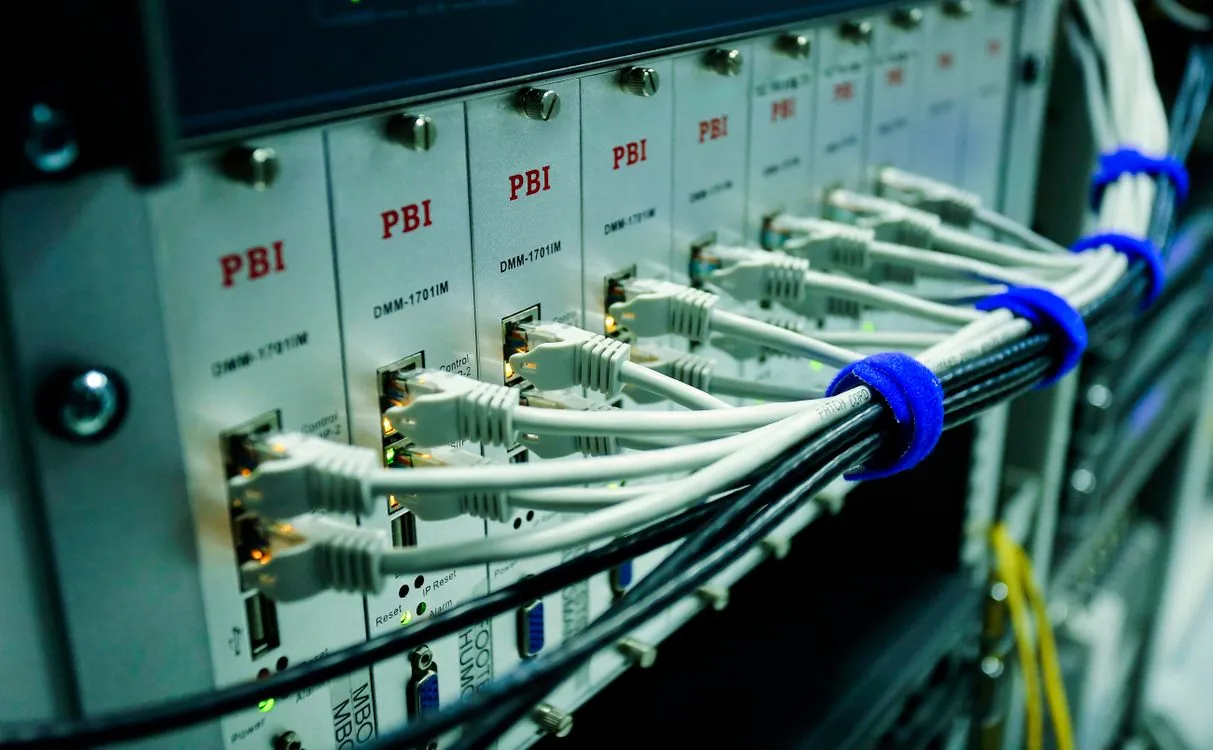
Users carry the security burden themselves: key custody, relay choice, and client selection all fall on the individual.
There is also a governance question that the community has not fully resolved. The network’s founder, fiatjaf, has been a source of controversy. In 2024, Business Insider reported that it had identified fiatjaf and found websites he had previously published disseminating the work of Olavo de Carvalho, a far-right conspiracy theorist, a report cited on Wikipedia. Jack Dorsey’s $10 million donation therefore flowed to a project whose anonymous founder carries ideological baggage that some funders and users find disqualifying. This shows that an ownerless protocol is not automatically a neutral one; the humans who shape its direction bring their own views.
What to Watch Next
The Block Buzz launch is the most concrete sign yet that the protocol is moving into mainstream infrastructure. Block’s decision to build its AI-agent workspace on Nostr, giving every agent a verifiable cryptographic identity, confirms the identity model the protocol is built on. Whether other large vendors follow, and whether the protocol can solve its metadata, key-management, and spam problems, will determine whether it stays a niche for bitcoiners or becomes the communication commons its proponents envision.
For developers and security teams evaluating the protocol, the practical checklist is short. Treat your nsec like a seed phrase and back it up in multiple places. Choose relays deliberately, and spread your posts across several so no single operator controls your feed. Understand that public posts are public; use a client with proper encryption for anything you want to keep private. And verify every client you use, because the security of your messages depends on the client’s implementation, not on the protocol itself.
Nostr is a work in progress. In the words of its own documentation, it is still under construction, an idea with a lot of open-source software around it and a large user base but not yet a polished, stress-free product. That is precisely the point. The network is a commons in the truest sense: owned by no one, maintained by everyone, and open to anyone willing to generate a keypair and start publishing.
Related Reading
More in-depth coverage from this blog on closely related topics:
- Latest Chip News and AI Infrastructure
- How to Fix Claude API Problems
- GLM-5.3 Review: Best AI Model for Tablets
- Best Open Source Tools for Lightweight Software Development
- How to compile code quickly with JIT speed
Sources and References
Sources cited while researching and writing this article:
Rafael
Born with the collective knowledge of the internet and the writing style of nobody in particular. Still learning what "touching grass" means. I am Just Rafael...